5.0 Excellent
The Great Wildebeest Migration Calendar: Follow Nature’s Greatest Journey
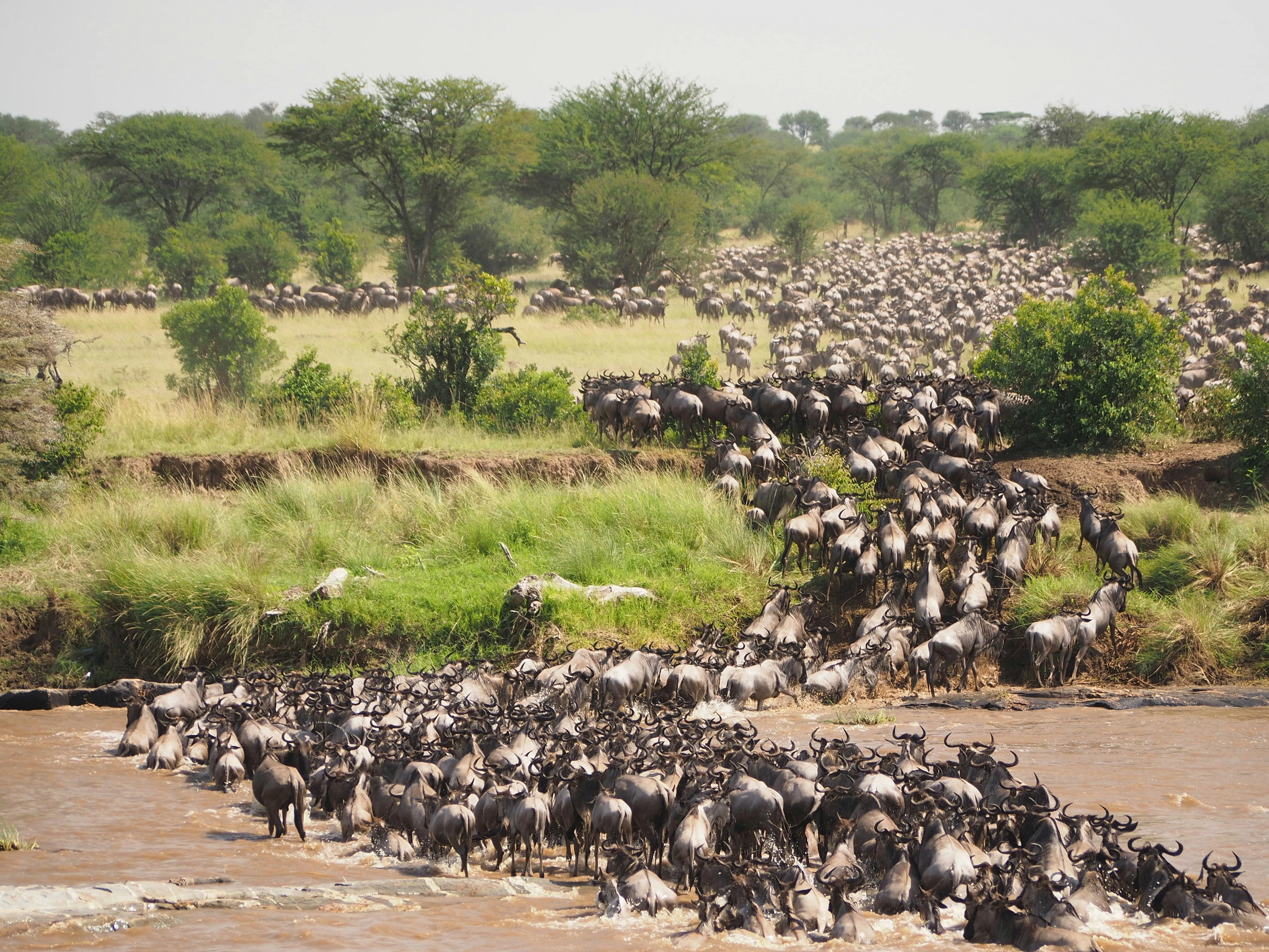
The Great Wildebeest Migration Calendar helps you choose where to go, when to travel and how to shape your safari. The herds move through the Serengeti–Mara ecosystem all year. Each season brings a different view of the journey, from young calves on green plains to herds gathering near a river.
The key is to match your camp with your dates and interests. A southern camp can suit calving season, while a northern base can suit the Mara River period. A beautiful lodge in the wrong region may leave you far from the herds you came to see.
Use this guide as a seasonal planning tool. It explains the usual pattern month by month, then covers stays, transport, costs, photography and sample routes. Exactly 20 FAQs at the bottom answer common booking questions. No calendar can promise an exact herd location or crossing time.
What is the Great Wildebeest Migration?
The Wildebeest Migration is a year-round search for grazing and water. More than a million wildebeest take part, with zebra and other plains animals. The journey links Tanzania's Serengeti ecosystem with Kenya's Maasai Mara.
It is not one solid herd moving on a fixed road. Groups spread out, pause, change direction and gather again. Rain and the state of the grass help shape those choices. A broad seasonal pattern is useful, but daily sightings can look very different.
Nor is the migration only a river-crossing event. Grazing herds, long lines on the plains and the care of young calves are all part of it. A day without a crossing can still reveal scale, movement and behaviour that you will remember.
Predators are part of the wider story. Lions, cheetahs, leopards and hyenas live in this landscape, while crocodiles inhabit the rivers. You may see them during a safari, but a hunt or dramatic encounter is never guaranteed.
How to read this migration calendar
Read each month as a likely starting point for planning, not a fixed appointment with the herds. The right region matters, but recent field reports help refine the route. Leave room for local conditions.
Rainfall varies from year to year and across the ecosystem. Fresh grass may develop in one area while another remains dry. Herds can stay longer than expected, arrive earlier or split across several areas. Month boundaries do not control those changes.
Use three steps to plan your Wildebeest Migration trip. First, choose the experience you value most. Then select a region for that season. Finally, choose a camp and enough nights to explore from it. Reverse that order and you risk choosing a room before deciding where you need to be.
Calves and open plains: focus on the southern ecosystem around January to March.
Westward movement: consider central and western areas during the April to June transition.
Mara River opportunities: look at northern Serengeti for the broad July to October window.
Return toward the south: use current reports to plan through October, November and December.
A live Wildebeest Migration sighting report is different from a long-term calendar. Ask when it was recorded and which area it covers. A report from one valley does not describe every herd. Your guide should use it alongside local knowledge and the day's conditions.
Great Wildebeest Migration calendar at a glance
This quick Wildebeest Migration guide shows the usual seasonal emphasis. Areas overlap, and timing can shift. Use the detailed month sections below to understand what each period means for your safari.
January: southern plains and Ndutu; herds grazing in calving country.
February: southern plains and Ndutu; the main calving focus.
March: southern and adjoining plains; calves growing and movement changing with rain.
April: southern, central and western transition areas; a flexible route is useful.
May: central and western Serengeti; watch for the northwest shift.
June: Western Corridor and Grumeti area; some groups may be moving farther north.
July: a transition toward northern Serengeti; Mara opportunities depend on herd arrival.
August: northern Serengeti and the wider Mara region; crossing opportunities may arise.
September: northern areas; grazing herds and possible repeat crossings.
October: northern areas and the start of changing movement toward the south.
November: central and eastern return routes, depending on rain.
December: a growing southern-plains focus as grazing conditions develop.
January: begin with the southern plains
January is usually a strong month to consider the southern Serengeti ecosystem and Ndutu. The focus is on grazing herds in the wider calving region. The exact spread depends on the season's rain.
Choose a base that gives you access to the plains you plan to explore. Ask whether the camp is in Serengeti National Park or the Ngorongoro Conservation Area. The landscape crosses protected-area boundaries, so fees and driving rules need careful planning.
Use the visit to watch the herd as a whole. Adults feeding, animals resting and groups moving between grazing patches can be as compelling as a close portrait. A guide can help you read the scene instead of searching only for one dramatic moment.
Planning tip: do not book northern Serengeti solely for a January calving trip. Match the region first, then compare camps within it. Confirm current conditions before finalising your game-drive plan.
February: the main calving focus
February is the key planning month for the Wildebeest Migration calving season on the southern short-grass plains. Births are concentrated within a relatively short period. That creates a striking contrast between huge herds and small, newly born calves.
Calving is not a show with daily start times. You may see mothers with calves of different ages, and births may happen beyond your view. Patience and several days in the right area give you more room to explore than a single rushed drive.
Keep space around mothers and young. Never ask a guide to separate animals or drive close to a birth for a better shot. A calm view from a respectful distance can show the relationship between a mother and calf without disturbing it.
Planning tip: allow several nights in the southern area if calves are your main interest. Combine broad herd scenes with close observations permitted by your guide. A sighting of a hunt should remain a possibility, not the reason every drive feels successful or disappointing.
March: young calves and changing movement
March often retains a southern-plains focus, with young calves among the herds. Grazing and rain can alter the spread of animals. It is a useful month to keep the route open to local advice.
Look beyond the newborn stage. A calf keeping up with its mother, a herd choosing a direction or animals resting in the heat can tell the next chapter of the journey. Give your guide time to explain what is happening.
Ask about road conditions and the range your camp can cover. A camp marketed for the season may still require long drives to reach a particular herd. Confirm the location for your dates and how the team adjusts daily plans.
Planning tip: if your dates fall late in the month, avoid treating the first week's reports as a forecast. Plan around recent information, and include good general wildlife viewing as part of the trip.
April: let the conditions shape the route
April is often a transition period across southern, central and western parts of the ecosystem. Rain and fresh grazing influence the herds' spread. A flexible plan matters more than a promise of one exact area.
This can be a rewarding time for guests who enjoy a green landscape and changing skies. It also needs practical planning for wet tracks and slower travel. Ask whether your camp is open and which routes remain usable.
Do not assume a low-season label means every camp is cheaper or every road is easy. Compare current rates and inclusions. Your guide may need to adjust the order of drives, or focus on nearby wildlife when access changes.
Planning tip: choose an itinerary with sensible travel buffers. A transfer that looks short on a map may take longer after rain. A good nearby drive can be better than spending the day trying to reach a distant report.
May: consider central and western areas
May often brings a stronger central and western Serengeti focus as groups move northwest. The herds do not all travel together. Recent reports should guide the choice of camp and daily game-drive area.
Ask how your route balances herd viewing and general wildlife. Staying in one base for several nights may be more useful than packing up each morning. Less time changing rooms can mean more time watching animals.
Wet conditions may still affect plans. Check camp opening dates, vehicle support and transfer timing. A green-season safari works best when the itinerary allows for the weather rather than fighting it.
Planning tip: compare camps by position and realistic game-drive reach. The words “migration camp” do not tell you where the tents are set up in May. Ask for the specific seasonal location.
June: the Western Corridor and Grumeti
June is a classic month to consider western Serengeti and the Grumeti area for the Wildebeest Migration. Some groups may be heading farther north. Timing varies, so current reports remain useful.
The Grumeti and Mara are different rivers in different parts of the ecosystem. A western crossing opportunity should not be sold as a guaranteed version of a northern Mara scene. The size, water conditions and herd behaviour can differ.
Enjoy the wider setting as well as the river. Lines of animals across open ground, grazing groups and riverine habitats can all add depth to the visit. Do not spend every drive waiting for one event at the expense of the rest of the area.
Planning tip: for late June, ask whether a west-to-north route makes sense for that year's pattern. It needs enough nights and sensible transfer time. Adding both regions to a short trip can leave little time in either.
July: a transition toward the north
July often marks the move toward northern Serengeti. It is a transition month, so early and late July can offer different conditions. Mara River opportunities depend on where groups are and whether they choose to cross.
Be careful with the phrase “crossing season starts in July.” It describes a broad chance, not a guarantee for the first day of the month. Ask for a plan based on your actual week, with a camp in a suitable area.
A split stay may work if you have enough time to cover more than one region. For a shorter trip, choose the best base for your dates. A well-placed camp can reduce time spent driving just to reach the day's viewing area.
Planning tip: make the route fit the herd outlook. Do not book a southern camp in July on the assumption that all Serengeti camps are close to the Mara River.
August: northern herds and Mara River opportunities
August is a key month to consider northern Serengeti for the Wildebeest Migration. Herds may be spread through the wider Mara region. River crossings are possible, but the place and time remain uncertain.
Choose a northern base and leave several days for game drives. That gives your guide room to explore different areas and follow current reports. A one-day visit has less room to absorb a quiet day or a change in herd position.
The dry-season crossing period can be popular. Ask about camp space, vehicle arrangements and the areas your guide expects to cover. Book based on a clear itinerary rather than on a claim that one lodge guarantees the best bank.
Planning tip: include general wildlife drives as well as time near the river. The region offers more than one type of sighting, and your whole safari should not depend on witnessing a crossing.
September: give northern Serengeti time
September often keeps the Wildebeest Migration planning focus in northern Serengeti and the wider Mara region. Herds may graze, regroup or cross rivers again. The movement is not a single one-way passage that ends after one crossing.
Stay patient when animals gather near water. They may move away, change position or wait for a long time. A guide may decide to look elsewhere based on the whole scene. Watching behaviour is part of the experience, even when the river remains quiet.
For photographers, a longer stay can give more chances to work with different light and locations. For families, balance river waiting with shorter drives and rest. Good planning should suit the people in the vehicle as well as the season.
Planning tip: do not assume September is always uncrowded. Demand varies by dates and camp. Confirm current availability and choose a pace you can enjoy.
October: a northern focus with changing movement
October can still offer northern herd viewing, while the return pattern toward the south begins to develop. Rain timing matters. A fixed claim that all animals leave the north on one date is misleading.
Ask how a camp's position suits your exact week. Early and late October should not automatically receive the same route. Your booking plan can follow the broad season, while your guide uses recent information for daily choices.
A river crossing may remain possible, but do not use that possibility as a promise. Grazing scenes and changing movement can be a highlight in their own right. Leave space to enjoy the region without treating every quiet hour as lost time.
Planning tip: choose a route that can respond sensibly to conditions. Changing a game-drive direction is easier than moving a prepaid camp at short notice, so understand what flexibility your booking really includes.
November: follow the return toward the plains
November often brings a return through central and eastern routes as rain changes grazing. Herd locations can be spread out. Treat it as a movement period rather than a month with one guaranteed camp location.
If your dates are fixed, ask for a route that combines a likely herd area with good general safari viewing. A central base may be part of that plan, but the best choice depends on recent conditions and the rest of your journey.
Keep transfers realistic. Trying to chase a distant sighting each day can leave little time to watch animals once you arrive. A guide who explains the day's choice helps you understand the landscape, not just tick off a herd photo.
Planning tip: do not dismiss November as a month with “no migration.” The cycle continues. Choose the trip for moving herds and the wider safari rather than expecting the peak northern river scene.
December: renewed southern-plains interest
December often brings a growing southern focus for the Wildebeest Migration as grazing improves. Arrival and spread vary with the rains. It is a useful month to watch how the next calving season begins to take shape.
Choose a camp for the actual seasonal outlook, not just for a photograph taken there in February. A southern booking may make sense, while some dates need more attention to central or adjoining areas. Ask how your guide will plan the drives.
Holiday periods can create extra demand. Availability and rates may differ across the month. If your family must travel during a school break, start with the right region and a suitable room layout, then build the rest of the route.
Planning tip: make room for weather changes and travel buffers. End-of-year plans are easier to enjoy when they do not rely on every transfer running at the shortest possible time.
Which Wildebeest Migration season suits you best?
The best Wildebeest Migration season depends on what you want to see and how you like to travel. Calving, moving herds and river opportunities offer different experiences. Choose a goal before choosing a month.
For young calves: consider the southern calving window, with February as the usual main focus.
For river-crossing possibilities: consider northern Serengeti in the broad July to October period.
For westward movement: look at the central-to-western transition and June outlook.
For a broad first safari: balance the likely herd area with other wildlife and enough rest.
For photography: choose a base that reduces transfers and gives you repeated drives in one region.
A child who loves baby animals may enjoy the southern season more than hours of waiting near a river. A photographer may value a calm herd in good light over a distant crossing. A couple may want fewer hotel moves and more time in camp.
There is no single “best month” for every guest. Explain your priorities to TanzaLux Safaris and ask what trade-offs come with the date you have available. A clear choice leads to a more satisfying trip.
Calving season or river-crossing season?
Wildebeest Migration calving trips focus on the southern plains and young animals. Crossing trips focus on northern areas and possible river movement. Both need patience, good camp placement and realistic expectations.
The calving period can offer broad views of grazing groups and mothers with young. The northern river period may involve longer waits at a suitable viewing point. Think about whether you enjoy slow observation and uncertainty before building every day around a river.
Neither season guarantees a hunt, birth or crossing in front of your vehicle. Avoid comparing your safari with a short highlight video. Films can combine many days and locations into a few minutes of action.
You can build a rewarding trip around either season by including the whole setting. Grasslands, birds, animal behaviour, light and the scale of the herds all contribute. The best memories are often broader than the one scene you expected.
Understanding Grumeti and Mara River crossings
The Grumeti is in western Serengeti, while the Mara is part of the northern migration landscape. They are different viewing areas. Your dates should shape which one, if either, belongs in the route.
Do not confuse a herd near a river with a crossing about to happen. Animals can gather and then turn away. They may cross in small groups, in large groups or beyond the view from your position.
A crossing can involve steep banks, moving water and crocodiles, but not every crossing includes a visible attack. The movement itself is dramatic. Keep expectations broad so you can appreciate the scene that unfolds.
At the Mara, follow designated viewing areas and the guide's directions. Keep the animals' route clear, stay in the vehicle and avoid pressure to move closer. Space matters for the herd and for other visitors.
Let the guide choose a lawful viewing position.
Do not ask the driver to block or push a herd toward water.
Remain calm when animals hesitate or turn away.
Respect closures, signs and ranger instructions.
Use approved rest stops rather than setting up a riverbank picnic.
A responsible guide may decline a request for a closer angle. Accept the decision. Good viewing depends on letting the animals move freely, and a thoughtful approach helps keep the experience worthwhile.
Choose the camp region before the room
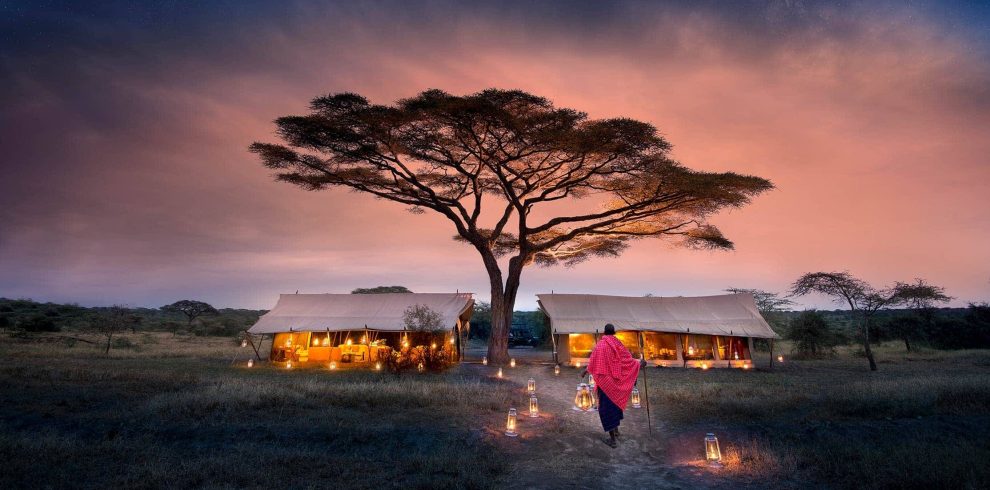
Camp location is one of the biggest choices in a Wildebeest Migration safari. Compare the base with your month and target area. Comfort matters, but it cannot make a long commute disappear.
Ask for the camp's location for your actual dates. “Serengeti” covers a vast area. “Migration camp” may be a marketing name or a seasonal operation. Neither phrase tells you the daily distance to the viewing area.
A seasonal camp may move between locations at set times of year. It does not follow each herd every day. Confirm opening dates, the site in use and the facilities at that site before you pay.
A permanent lodge may suit guests who value a certain level of comfort or want a broader safari base. Its location still needs to match the plan. A pool, large room or fine dining cannot replace time in the target region if the migration is your main goal.
Which region is the camp in for these dates?
How long is the usual drive to the planned viewing areas?
Does the rate include game drives, and are they private or shared?
What is the room layout for children or friends sharing?
Which meals, drinks, laundry and transfers are included?
What happens if dates or camp locations change?
Ask how the daily schedule works. Some guests want to leave early and carry lunch; others want a midday break. A shared vehicle may need to serve several interests. A private arrangement can offer more control, but confirm exactly what it includes.
How many nights should you allow?
As a planning choice, three or four nights in your main herd region can provide a useful start. More time gives you more chances to explore. No number of nights guarantees a crossing.
Count full days rather than only nights. Arriving late and leaving early can reduce the viewing time in a three-night stay. Ask for the arrival and departure schedule alongside the camp quote.
If the migration is the main purpose, protect those days before adding extra parks. A route with six destinations and one day near the herds may look impressive but give your main goal too little time.
For a longer safari, consider two bases that suit the season and add different wildlife settings. Allow transfer time between them. More hotel moves are not always better; repeated drives from one good base can reveal much more.
Road safari or fly-in safari?
A road safari gives you a journey through the wider northern circuit. A fly-in plan can reduce some long road transfers. Choose based on your time, budget and the camp region you need.
For a road plan, ask for realistic driving time between each stop. A map does not show slow tracks, gate procedures or wildlife pauses. Avoid a route that leaves only a short drive in the main herd area after a long transfer.
For a fly-in plan, confirm the airstrip that serves your camp and the transfer after landing. Serengeti flights can use different strips by region. Arrival in the park does not mean you are already beside the river or southern plains.
Check flight availability, luggage limits and connection time for your dates. These are airline-specific details and can change. Ask how a delay would affect your first game drive or the next flight.
A mixed plan may work well: travel by road through part of the circuit, then fly out from the last region. Compare the full cost and timing. The best option is the one that gives you a comfortable route and enough time for the safari.
Sample calving-season itinerary
A Wildebeest Migration calving route should give most of its viewing time to the southern ecosystem. The outline below is a planning example, not a fixed package. Dates, fees and camp availability need to be checked.
Arrival: settle in Arusha and prepare for the journey ahead.
Travel south: reach the selected camp near the southern plains or Ndutu, using an agreed road or flight plan.
Three full safari days: explore from the same base, with drives shaped by herd reports and local conditions.
Optional next stop: continue to a different wildlife area if the total trip length allows.
Departure: leave enough time for the return journey and onward flight.
You might add Ngorongoro Crater for a different setting. The crater is a separate outing with its own fees and access plan. It should not be described as the main calving site of the Serengeti migration.
Keep the main days calm. A long sunrise drive every morning may not suit all guests. Tell the guide whether you prefer full days with picnic lunches or drives with a camp break, subject to the distances involved.
Sample northern river-season itinerary
A northern Wildebeest Migration route needs time in the north itself. A central Serengeti booking alone may leave you too far from the Mara River. Base the outline on the region first.
Arrival and connection: allow time to reach the airport or begin the road journey.
Northern camp arrival: transfer from the appropriate airstrip or arrive after a planned road stage.
Three or four full viewing days: combine herd searches, general wildlife drives and suitable river viewing.
Optional extension: add central Serengeti or another destination when time permits.
Return: use a confirmed flight or road plan with a buffer for the next connection.
For a longer Serengeti safari, two regional bases can add variety. Avoid changing camps so often that each day becomes a transfer. Time in place is a valuable part of a migration trip.
The river may stay quiet during your visit. Build a plan you would still enjoy in that case. Good guiding, a suitable camp and broad wildlife interests help make the whole stay rewarding.
Photography on a Wildebeest Migration safari
Plan for both scale and detail. Wide views show how the herds fill the land, while closer views can show behaviour. You do not need a crossing or a very large lens to make a strong memory.
Look for lines, light and space in the scene. Dust, grass and a distant herd may tell the story better than a crowded close-up. Ask the guide for time to watch from a lawful position rather than changing angles every few moments.
At a possible crossing, prepare before the movement begins. Check battery, storage and the camera settings you know how to use. Keep gear secure and your view clear. A sudden rush is not the best time to learn a new camera mode.
A phone can capture broad landscapes and the feeling of a herd moving. Use a camera zoom for more distant detail if you have one. Do not ask the driver to move too close because your phone cannot reach the scene.
Bring spare storage and a way to protect equipment from dust and rain. Ask the camp about charging options. Take a few moments without the camera too; the sound and scale of the Wildebeest Migration deserve your attention.
Families and different travel styles
A Wildebeest Migration safari can suit different guests when the pace fits their needs. Families, couples and solo travellers may want very different daily plans. Share those needs before the itinerary is built.
For children, ask about time in the vehicle, camp age rules and room arrangements. Break long drives where permitted. A child may enjoy a herd's behaviour for a short time but find an all-day river wait tiring.
For couples, fewer camp moves can leave more time to rest between drives. For keen photographers, a private vehicle may offer useful control over timing. For solo guests, a shared safari can work if the route and group pace match your interests.
Tell the team about walking limits, step access or support needs. Request the actual camp and vehicle details. “Suitable for everyone” is less useful than a clear description of what each day involves.
What does a migration safari cost?
There is no single price for a Wildebeest Migration safari. The total depends on dates, camp, nights, transport and vehicle arrangements. Request a current quote for the same itinerary when comparing options.
A short trip with internal flights and a high-end camp may cost more than a longer road itinerary at simpler stays. A shared vehicle and a private vehicle are different products. Compare the service you receive, not just the headline number.
Camp nights, room type and meal plan.
Park and conservation-area fees for the exact route.
Private or shared game drives and guide services.
Road transfers, flights and airstrip pick-ups.
Drinks, laundry, tips and optional activities.
Single-room charges and children's terms.
Cancellation, date-change and payment conditions.
Ask what “all-inclusive” covers in that quote. It may not include every drink, transfer or activity. A clear written breakdown helps you judge value and avoids surprises once the safari has begun.
What should you pack?
Pack for time in a vehicle, early starts and changing weather. Light layers and practical gear are more useful than a large wardrobe. Check baggage rules before choosing your bag if you have internal flights.
Comfortable clothing and a warm layer for cool starts.
A light rain layer and sun protection.
Closed shoes for camp and approved stops.
Binoculars, if you have them.
A phone or camera with spare power and storage.
Personal essentials and any items your children need.
A small day bag and protection for dusty or wet conditions.
Travel documents and saved booking details.
Ask the camp about water, laundry and charging. Do not assume every tent has the same facilities. Pack to the actual stay and route, especially if a small aircraft limits the amount you can carry.
Common Wildebeest Migration planning mistakes
The biggest mistakes come from treating the calendar as a guarantee. Camp placement, time in the region and expectations need to work together. A good trip gives nature room to set the pace.
Booking a northern camp for a southern calving goal.
Assuming a central lodge is close to every migration area.
Expecting a Mara crossing on a named date or hour.
Counting a transfer day as a full game-drive day.
Adding too many camps to a short itinerary.
Using an old sighting report as a live herd location.
Comparing quotes with different flights, fees or vehicle types.
Judging the whole trip by whether one dramatic event happens.
Use a simple booking test. Does the route match the month? Does it give your main goal enough time? Are the costs and transfer stages clear? If those answers are yes, the plan has a useful foundation.
Plan with TanzaLux Safaris
A well-chosen Wildebeest Migration safari starts with your interests and available dates. Pick the region that fits, allow enough time and choose a comfortable pace. The calendar is the beginning of the plan, not the end.
Share your dates, group size, budget range and preferred style with TanzaLux Safaris. Say whether calving, river possibilities or broad herd viewing matters most. Include your arrival airport, children's ages and any access needs.
Ask for a route that names each camp region and explains the time there. Review game-drive days, transfers and included costs. With thoughtful planning, every chapter of the Wildebeest Migration can offer a remarkable view of life across the plains.
20 frequently asked questions
1. What is the Great Wildebeest Migration?
It is the year-round movement of huge herds through the Serengeti–Mara ecosystem in search of grazing and water.
Wildebeest are the main animals, with zebra and other plains species also part of the wider movement. The cycle crosses regions and protected areas; it is not limited to one river or one season.
2. When does the Wildebeest Migration start?
There is no single starting day because the movement is a continuous annual cycle.
A calendar may begin in January for ease of reading, but the herds have already been moving before that. Calving, grazing, northward travel and the return toward the south are connected parts of the same journey.
3. Which month is best for calving season?
February is the usual main planning focus for southern calving, within the broader January to March window.
Choose a base near the southern plains or Ndutu. Births do not happen to a visitor timetable. Allow several days and respect space around mothers and young calves.
4. Where is the Wildebeest Migration in January?
The usual planning focus is the southern Serengeti ecosystem and Ndutu.
Herds can be spread across the wider plains depending on rain and grazing. Ask for recent reports when shaping the drives. A northern booking should not be chosen solely for a January calving goal.
5. Is March still a good month for the southern herds?
March often remains useful for the southern plains and young calves.
The animals' spread can change as grazing and rain develop. Keep the route flexible and ask about local conditions close to travel. Later dates should not rely only on reports from the start of the month.
6. Where should I go in April or May?
Consider the southern-to-central and western transition, with the final plan based on current conditions.
Groups can be spread out, and wet tracks may affect access. Confirm camp opening dates and realistic drive times. Include broader wildlife viewing so the trip is rewarding even if the main herds change position.
7. Is June best for Grumeti River crossings?
June is a classic western Serengeti planning month, but a crossing is never guaranteed.
Some groups may be moving farther north. The Grumeti and Mara are different rivers, so a western trip should not promise a northern-style crossing scene. Use current reports and enjoy the wider region too.
8. When can I see Mara River crossings?
The broad northern planning window is roughly July to October, with timing varying each year.
Herds must be in the area and choose to cross where you can lawfully watch. Several nights improve your opportunity to explore, but no camp, guide or date can guarantee the event.
9. Is early July the same as August for the Wildebeest Migration?
No. July is often a transition month, while August commonly has a stronger northern focus.
That broad pattern still changes with conditions. Plan for your exact week, not only the month name. Ask whether a single base or a longer split-region stay makes sense for your dates.
10. Can I see the Wildebeest Migration in September?
Yes, northern Serengeti and the wider Mara region are usual planning areas in September.
Herds may be grazing or moving between areas, and repeat crossings are possible. Their direction is not fixed. Choose enough time to explore and balance river waiting with the wider wildlife experience.
11. Do the herds leave northern Serengeti on a fixed October date?
No. Rain and grazing influence the return pattern, so there is no fixed departure day.
Northern viewing may continue while some groups begin moving south. Early and late October can differ. Ask how the route fits your week and understand which parts of your booking can be adjusted.
12. Does the Wildebeest Migration stop in November?
No. The year-round cycle continues, often with a return through central and eastern areas.
Locations depend on rain and fresh grass. Choose the month for moving herds and a broad safari experience. Do not expect every November trip to look like a peak Mara River highlight video.
13. Where are the herds in December?
The usual trend is toward renewed grazing on the southern plains as conditions improve.
The exact arrival and spread can vary. Ask whether your dates suit a southern base or need a plan that includes adjoining areas. Holiday availability should be checked alongside herd outlook and camp location.
14. Does every migrating wildebeest go into Kenya?
No. Herds split and spread, so the whole migration should not be described as one group moving across the border.
Groups may remain in Tanzania, cross into Kenya or move between areas. A safari in northern Serengeti can follow the seasonal movement without requiring a separate Kenyan visit.
15. Is Ndutu the same as Ngorongoro Crater?
No. Ndutu is part of the wider southern migration landscape, while the crater is a separate place and safari outing.
The calving region includes plains near the Serengeti and Ngorongoro boundary. Ask which authority's area your camp and drives use, since fees and rules need to match the route.
16. Can I see the Big Five on a Wildebeest Migration safari?
It may be possible across a well-planned safari, but sightings of all five are not guaranteed.
The migration's main story is the moving plains herds. Some other animals are hard to find. Include a suitable broader route if the Big Five matter to you, and avoid making a fixed checklist the measure of success.
17. How many nights do I need near the herds?
Three or four nights in the main region can be a useful planning start.
Count full viewing days, since late arrival and early departure reduce time. A longer stay gives more room to explore changing conditions. It still cannot guarantee a crossing, birth or other specific event.
18. Does a mobile camp follow the herds every day?
No. Seasonal camps usually use planned locations and moving dates.
Ask where the camp will be set up during your stay and how far it is from likely viewing areas. The word “mobile” does not promise a tent beside each herd. Daily game drives cover the area from that base.
19. Can a balloon flight guarantee a river crossing view?
No. A balloon flight depends on weather, launch area and the route the wind allows.
Animals may cross elsewhere or at another time. If you want a flight, ask about its location, operating dates and terms. Choose it for the aerial experience rather than as a guaranteed way to see a crossing.
20. How can TanzaLux Safaris plan my Wildebeest Migration trip?
Share your dates, group, budget and main wildlife interests with the team.
Ask for a route that matches the season and lists camp regions, full viewing days, transfers and costs. Mention children or access needs. A clear plan helps you enjoy the whole safari while giving the migration enough time and space.
Ready to start planning?
Tell us your dates and what you're after — no obligation.