 5.0 Excellent

Calving Season vs River Crossings: Which Great Migration Safari Is Right for You?
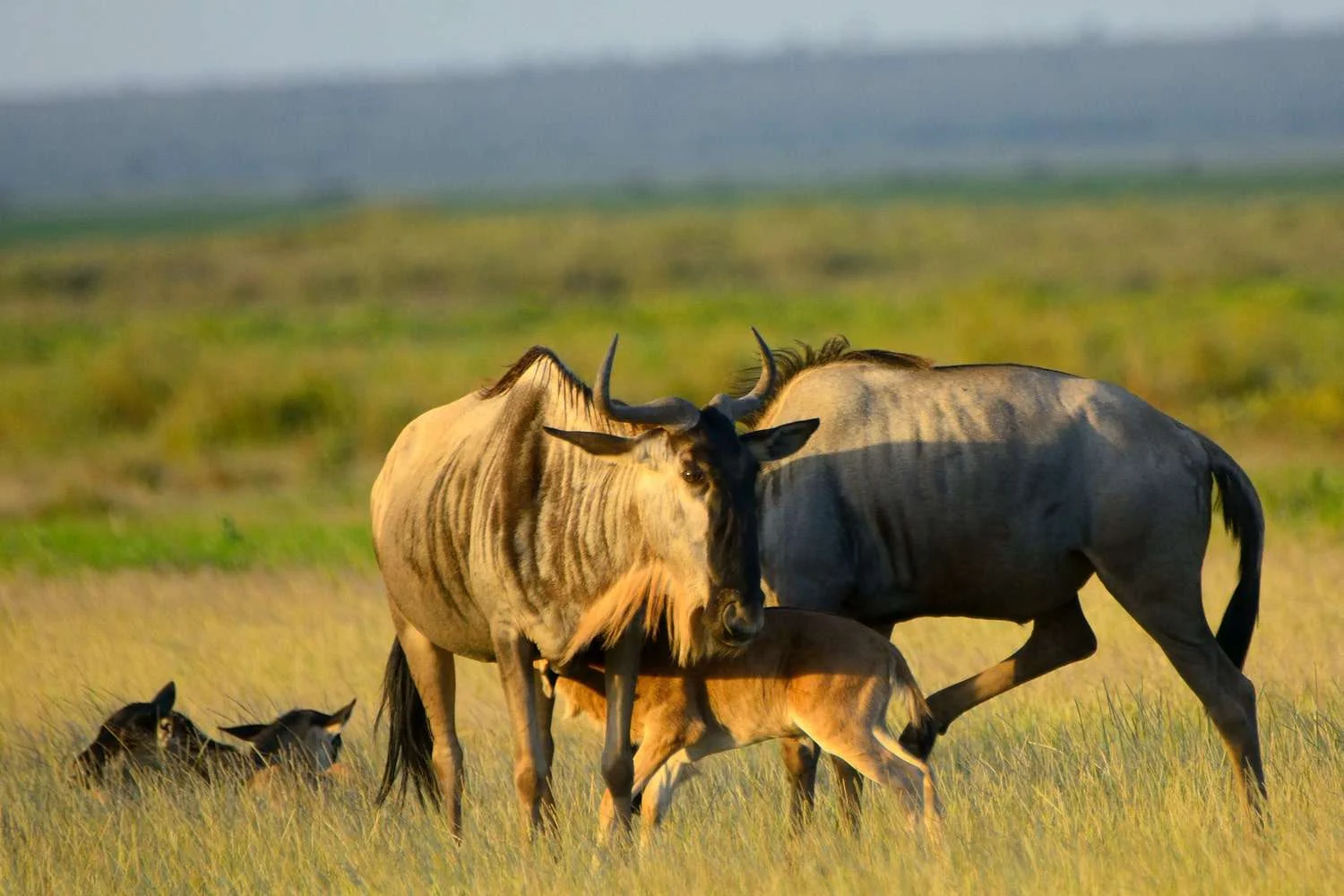
Choosing calving season vs river crossing viewing comes down to the experience you want. Choose the southern plains for newborn wildebeest and herd behaviour; choose the northern Serengeti for the chance of a dramatic Mara River crossing. Both are stages of the same Great Migration. Explore our calving safaris if young animals are your priority.
Calving season vs river crossings at a glance
Months: calving is generally a January-to-March focus, often peaking around February; Mara River crossing trips usually target July to October. Rainfall and herd movements shift the timing.
Area: calving centres on Ndutu and the southern Serengeti plains; Mara crossings are in the northern Serengeti and the wider Serengeti–Mara ecosystem.
What you see: calves, nursing and predators on the plains versus herds gathering at rivers, waiting and potentially crossing.
Crowds: both can attract several vehicles at popular sightings. River viewing can concentrate vehicles at a limited number of crossing points.
Price level: both are sought-after experiences. Camp choice, dates and transport matter more than a blanket claim that one is cheaper.
Best fit: calving suits travellers drawn to young animals and open plains; crossings suit those willing to wait for a brief, unpredictable event.
What makes calving special?
Calving offers a wider story than a single birth. You may spend time watching mothers with calves, young animals finding their feet and herds spread across the short grass. Predators are part of this landscape, but hunting and births are never guaranteed. For the background, read why wildebeest calve around Ndutu.
The Ngorongoro Conservation Area visitor brochure highlights February calving around Ndutu. Treat the season as a planning window rather than a fixed appointment with the herds.
What makes river crossings special?
The attraction is the tension: animals gathering at the bank, hesitating and sometimes entering the water in large numbers. Yet a herd can approach and turn away. Hours of waiting may end without a crossing, and the most dramatic moment can be over quickly. Allow time for general wildlife viewing as well as the river.
Mara River crossings in the north differ from Grumeti River crossings in the western migration stage. Confirm which river your itinerary targets. See our Great Migration guide for the wider seasonal journey.
Which is more dramatic?
Crossings can deliver sudden movement and intense river scenes. Calving offers a slower sequence of births, family behaviour and predator encounters. Both may involve animals dying, and neither should be chosen on a promise of a hunt or a rescue. Your own interests matter more than which experience looks most spectacular in a short video.
Which is cheaper?
There is no reliable universal winner. Compare quotations with the same number of nights, comfort level, vehicle arrangements and inclusions. A flight to the northern Serengeti can change the total, while a sought-after Ndutu camp in February can also command strong rates. Ask for park and conservation fees, transfers and any flight baggage restrictions to be clearly explained.
Which is better for a first safari?
Calving may suit a first visit if you want a broad plains experience with calves as one of several interests. River crossings may suit you better if the river is a long-held priority and you are comfortable with waiting. In either case, choose a route with time for resident wildlife so the success of the trip does not rest on one event.
Choose calving if…
You are drawn to young animals, herd behaviour and southern plains landscapes.
Your dates fall in the early-year calving window.
You want to spend patient time observing wildlife beyond one short event.
Choose river crossings if…
The Mara River is your main migration goal.
You can travel in the northern migration window.
You accept long waits and the possibility of leaving without seeing a crossing.
Frequently asked questions
Can I see calving and Mara River crossings in one trip?
Not on a typical short safari: their main viewing windows are months apart. Two separate visits are the realistic way to target both. Driving from south to north in one week does not bring both seasonal events together.
Is January or July better for the Great Migration?
January usually points you towards the southern plains and the developing calving period. July generally points towards northern movement and possible Mara crossings. Choose the event first, then match the camp to the expected herd location.
Will more days guarantee a sighting?
No. Extra days create more chances and reduce the pressure on each drive, but weather and wildlife remain unpredictable.
Which is better for photography?
Calving can offer calves and behaviour across open plains. Crossings can offer fast action, spray and dense herds, alongside long waits. Choose the subjects you enjoy, and discuss vehicle space and positioning with your guide.
See our calving safaris
See our calving safaris to plan time on the southern plains, or explore the Great Migration to match your trip with another stage of the herds’ journey.

Ready to start planning?
Tell us your dates and what you're after — no obligation.
