5.0 Excellent
Dorine M1 year ago

Grateful experience
As a solo female traveler, I felt super safe and well taken care of the entire time.
Read more
The complete guide — routes, a real day-by-day itinerary, altitude safety, packing and honest answers, from a local Arusha-based team.
Kilimanjaro is the tallest mountain in Africa and the world's tallest free-standing mountain — no technical climbing skill required, just a good level of fitness, the right route, and enough time on the mountain to acclimatize properly. Most climbers who fail don't fail because the terrain is too hard; they fail because their itinerary didn't give their body enough time to adjust to the altitude.
We run every Kilimanjaro climb as a local, Arusha-based team — our own guides and porter crews, not subcontracted out. This page is the complete guide: routes, a real day-by-day itinerary, what affects your summit chances, safety, packing, and honest answers to the questions that actually matter before you book.
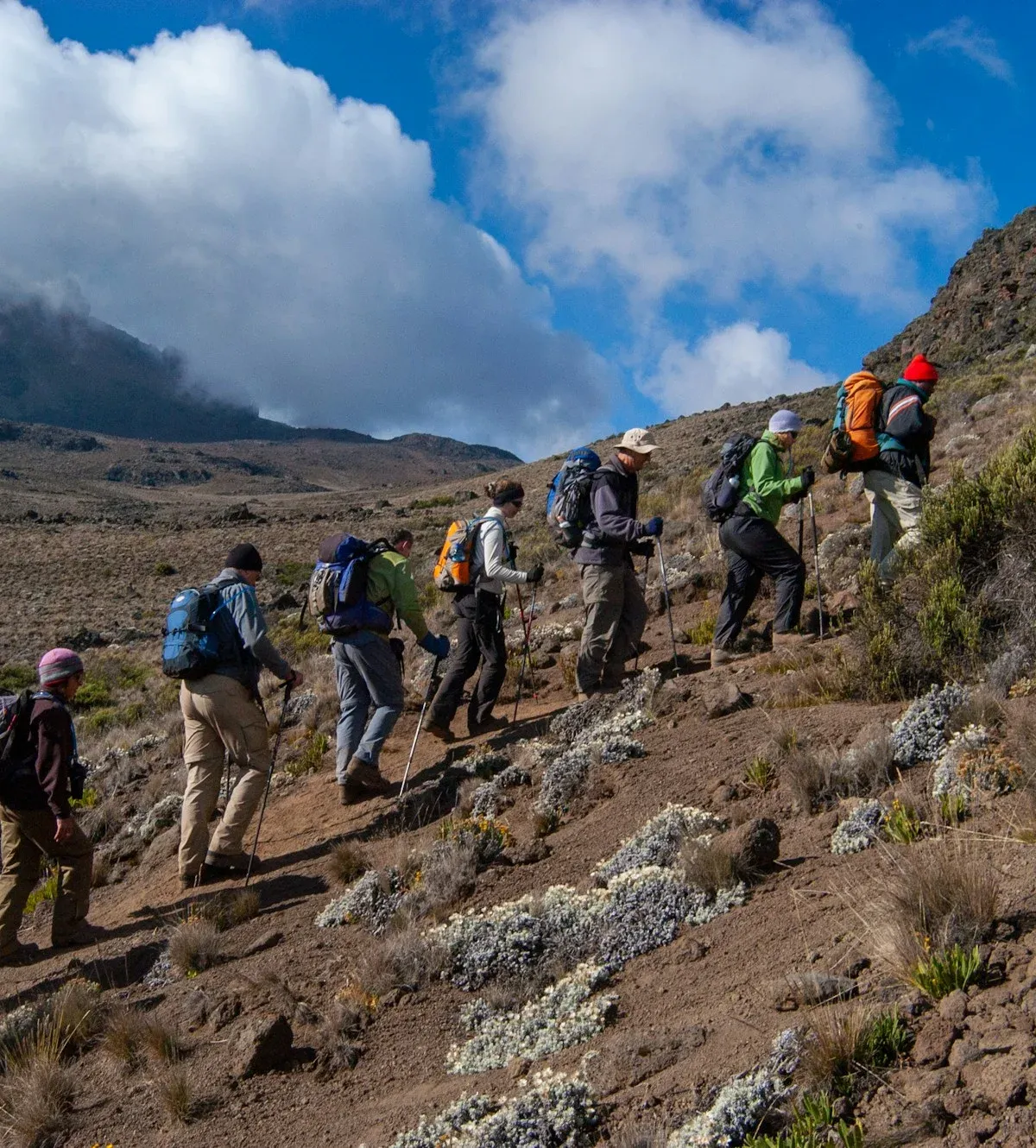
You don't need technical climbing experience or mountaineering skills to summit Kilimanjaro. It's a long, high-altitude walk, not a climb requiring ropes or crampons. What you do need is real cardiovascular fitness and enough days on the mountain to acclimatize.
A reasonable fitness target: being able to comfortably run 5km or hike 10km with some elevation gain. If you can do that, training in the weeks before your climb is about building endurance, not starting from zero.
Running, cycling or swimming several times a week builds the endurance you'll need for long summit-night hours.
Hike hilly terrain with a daypack close to what you'll carry on the mountain (5–7kg).
If you can, train on consecutive days — climbing is a multi-day endurance event, not a single hard effort.
Route length and pace affect your summit chances far more than raw fitness. A very fit climber on a rushed 5-day itinerary can still struggle with altitude; a moderately fit climber on a well-paced 7–8 day route has a real acclimatization advantage. Choosing the right route matters as much as training for it.
Choose the itinerary you're considering and tell us a little about your experience. We'll compare the pace, altitude profile and route characteristics to suggest the best fit — and tell you honestly if the one you already picked is a good match.
Answer all five questions to see your result.
Six distinct paths to the summit of Kilimanjaro. Each route has its own character, pace and views — choose the one that fits how you want to climb.
The Whiskey Route
The most popular camping route, with varied terrain and a good balance of scenery and challenge. The 7-day option gives a real acclimatization edge over the 6-day version.
Best for: First-timers who want scenic variety
The Scenic Route
Widely considered one of the best all-round routes, thanks to a longer, gentler approach across the Shira Plateau that gives excellent acclimatization without feeling rushed.
Best for: Climbers who want the best balance of scenery and summit success
The Coca-Cola Route
The only route with sleeping huts instead of tents, and generally the most affordable option — but the shortest standard duration means less time to acclimatize.
Best for: Climbers who'd rather sleep in a hut than a tent
The Northern Route
Approaches from the north, Kenya-facing side of the mountain, which stays noticeably drier and quieter than the southern routes, making it a good choice in the wetter months.
Best for: Climbers who want a quieter, drier route
The Challenging Route
The steepest and most direct route up the mountain: quiet and dramatic, but the fast initial ascent gives little time to acclimatize, so it suits experienced high-altitude trekkers more than first-timers.
Best for: Experienced trekkers looking for a real challenge
The Longest Route
The newest and longest standard route, circling most of the mountain for the most gradual acclimatization profile of any route and some of the quietest, most panoramic trekking on Kilimanjaro.
Best for: Climbers with extra time who want the highest acclimatization margin
Every route to the summit of Kilimanjaro has its own character. Use this quick comparison to understand the pace, terrain and experience each one offers.
| Route | Duration | Difficulty | Traffic | Sleeps | Best for |
|---|---|---|---|---|---|
Machame RouteThe Whiskey Route | 6–7 days | Moderate–Hard | High Very popular | Camping | First-timers who want scenic variety |
Lemosho RouteThe Scenic RouteRecommended | 6–8 days | Moderate | Medium Moderate traffic | Camping | Climbers who want the best balance of scenery and summit success |
Marangu RouteThe Coca-Cola Route | 5–6 days | Moderate | High Busy trail | Huts | Climbers who'd rather sleep in a hut than a tent |
Rongai RouteThe Northern Route | 6–7 days | Moderate | Low Quieter trail | Camping | Climbers who want a quieter, drier route |
Umbwe RouteThe Challenging Route | 6–7 days | Hard | Low Very quiet | Camping | Experienced trekkers looking for a real challenge |
Northern CircuitThe Longest RouteRecommended | 8–9 days | Moderate | Low Least crowded | Camping | Climbers with extra time who want the highest acclimatization margin |
Pick a route to see its camp-by-camp profile, the same real geography as the itineraries on this site, not a generic summary.
The Whiskey Route
The most popular camping route, with varied terrain and a good balance of scenery and challenge. The 7-day option gives a real acclimatization edge over the 6-day version.
Camp by camp
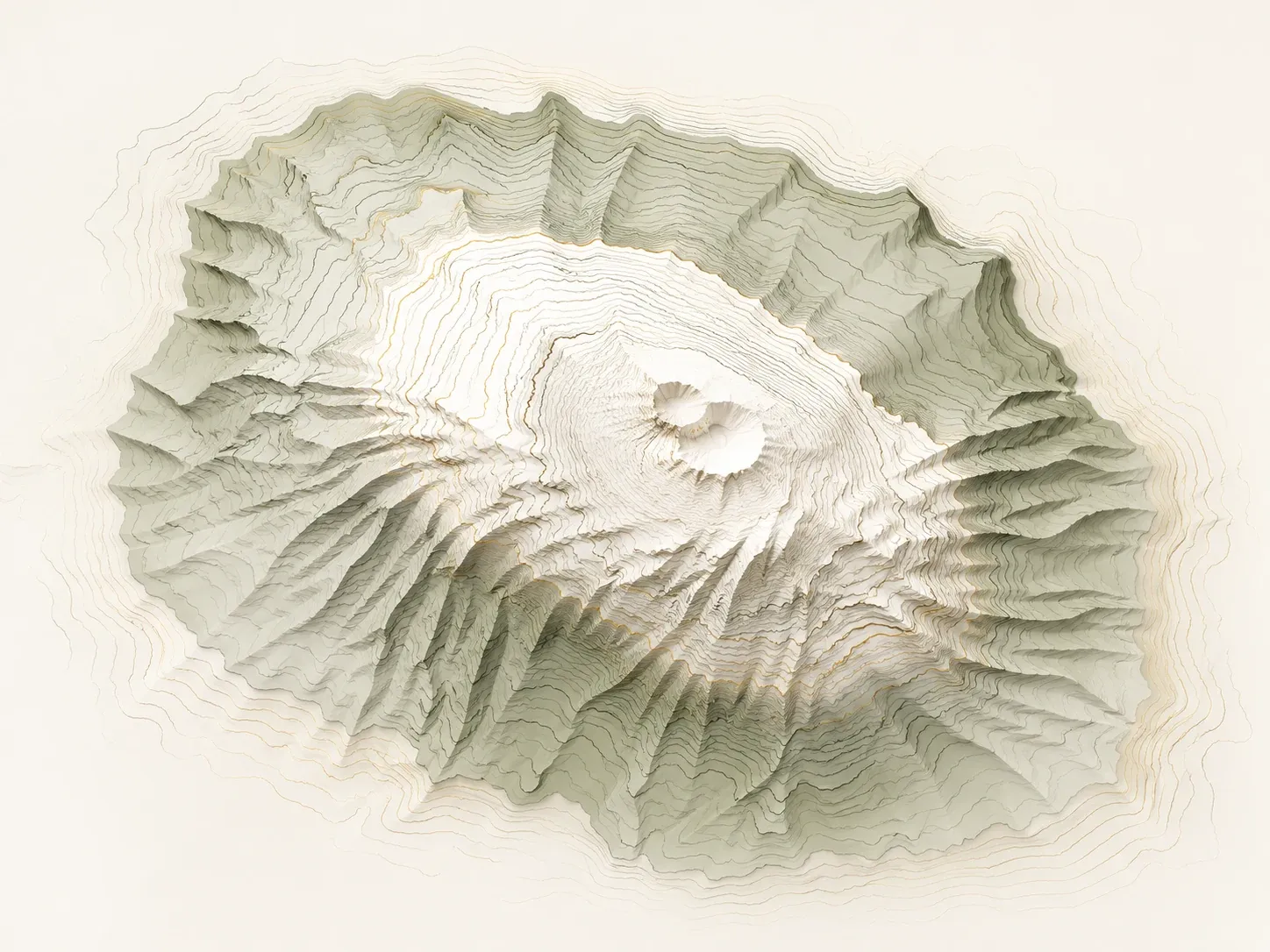
Why the line bends this way
The route climbs from the southwest, crosses the Shira area, uses Lava Tower for acclimatization, then joins the southern circuit through Barranco, Karanga and Barafu before descending via Mweka.
A real camp-to-camp breakdown of one of the best-balanced routes — every itinerary is adjusted to your chosen route and pace.
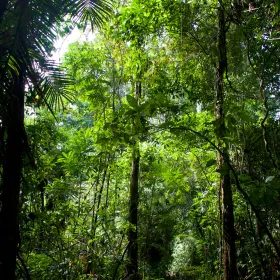
Londorossi Gate (2,250m) → Mti Mkubwa (Big Tree Camp) (2,750m)
A gentle first day through dense rainforest, with a good chance to spot colobus monkeys before the trees thin out on the days ahead.
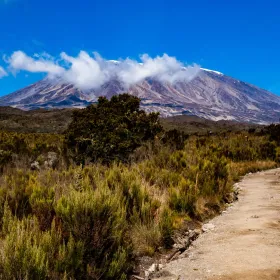
Mti Mkubwa (2,750m) → Shira 1 Camp (3,500m)
The forest gives way to open moorland as you climb onto the Shira Plateau, with your first real views of Kibo's summit.
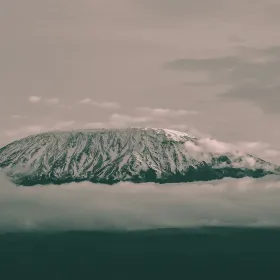
Shira 1 Camp (3,500m) → Shira 2 Camp (3,850m)
A short, gentle day walking across the Shira Plateau, deliberately easy, giving your body time to adjust before the altitude increases more seriously.
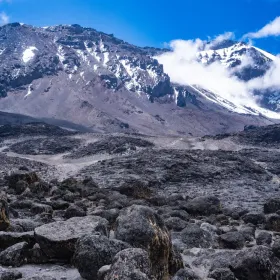
Shira 2 Camp (3,850m) → Barranco Camp (3,960m)
The classic acclimatization day — you climb up past the Lava Tower (4,600m) for lunch, then descend to sleep at a lower camp, letting your body adapt to the thinner air.
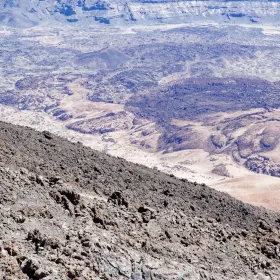
Barranco Camp (3,960m) → Karanga Camp (4,035m)
A scramble up the Barranco Wall first thing, steep but non-technical and one of the most memorable stretches on the mountain, before a short walk to camp.
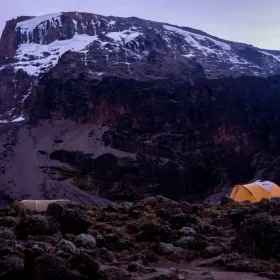
Karanga Camp (4,035m) → Barafu Camp (4,673m)
A shorter day to Barafu, the last camp before the summit push, with rest and an early dinner before a midnight start.
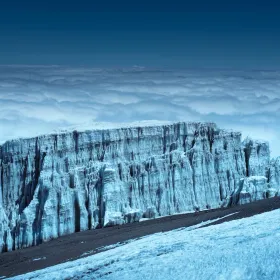
Barafu Camp (4,673m) → Mweka Camp (3,100m)
A midnight departure for Uhuru Peak (5,895m), timed to reach the summit around sunrise, followed by a long descent to Mweka Camp on what is the longest and hardest day of the climb.
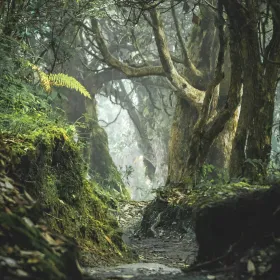
Mweka Camp (3,100m) → Mweka Gate (1,640m)
A final descent back through the rainforest to Mweka Gate, where you'll collect your summit certificate.
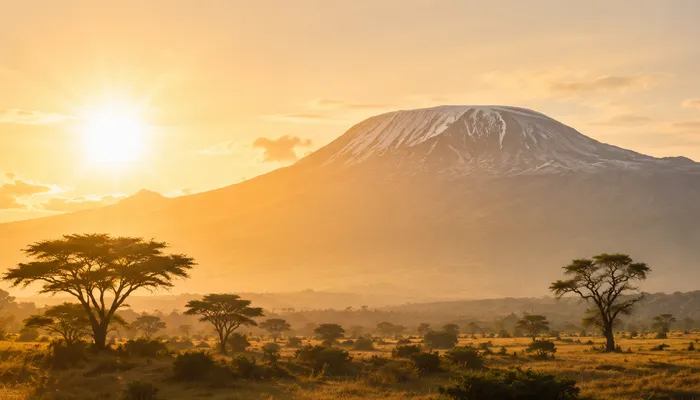
Warm, dry weather with good visibility, plus calving season on safari if you are combining the two.
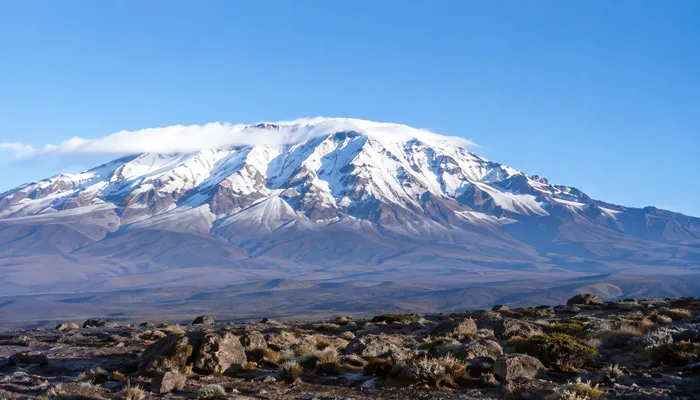
Cold but clear, the most popular season, with the most predictable weather of the year.
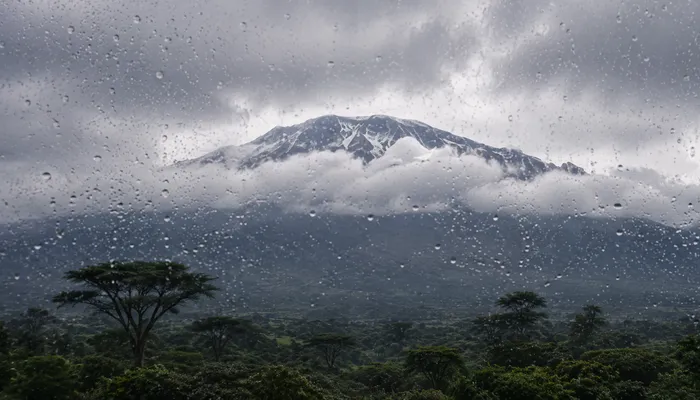
Heavier rain lower down, though mornings often stay clear. Rongai, Marangu and the Northern Circuit see the least rain.
Altitude, not fitness, is what actually ends most Kilimanjaro climbs early. Acute Mountain Sickness (AMS) happens when you climb faster than your body can adjust to thinner air — it can affect anyone, regardless of age or fitness level.
"Climb high, sleep low" is the core acclimatization principle behind every well-designed itinerary: hiking to a higher altitude during the day, then sleeping lower down, trains your body to cope before you need it to.
Experienced guideswho monitor every climber for AMS symptoms throughout the climb.
A first-aid kit and supplemental oxygencarried on every climb.
Routes and pacingchosen for real acclimatization, not just the shortest itinerary.
The judgment — and authority —to turn a climber back if it's not safe to continue.
Your safety comes first. Reaching the summit is optional — coming home is not.
Kilimanjaro's summit sits above 5,800m, which most standard travel insurance policies don't cover — check the fine print before you buy. At minimum, look for a policy that covers:
We don't sell insurance or take commission on it — a few well-known providers that specialize in high-altitude trekking cover include Global Rescue, World Nomads and Ripcord Rescue Travel Insurance. Compare policies and confirm altitude coverage directly with the provider before booking.
A professional driver-guide and porter crew for the whole climb.
Tents, sleeping arrangements and all meals on the mountain.
National park and camping fees for every day on the mountain.
A first-aid kit and supplemental oxygen carried on every climb.
Transfers between your hotel and the mountain gate, both ways.
Kilimanjaro crosses five climate zones in under a week — layers matter more than any single piece of gear.
Duffel bag: Porters carry your main duffel bag — keep it to around 15kg, in a soft-sided waterproof bag (no hard suitcases).
Daypack: You carry your own daypack — aim for 5–7kg: water, snacks, camera, extra layers.
Test everything before you fly — boots, daypack and rain gear should already be broken in, not brand new out of the box. Gear rental is available in Moshi if you're missing anything.
Porters carry the camp that makes your climb possible — tents, food, cooking gear — often on tight schedules and in the same weather you're climbing through. We pay fair wages, keep loads within safe limits, and make sure every porter on our crews has proper cold-weather gear, not just what they can afford themselves.
It's a basic standard, not a marketing claim — ask us about it directly when you book, and we'll tell you exactly how our crews are treated and paid.
We pay fair, transparent wages to every member of our porter teams.
We strictly follow safe load limits to protect our porters' health.
Every porter is provided proper cold-weather gear, not just what they can afford.
On October 6, 1889, German geologist Hans Meyer and Austrian mountaineer Ludwig Purtscheller reached Uhuru Peak, guided by Yohani Kinyala Lauwo, a local Tanzanian guide whose role in that first successful climb is often left out of the story.
Sheila MacDonald became the first woman recorded to summit Kilimanjaro, in 1927.
Cultivation zone (up to 1,800m) → Montane rainforest (1,800–2,800m) → Heath & moorland (2,800–4,000m) → Alpine desert (4,000–5,000m) → Arctic summit zone (5,000m+) — you cross all five in under a week.
Kilimanjaro's glaciers have retreated roughly 80% since the early 1900s — climbing scientists expect much of what remains could disappear within decades.
Kilimanjaro is a dormant stratovolcano with three volcanic cones — Kibo (the summit), Mawenzi and Shira. Kibo is considered dormant, not extinct.
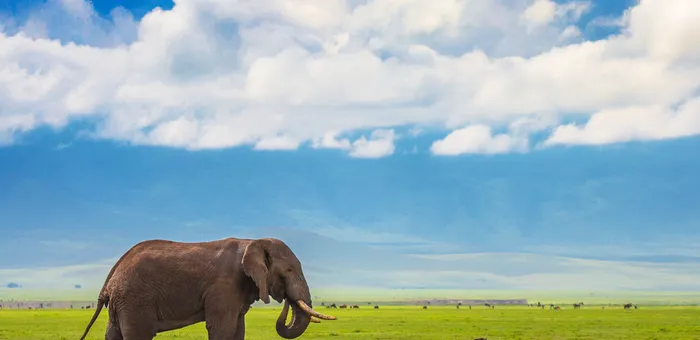
Descend the mountain and head straight into the Serengeti and Ngorongoro Crater, the classic Kilimanjaro-plus-safari pairing.
Explore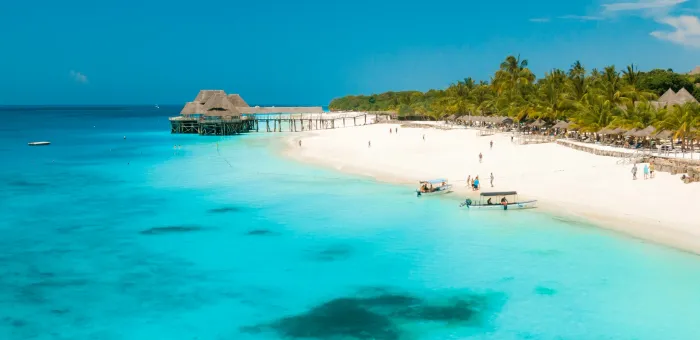
Recover on the Indian Ocean after summit night — sore legs, warm water and nowhere to be.
ExploreMost climbers fly into Kilimanjaro International Airport (JRO), about a 50-minute drive from Moshi (the usual starting town for a climb) or Arusha. If a direct flight isn't available, connecting through Dar es Salaam or overland via Nairobi are both common alternatives.
We don't run a public departure calendar yet — but if you're open to climbing alongside other travelers, tell us your route and rough dates and we'll let you know who else is climbing around then, and confirm group pricing directly.
This is a matching request, not a confirmed booking — we'll follow up personally once we know who else is interested.
We run our own Kilimanjaro crews — not a subcontracted team we've never met.
We'll steer you toward the route and duration that actually gives you the best shot at the summit, not just the cheapest option.
Experienced guides, daily health monitoring, and the authority to turn a climb around if it isn't safe to continue.
Fair wages, safe loads and proper gear for every porter on the mountain with you.
We plan the climb and a safari or Zanzibar extension as one seamless trip.
It's a long, high-altitude walk, not a technical climb — no ropes or climbing skills needed. The real challenge is altitude and endurance, not terrain difficulty.
Lemosho or the 7-day Machame option are usually the best starting points — both give solid acclimatization time without an extreme time commitment.
5 days is the shortest standard option (Marangu); 7–9 days gives meaningfully better acclimatization and higher summit success. We recommend at least 7 days for most climbers.
It's the main reason climbs don't reach the summit — it can affect fit and unfit climbers alike. A longer route, a sensible pace, and a guide trained to recognize the symptoms early are what actually manage the risk.
Costs vary by route length and group size — tell us your preferred route and dates and we'll give you a clear, itemized quote. Park fees make up a significant share of the total on any route.
Your guide and porter team, all camping gear and meals on the mountain, park fees and permits, a first-aid kit and oxygen, and transport to and from the gate.
Yes — aim to comfortably run 5km or hike 10km before you go. Cardio training and hiking with a loaded daypack in the weeks before your climb make a real difference.
Fairly paid, with safe load limits and proper cold-weather gear — ask us directly when you book and we'll walk you through exactly how our crews are supported.
Yes — Kilimanjaro and a Serengeti/Ngorongoro safari is a classic pairing, and we plan both halves as one trip.
See safari stylesGrateful experience
As a solo female traveler, I felt super safe and well taken care of the entire time.
Read morePrivate Safari 6 days
I can only highly recommend the young company Tanzalux for organizing a private safari.
Read moreAn unforgettable vegetarian journey with Tanzalux Safaris
I highly recommend Tanzalux for anyone wanting a special, personalized safari.
Read moreOur 3-day camping safari with Tanzalux was simply fantastic! Everything was perfectly organized.
Read moreBack in April, I joined a day trip to Tarangire National Park with Tanzalux Safaris, and it was truly one of the best experiences I have ever had…
Read moreI've had an amazing experience with Tanzalux Safaris, would 1000% recommend! Thank you for making my trip so special🫶
Read moreI recently visited Meru Waterfalls in Arusha and got to do some of the activities there, honestly it was such a great experience and I really enjoyed it.
Read moreOur guide Dullah Mr Rastaman had the best vibe. I would like to recommend other people not to miss it, Tarangire is the best national park.
Read moreOur tour guide Nasri was very friendly and welcoming from the first day we met him. He knows Tarangire very well and explained many things during the safari.
Read moreAs a grandmother in the group, I would like to share my happiness with Tanzalux Safaris. Me, my daughters, and my grandson went on a short trip to Tarangire National Park…
Read moreTell us your preferred route and dates and we'll build the itinerary — no obligation.