5.0 Excellent

 Days 1–2 and 8
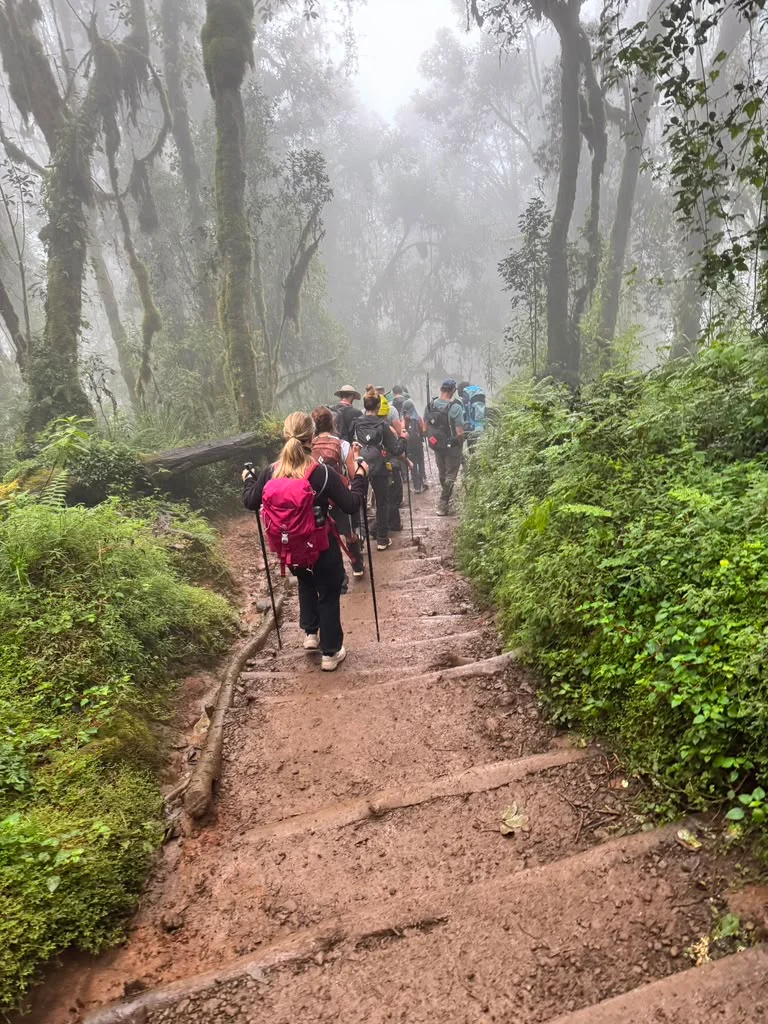
Montane rainforest
Up to ~2,800 m
Tall, mossy trees, hanging lichen and birdsong. Damp, cool and muddy after rain, and the only part of the route that is.
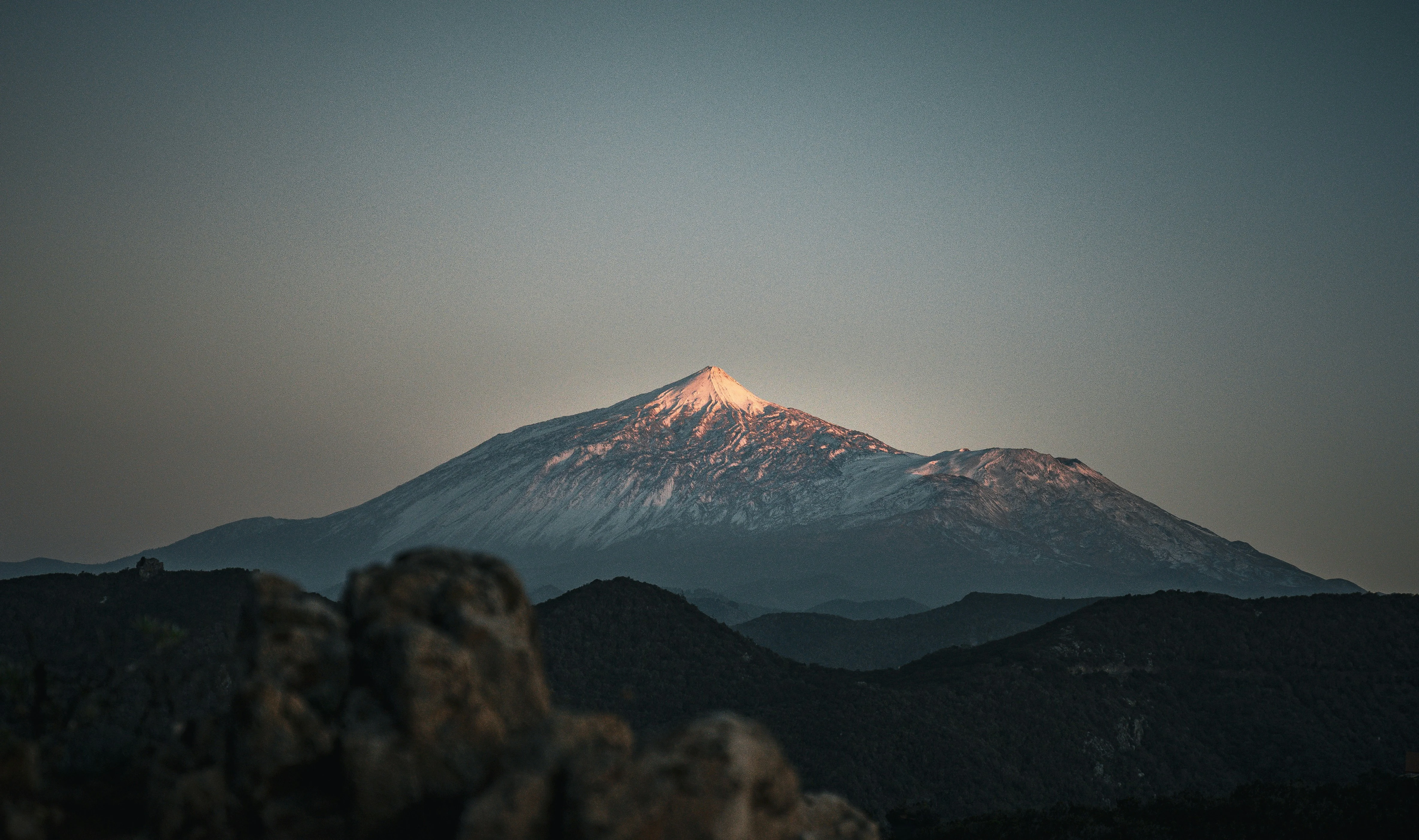
Kilimanjaro's longest and quietest climb: an eight-day arc around the remote northern slopes with the most gradual acclimatization on the mountain.
The Northern Circuit is Kilimanjaro's newest and longest route, and the one that takes in the most of the mountain. It starts on the quiet western side at Londorossi Gate and shares its first two days with Lemosho, through the rainforest and up onto the Shira Plateau. Then, instead of turning south toward the busy Barranco and Barafu camps, it swings east around the northern slopes of Kibo before turning toward School Hut for the summit push, and descends by the Mweka route. That sweeping arc is the whole point. Long, gentle days across open, rarely visited ground give your body more time at altitude than any shorter route can, and the camps along the northern side, Moir, Buffalo and Third Cave, see only a fraction of the traffic on the southern trails. You trade a few extra days for the quietest climb on the mountain, wide views over the plains toward the Kenya–Tanzania border, and one of the most forgiving acclimatization profiles of any standard route.
It is not the quickest way up. It is the one that rewards time: quiet trails, remote camps and a body that has had every chance to adjust.
Altitude, not fitness, ends most Kilimanjaro climbs early. Here you reach 4,200 m at Moir Hut on day 3, then spend the next two nights at 4,020 m and 3,930 m, a built-in "climb high, sleep low" before School Hut.
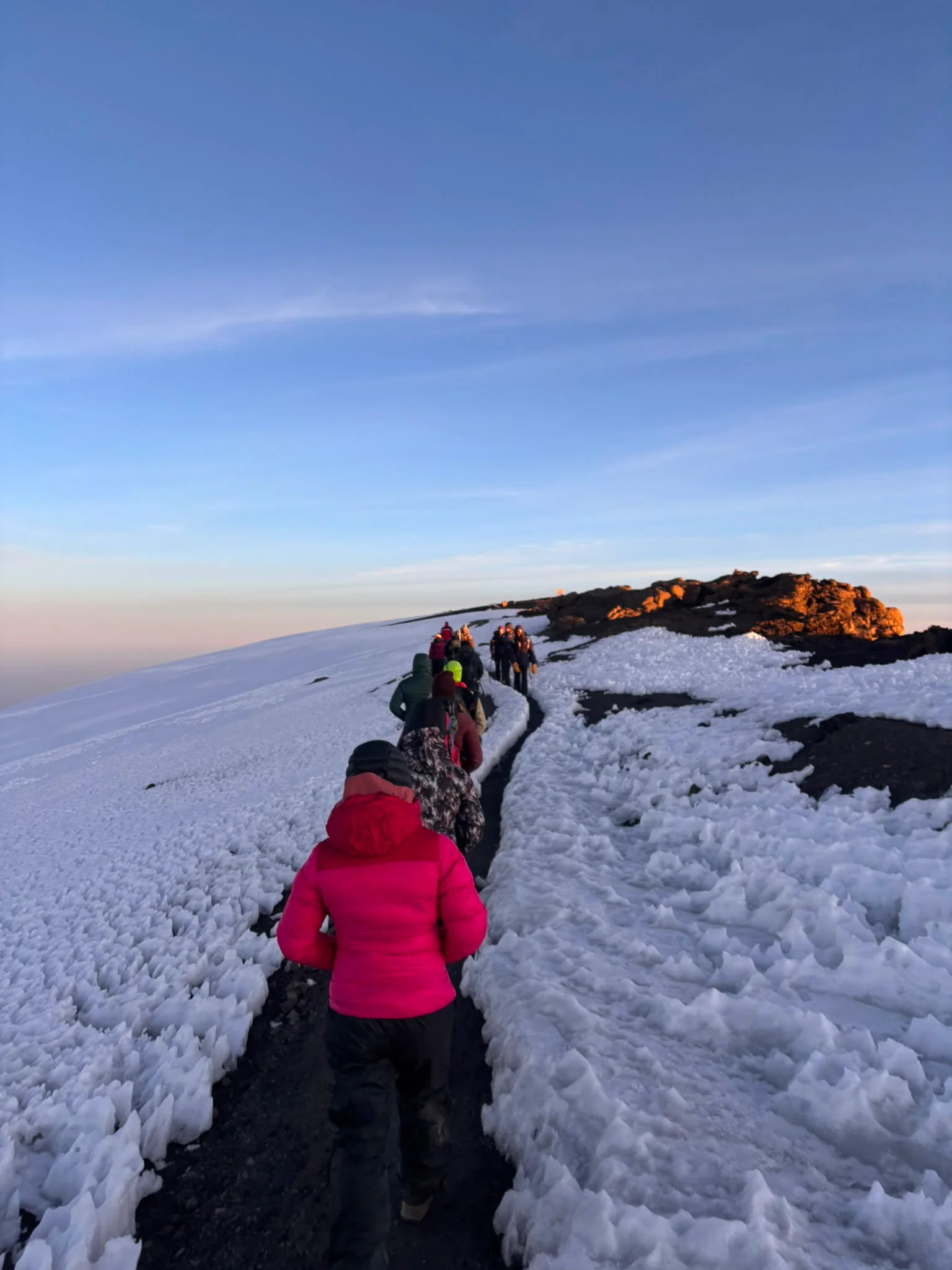
Once the route leaves the shared Lemosho start behind, it turns away from the busy southern camps. Across the northern slopes you can go long stretches without seeing another group.
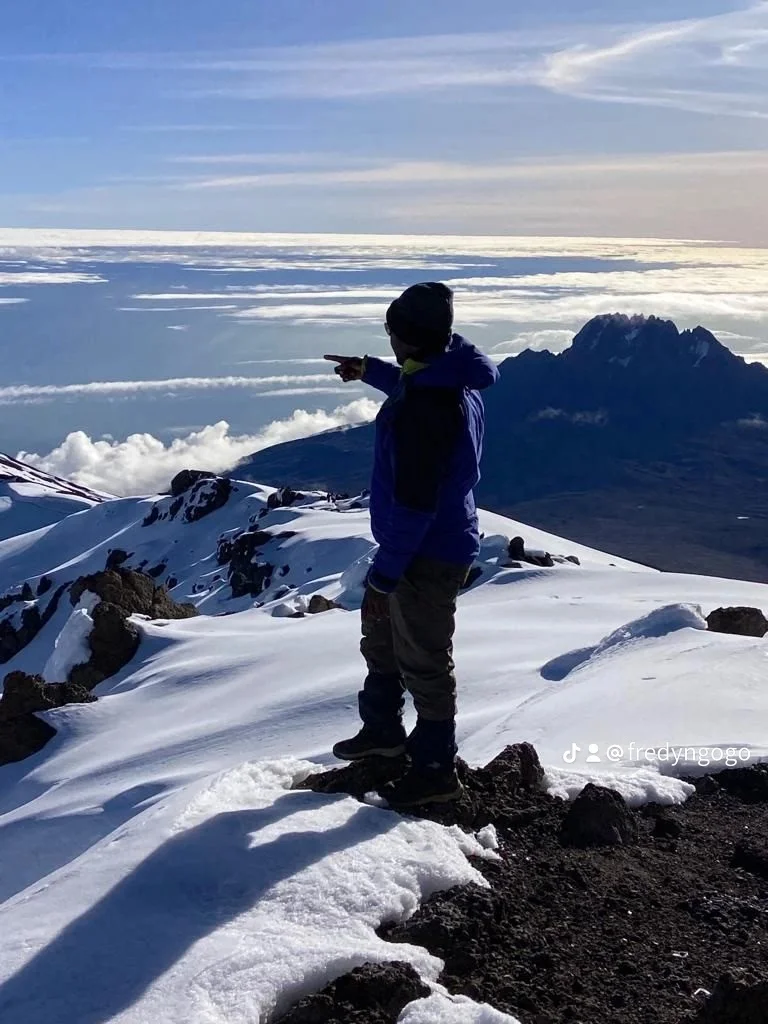
West through the rainforest and across Shira, north over the plains toward Kenya, then east to School Hut: you see the mountain from more angles than any other standard route offers.
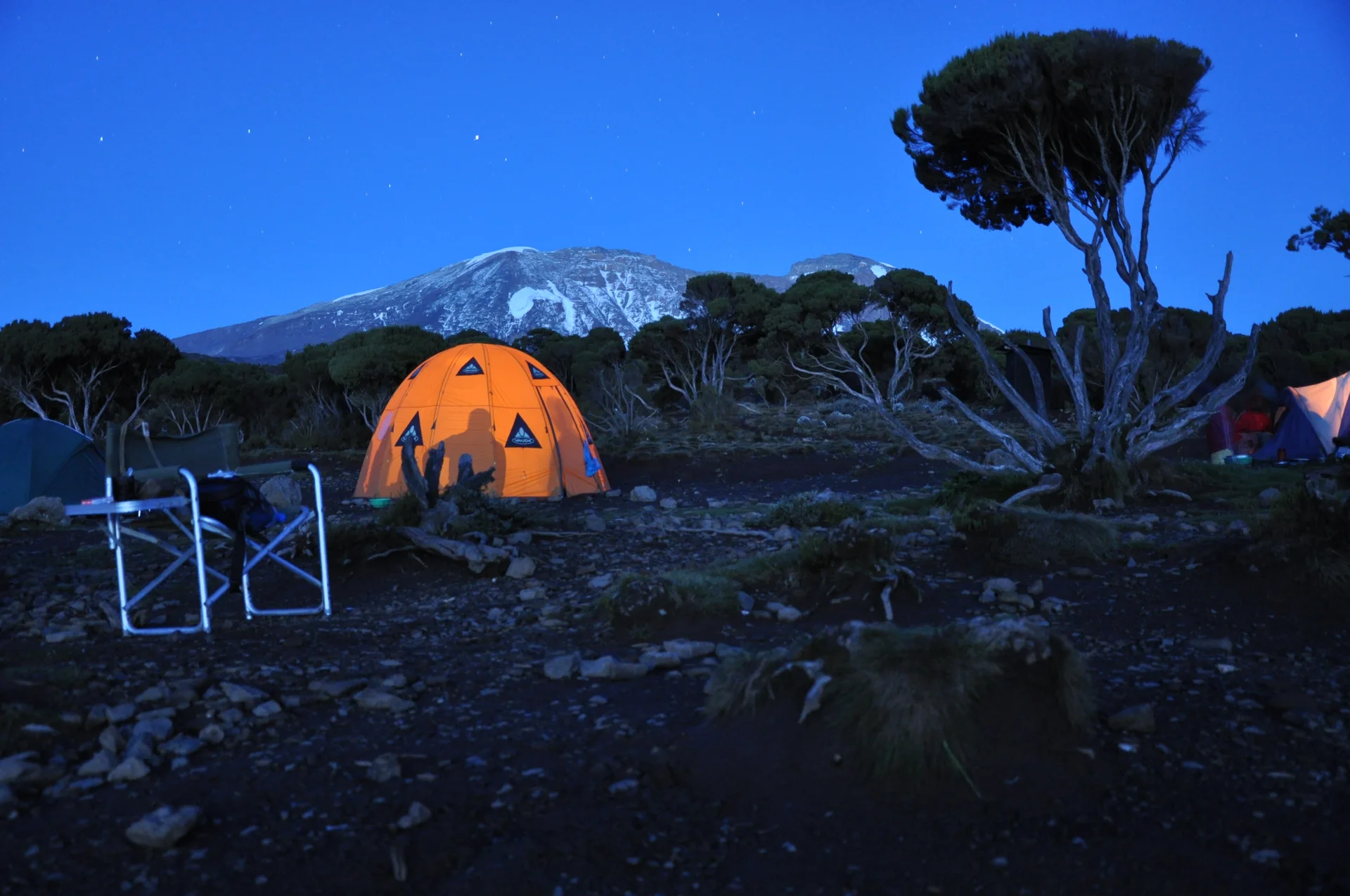
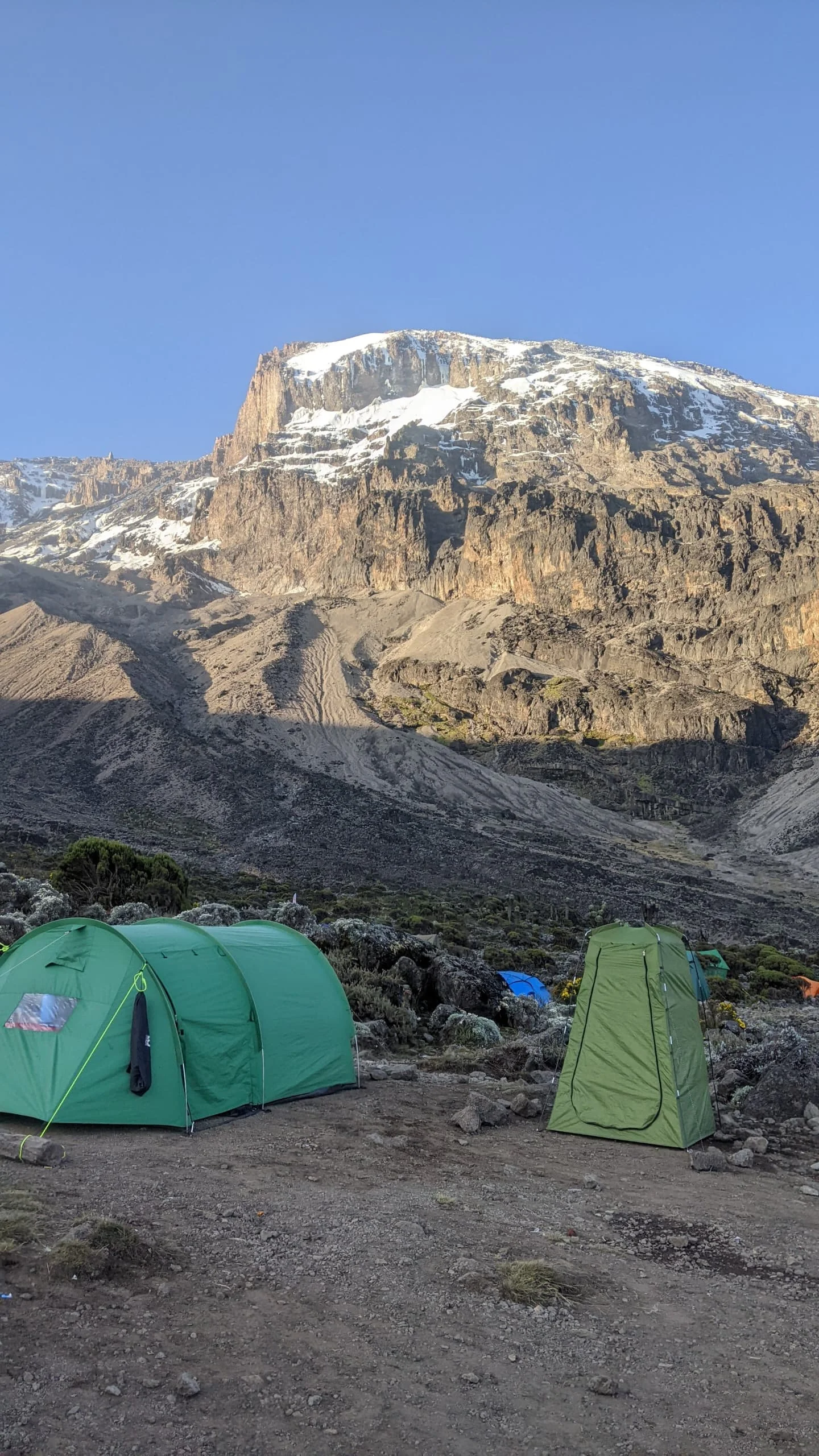
Moir Hut sits beneath the Lent Hills, and Buffalo and Third Cave are tucked into the high northern moorland. They are quiet, uncrowded camps with big skies and very little else around.
The northern slopes get the least rain on Kilimanjaro, which makes this one of the better-placed routes even in the wetter months. Only the rainforest sections at either end stay reliably damp.
Eight days of steady walking, a full crew and a gradual build to summit night. It suits climbers who want the journey and not only the summit photo.
The Northern Circuit is climbed over 8 or 9 days. Every extra day is acclimatization time, not filler.
The itinerary we run: rainforest, the Shira Plateau, then five days of steady traverse across the northern slopes before School Hut and the summit. Two of those nights are spent lower than the one before, which is real acclimatization, not padding.
Best for: Most fit trekkers who want a quiet, well-acclimatized climb
Adds an extra day on the Shira side before the northern traverse, usually with a climb-high, sleep-low walk toward Lava Tower. It gives the largest acclimatization margin of any Kilimanjaro itinerary. It is not on our standard departures list, so ask us and we will build it.
Best for: First-time high-altitude trekkers, or anyone putting summit odds ahead of time and budget
The real plan we run, with the camps, distances and walking times your guide will work to. Timings shift with weather and the pace of your group.
Londorossi Gate Mti Mkubwa Camp
Park registration at the gate, then an easy first walk under tall forest canopy at a deliberately slow pace.
Mti Mkubwa Camp Shira 1 Camp
The forest thins into heather and open moorland, with the first views across the plateau toward Kibo.
Shira 1 Camp Moir Hut
The route leaves the Lemosho line and heads east to the quiet Moir Valley beneath the Lent Hills. Giant senecio and wildflowers line the way.
Moir Hut Buffalo Camp
A steady climb around the Lent Hills, then open, undulating ground with wide views over the plains toward the Kenya–Tanzania border. You sleep lower than you started.
Buffalo Camp Third Cave Camp
Gentle rises and falls around the northern flank of Kibo, one of the quietest stretches of the whole mountain.
Third Cave Camp School Hut
A short day to save your legs. Summit briefing, final kit checks, an early dinner and as much rest as you can get.
School Hut Mweka Camp
You start in the dark, reach Gilman’s Point on the crater rim around dawn, then continue to Uhuru Peak at 5,895 m before the long descent to Mweka Camp.
Mweka Camp Mweka Gate
A muddy, mossy descent to the gate, where you collect your summit certificate and meet your vehicle back to Moshi or Arusha.
See how the circuit leaves the shared Lemosho start and loops around the north of Kibo before the summit.
The Longest Route
The newest and longest standard route, circling most of the mountain for the most gradual acclimatization profile of any route and some of the quietest, most panoramic trekking on Kilimanjaro.
Camp by camp
The broadest traverse
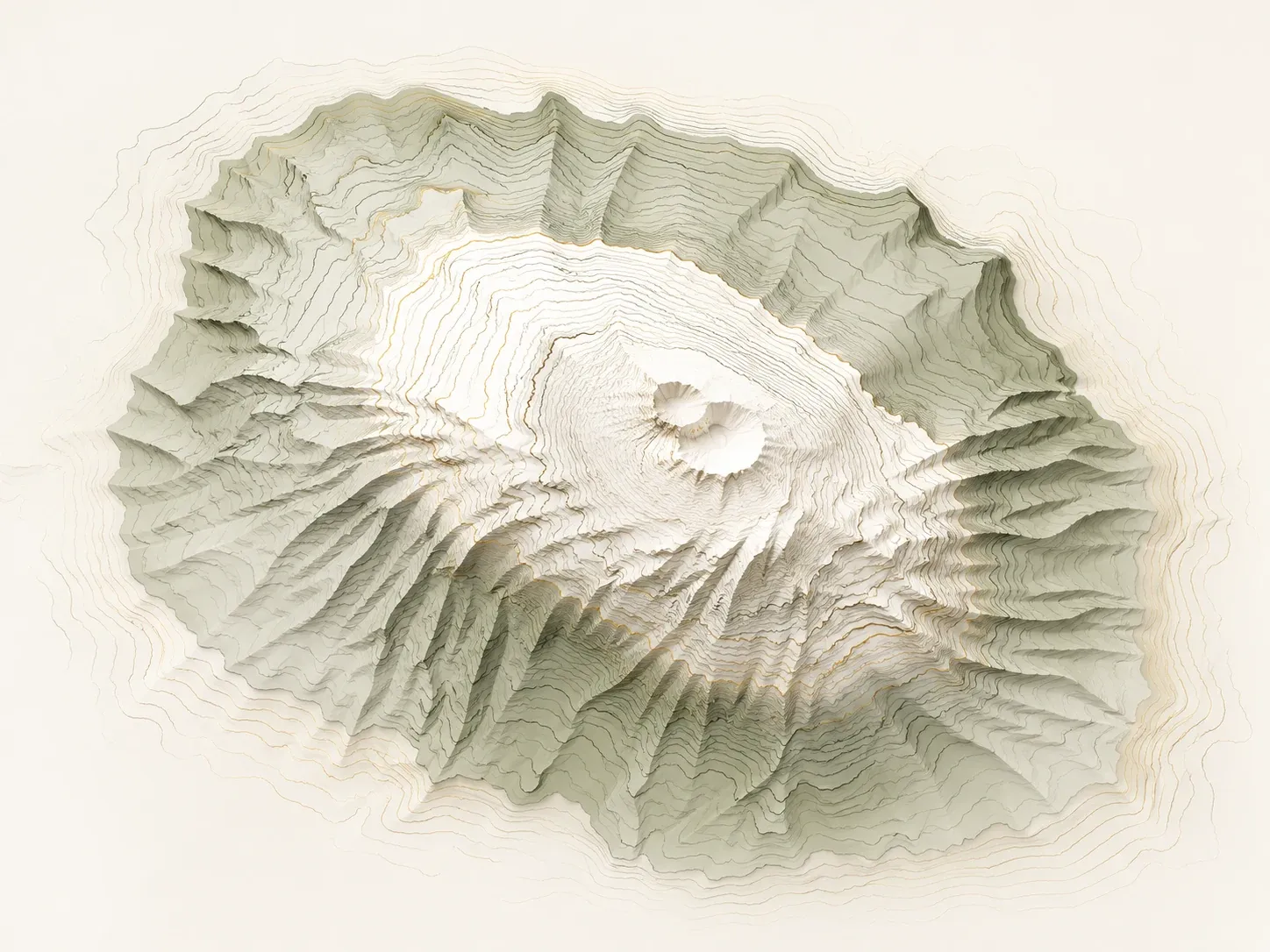
Northern Circuit shares Lemosho's western beginning, then leaves it on the Shira Plateau and arcs through Moir, Buffalo and 3rd Cave before turning toward School Hut and the summit. The descent follows the Mweka route, with a night at Mweka Camp.
Climbing Kilimanjaro is like walking from the equator to the poles. The Northern Circuit spends more time in the high zones than any shorter route.
Days 1–2 and 8Up to ~2,800 m
Tall, mossy trees, hanging lichen and birdsong. Damp, cool and muddy after rain, and the only part of the route that is.
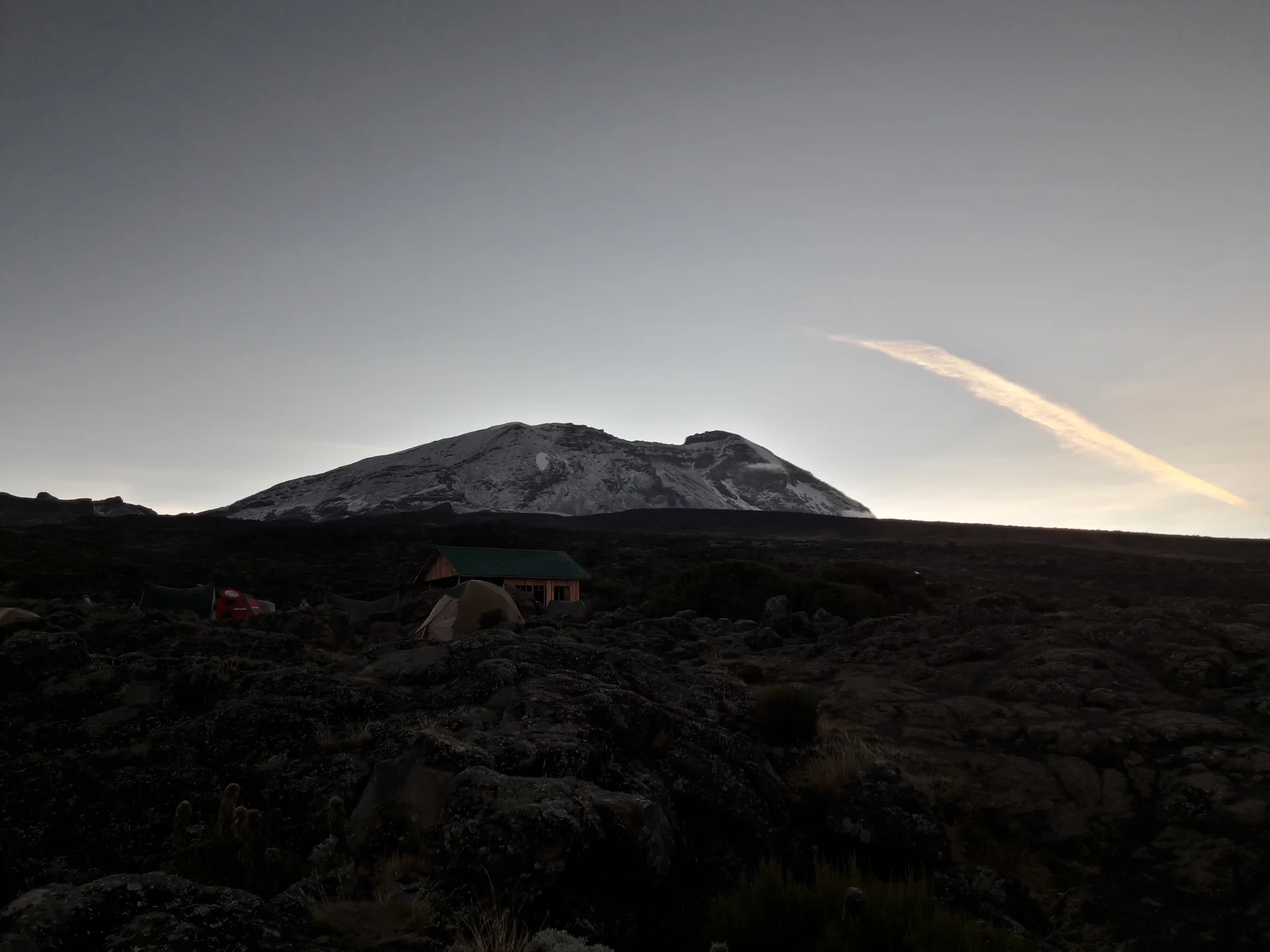 Days 2–3
~2,800 – 4,000 m
Giant heather, grasses and wildflowers on the open Shira Plateau, with giant senecio plants and the first clear views of Kibo.
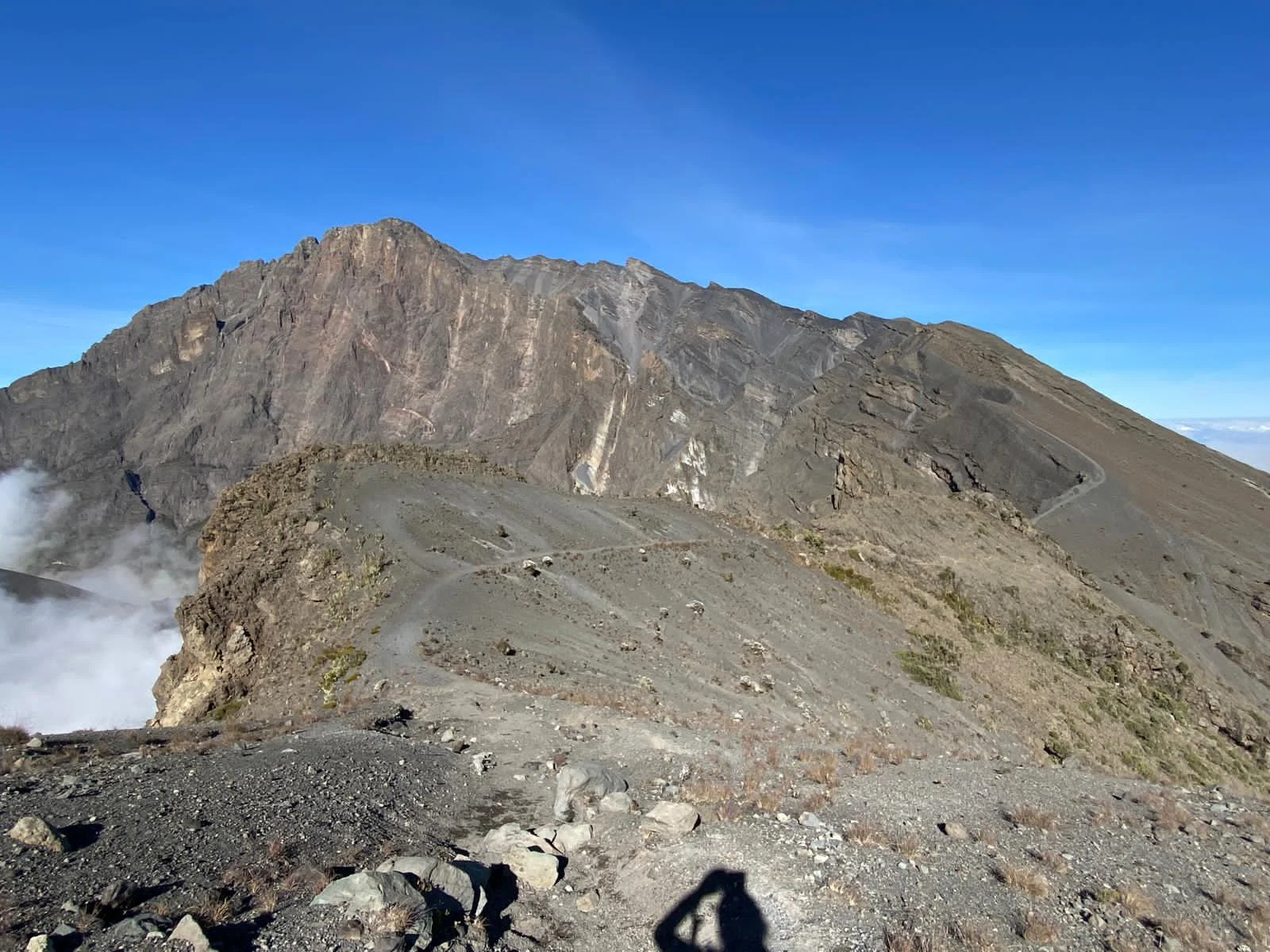 Days 3–6
~4,000 – 5,000 m
Bare volcanic rock and dust under a huge sky, with big swings between hot sun and freezing nights. Most of the northern traverse is here.
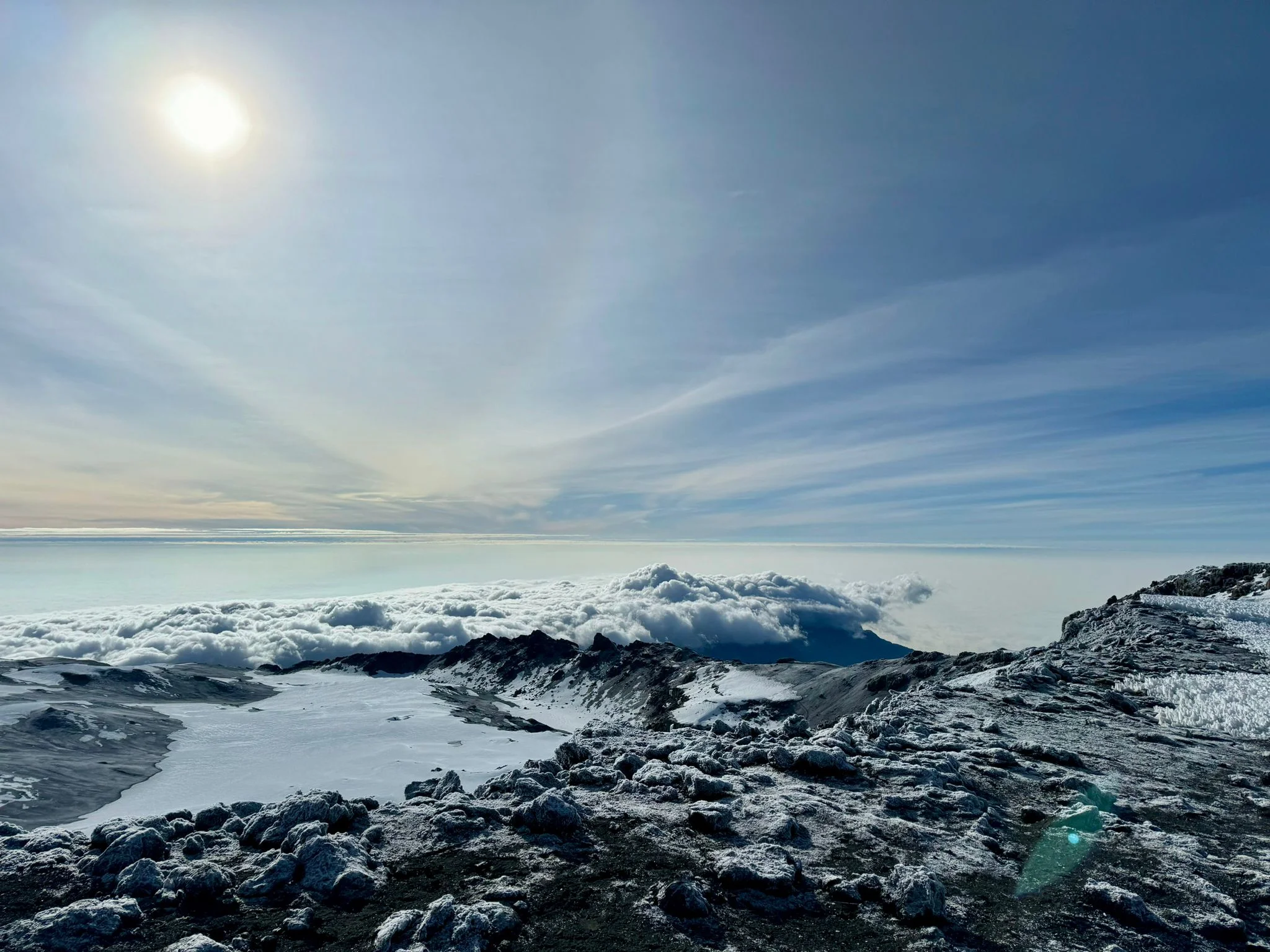 Day 7
Above ~5,000 m
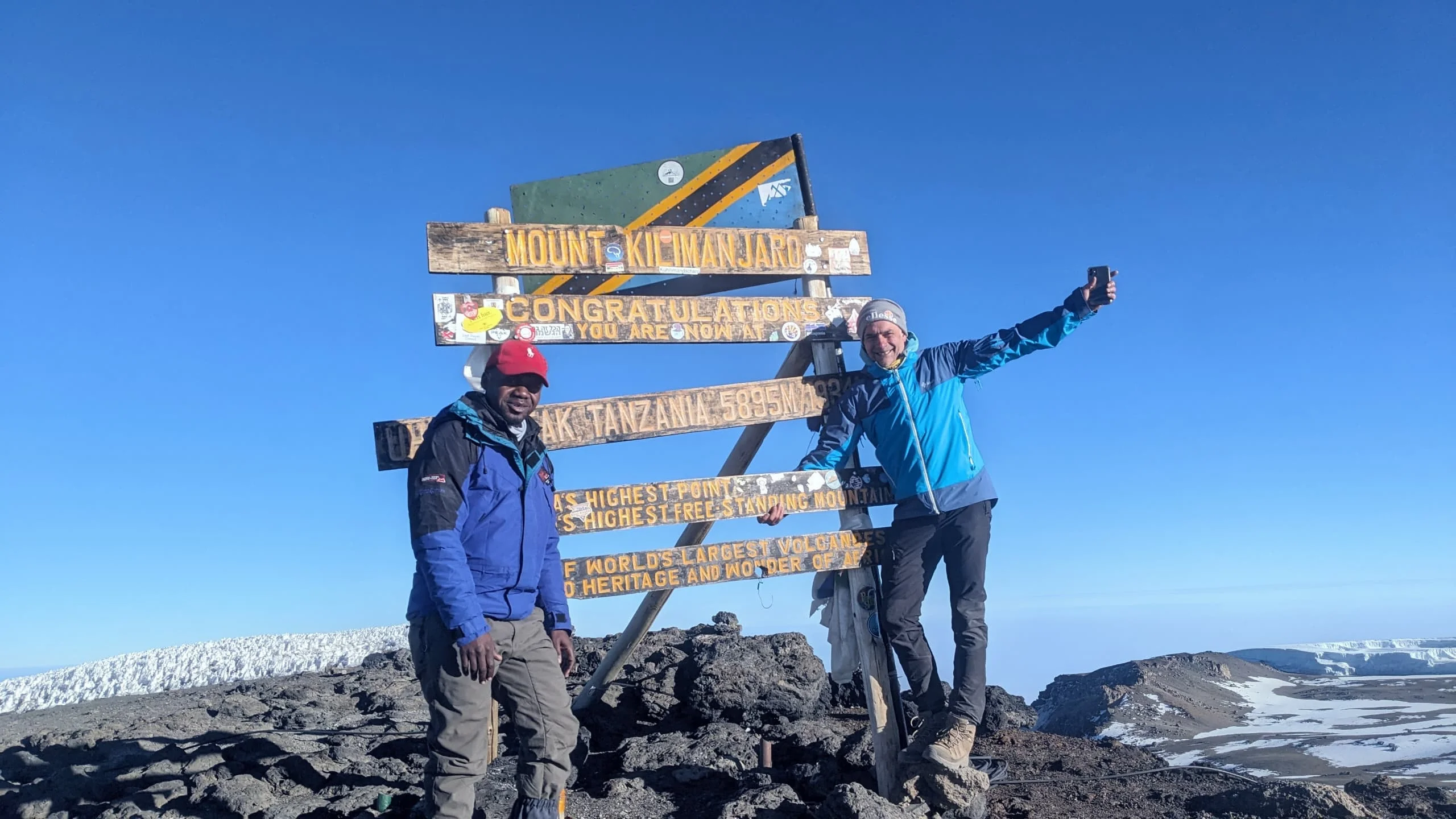
Scree, snow and ice on the crater rim, where it can fall to −10°C or lower before sunrise. Gilman’s Point, then the ridge to Uhuru Peak.
The routes that come up most often when climbers are choosing, side by side.
The northern slopes sit in a partial rain shadow, which gives this route more flexibility than most.
Clear skies and warmer days, one of the two main dry seasons. A good time to combine the climb with a safari.
The most predictable weather of the year and the busiest season on the mountain, though the northern side stays the quietest.
The rain comes mostly to the southern slopes. The northern side sees the least of it, so the Northern Circuit is a smart choice if these are your dates. Expect a muddy rainforest at either end.
A longer route asks for more stamina and more care. Here is how we look after you, and what we ask of you.
Your guide checks blood oxygen saturation and heart rate with a pulse oximeter every morning and evening, and scores symptoms on the Lake Louise scale.
For one climber or a couple, that means a lead guide, one or two assistant guides, a mountain chef and roughly six to eight porters.
Cardio, stair climbing with a weighted pack and weekend hikes. You will walk five to seven hours a day for several days in a row, and up to 14 hours on summit day.
Summit night can fall to −10°C to −25°C with wind. Your duffel for the porters should weigh no more than 15 kg (33 lb).
Your safety comes first. Reaching the summit is optional, and coming home is not. Our guides have the authority to turn a climber back if it is not safe to continue. More in our full Kilimanjaro guide.
Every bookable Northern Circuit trip we run, from $2,100 per person — pick one to see the full day-by-day plan, pricing and dates.
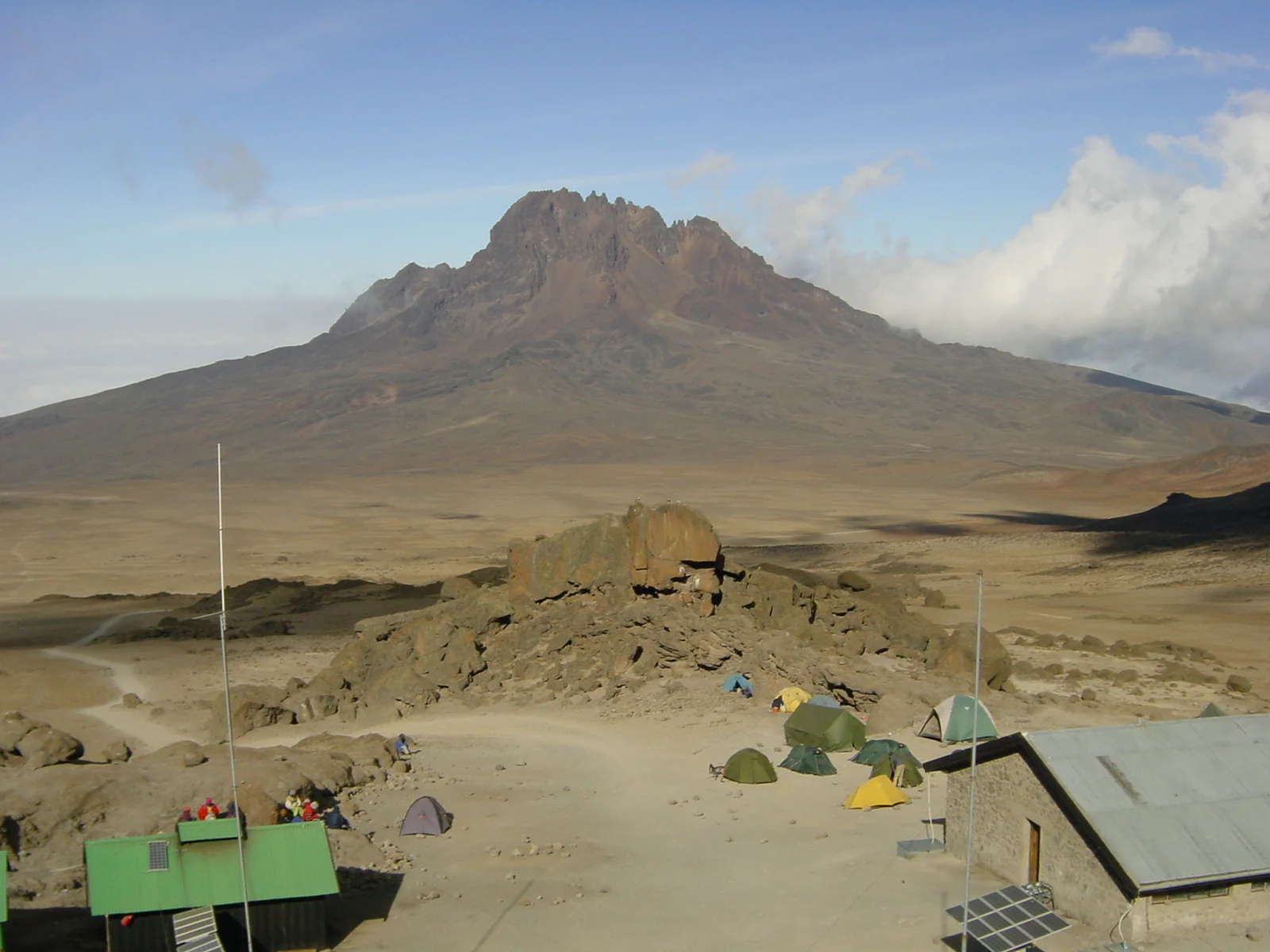
No, and the names cause real confusion. Rongai starts at Nale Moru Gate on the northern, Kenya-facing side, takes 6–7 days and descends via Marangu. The Northern Circuit starts on the western side at Londorossi, shares the first days with Lemosho, then circles the whole northern slope over 8–9 days and descends via Mweka.
Compare every Kilimanjaro routeThey share the first two days. Lemosho then turns south toward Lava Tower and Barranco and joins the busy southern circuit, while the Northern Circuit heads east around the quiet northern slopes. You pay for the extra days and distance, but you get a quieter mountain and a more gradual climb.
Read about the Lemosho RouteOur standard itinerary is 8 days on the mountain and covers roughly 74 km (46 miles), from Londorossi Gate to Mweka Gate. Some operators run a 9-day version for extra acclimatization; ask us if you would like one built.
Operators commonly report 90% or higher, among the best on the mountain, and the reason is the extra time to acclimatize. No park authority publishes official per-route figures though, and every operator measures success differently, so treat any single percentage with caution. What is not in doubt is that longer, gentler itineraries give more people the chance to reach the top.
It is longer, but not harder in the technical sense. There is no scrambling on the route, and the long, gentle days make it easier on the body than shorter routes. The main challenge is endurance, since you walk five to seven hours a day for several days. Summit night is the same demanding push as on any other route.
It starts at Londorossi Gate on the western side, about 2–3 hours’ drive from Moshi, and finishes at Mweka Gate on the south side, from where your driver takes you back to Moshi or Arusha.
Temperatures on the crater rim before sunrise regularly drop to between −10°C and −25°C, with wind making it feel colder. A down jacket, windproof shell, balaclava, thermal mittens and thermal base layers are essential.
Our Northern Circuit trip is open to climbers aged 12 and over who are fit and well prepared. No technical climbing experience is needed, but plan on four to six months of cardio and hiking training beforehand.
The price depends on group size and season. Solo climbers pay the most per person and larger groups pay less. As the longest standard route it costs more than shorter climbs, because park fees and crew days are charged per day. See the available trips on this page for current prices, or ask us for a quote.
Yes, and it is a very common pairing: summit first, then recover with a few days of wildlife in the northern parks or on the Zanzibar coast. Tell us your dates and we will plan it as one trip.
See combination tripsShares the Northern Circuit's western start, then turns south for a shorter, more scenic climb with excellent acclimatization.
ExploreThe "Whiskey Route", Kilimanjaro's most popular path, steeper and more direct, with more company on the trail.
ExploreEvery route compared, fitness guidance, altitude safety, packing lists and more, all in one place.
Explore
Grateful experience
As a solo female traveler, I felt super safe and well taken care of the entire time.
Read morePrivate Safari 6 days
I can only highly recommend the young company Tanzalux for organizing a private safari.
Read moreAn unforgettable vegetarian journey with Tanzalux Safaris
I highly recommend Tanzalux for anyone wanting a special, personalized safari.
Read moreOur 3-day camping safari with Tanzalux was simply fantastic! Everything was perfectly organized.
Read moreBack in April, I joined a day trip to Tarangire National Park with Tanzalux Safaris, and it was truly one of the best experiences I have ever had…
Read moreI've had an amazing experience with Tanzalux Safaris, would 1000% recommend! Thank you for making my trip so special🫶
Read moreI recently visited Meru Waterfalls in Arusha and got to do some of the activities there, honestly it was such a great experience and I really enjoyed it.
Read moreOur guide Dullah Mr Rastaman had the best vibe. I would like to recommend other people not to miss it, Tarangire is the best national park.
Read moreOur tour guide Nasri was very friendly and welcoming from the first day we met him. He knows Tarangire very well and explained many things during the safari.
Read moreAs a grandmother in the group, I would like to share my happiness with Tanzalux Safaris. Me, my daughters, and my grandson went on a short trip to Tarangire National Park…
Read moreTell us your preferred itinerary length and dates and we'll build your climb — no obligation.