5.0 Excellent
Best Time for a Tanzania Luxury Safari: Your Complete Guide
The best time for a Tanzania luxury safari depends on your main goal. June to October is a strong starting point for dry-season game viewing. January to March suits a southern Serengeti trip focused on calving.
Yet a month alone cannot build a great safari. Your camp location, guide, length of stay, and pace matter just as much. This guide helps you choose dates that fit the wildlife, comfort, and atmosphere you want.
What is the best time for a Tanzania luxury safari?
Choose your priority first, then match the season and route to it. A river-crossing trip, a quiet honeymoon, and a family holiday may need very different plans.
For a first safari with a dry-season focus, start by comparing June to October.
For wildebeest calving, look at the southern Serengeti ecosystem in the early months of the year.
For Mara River crossings, consider the northern Serengeti around July to October, with no guarantee.
For green scenery and possible rate savings, compare quieter dates and check camp access.
For fixed school holidays, build the route around the dates you actually have.
These are planning windows, not wildlife appointments. Rain changes grazing, water supply, and herd movements. A good itinerary should still be rewarding if a much-hoped-for sighting does not happen.
How do Tanzania's safari seasons differ?
Dry and wet periods change the feel of a safari, but conditions vary by region. Do not use one weather label for the whole country or every park.
Dry-season travel
Dry months often bring firmer roads and easier viewing where animals gather near water. They can also bring dust, busy sightings, and higher demand for well-placed camps.
The Tanzania Tourism seasonal guide is a useful starting point. Use broad advice to narrow your dates, then check conditions for the exact parks and lodges in your plan.
Dry does not mean warm at every hour. Early starts and highland stays can feel cold. Pack layers even when you expect sunny days. A private vehicle helps with pace, but does not make a public park private.
Green-season travel
Wetter periods can bring fresh landscapes, moody light, and fewer guests in some areas. The trade-off may be muddy tracks, altered drives, or fewer open camps.
Do not assume rain falls only at night or lasts just a few minutes. Weather varies. Ask what happens if an airstrip or road becomes unusable. A lower room rate is less useful if the route does not work.
Nor is every green-season date quiet. Festive holidays and sought-after wildlife events can be busy. Compare actual dates and properties, rather than expecting one national low-season price.
Tanzania luxury safari: a month-by-month planning guide
Use this calendar to choose a starting point, not a fixed forecast. Confirm camp locations, opening dates, transfers, and recent field advice before paying a deposit.
January: focus on the southern plains
January can suit a southern Serengeti and Ndutu plan as herds use the short-grass plains. Check recent rain and herd reports when choosing your base.
Allow time to settle into camp rather than moving each night. Ask whether your drives focus on the park, the wider conservation area, or both. The route and fees should match the camp location.
February: plan around calving
February is a key month to consider for wildebeest calving in the southern ecosystem. It is a popular wildlife period, not an automatic bargain season.
Plan for patient viewing and time in one well-placed base. Newborn animals can attract predators, but no hunt or birth can be scheduled. Families should know that natural scenes may be distressing.
March: allow for a changing season
March can still offer a rewarding southern safari, while rain risk may increase as the month develops. Early and late March need not offer the same conditions.
Keep transfers realistic and ask about camp closing dates. Build flexibility into each day. A rushed route with several remote stops can be harder to adjust if weather changes.
April: choose access before price
April falls within the usual long-rain period in much of the northern circuit. Some camps close, while others continue to host guests.
Choose a route built around open properties and workable access. Ask about the backup plan for flights and drives. This is a month for flexible expectations, not a cheap copy of a peak-season itinerary.
May: check the transition carefully
May can remain wet, and reopening dates vary. Conditions toward the end of the month may differ from those at the start.
Confirm the actual dates each camp operates. Do not infer availability from a booking calendar alone. Ask whether nearby tracks and activities will be usable during your stay.
June: consider a dry-season opening
June often marks a move toward drier conditions. It can be a useful month to compare for a northern-circuit trip, with room for local variation.
Do not place every June migration guest in the far north. Herds may still be farther south or west. Camp placement should reflect the expected route and the latest advice.
July: match your camp to your wildlife goal
July is a popular dry-season month. Northern Serengeti plans may become relevant for migration viewing, but arrival and crossing dates vary with the herds.
Book for the region as well as the room. A beautiful camp far from your focus can mean long daily drives. Ask how much time you may spend reaching the main viewing areas.
August: plan for demand
August is a sought-after travel period. It can suit guests with school-holiday dates, but preferred family rooms and small camps may fill early.
Expect company at well-known sightings. Spend enough nights in a good base and discuss quieter drive choices with your guide. Paying more for a room does not remove other vehicles from the park.
September: keep the dry-season focus
September remains a strong month to compare for dry-season travel. Northern Serengeti stays may suit a migration focus, while other parks offer a different pace.
Choose whether you want long days following wildlife or more lodge time. Both can be luxurious. The mistake is paying for facilities you never have time to use.
October: prepare for heat and transition
October can be dry and hot in lower areas, with seasonal change approaching. Do not treat the whole month as a promise of crossings or clear skies.
Ask about shade, cooling, and the daily drive plan. A midday break may matter more than an extra transfer. Keep flexible plans if early rain changes conditions.
November: value flexibility
November often brings short rains to parts of northern Tanzania. The landscape may begin to green, and some camps move or close.
Check where a mobile camp will be on your exact nights. A familiar camp name can refer to a different seasonal site. Price, location, and access all need to be confirmed together.
December: separate early dates from festive travel
December can bring changing herd positions and mixed weather. Christmas and New Year also bring a different demand pattern from earlier dates.
Ask about minimum stays, holiday supplements, and meal plans. Confirm your full route before booking international flights. A room available for one night may not solve the rest of the journey.
When should you travel for the Great Migration?
Choose the stage you want to see, then allow several nights in the relevant area. The migration is a moving cycle, not one event at one place.
Asilia's migration timing guide describes the usual seasonal pattern. Early-year calving and mid-to-late-year northern river activity require different camp choices. Rain can shift the pattern.
Crossings are especially unpredictable. Herds may wait, change direction, or cross where you are not watching. A guide can read conditions and choose sensible positions, but cannot make animals cross.
Build a Tanzania luxury safari that offers more than one hoped-for moment. Resident wildlife, landscapes, birds, and quiet time in camp should all have value. Three or more nights in a focal area is often a sensible planning choice, not a guarantee.
Which parks fit your Tanzania luxury safari dates?
Use each park for its strengths rather than adding names to a checklist. A coherent route with fewer bases can feel richer than a fast circuit of many parks.
Serengeti: location matters as much as month
The Serengeti offers wildlife interests beyond the migrating herds. Choose a region for your dates and goals, then check how your camp supports that choice.
Central, southern, western, and northern bases are not interchangeable. Ask for a map showing your camp and airstrip. A broad label such as Serengeti luxury camp tells you too little about daily drive times.
Ngorongoro Crater: compare access and comfort
A crater visit can fit many northern routes across the year. Lodges on the rim and in nearby highlands offer different access, views, and daily rhythms.
Ask about the planned descent day and time on the crater floor. Mist, cold mornings, and rain can affect comfort. Black rhino sightings are possible, but never promised. Avoid treating the crater as a guaranteed Big Five checklist.
Tarangire: a strong dry-season option
Tarangire is worth comparing for a dry-season wildlife focus. Its river, varied habitats, and baobab scenery give it a distinct place in a northern itinerary.
TANAPA's Tarangire information describes the usual June-to-October dry period. Ask how your lodge location affects access to different parts of the park. A quick transit visit is not the same as an unhurried stay.
Lake Manyara: add it for variety
Consider Lake Manyara when its setting and route fit your interests. It can add habitat variety, but should not be sold on guaranteed tree-climbing lions or flamingo numbers.
Check recent conditions and whether the planned activity is available. If time is short, weigh another park stop against an extra night in an existing base. More destinations do not always mean a better safari.
Ruaha and Nyerere: check seasonal operations
Southern Tanzania can suit guests seeking a different safari route. Dry-season dates are a useful starting point, but individual camps have their own operating calendars.
Some properties close during heavier rains. Asilia's camp-planning guidance notes seasonal closures in both Ruaha and Nyerere. Confirm your chosen property's dates rather than applying one rule to every lodge.
Also check the activities you care about. Walking, boating, and night drives depend on location, permissions, conditions, and the operator. Do not assume every camp includes every activity.
How does season affect Tanzania luxury safari prices?
Season can affect room rates, but the total price depends on much more. Compare complete quotes for the same dates, guests, route, and service level.
A Tanzania luxury safari may cost more in high-demand periods or at small, sought-after camps. Yet a lower room rate can be offset by private flights, long transfers, or a different meal plan.
Check the currency and the dates for which the quote is valid.
Confirm room type, occupancy, and any single-room supplement.
Separate private guiding from shared camp game drives.
Ask which park, conservation, and activity fees are included.
Check flights, transfers, drinks, laundry, and extra activities.
Request payment, cancellation, and change terms in writing.
Ask for two comparable date options if you can be flexible. This shows what changes with the season. Avoid a headline discount that quietly changes the camp, route, or vehicle arrangement.
What makes a Tanzania luxury safari feel truly luxurious?
Comfort comes from a well-paced journey as much as a fine room. Good camp placement, clear plans, and time to rest can matter more than a long list of extras.
Check what private actually means. A private room does not imply a private vehicle. A private vehicle does not imply exclusive use of a lodge or wildlife area. Request each service by name.
Ask about hot water, power, charging, cooling, laundry, and internet if these matter to you. A high-end tented camp may use limited power and have weak connectivity. That can be part of the appeal, but should not be a surprise.
For a Tanzania luxury safari with children, check ages and room rules. For guests with limited mobility, ask about steps and paths between rooms and shared areas. Photos alone cannot confirm access.
How many days should you allow?
Allow enough nights to enjoy your main wildlife area without daily packing. Transfer days use time even when flights are short or the map looks simple.
As a planning example, an eight-night northern trip might use one arrival night, two nights near Tarangire, two near Ngorongoro, and three in the Serengeti. This is a starting structure, not a fixed package.
A migration-focused Tanzania luxury safari may put more nights in one Serengeti region. A shorter trip may work better with one or two bases. Ask for realistic door-to-door travel times before adding another park.
If you combine north and south, check flight links and any needed overnight stop. Do not assume two famous parks are easy neighbours. Leave space for delays before an international departure.
When should you book a Tanzania luxury safari?
Start early when your dates, camp, or room type are fixed. Small lodges and family units give you less choice once popular dates begin to fill.
Rather than rely on one booking deadline, ask for live availability across the whole route. Rooms, domestic flights, and special activities need to work together. A held room may expire before the rest is confirmed.
Before paying, check the names, nights, room types, and transfer details on the proposal. Review the cancellation terms and what happens if a property changes. Make sure you know which arrangements are confirmed and which are still requests.
How should you prepare for seasonal conditions?
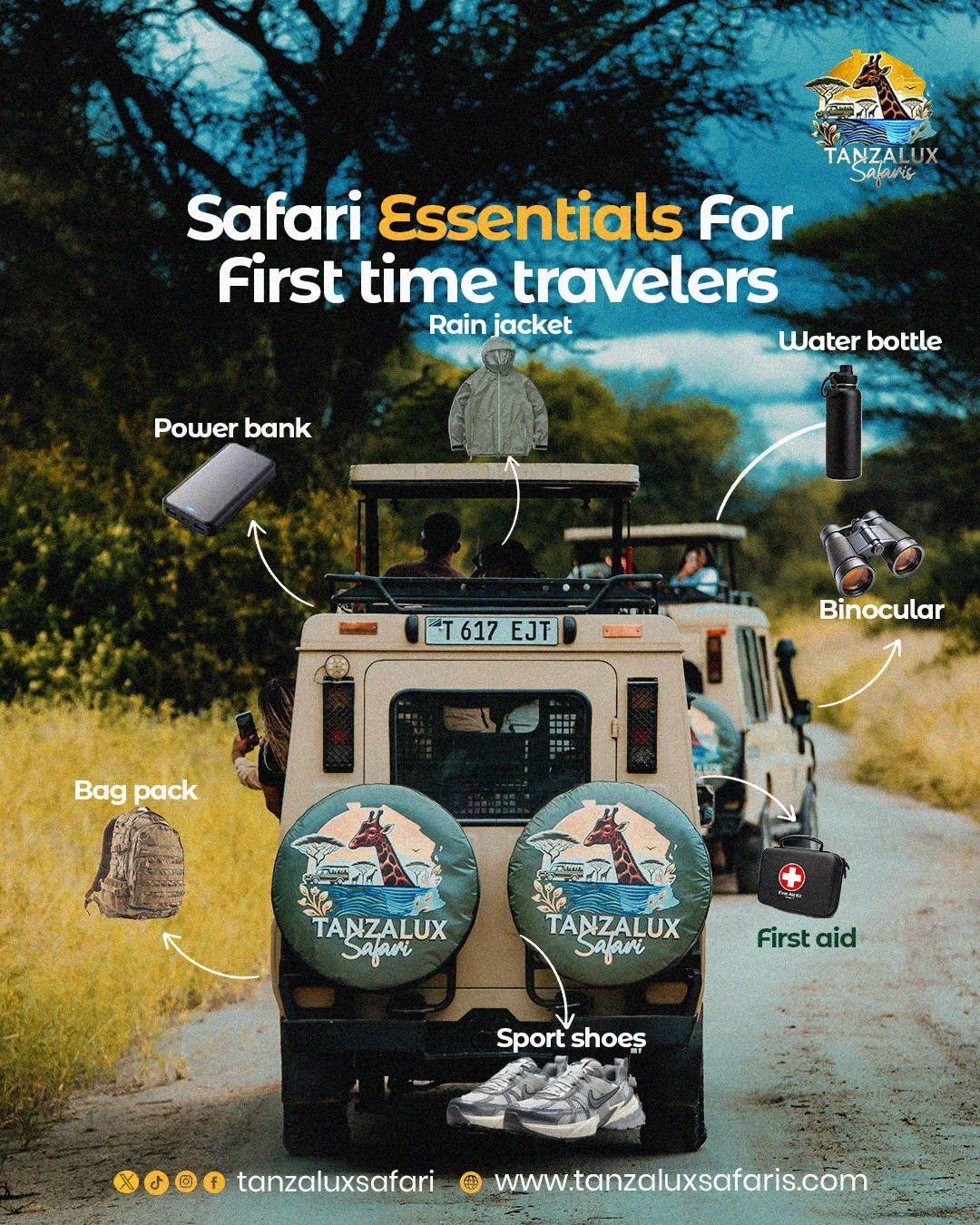
Pack light layers, sun protection, and a small bag for drives. Adjust the list to your route, luggage limits, and the facilities at each camp.
Bring a warm layer for early drives and highland nights.
Use a light rain jacket for showers and wind.
Protect cameras and electronics from dust and water.
Check aircraft baggage limits before choosing a suitcase.
Confirm laundry service instead of assuming it is included.
Ask a travel-health professional about your personal needs before departure.
Luxury does not remove rough roads or exposure to the weather. Let the team know about back pain, heat sensitivity, or other comfort concerns. A slower Tanzania luxury safari may suit you better than full-day drives every day.
Why plan your dates with TanzaLux Safaris?
Use TanzaLux to connect your travel dates with a practical route and suitable places to stay. Start with your priorities, not a generic list of must-see parks.
Tell the team whether wildlife, privacy, photography, family time, or lodge comfort comes first. Share your budget range and any fixed flights. Ask for a clear explanation of why each camp fits the season.
A useful proposal should show trade-offs openly. Ask what you gain by shifting your dates, extending a stay, or choosing a different region. No operator should promise a crossing, a predator hunt, or every Big Five species.
Contact TanzaLux Safaris with your preferred month, group size, and interests. Request a Tanzania luxury safari plan with named camps, clear inclusions, and enough time to enjoy each stop.
20 frequently asked questions about Tanzania luxury safari timing
These answers help narrow your options. Check current weather, camp operations, and availability before confirming your final travel plan.
1. What is the best time for a Tanzania luxury safari?
June to October is a strong starting point for dry-season game viewing. January to March suits a southern Serengeti calving focus. Your best choice depends on the parks and experiences you want.
2. Is there one best month for everyone?
No. A family with fixed holidays has different needs from a photographer following the herds. Choose your goal, then compare the route, likely conditions, and camp availability.
3. When is wildebeest calving season?
The early months of the year are the usual planning window in the southern Serengeti ecosystem. February is a key month to consider. Rain and herd movements affect the exact pattern.
4. When can I see Mara River crossings?
July to October is a common planning window in the northern Serengeti. Crossings are unpredictable and may not occur during your stay. Camp location and several nights in the area help, but cannot ensure a sighting.
5. Can a guide guarantee the Great Migration?
No guide can guarantee herd positions or a specific event. Guides use current knowledge to improve the plan. The safari should also offer value beyond the migration.
6. Is April a bad month to visit?
Not automatically, but it requires careful planning around rain and access. Some camps close. Choose open properties with a workable route and clear weather contingency plans.
7. Is May cheaper than August?
Some properties may offer lower May rates, but that is not universal. Compare the total trip cost, including flights, transfers, fees, and the services each quote includes.
8. Is December peak season?
Christmas and New Year can attract strong demand and special booking terms. Earlier December dates may differ. Check your actual nights instead of treating the whole month alike.
9. Can I enjoy a safari during rain?
Yes, where camps and routes remain workable. Expect changes to plans and possible muddy tracks. Green scenery can be rewarding, but rain duration and intensity cannot be promised.
10. When is Tarangire worth considering?
The June-to-October dry period is a useful starting point for wildlife-focused planning. Discuss lodge location and time in the park. It also has year-round interests beyond one season.
11. Is Ngorongoro only worth visiting in dry months?
No. A crater visit can fit routes across the year. Conditions, visibility, and road access still matter. Pack for cool highland weather and keep wildlife expectations realistic.
12. Do all luxury camps stay open all year?
No. Some close for rain, maintenance, or seasonal relocation. Check the exact property and dates before booking. A camp name alone does not confirm its location or operating season.
13. Does a luxury booking include private game drives?
Not always. Some lodge packages use shared vehicles. Ask whether a private guide and vehicle are included throughout, available at extra cost, or subject to availability.
14. How long should a Tanzania luxury safari be?
Choose the length around your route rather than a fixed ideal. Several nights in key bases often work better than daily moves. Include arrival rest and realistic transfer time.
15. Should I book a mobile or permanent camp?
A seasonal camp may suit a herd-focused trip, while a permanent lodge may offer different facilities. Compare actual location, service, access, and comfort rather than choosing by label alone.
16. Which season suits a honeymoon?
Choose the wildlife and weather trade-offs you prefer, then prioritise privacy and pace. Confirm room layout, private dining options, and lodge atmosphere. No single month is best for every couple.
17. Can families travel in school holidays?
Yes. Build the route around the available dates and book suitable rooms early. Check age limits for walks, drives, and activities. Plan breaks and avoid too many long transfer days.
18. Can I add Zanzibar after my safari?
Yes, subject to workable flights and hotel availability. Check beach conditions separately from inland safari advice. Leave enough time to enjoy the beach stay rather than making it a rushed final stop.
19. How can I avoid the busiest sightings?
Discuss quieter areas, flexible drive times, and your tolerance for crowds. A private vehicle gives more control over pace. It does not guarantee empty roads or exclusive wildlife viewing.
20. How do I choose dates with TanzaLux Safaris?
Send your preferred dates, guest count, budget range, and top interests. Ask for a Tanzania luxury safari proposal that explains seasonal choices, named camps, inclusions, and booking terms.
.jpg?alt=media&token=95a5caed-fa4c-47ac-a42e-c42ac61e6b69)
Ready to start planning?
Tell us your dates and what you're after — no obligation.