5.0 Excellent

What’s the Best Time for Safari in Tanzania? A 2027/2028 Seasonal Breakdown
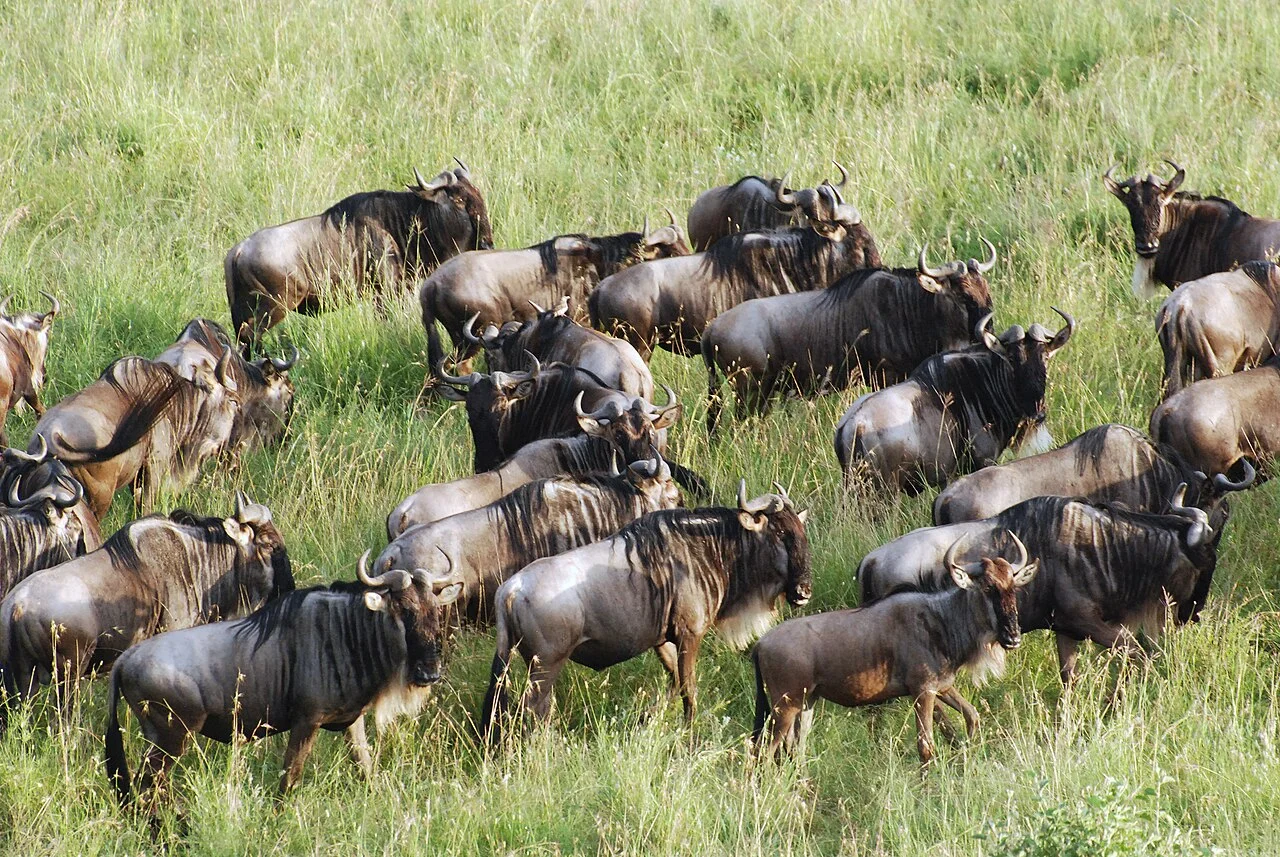
A Tanzania safari is possible in every season, but the best month depends on what you want to see and how you like to travel. For a first wildlife trip, June to October is a strong starting point. For the southern Serengeti’s calving period, look at January to March, with February often a key month.
So, what is the best time for safari in Tanzania in 2027 or 2028? Start with your main goal, then choose the parks and dates together. A river-crossing trip, a green-season escape and a relaxed family holiday need different plans.
This guide uses usual seasonal patterns, not a weather forecast for either year. Rain, grazing and herd movements can change the timing. Camp opening dates, flight schedules and prices for 2027 and 2028 need confirmation for the actual booking.
Read on for a month-by-month breakdown, park choices, costs to compare and sample routes. Use the same broad calendar for both years, then refine the plan with current local advice as your departure gets closer.
Share your 2027 or 2028 dates and let TanzaLux help match the season to your safari goals.
Your Tanzania safari season at a glance
The TANAPA trip-planning guide sets out broad dry, short-rain and long-rain periods. Local climates differ, so these are useful starting points rather than fixed dates on which conditions change.
June to October: the classic dry-season window for general wildlife viewing.
January to March: consider southern Serengeti and Ndutu for a calving-focused trip.
Roughly July to October: consider northern Serengeti for possible Mara River crossings.
November and December: short rains can bring greener scenery; check the route and camp dates.
March to May: plan around the long rains, access and confirmed lodge openings.
A dry season safari is a useful choice if ease of viewing matters most. A green season safari may appeal if you enjoy lush scenery and can accept more changes to the daily plan. Neither choice promises a particular sighting.
Do not treat the whole country as one climate zone. January in the northern parks can feel different from January in the south. Match the season to the actual route, not just the name of the country.
2027 and 2028: what changes, and what stays useful?
The usual seasonal cycle is a sound starting point for both years. It cannot tell us which year will have better sightings, lighter rain or lower prices. Choose between 2027 and 2028 based on your time, budget and the services you can secure.
Planning a Tanzania safari in 2027
Ask for the real space at your preferred camps and the full cost for your dates. Check whether the proposal includes a held room, a confirmed booking or only an enquiry. Read the payment and cancellation terms before committing.
If you have fixed school or work dates, share them early. It may be more useful to change the route than to chase a different month. A camp in the right area matters more than a broad label such as “peak season.”
Planning ahead for 2028
Begin with your preferred travel window and number of nights. Some services may have only draft prices or booking dates that are not yet open. Ask what is firm, what can change and when the next decision is due.
A long lead time gives room to compare choices. It does not lock in weather or herd positions. Keep the wildlife aims realistic and ask how any provisional quote will be updated.
For a Tanzania safari in either year, use a written plan with clear bases, travel days and terms. Recheck the details as departure approaches. Do not buy a tight flight connection on the strength of an unconfirmed road or air transfer.
Month-by-month Tanzania safari guide for 2027/2028
The notes below apply as a planning guide to January through December in both years. They describe typical opportunities and useful questions to ask. Weather and wildlife can shift within each month.
January: a southern Serengeti starting point
Consider southern Serengeti and the Ndutu area if the herds are your focus. The plains can be green, with warm days and showers possible. Check the chosen camp’s position and the viewing area included in your plan.
A Tanzania safari in January should leave time for exploring, rather than depend on witnessing a birth. Tell the planner whether you want a focused herd trip or a wider northern circuit. Those aims need different night allocations.
February: the calving-season shortlist
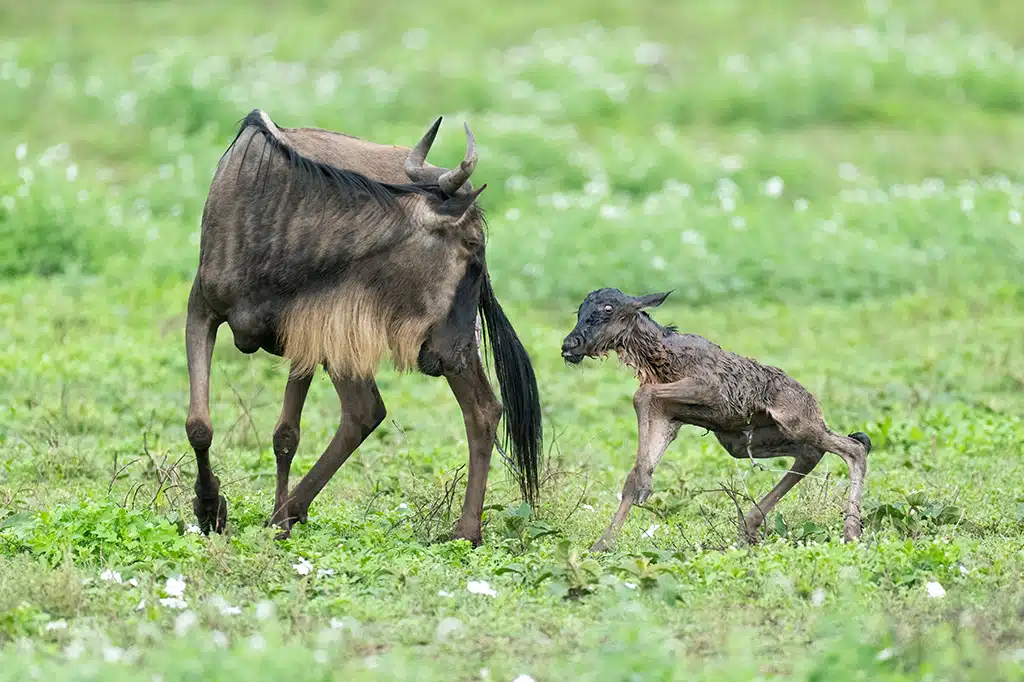
A wildebeest and calf from the Ndutu media collection illustrate the calving-season theme. Dates and sightings vary each year.
The Ndutu calving season is a strong reason to consider February. Birth timing and herd spread still vary. A well-placed base offers access to the right broad area, while the daily route depends on conditions.
Stay long enough to enjoy more than one drive. Ask about the camp’s exact seasonal location and the charges for your viewing areas. Southern Serengeti and the Ngorongoro Conservation Area have distinct access and fee arrangements.
March: allow room for a changing season
March can retain interest in the southern plains while the risk of heavier rain grows. Think of it as a month needing local advice, not a simple extension of February. Confirm the camp’s operating dates and likely access.
For your Tanzania safari, avoid too many short stays if wet roads could slow the plan. Fewer bases may leave more useful viewing time. Ask what can change if rain affects a planned route.
April: choose an open, workable route
April falls within the broad long-rain period. It may appeal to guests who enjoy green landscapes and accept a less predictable schedule. The first task is to establish which camps and transfers will operate.
A lower room rate is useful only if the full trip works. Ask about access, backup plans and the cost of flights if they are needed. Do not assume the whole country closes, or that every camp stays open.
May: check the stage of the transition
May can bring a gradual shift as the long rains ease, though conditions vary. Serengeti herds may begin moving north and west during this broader period. The camp choice should reflect recent advice rather than a fixed pin on a map.
Build a Tanzania safari around confirmed services and realistic travel days. If a camp reopens during the month, get its actual date in writing. Leave enough time to compare an early-May plan with a later departure.
June: the dry-season window begins
June is a useful month to consider for a general northern circuit. For migration interest, central and western Serengeti may enter the discussion. The exact choice depends on where the herds are and the camp’s location.
Pack for cool early starts as well as warmer daytime drives. Ask how the route balances road time with park time. A longer stay in one area may suit you better than a fast tour through several.
July: dry-season travel and the northern option
July is a popular starting point for a dry season safari. Northern Serengeti becomes an option for migration-focused plans, but the arrival and spread of the herds vary. A crossing is a possibility, not an appointment.
For a Tanzania safari with fixed holiday dates, book the right area before fine-tuning optional extras. Check room layouts and vehicle needs for families or groups. A useful plan should fit the people as well as the wildlife aim.
August: plan for demand as well as wildlife
August is a widely sought-after dry-season month. Northern Serengeti is often considered for the Mara River phase. Expect popular camps and viewing areas to draw interest, and ask about actual space for your dates.
Give a migration base several nights if it is central to the trip. Patience is part of the experience, including days without a crossing. Keep a wider interest in the park so that waiting does not become the whole holiday.
September: a strong dry-season candidate
September remains a useful month for general wildlife travel and northern Serengeti plans. The dry-season setting can make water sources important to viewing. Daily sightings still depend on the animals and conditions.
A Tanzania safari in September can focus on the north or explore the southern parks. Compare the transfer pattern before deciding. Do not add a distant region simply to increase the number of parks in the itinerary.
October: watch for a shift in conditions
October is often considered part of the dry-season window, with change possible as rains approach. Northern Serengeti can remain relevant to migration interest. Ask for current guidance rather than assuming the same pattern through the whole month.
If you are choosing early or late October, compare the actual camp and route. Let weather updates refine expectations. Keep plans broad enough that a shift in herd position does not remove the trip’s main appeal.
November: green scenery and moving herds
Short rains often shape November in the north. The Serengeti migration may be spread out as herds respond to grazing and begin a southward phase. This makes a well-judged base important.
A Tanzania safari in November needs an open camp and a clear access plan. Ask whether a mobile camp is changing sites around your dates. A quieter period in one area does not mean that every lodge has low demand.
December: a southern return and holiday demand
December may bring herds back towards the southern Serengeti, depending on rain and grazing. It is a month for checking where a camp will be, rather than assuming the move is complete. Showers remain possible.
For a Tanzania safari over the festive period, compare the exact dates and terms. Minimum stays or higher demand may affect some properties. Do not assume a green-season trip over the holidays will be the cheapest option.
Compare two travel months with TanzaLux and choose the route that fits your priorities.
How reliable is the Serengeti migration calendar?
The Serengeti migration is a moving pattern linked to rainfall and grazing. It is not a fixed route that every herd follows on the same day. Groups can spread out, pause or change direction.
Nomad’s seasonal camp guide describes a broad southern-plains phase early in the year, movement towards the west around May and June, a northern phase around July to October and a return south later in the year. It also stresses that weather can change those movements.
Use that pattern to choose a broad area for your Tanzania safari. Then ask why the proposed camp suits your dates. A property being “in the Serengeti” does not tell you whether it is near your likely viewing area.
A Mara River crossing can take patience, and none is guaranteed in 2027 or 2028. Several nights in a suitable base give more time in the area. They cannot guarantee the event.
Ask TanzaLux to explain the camp location and viewing plan for your migration dates.
Northern or southern Tanzania: match the park to the season
Serengeti, Tarangire and Ngorongoro
The northern parks give you several ways to shape a Tanzania safari. Put the right Serengeti area at the heart of a migration trip. If your aim is a varied first visit, balance it with other parks and enough time on the ground.
For Tarangire, the TANAPA visitor guide identifies June to October as the peak dry-season period. Check the chosen base and the time allowed for drives. A day trip and two nights near the park create different experiences.
Ngorongoro adds a distinct landscape to a northern route. Choose its place in the itinerary for sensible transfers, not because the migration calendar says every park should be visited that month. A crater visit is its own activity with its own arrangements.
Ruaha and Nyerere
A southern Tanzania safari deserves a separate look at weather and access. Ruaha’s usual dry-season window is broadly June to October, as described in TANAPA’s park brochure. That is a useful starting point for guests comparing the two circuits.
Camp openings matter as much as the calendar. Asilia’s camp guidance, for example, explains that some of its southern camps close during the heaviest rains. This is an operator-specific example, not a nationwide closure rule or a confirmed schedule for 2027 or 2028.
For Nyerere, TANAPA advises checking river levels and road conditions during the wet season. Boat trips and walks need proper guiding, suitable conditions and a confirmed service. Do not assume every activity is available on every date.
Adding Zanzibar
Assess the beach stage on its own terms. A good mainland wildlife month does not promise clear skies or calm seas on an island. Choose the coast and planned outings for your interests, and check transfers and flight times.
A few beach nights can give a Tanzania safari a gentle finish. Keep the connection practical and avoid filling every spare day with travel. The sample routes below focus on the mainland; an island extension can be added with its own confirmed plan.
How season affects price, crowds and comfort
Popular dates and a well-placed camp can drive demand. Quiet periods may offer different rates, but savings depend on the property and the full trip. Compare like-for-like quotes rather than assuming a fixed discount for a month.
For a Tanzania safari in 2027 or 2028, check the currency, validity period and taxes in the offer. Ask which park charges and flights are included. A future rate may be provisional until the supplier releases its final terms.
Location: is the camp suited to your wildlife goal for those dates?
Travel time: how much of each day is spent reaching the next base?
Open services: are the camp, flights and activities confirmed to operate?
Comfort: do room layout, seating and access suit your group?
Terms: what happens if you change dates or a quoted service changes?
For families, the best month may be the one that fits school dates and allows a relaxed route. For keen photographers, camp position and several nights in one area may matter more. Discuss those trade-offs before choosing a final month.
Request a written seasonal comparison with clear costs, camp locations and booking terms.
Sample 2027/2028 safari packages
These are example routes for discussion, not fixed departures or priced offers. They depend on available rooms, transport, park arrangements and conditions. The night counts are a starting point; your interests should shape the final plan.
Package 1: calving-focused northern route — 8 days, 7 nights
Consider January to March for this Tanzania safari, refining the Ndutu base for your dates. The route gives the southern plains three nights. It does not promise births, predator action or a particular herd position.
Day 1: arrive in Arusha and stay overnight.
Day 2: visit Tarangire and stay at a suitable safari base.
Days 3–5: transfer to the Ndutu or southern Serengeti area for three nights.
Days 6–7: move to Karatu for two nights, including a crater excursion.
Day 8: return to Arusha for onward plans.
One Arusha night, one Tarangire night, three southern-plains nights and two Karatu nights make seven. Check the longer drives and the viewing areas covered by the quote. Add nights if you prefer fewer long days.
Package 2: northern Serengeti focus — 8 days, 7 nights
Consider the broad July-to-October window for a Tanzania safari with river-phase interest. This example puts four nights in one northern base. Flights and camp location need to match the actual travel dates.
Day 1: arrive in Arusha and stay overnight.
Days 2–5: fly to a suitable northern Serengeti airstrip and stay four nights.
Day 6: take the confirmed return flight and transfer to Karatu for two nights.
Day 7: enjoy the planned Ngorongoro Crater excursion.
Day 8: return to Arusha for departure or an extra night if required.
The seven nights are one in Arusha, four in the north and two in Karatu. Confirm the flight route and transfer time before booking. Four nights offer time to explore, not a guarantee of a crossing.
Package 3: southern parks by air — 8 days, 7 nights
A Tanzania safari in the broad June-to-October dry-season window can combine Nyerere and Ruaha. Check that both camps operate for your dates. This route needs workable flight connections rather than a string of assumed daily departures.
Day 1: arrive in Dar es Salaam and stay overnight.
Days 2–4: fly to Nyerere for three nights, with activities as confirmed.
Days 5–7: take the confirmed connection to Ruaha for three nights.
Day 8: return by the agreed flight route for onward travel.
One city night and three nights in each park make seven. Add a city night if needed for an international flight. Review luggage limits, park transfers and activity inclusions in the written quote.
Adapt a seasonal package with TanzaLux around your dates, pace and wildlife priorities.
Why plan your dates with TanzaLux Safaris?
Our Tanzanian-owned team is based in Arusha. We plan around your dates, pace, budget and interests. Safari, Kilimanjaro and Zanzibar can be discussed as parts of the same wider journey.
A good Tanzania safari starts by matching your main goal to a workable route. Tell us whether you want a first wildlife trip, a migration focus or a slower private holiday. We can then discuss bases, time and services in that context.
Personal planning: begin with your own travel window and priorities.
Seasonal choices: compare the areas that suit your dates.
Clear services: review camp position, transfers and inclusions.
A joined-up route: consider arrival, safari and onward travel together.
Ask why each base has been chosen, then read the full terms. A clear booking and realistic wildlife hopes make a better starting point than a promise of one perfect day. The best season is the one that fits the trip you want to take.
Start planning your 2027 or 2028 Tanzania safari with TanzaLux Safaris.
Frequently asked questions
1. What is the best time for safari in Tanzania?
June to October is a strong starting point for general dry-season wildlife viewing. January to March is worth considering for the southern Serengeti’s calving period. The best choice depends on your goal and route.
2. Is 2027 or 2028 better for a safari?
There is no basis here for promising better weather or wildlife in one year. Use the usual seasonal pattern for both. Compare your available dates, confirmed services, costs and booking terms.
3. Is this a weather forecast for 2027/2028?
No. It is a guide to typical seasons and planning choices. Weather and wildlife vary each year. Check local advice as the trip gets closer and keep expectations suited to the conditions.
4. When is the Ndutu calving season?
January to March is the broad period to consider, with February often a focus. Timing and herd spread vary. Choose a suitable base and do not expect a birth on a fixed day.
5. When should I try for Mara River crossings?
Roughly July to October is a planning window for northern Serengeti. Herd positions and crossing events are unpredictable. Ask why the chosen camp suits your dates and allow several nights if this is your main aim.
6. Are river crossings guaranteed?
No. Even a well-placed camp and several nights cannot promise a crossing. Enjoy the wider park and trust the guide’s judgement. A wildlife event is not a scheduled part of a package.
7. Is April a bad month for everyone?
No, but it needs a workable wet-season plan. Check camp openings, access and transfer options. A guest who enjoys green scenery may accept limits that would not suit someone seeking a simple first dry-season trip.
8. Are all camps open throughout the year?
No. Some close for rain, maintenance or seasonal moves. Get the actual opening dates for the camp and year you are booking. A general park guide is not proof that a specific stay will operate.
9. Is November always cheaper?
No. Rates depend on the property, dates and full route. Compare written quotes with the same services. Lower demand in one area does not create a fixed discount across the country.
10. Is December a low-cost month?
Do not assume that, especially over festive dates. Demand, minimum stays and rates may vary. Check the precise nights and terms rather than choosing from a broad green-season label.
11. When is a dry season safari easiest to plan?
June to October is the broad window to start with for many routes. Choose the parks for your interests and confirm the services. Dry-season travel still needs room for weather changes and wildlife uncertainty.
12. Who might enjoy a green season safari?
Guests who like lush scenery and can accept a more flexible daily plan may enjoy it. Choose an open, accessible camp. Do not assume every green month has the same weather or viewing conditions.
13. When should I visit Tarangire?
June to October is a popular dry-season window. Other dates can suit a different kind of visit. Ask about current conditions, the chosen base and how much time the plan gives you in the park.
14. Do southern parks follow the same calendar?
Not exactly. Ruaha and Nyerere need their own weather, access and camp checks. Do not apply a January northern-circuit plan to the south without reviewing the differences.
15. How early should I book?
Start once you have a useful date range, budget and goal. Popular camps and fixed holiday dates deserve early attention. Ask about actual space and avoid treating an enquiry as a confirmed reservation.
16. Are 2028 prices guaranteed now?
Only the written offer and its terms can establish what is fixed. Some suppliers may not have released final rates. Check quote validity, included charges and how any future change will be handled.
17. How many nights should I spend in a migration area?
Several nights at a suitable base give more time to explore and respond to conditions. Three or four can be a useful starting point for discussion. More time still does not guarantee the main herds or a crossing.
18. Which month is best for a family?
Begin with school dates, children’s ages and a comfortable route. Compare daily drive times and room layouts. A gentler plan in a suitable month is more useful than a packed itinerary chosen only for wildlife headlines.
19. Can I add Zanzibar in any season?
Discuss the island stage for the actual month and your planned outings. Mainland safari timing does not guarantee beach weather. Check flights, transfers and local conditions before confirming the extension.
20. How do I plan a Tanzania safari with TanzaLux?
Share your 2027 or 2028 dates, group size, budget and main interests. Add comfort and room needs. Review the proposed bases, transfers, inclusions and terms before confirming the trip.
Ready to start planning?
Tell us your dates and what you're after — no obligation.