 5.0 Excellent

Serengeti Luxury Safari: What Luxury Means - TanzaLux
Ready to book?
See our luxury Serengeti safaris
What is a Serengeti luxury safari?
A Serengeti luxury safari pairs skilled guiding with a well-placed camp, thoughtful service and time to enjoy the wild. Private drives can add freedom, but they must be confirmed in your booking. Comfort cannot guarantee a sighting.
Luxury here is not just a pool, a suite or a glass of wine at sunset. It is waking close to the area you want to explore. It is a guide who knows when to wait, when to move and when to leave an animal in peace. It is a route that feels good in real life, not only on a map.
This guide explains what to choose, what to check and where it makes sense to spend more. It also shows how to build a trip around your dates and interests. Planning details reviewed: 1 October 2026. Camp services, prices, flights and rules can change; confirm them for your travel dates.
What does luxury change on safari?
Luxury should improve the quality of your time, not just the look of your room. Spend first on the right area, enough nights and a good guide. Choose extra comforts once those basics work.
Time: fewer rushed transfers and more chances to explore at a calm pace.
Guiding: clear explanations of tracks, animal behaviour and the wider landscape.
Location: a camp close to your chosen wildlife area for that season.
Space: a comfortable seat, a well-planned room and time to rest.
Care: meals, transfers and special needs checked before you arrive.
A fine camp far from your main goal can mean hours of driving each day. A smaller camp in the right area may give you more time in the bush. Neither is always better. The right choice depends on whether you want broad game viewing, migration herds, quiet time or a mix.
Who is this kind of trip best for?
A Serengeti luxury safari suits guests who value ease, guiding and a well-paced stay. It can work for couples, families, solo guests and photographers. The plan must still fit each person's needs.
Couples may want fewer room changes and space to enjoy camp. Families may need early meals and shorter drives. A keen photographer may want to spend an hour with one subject. A first-time guest may prefer varied wildlife and a guide who explains the small details.
It is not a promise of silence, perfect roads or hotel-style service in every remote camp. Dust, insects, rain and uneven tracks remain part of the trip. Some guests will love a canvas tent with open views. Others will sleep better in a lodge with solid walls. Tell your planner which comforts matter most.
Does a private booking mean private game drives?
Not always. A private road safari usually includes your own vehicle and guide. A fly-in camp stay may include shared drives with other guests. Ask for the exact drive arrangement in writing.
Private drives let you set your pace within park rules and the day's safe limits. You can focus on birds, return for lunch or wait at a sighting. A private vehicle does not give permission to drive off-road, crowd animals or ignore gate times.
Shared camp drives can be a good choice if you enjoy meeting other guests. They may have a fixed schedule and limited seats. A private vehicle at camp can cost extra, and it may need to be reserved early. The words “exclusive” and “luxury” do not settle this question.
Who provides the guide: the tour operator or the camp?
Are all drives private, or only transfers?
Does each guest have a clear viewing seat?
Are full-day drives, packed meals and extra stops included?
What happens to your drive plan on arrival and departure days?
Why does the choice of area matter so much?
The Serengeti is a large park within an even wider ecosystem. Choose the area before the room. One camp cannot put you close to every part of the migration in every month.
UNESCO's Serengeti National Park listing gives the park's area as 14,763 square kilometres. That scale matters when you plan camp changes. The wider landscape extends beyond park borders, so “Serengeti region” is not always the same as “inside Serengeti National Park.”
Ask for each camp's map location, nearest airstrip and managing area. This helps explain drive times, entry charges and which activities are allowed. It also avoids the common mistake of treating Ndutu, the central park and private reserves to the west as one small destination.
Why choose the central Seronera area?
Central Serengeti is a useful base for broad wildlife viewing and first-time trips. It has a range of camps and access to Seronera airstrip. It is not a shortcut to the northern Mara River.
Choose this area if you want a varied stay rather than one event alone. Open grassland, kopjes and river areas give different scenes to explore. A central camp can work well as the first part of a longer trip, followed by a seasonal stay elsewhere. Expect some busy sightings near popular routes.
When does northern Serengeti make sense?
The north is a strong choice when Mara River herds are your main goal. Plan several nights near the right area rather than driving north and back in one long day.
A northern camp can help reduce travel to river viewing areas. It cannot make the herds cross at a set time. A river-focused trip should also leave room for other wildlife and landscapes. Ask how far the camp is from likely viewing routes and whether the flight serves a suitable northern airstrip.
How should you think about the western corridor?
The western corridor can suit guests interested in the Grumeti area and a different park landscape. Check the exact property location. A lodge in a nearby private reserve is not the same as a camp inside the national park.
Boundaries affect access, fees and activities. A private-reserve stay may offer a different rhythm, but its own rules still apply. Do not assume a walk or night drive offered at one property is available at all Serengeti camps. Ask how the stay fits with the rest of your route.
Is Ndutu inside Serengeti National Park?
The Ndutu wildlife region straddles the wider southern ecosystem; specific properties may lie in the Ngorongoro Conservation Area. Check the camp's exact position rather than relying on a broad “southern Serengeti” label.
For example, Ndutu Safari Lodge's location guide places the lodge in the Ngorongoro Conservation Area. This does not make it a crater-rim lodge. The southern plains, Ndutu and the crater floor are different places and need different route plans.
When is the best time for a Serengeti luxury safari?
The best time depends on what you want to see and how you like to travel. The migration moves throughout the year. Rain and fresh grass shape its route, so month-by-month plans are guides, not guarantees.
The Four Seasons seasonal guide sets out broad regional patterns. Nomad's camp guide stresses that local weather makes the herds unpredictable. Use these patterns to plan, not to promise a specific event.
What can January to March offer?
The southern plains and Ndutu area are often the focus in the early year. This can suit guests who want large herds and the calving season. The exact position and pace of the herds vary.
Ndutu Safari Lodge's migration guide describes the seasonal return to the southern plains and the calving period. Choose a camp that operates in the right area for your dates. Do not book solely on the promise of seeing a birth or a hunt; neither can be timed for a guest.
What changes during April and May?
These months often bring the long rains, green scenery and a quieter feel in some areas. They can suit flexible guests, but wet tracks and camp closures may affect the route.
Do not assume low-season savings at every camp. Ask which camps will be open, how the route works in wet weather and what happens if access changes. A pool or long outdoor lunch may matter less if your main wish is dramatic skies and time with birds. Build the plan around what you enjoy, not just a discount.
Why are June to October popular?
The dry-season months often suit guests who prefer less rain. Migration plans may shift from the west towards the north as the season develops. River-focused stays need careful location choices and flexible expectations.
July to October is a common broad planning window for northern herds, but crossings do not run to a timetable. Some days involve long waits. Others bring movement elsewhere. For a Serengeti luxury safari in this busy season, secure suitable rooms early and choose enough nights to avoid a one-day gamble.
What can November and December offer?
The short-rain period can bring greener scenery and shifting herd locations. It can suit guests who enjoy changeable skies and a less rigid wildlife plan. Holiday dates may still be busy and costly.
Check seasonal camp openings rather than assuming all camps operate all year. If your dates are fixed, be willing to change the area. If your dream is fixed, such as southern herds, be willing to discuss different dates. That is often more useful than paying more for the wrong location.
Which camp style should you choose?
For a Serengeti luxury safari, choose the camp style that matches your sleep, comfort and location needs. A lodge, permanent tented camp and seasonal mobile camp can all feel special. They offer different trade-offs.
What does a permanent lodge offer?
A lodge often suits guests who want solid rooms and a wider range of facilities. Pools, air conditioning, spas and gyms are property-specific, not a standard feature of every luxury stay.
A lodge can be a welcome base for slow afternoons and family time. The trade-off may be distance from a seasonal wildlife focus. Check the room category too. A suite, villa and standard room at the same property can have very different space, views and inclusions.
How does a permanent tented camp differ?
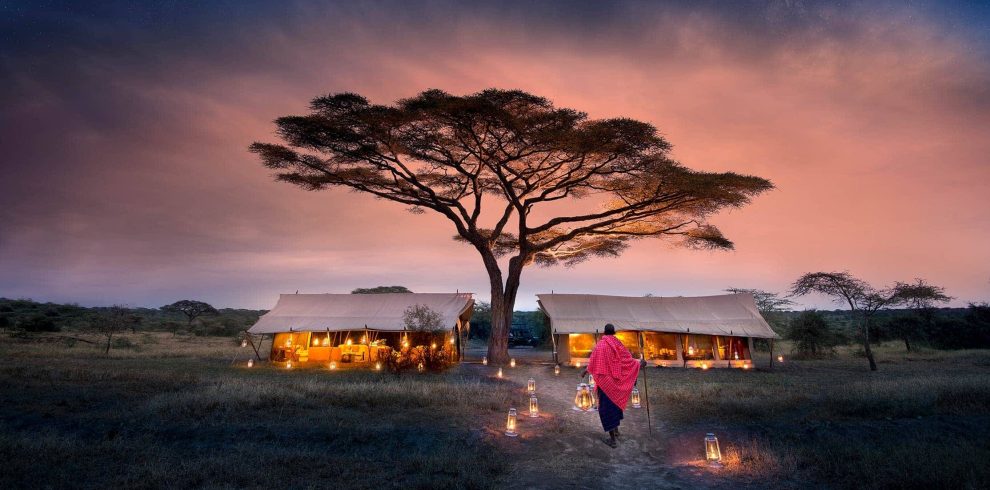
A permanent tented camp stays in one place, often blending a small camp feel with comfortable bathrooms and meals. “Permanent” describes the location. It does not prove that the camp is open all year.
Canvas lets you hear more of the night outside. Fans, screens and cooling systems vary. Ask about shower type, bedside charging, walking distance to the dining tent and night escorts. The right tent can feel close to the bush without making you give up a good bed.
What does a seasonal mobile camp mean?
A mobile camp changes location between seasons to improve access to likely herd areas. It does not chase the animals each morning or necessarily move while you stay. Comfort and facilities vary by camp.
Some mobile camps have flush toilets and hot showers. Others have more limited power or water systems. Check the camp's confirmed site for your dates, not only its brand name. A brochure photo from the south may not show the landscape of its northern site.
Which real properties show these differences?
These properties are researched examples of different stay styles, not a ranked list or a promise of availability. Confirm the exact room, operating dates, drive arrangements and total cost in your quote.
Four Seasons Safari Lodge Serengeti: a central lodge with substantial facilities, including a pool and air conditioning. Its access guide places it about 45 minutes from Seronera airstrip. Check current facilities for your chosen room.
Dunia Camp: a small central tented camp. Its official camp page lists en-suite bathrooms, hot showers and a family suite. It shows that canvas can offer comfort without a large lodge setting.
Sayari Camp: a permanent northern camp near the Mara River. The camp's current guide lists a pool and spa, but also April–May closures. A permanent site does not mean a year-round stay.
Olakira Migration Camp: a seasonal camp that uses northern and southern sites. Its official location guide identifies the Ndutu site as being in the Ngorongoro Conservation Area. Confirm the site and opening dates for your booking.
&Beyond Grumeti Serengeti River Lodge: the operator places this lodge inside the park's western corridor. Do not confuse it with all other properties using the Grumeti name.
Singita Sasakwa: a lodge in Singita Grumeti. The operator describes its Grumeti area as adjacent to the national park. Its room and inclusion details should be checked before comparing it with a park-based camp.
Use these examples to build questions, not just a wish list of names. Would you use a pool each day? Do you prefer a small dining room? Do you want air conditioning, or would a breeze and mesh screens suit you? A good planner can then suggest options that fit the whole trip.
How many nights should you spend in the park?
For a Serengeti luxury safari, our planning starting point is three or four nights in one area. Five to seven nights can suit two areas. This is a pacing recommendation, not a wildlife guarantee.
Arrival and departure days are often partial safari days. Three nights usually give two full days between them. Four nights give three. A one-night stay may leave little time once the flight, airstrip pickup and room check-in are done.
Longer stays let you repeat an area in different light and take a quieter afternoon. Adding camps also adds packing, check-out and transfer time. Change camps because it improves access to a different area, not just to collect more properties. If your whole Tanzania trip lasts a week, it may be wiser to cut one stop than to rush four parks.
Should you fly in or travel by road?
A fly-in Serengeti luxury safari can reduce long road transfers. A road trip links more landscapes and parks. A mixed route can offer both. None of these options removes all travel time.
Road-based travel can suit a wider northern circuit with Tarangire and Ngorongoro. It gives a clear sense of how the country changes along the way. Rough sections, stops and gate formalities mean a transfer day should not be sold as a full day of relaxed game viewing.
Fly-in travel can suit short stays or a distant northern camp. Scheduled bush flights may make stops and carry other guests. “Fly-in” does not mean a private charter. The nearest suitable airstrip matters as much as the flight itself.
A mixed trip might drive through Tarangire and Ngorongoro, then fly out from the Serengeti. This can avoid repeating a long road leg. Confirm the last night's camp, airstrip, flight route and onward connection as one plan.
Auric Air lists several Serengeti bush-airstrip destinations. Ask your planner to confirm the best one for your camp. Treat flight schedules and ground-transfer estimates as booking details, not fixed promises from a general blog.
Which luggage rules apply to bush flights?
Rules depend on the airline and flight. Confirm weight, bag size and bag type for every sector. Cameras and hand luggage may count towards the total allowance.
At this review date, Coastal's scheduled-flight conditions list 15 kilograms total. Auric Air's baggage policy lists 20 kilograms total and recommends soft-sided bags. These are different policies, not one universal Serengeti rule.
Ask about extra camera gear before paying for tickets. Extra luggage may require advance arrangements and can depend on space. If you leave a large case in Arusha, agree how and when it will be returned. Do not rely on an informal promise at the airstrip.
What might a day on safari feel like?
A Serengeti luxury safari should balance wildlife time with rest. Some days suit an early drive and a camp lunch. Others suit a full day with packed meals. Let your guide explain the trade-offs.
Early morning: tea or coffee, then a drive if your plan allows.
Breakfast: back at camp or at an approved stop with a packed meal.
Middle of the day: rest, a slow lunch or further exploring.
Late afternoon: another drive if it fits the route and park hours.
Evening: a meal, a brief plan for tomorrow and time to enjoy camp.
This is a sample rhythm, not a fixed schedule. River watching may take patience. A distant area may call for a full-day outing. Families may prefer shorter blocks. Be clear about what makes a day enjoyable to you, and allow the guide to adapt within safe and legal limits.
What sample routes avoid a rushed trip?
These Serengeti luxury safari routes are starting points, not ready-priced packages. Flight access, camp space, weather and your arrival time shape the final plan. Keep at least one overnight buffer before a critical long-haul connection.
How can four nights in one area work?
Four nights at one camp can suit guests who want depth without constant packing. Fly to a suitable airstrip, explore one area and leave time to rest. Add an arrival night in Arusha if needed.
Day 1: fly to the selected airstrip, meet your guide and transfer to camp. A drive depends on flight timing.
Days 2–4: three full days to explore, with private or shared drives as booked.
Day 5: transfer to the airstrip and fly onward. Keep the next connection safely spaced.
Choose the north for a river-focused seasonal stay, the centre for broader viewing, or the southern ecosystem when the early-year herds are the aim. Do not force several distant regions into these four nights.
What does an eight-day northern circuit look like?
An eight-day trip can combine one night in Arusha, one near Tarangire, one in the Karatu area and four in Serengeti. A flight out helps avoid a long road return.
Day 1: arrive, transfer to Arusha and rest.
Day 2: travel to Tarangire, explore as time allows and stay nearby.
Day 3: travel for a planned Ngorongoro Crater visit and stay in the Karatu area. This is a full day.
Day 4: road transfer through the conservation area to a suitable central Serengeti camp. Allow for rough roads and entry stops.
Days 5–7: three full Serengeti days, with rest built into your plan.
Day 8: fly out from a suitable airstrip, subject to the confirmed route.
This plan works best when the chosen camp fits the transfer route and seasonal goal. A northern migration focus may need a different order, an extra night or another flight. Do not add Lake Manyara simply because it lies near the route if it leaves too little time in the Serengeti.
When is a two-area stay worth it?
A two-area stay makes sense when each camp gives access to a distinct wildlife focus. For example, combine central viewing with a northern seasonal stay. Allow five to seven park nights rather than rushing both.
Agree which day is mainly for moving and which days are truly for exploring. A camp-to-camp drive can include sightings, but it is still a transfer with luggage and a destination to reach. If a flight is used, confirm check-in times and luggage rules again.
How much does a Serengeti luxury safari cost?
A Serengeti luxury safari needs a dated, itemised quote. The total depends on your dates, rooms, group size, flights and drive arrangements. One nightly room price does not show the full cost of a trip.
For a dated starting reference, TanzaLux's public safari catalogue displayed a four-day Serengeti fly-in safari from USD 3,400 per person at this review. That is an advertised starting price, not a personalised quote or a promise of a specific camp. Confirm dates, sharing basis, fees and inclusions before comparing it with another trip.
A shorter Serengeti luxury safari is not always cheaper per day. Flights and transfers are spread over fewer nights. Two adults sharing a room also have a different cost from a solo guest, a family using two rooms or a couple booking a villa.
What should a complete quote show?
A useful quote lists the exact services, dates and exclusions. Compare the full trip, not just a headline price. If a detail is missing, ask before paying a deposit.
Named camps, room types, nights and meal basis.
Private or shared game drives and the provider of each guide.
Park entry and any applicable camping, concession or conservation charges.
Road transfers, airstrip pickups and scheduled or charter flights.
Taxes, currency, payment fees and the quote's validity date.
Drinks, laundry and activities included in the room rate.
Child rates, extra beds and single-room supplements where relevant.
Deposit terms, balance dates and cancellation charges.
Common items to check separately include international flights, visas, insurance, tips, premium drinks, spa treatments and balloon flights. They are not automatically included or excluded in every package. The written quote should settle each one.
Where is it worth spending more?
For a Serengeti luxury safari, extra nights, better location and the right drive arrangement often improve the trip more than a room upgrade. Choose the extras that solve a real need.
If you dislike long transfers, a well-matched flight may be worth more than a plunge pool. If you want time for photography, a private vehicle may matter more than a larger suite. If your family needs downtime, a pool and easy meal times may be central to the choice.
Ask for two versions of the same route. One might use your ideal camp; another might keep the same area and nights at a smaller property. This makes the trade-off clear. Do not save money by cutting all rest time or by placing the camp far from your main goal.
Which extra experiences are worth considering?
A Serengeti luxury safari can include special experiences, but they should fit the location and your interests. Balloon flights, walks, private meals and cultural visits all need confirmed arrangements. Not every activity is allowed at every camp.
Balloon flights offer a different view of the landscape. They depend on suitable weather and the launch area. Confirm pickup time, age and fitness requirements, what happens after a cancellation and whether breakfast and transfers are included. Serengeti Balloon Safaris' own guidance explains that passengers must be able to take part in the landing position and get into the basket. Wildlife below cannot be guaranteed.
Guided walks may be offered only in approved places with the right staff and rules. A walk listed at one property does not mean you can walk freely elsewhere. Check age limits and how strenuous the outing is before booking.
Private meals and celebrations can suit a honeymoon or family occasion. Agree the setting, extra cost and weather backup. A dinner should never need staff to disturb wildlife or put guests in an unsafe place.
Cultural visits should be based on consent and a clear benefit to the hosts. Ask what the visit includes, who receives payment and when photography is welcome. Do not treat local people as props for a safari photo.
How should families and couples tailor the trip?
A Serengeti luxury safari should suit the people travelling, not a generic guest profile. Share ages, sleep preferences, food needs and mobility concerns early. Confirm each camp's policies rather than assuming they match.
For families, ask about room layouts, connecting options, child meals, pool supervision and the length of drives. Young children may find short outings more enjoyable than a whole day at a river. Camp age limits and activity limits can differ even within one brand.
For couples, think about privacy and pace as well as the room. A stay with fewer moves may feel more relaxed than a fast tour of famous camps. Check honeymoon benefits rather than assuming gifts, room upgrades or private dinners are included.
For guests with limited mobility, ask specific questions. How high is the vehicle step? Are paths level? How far is the room from dining? Are there stairs, rails or accessible bathrooms? “Luxury” does not automatically mean step-free access. Obtain property-level answers before committing to the route.
What should you pack for comfort and photography?
Pack light layers, sun protection and essential kit for a Serengeti luxury safari. Prioritise what you will use each day. Your flight rules and camp laundry service should guide how much you bring.
Light, neutral-coloured shirts and trousers, plus a warm layer for early starts.
Comfortable closed shoes and simple camp footwear.
A hat, sunglasses, sunscreen and suitable insect repellent.
Binoculars, a camera, spare batteries and spare memory cards.
A dust cover or bag for camera gear and a soft lens cloth.
Prescription medicines in original labelled packaging and essential documents.
A small day bag and a refillable bottle if safe drinking-water refills are supplied.
For photos, a modest camera used well can be more useful than an unfamiliar heavy kit. Learn basic settings before the trip. Practice holding a camera steady and changing batteries without spreading gear across the vehicle. Ask about a beanbag or other support before assuming it is supplied.
Explain your photo interests to the guide. You may value wide scenes, birds, behaviour or soft evening light. Patience often matters more than moving from one sighting to the next. Do not pressure a guide to crowd an animal for a closer frame.
Ask about bedside power, plug types and charging hours. Remote camps may manage energy use. Wi-Fi and mobile coverage can vary; do not plan a critical work meeting around an untested connection. Keep key travel details available offline.
What health and entry checks should you make?
Check entry rules for your nationality and seek travel-health advice for your full route. A Serengeti luxury safari does not remove health risks. Good planning includes cover for medical care and evacuation.
Use the official Tanzania eVisa guidance for passport and visa conditions. It currently states a minimum six-month passport validity and at least one unused visa page for applications. Visa categories and eligibility vary; do not assume every guest can use the same process.
The CDC's Tanzania travel-health guidance is a useful starting point for a clinician discussion. Ask about malaria prevention, routine vaccines and any requirements linked to your transit countries. Yellow-fever entry rules depend on the journey; they are not a blanket requirement for all visitors.
Carry suitable insurance and understand its exclusions. If you add Zanzibar, trekking or other activities, check those parts too. This guide is not personal medical or immigration advice. Recheck official requirements close to departure.
How does responsible luxury protect the experience?
A good Serengeti luxury safari respects wildlife, staff and local people. Better service should not mean closer pressure on an animal. Your guide must be able to say no when a request is unsafe or harmful.
TANAPA's Mara River crossing guidelines require guests and guides to use designated viewing positions and avoid blocking or approaching crossing animals. Passengers should remain in vehicles; river-bank picnics are not allowed. Waiting well is part of the experience.
Do not feed, call, chase or touch wild animals.
Keep noise low and leave a clear path for animals to move.
Stay on authorised routes and obey your guide's instructions.
Use water and power thoughtfully, even at a high-end camp.
Take litter away and avoid unnecessary single-use items.
Ask for clear evidence behind conservation and community claims.
At an unfenced camp, follow the staff's walking and night-escort rules. Wildlife can pass through camp. Good rooms and attentive service do not turn the bush into a fenced resort. Treat the staff's advice as part of your comfort, not a barrier to it.
Why book a Serengeti luxury safari with TanzaLux?
TanzaLux plans from Arusha and offers private, fly-in and wider Tanzania journeys. The value is in matching the route to you. Ask for a clear proposal that links camps, drives and transfers into one practical trip.
Start with your dates, guest numbers, budget and two or three priorities. Say whether those priorities are a private vehicle, a small camp, migration herds, photography, family comfort or time to rest. That gives the team a better brief than simply asking for “the best lodge.”
For your Serengeti luxury safari proposal, request named camp options and a reason for each location. Ask which days involve long travel, which drives are private and what can change before booking. The best choice is the one whose details fit your needs, not the one with the strongest adjectives.
Browse TanzaLux's Tanzania safari options or send the team your trip ideas. Include your arrival and departure airports, room needs and any fixed events. Ask for a written quote before paying. A Serengeti luxury safari should give you a clear plan as well as something to look forward to.
20 FAQs about a Serengeti luxury safari
These quick answers cover the main booking questions. Use them alongside your written itinerary, since camp policies, fees and flight arrangements can change.
1. What is a Serengeti luxury safari?
It is a well-planned wildlife trip with skilled guiding, a comfortable camp and thoughtful service. Private drives can add freedom, but check that they are included. The wild remains unpredictable.
2. Does every luxury trip include a private vehicle?
No. A Serengeti luxury safari may include shared camp drives, especially on fly-in trips. Ask which drives and transfers are private. Reserve a private camp vehicle in advance if that matters to you.
3. When should I visit for Mara River crossings?
Northern Serengeti is often the focus from July to October. These are broad planning dates, not a crossing timetable. Spend several nights in a suitable area and enjoy other wildlife while you wait.
4. Can TanzaLux guarantee the migration or the Big Five?
No. A Serengeti luxury safari cannot guarantee wild animal sightings, river crossings or a hunt. A good route improves access to suitable areas, but rain, animal movement and chance still shape each day.
5. Which area is best for a first visit?
Central Serengeti is a useful base for varied wildlife viewing. For a Serengeti luxury safari focused on seasonal herds, another area may be better. Match the camp to your dates and main interests.
6. Is Ndutu the same as Ngorongoro Crater?
No. Ndutu is part of the wider southern Serengeti ecosystem, while the crater is a separate destination. Some Ndutu camps are in Ngorongoro Conservation Area. Check each property’s location and applicable fees.
7. What is the difference between a lodge and a tented camp?
A lodge typically uses solid rooms; a tented camp uses canvas accommodation. Both can be comfortable. On a Serengeti luxury safari, check cooling, bathrooms, power and location instead of choosing by the label alone.
8. Will a mobile camp move during my stay?
Usually the camp relocates between seasons rather than during a guest stay. Confirm its site for your dates. A mobile camp can help with seasonal access, but it cannot guarantee nearby herds.
9. How many Serengeti nights should I book?
Three or four nights in one area is a useful planning start. Five to seven can suit two areas. A Serengeti luxury safari needs time for transfers, so count full days as well as nights.
10. Should I choose a fly-in or road safari?
Choose flights to reduce long road legs, roads to link more parks, or a mix for both. A fly-in Serengeti luxury safari still involves airstrip transfers. Scheduled flights do not mean a private aircraft.
11. What baggage allowance applies to bush flights?
It depends on the airline and booking. Confirm weight, bag dimensions and whether camera gear counts towards the allowance. Do not assume all flights use the same limit or accept extra bags on arrival.
12. How much should I budget?
Request a dated, itemised Serengeti luxury safari quote for your guest numbers, rooms and dates. Check flights, park charges and drive arrangements. A starting price is not the final cost of your chosen trip.
13. Are drinks, tips and balloon flights included?
Not always. Inclusions vary by camp and package. Ask for a written list covering drinks, laundry, tips and activities. Compare the same services before deciding that one quote is better value.
14. Are luxury camps suitable for children?
Some are, but age limits, rooms and activity rules vary. A family Serengeti luxury safari should allow shorter drives, rest and suitable meals. Confirm child policies and supervision needs at each property before booking.
15. Can I book a balloon flight?
Often yes, if a suitable launch area operates for your dates. Flights depend on weather and participation requirements. Confirm age limits, transfers and cancellation terms. A balloon does not guarantee a particular wildlife sighting.
16. Can I go walking or on a night drive anywhere?
No. Those activities depend on the managing area, permissions and property arrangements. Do not assume an activity offered in a private reserve is allowed inside the national park. Ask about your specific camp.
17. What should I pack?
For a Serengeti luxury safari, pack light layers, a warm jacket, closed shoes, sun protection, insect repellent and binoculars. Bring essential medicines and spare camera batteries. Check flight limits and camp laundry before packing extra clothes.
18. Do luxury camps have reliable Wi-Fi and air conditioning?
Some do, but neither is universal. Check your exact room and camp. Power and internet can vary in remote locations. Keep key travel details offline and avoid relying on untested Wi-Fi for urgent work.
19. Can I combine the trip with Zanzibar or Ngorongoro?
Yes, with a route that leaves enough travel and rest time. A Serengeti luxury safari can form part of a wider Tanzania trip. Confirm flights and overnight buffers rather than joining destinations on a map alone.
20. Why plan with TanzaLux Safaris?
TanzaLux is an Arusha-based team offering tailored Tanzania journeys. Ask the team to match camps, guiding and transport to your goals. A good proposal makes locations, inclusions, costs and booking terms clear before you pay.
Luxury Serengeti safaris we run
Choose a luxury Serengeti safari
- 6-Day Private Luxury Tanzania Safari: Tarangire, Serengeti & Ngorongoro6 days
from $3,200 - 8-Day Luxury Tanzania Safari | Tarangire, Lake Manyara, Serengeti & Ngorongoro8 days
from $4,000 - 7-Day Luxury Ndutu & Southern Serengeti Safari7 days
Price on request - 7-Day Private Luxury Tanzania Safari: Lake Manyara, Serengeti & Ngorongoro7 days
Price on request - 7-Day Luxury Tanzania Safari with Serengeti Balloon Flight7 days
from $3,600 - 10-Day Luxury Tanzania Great Migration Safari – Fly-In Northern Serengeti10 days
from $4,500
Ready to start planning?
Tell us your dates and what you're after — no obligation.
