5.0 Excellent

10 Commonly Seen Animals and Where to Spot Them on Your Tanzania Safari
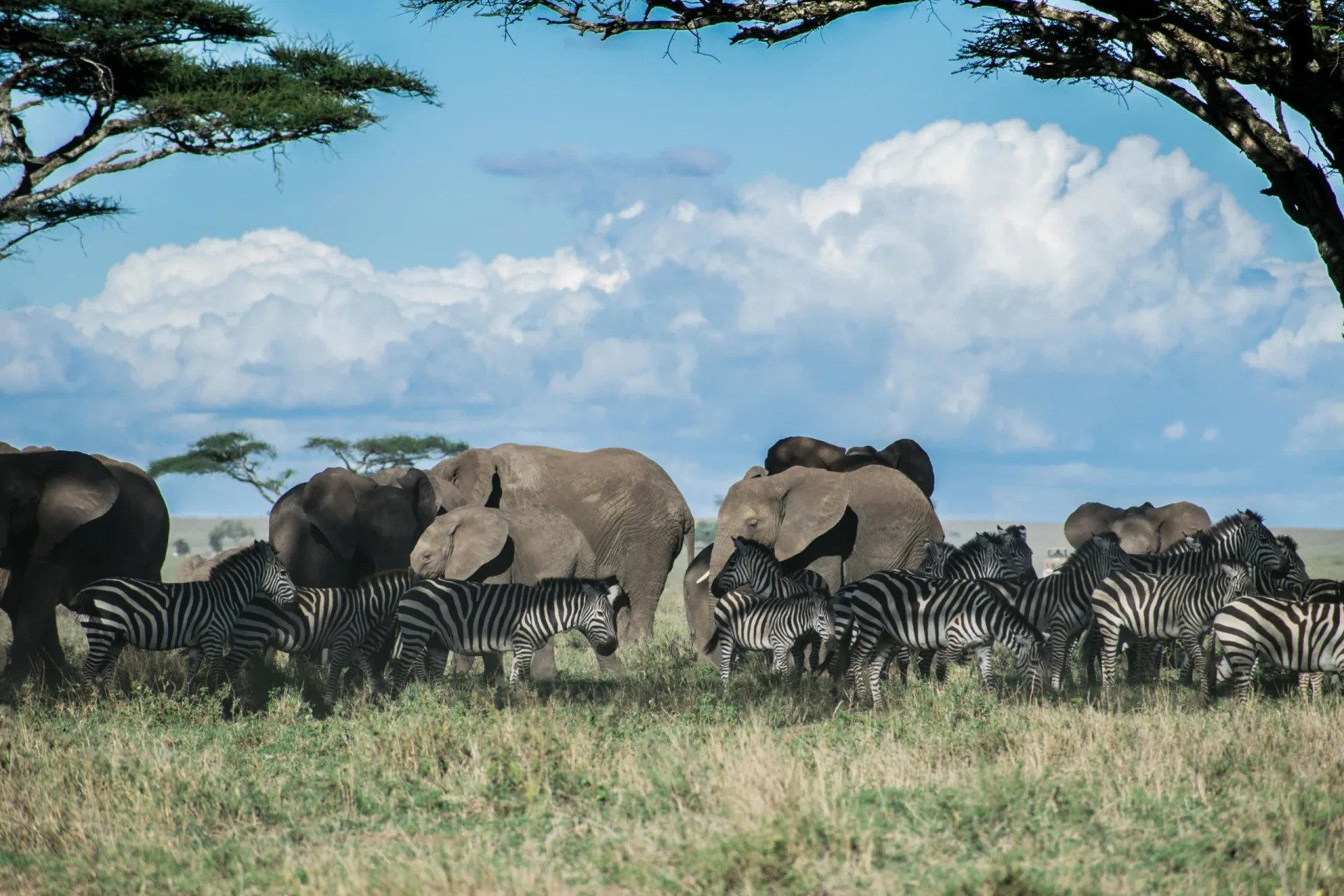
Tanzania safari animals turn a game drive into much more than a journey from one viewpoint to the next. An elephant feeding beside a tree, a herd of zebra crossing the track, or a warthog family at the edge of the grass can hold your attention for hours.
This guide highlights ten animals that visitors commonly encounter on suitable mainland routes. It is a practical shortlist, rather than a measured national ranking. The species you see will depend on the parks, habitats, season, and time spent in the field. No wild animal sighting is guaranteed.
Use the list to learn what to look for and where to start planning. Then give each encounter time. A familiar animal doing something interesting can become the most memorable part of a Tanzania wildlife holiday.
Plan a private wildlife journey with TanzaLux Safaris and choose parks that suit your interests.
10 Tanzania safari animals and where to look for them
1. African elephant: start with Tarangire
Where to look: Tarangire is a strong starting point, with Serengeti and Mikumi offering other opportunities. TANAPA describes Tarangire's elephant appeal and the way animals gather around the river during the dry season. That makes it worth allowing more than a quick pass through.
What to notice: watch how the trunk reaches for food and how a group moves together. Look at animals of different sizes, the position of a calf, and the way a path through the trees opens up. Ask your guide what the group is doing before you decide it is heading to water.
Tarangire elephants reward patient viewing. Keep the route ahead of them clear and let the guide choose a safe place to wait. A close approach is never needed to make these Tanzania safari animals feel impressive.
2. Giraffe: explore Tarangire and Arusha National Park
Where to look: Arusha National Park, Tarangire, and suitable areas of Serengeti are useful choices. The Arusha wildlife guide highlights giraffes in its open glades and forest-edge mix. Mikumi is another option for a different route.
What to notice: the long neck is only the start. Look at the coat pattern, the small horn-like structures on the head, and the slow, deliberate way the animal walks. When it feeds, notice which parts of the tree it can reach.
For giraffe viewing, include a park known for suitable habitat rather than relying on one crater drive. The wider Ngorongoro area and the crater floor are different settings. Ask the planner to show exactly where your game drives will take place.
3. Plains zebra: watch the grasslands
Where to look: Serengeti and Ngorongoro Crater are useful places for zebra, while Tarangire and Mikumi add other opportunities. Zebra can be part of a mixed scene with wildebeest and other grazers, so scan the whole group rather than only the nearest animal.
What to notice: take in the stripes, ears, and how individuals stand in relation to each other. A line of animals walking across open ground can make a lovely wide photo. A closer view can show the pattern and shape of a single face.
Among Tanzania safari animals, zebra are easy to recognise but still deserve a proper stop. Spend time watching a small group instead of treating the first sighting as a completed tick. You may see a different scene on each drive.
4. Blue wildebeest: follow the right part of the ecosystem
Where to look: Serengeti is central to migration planning, while Ngorongoro Crater, Tarangire, and Mikumi can offer wildebeest encounters of their own. A wildebeest sighting and a Great Migration river crossing are different experiences.
What to notice: look for the heavy front end, slimmer hindquarters, curved horns, and dark face. Watch the herd's direction, spacing, and pace. A group grazing quietly can be just as absorbing as one on the move.
TANAPA's Serengeti overview explains the park's migration appeal. Choose a base for the season and likely herd movements, with room for changing rain and grazing. Tanzania safari animals do not follow a fixed visitor timetable, and no crossing can be promised.
5. African buffalo: look for herds and quiet grazers
Where to look: Ngorongoro Crater, Arusha National Park, Tarangire, Serengeti, and Mikumi can all fit buffalo viewing. Park choice and daily conditions shape the actual encounter. A herd may be in open grass, while other animals are partly hidden at the edge of cover.
What to notice: the heavy build, dark coat, broad muzzle, and horns help identify a buffalo. Use binoculars to study the group from the vehicle. Ask your guide about age and sex differences rather than assuming every large horned animal is the same.
Buffalo may look calm while resting or feeding, but they remain powerful wild animals. Keep space and follow the guide's instructions. These Tanzania safari animals should always be watched with respect, even when the scene seems quiet.
6. Impala: give the woodland edges a second look
Where to look: Tarangire and suitable woodland-edge areas of Serengeti are good places to discuss with your guide. Impala are one reason to include more than wide open plains in the route. Their habitat preferences help explain why a mixed safari can feel so varied.
What to notice: look for a warm brown coat, pale underparts, and dark markings towards the rear. Males carry curved horns, while females do not. The African Wildlife Foundation's impala guide is useful for these features and their grassland-edge habitat.
Do not rush past a herd simply because another vehicle is searching for a cat. Grazing, browsing, resting, and small changes in the group's attention all give you something to watch. Learning common antelope adds depth to a list of Tanzania safari animals.
7. Common warthog: check the short grass
Where to look: Arusha National Park, Tarangire, Serengeti, and Ngorongoro Crater can offer warthog encounters. Keep looking near the track as well as far into the landscape. Smaller animals can be missed when everyone is scanning the horizon.
What to notice: look for the sturdy shape, tusks, and tail carried upright when running. Warthogs may kneel on their front legs to feed on short grass. AWF describes this feeding habit, which makes a quiet stop especially interesting.
Watch piglets from a respectful position and let the family keep moving. Avoid calling or making noises for a reaction. A good encounter with Tanzania safari animals lets you see natural behaviour without creating it.
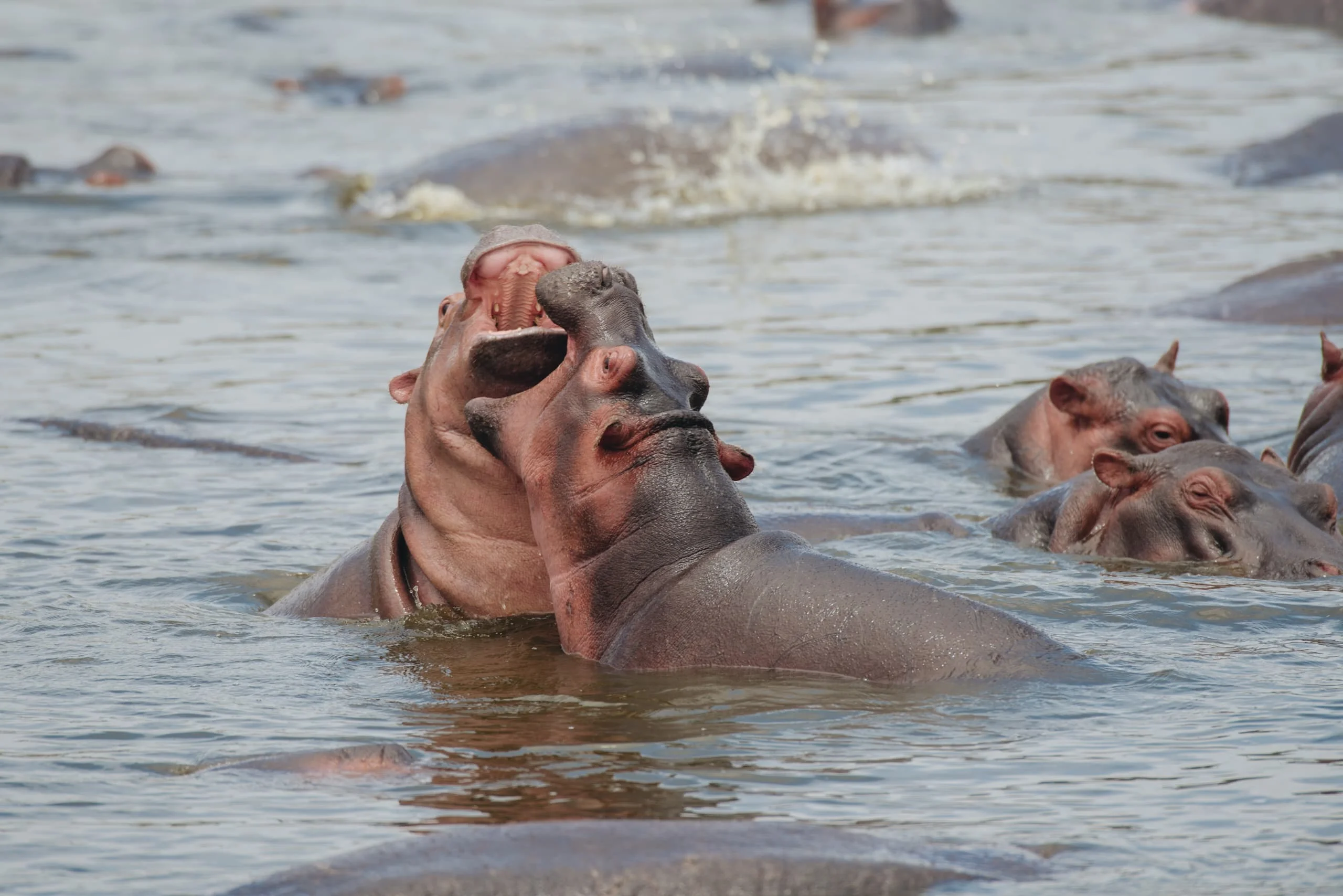
Watch hippos from approved viewing points and give the water edge plenty of space.
8. Hippopotamus: choose suitable water habitats
Where to look: known hippo pools and waterways in Serengeti, Ngorongoro Crater, and Mikumi are useful options. Your guide will decide which permitted viewing point fits the day's route. A place with hippos is not automatically a place where you can walk freely along the bank.
What to notice: the ears, eyes, and nostrils may be the first parts you see above the water. Spend time watching the group from the approved position. Avoid trying to judge safety from how little of the animal is visible.
The AWF hippo profile explains their use of water and mud and their movement onto land to graze. Give both water and bank routes space. Never place yourself between a hippo and its access to water.
9. Lion: allow time in Serengeti and Ngorongoro
Where to look: Serengeti and Ngorongoro Crater are useful choices for guests interested in lions. Tarangire and Mikumi can also offer sightings. Finding them still takes suitable habitat, time, and a guide reading the scene.
What to notice: look beyond the mane of an adult male. Watch the body language of the group, the direction of their attention, and the setting around them. A lion resting in shade is still a worthwhile sighting, even if it does not stand up.
Lions are among the most sought-after Tanzania safari animals, but a safari should not depend on seeing a hunt. Do not ask for an approach that crowds a pride or separates animals. Your guide can wait where permitted and move on when that is the better choice.
10. Spotted hyena: take time to understand the predator
Where to look: Serengeti and Ngorongoro Crater are useful places to include. Spotted hyenas also occur in other parks, including Mikumi. Early game drives may fit your plans, but you do not need to assume that a daytime sighting is impossible.
What to notice: look for a sloping back, sturdy front end, rounded ears, and spotted coat. Ask the guide what you are seeing rather than labelling every hyena near another predator as a scavenger.
AWF's hyena profile describes both hunting and scavenging, along with clan life. These are active predators with a complex social world. A broader understanding of Tanzania safari animals makes the encounter far richer than a cartoon stereotype.
How to choose parks for Tanzania safari animals
Build the route around a mix of habitats and enough time to explore. Open grass, woodland, water, and a crater setting each add something different. You do not need to visit every park to enjoy a varied wildlife trip.
Use a northern route for a varied first safari
Tarangire can give the trip a strong elephant focus. Serengeti adds scale, plains, and the chance to spend several days in one wildlife area. A crater visit can add a distinct setting and its own mix of animals.
The Ngorongoro Lengai Geopark's wildlife overview lists hippos, hyenas, warthogs, zebra, wildebeest, and other species in the crater. This is a useful introduction to Ngorongoro Crater wildlife. Keep the crater and the wider conservation area separate when discussing the exact route.
Consider Mikumi for a different starting point
TANAPA's Mikumi wildlife page highlights elephant, buffalo, zebra, wildebeest, and giraffe on its plains, with predators and water habitats as well. It can suit a different mainland plan from a northern circuit trip.
Ask about the journey from your arrival point and how much time remains for game drives. A park's presence on a map does not make it a short add-on to every itinerary. Choose a route that works for the whole holiday.
When should you look for Tanzania safari animals?
Time of year affects water, vegetation, herd movements, and the ease of seeing into the bush. June to October is often a drier period in many northern safari areas. Wetter periods can bring green scenery and different viewing conditions.
Choose the season for your main interests, then plan camp locations around it. Serengeti animals are spread across a large area, and the migration shifts with rain and grazing. Staying in the right region matters more than simply booking a lodge with “Serengeti” in its name.
During the day, ask your guide how to balance an early start with rest and the route. Some moments happen near dawn; others appear in the middle of a quiet afternoon. There is no single hour when all Tanzania safari animals are easiest to find.
How to make Tanzania game drives more rewarding
Start by telling your guide what interests you. You may enjoy big cats, herds, antelope, birdlife, or the small details of feeding and movement. A clear wish list helps shape a day, while leaving room for the animals you actually meet.
Use binoculars: study behaviour without asking the vehicle to move closer.
Stay with a scene: give a quiet herd time before rushing away.
Look at the habitat: ask why the species uses that part of the park.
Keep a short list: note the species, park, and one thing it was doing.
Share the view: move carefully and consider other guests when taking photos.
Rest when needed: a comfortable pace helps you keep noticing things.
Try taking one wide image, one closer frame, and a detail when the sighting allows. Put the camera down too. The sounds, smells, and movement around Tanzania safari animals are part of the memory.
Keep every encounter respectful
Stay in the vehicle except where the location or authorised activity permits otherwise. Do not feed, call, chase, or block animals. Follow park rules and your guide's instructions, including when another vehicle is already close to the sighting.
The Tarangire visitor guide sets out track, distance, and wildlife care guidance. Similar care belongs throughout the trip. A rare moment is never a reason to put pressure on an animal.
What about the Big Five and other wildlife?
The Big Five are lion, leopard, elephant, buffalo, and rhino. They are a familiar safari grouping, rather than a list of the five animals you are most likely to see. A Big Five safari still needs realistic expectations.
Leopard, rhino, cheetah, and wild dog can be special hopes, but this article focuses on a broad set of commonly encountered Tanzania safari animals. Ask your planner which parks fit a particular wish. Avoid making a rare sighting the only measure of a successful trip.
Birds, monkeys, reptiles, and other antelope add far more than a ten-animal list can cover. Stay open to them. A guide may help turn an unfamiliar bird or a tiny track into an encounter you would otherwise have missed.
Explore private safari ideas and build time for the wildlife that interests you most.
Sample safari packages for wildlife lovers
These sample routes show ways to explore Tanzania safari animals at a useful pace. They are ideas to tailor, not fixed departures or promises of sightings. Camps, activities, park fees, transport, meals, and prices need confirmation in your written quote.
5-day Arusha and Tarangire Wildlife Discovery
Day 1: Arrive and settle into an Arusha hotel.
Day 2: Explore Arusha National Park on a guided game drive and return to Arusha.
Day 3: Transfer to Tarangire for wildlife viewing and an overnight stay in or near the park.
Day 4: Enjoy another Tarangire day, with time for unhurried stops.
Day 5: Return to Arusha for a suitably timed departure or an extra night.
This route gives space to enjoy giraffes, buffalo, zebra, elephants, and the wider habitat without racing to Serengeti. It is not a promise to see every animal in this guide. Confirm final-day driving and flight times before booking.
Tailor a five-day Arusha and Tarangire trip with time to learn about the animals you meet.
8-day Northern Circuit Wildlife Safari
Day 1: Arrive in Arusha.
Day 2: Visit Tarangire and stay in or near the park.
Day 3: Enjoy more wildlife viewing, then continue to Karatu.
Day 4: Travel through the highlands to a central Serengeti base.
Days 5–6: Explore Serengeti from the same camp.
Day 7: Return towards the Ngorongoro highlands for the night.
Day 8: Take a planned crater drive and return to Arusha for an overnight stay.
Schedule departure for the following day. This route brings different habitats into one trip, including time for Ngorongoro Crater wildlife. Long road transfers can be adjusted with more nights or suitable flight options.
12-day Wildlife and Zanzibar Journey
Day 1: Arrive in Arusha.
Day 2: Visit Tarangire and continue to Karatu for the night.
Day 3: Enjoy a crater outing, with another highlands night.
Day 4: Travel to a suitable Serengeti base.
Days 5–6: Explore on game drives.
Day 7: Take a confirmed flight connection to Zanzibar and stay in Stone Town.
Day 8: Take a guided town visit, then transfer to the coast.
Days 9–11: Relax, with optional activities arranged separately.
Day 12: Transfer for departure.
Confirm flight stops, bag limits, and transfer times. Add a transit night if required. A private road safari does not make scheduled flights, boats, or every island activity private.
Combine a private wildlife safari with Stone Town and a relaxed Zanzibar beach stay.
Why travel with TanzaLux Safaris?
TanzaLux Safaris is Tanzanian-owned and based in Arusha. Its team plans around your dates, interests, pace, comfort, and budget. Tell the planner which Tanzania safari animals interest you and how you like to spend time at a sighting.
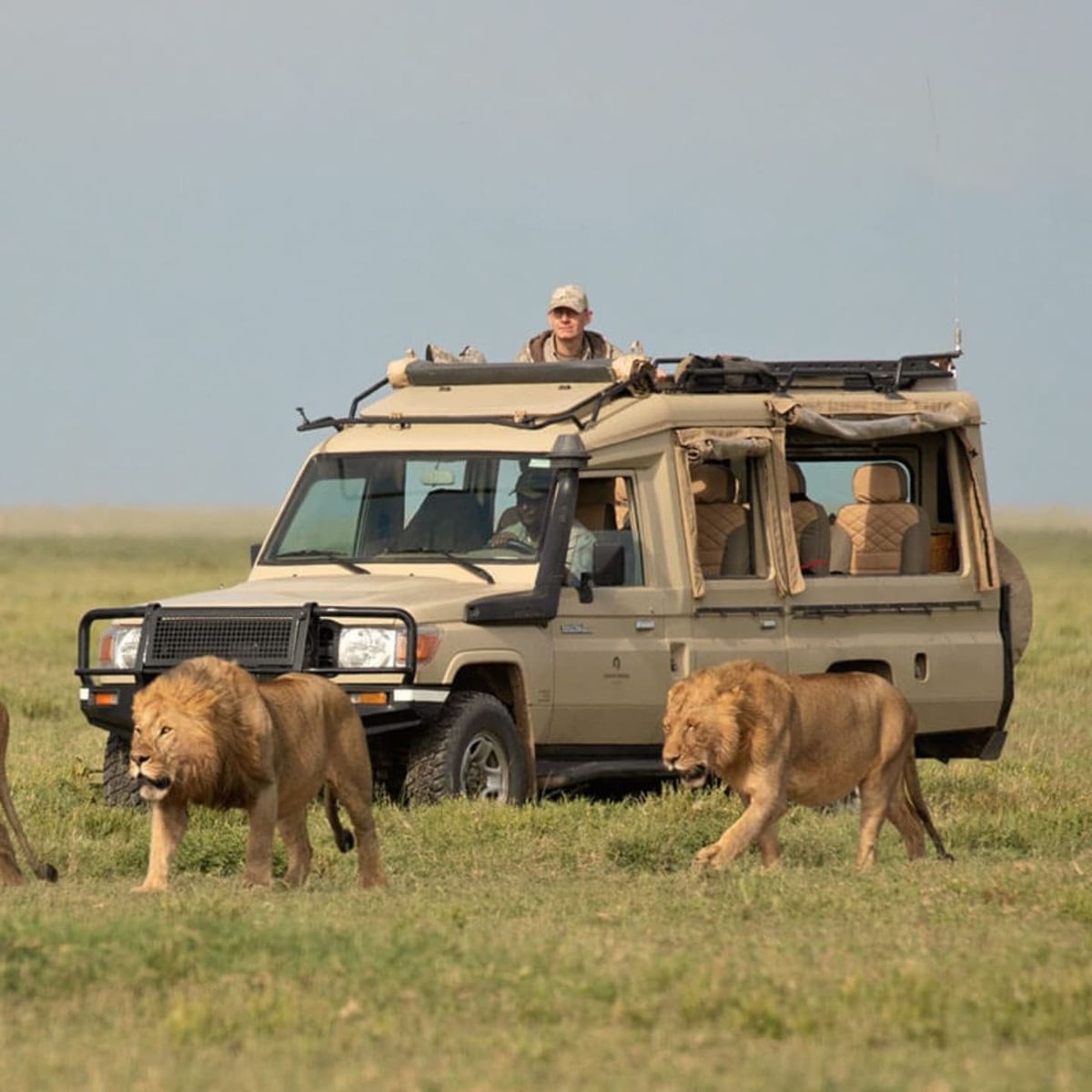
A private road safari gives your party its own guide and vehicle. You can discuss longer stops, a photography focus, or a gentler rhythm for family travel. The plan still works within park rules, conditions, and the agreed route.
Ask for a clear quote showing the camp locations, park visits, driving days, and exclusions. A good plan makes space for the wider wildlife experience, with honest expectations about what remains unpredictable.
Tanzania safari animals offer something new each day, even when the species are familiar. Travel with time to notice, listen to your guide, and let the journey become more than a list of names.
Share your wildlife wish list with TanzaLux Safaris and request a tailored itinerary.
Frequently asked questions
1. Which Tanzania safari animals are commonly seen?
Elephants, giraffes, zebra, wildebeest, buffalo, impala, warthogs, hippos, lions, and spotted hyenas are a useful starting list across suitable routes. They are not present or equally easy to find in every park, and sightings remain uncertain.
2. Is this a national ranking of the ten most-seen animals?
No. It is an editorial shortlist for safari planning. A measured ranking would need comparable visitor or survey data across parks and seasons. The list helps you choose habitats and learn what to watch for.
3. Where should I go for elephants?
Tarangire is a strong starting point, with other opportunities in parks such as Serengeti and Mikumi. Ask about the season and overnight location. Give a herd time and leave its movement routes clear.
4. Which parks are useful for giraffes?
Arusha National Park and Tarangire are useful northern choices, with suitable areas of Serengeti and Mikumi offering more options. Ask about the actual game-drive area rather than assuming every habitat supports the same animals.
5. Do I need the migration season to see wildebeest?
No. A wildebeest encounter is not limited to a river-crossing trip. Different parks and areas offer their own opportunities. For large migrating herds, choose a suitable seasonal base and allow for changing conditions.
6. Where can I see zebra on safari?
Serengeti, Ngorongoro Crater, Tarangire, and Mikumi can all offer zebra viewing. Look at the herd as well as single animals. A quiet grazing scene can show the landscape and group movement beautifully.
7. Are buffalo safe to approach?
Keep a respectful distance and follow the guide's instructions. A resting or grazing buffalo is still a powerful wild animal. Do not approach on foot or ask the driver to crowd it for a photo.
8. How can I recognise an impala?
Look for a warm brown coat, pale underparts, and dark rear markings. Males have curved horns while females lack them. Ask your guide to compare the animal with nearby antelope so you learn more than one feature.
9. Why do warthogs bend down to feed?
Warthogs can kneel on their padded front legs to reach short grass. It is a useful behaviour to watch at a calm sighting. Keep voices low and avoid making noises to prompt movement.
10. Where should I look for hippos?
Ask about permitted viewing at suitable pools and waterways in Serengeti, Ngorongoro Crater, or Mikumi. Stay in the approved area. Never treat a water edge as an open walking spot without the guide's permission.
11. Can a lion sighting be guaranteed?
No. Serengeti and Ngorongoro are useful places to include, but wild lions cannot be booked on demand. A good itinerary allows time for a range of wildlife and does not depend on seeing a hunt.
12. Are spotted hyenas only scavengers?
No. They hunt as well as feed on carrion. Their social lives and movements are worth watching in their own right. Ask what is happening in the scene rather than relying on a familiar stereotype.
13. Will I see all ten Tanzania safari animals in one day?
Do not expect or require that outcome. Habitat, weather, visibility, and the animals' movements all matter. More time can offer a broader experience, but it does not turn the list into a guarantee.
14. Which of these animals are in the Big Five?
Lion, elephant, and buffalo are on both lists. Leopard and rhino complete the Big Five. That grouping is not a ranking of the animals most likely to be seen on each game drive.
15. Is Ngorongoro Crater the same as the conservation area?
The crater is one part of the wider conservation area. Different habitats and visit locations offer different wildlife experiences. Check the exact drive and overnight plan rather than treating every Ngorongoro stop as a crater-floor visit.
16. Can I see Tanzania safari animals in Mikumi?
Yes. TANAPA lists a range of plains animals and predators there. Plan the journey and length of stay around your starting point. Mikumi is a separate route choice, not a quick addition to every northern safari.
17. Are early game drives always best?
They can be rewarding, but there is no single best hour for every species and setting. Ask your guide about the day's conditions. Balance time in the field with enough rest to stay alert and enjoy it.
18. Can children enjoy watching common animals?
Watching a herd feed or a warthog family move can be absorbing for children. Ask about age rules, drive lengths, lodge suitability, and breaks. Match the plan to your family's needs rather than aiming for a fixed animal count.
19. Do I need a professional camera?
No. Binoculars, patience, and a curious eye are useful tools. A phone can record wider scenes, while a zoom lens helps with detail. Never seek a closer position that conflicts with wildlife care or safety.
20. How can TanzaLux help me plan around Tanzania safari animals?
Share your wildlife interests, dates, and preferred pace with the Arusha-based team. Ask for suitable park and camp choices with clear inclusions. The route can be tailored, while weather and wild sightings remain outside anyone's control.
Ready to start planning?
Tell us your dates and what you're after — no obligation.