5.0 Excellent

5 Questions with Safari Guide Abel: Exploring Albino Animals
Editorial draft for Abel's review: The five answers below are source-based editorial copy prepared for review. They are not a recorded interview or Abel's approved statements. No personal sightings or direct quotes are attributed to him. Confirm the wording with Abel before publication.
Albino animals can spark some of the most curious questions on a Tanzania safari. Why does one animal look so pale? Is every white giraffe an albino? Does a different coat change life in the wild? These questions invite us to look closely, ask more, and be careful about the names we use.
This Q&A draft sets out five questions for safari guide Abel, with clear background answers for his review. It explores albinism, leucism, a documented white giraffe in Tanzania, and respectful wildlife viewing. The aim is a thoughtful safari story built on evidence, with room for Abel to add his own verified experience.
Plan a private Tanzania wildlife safari with TanzaLux Safaris.
Albino animals: what safari guests should know
Pale does not always mean albino: several traits can affect colour.
Albinism and leucism differ: they should not be used as matching labels.
A photo has limits: light, distance, and image editing can hide useful details.
A rare animal is still wild: it needs space and normal, undisturbed movement.
A historic report is not a live sighting: check dates and avoid promises.
A full safari matters: plan around habitats and interests, with any rare sighting as a bonus.
Five questions for safari guide Abel's review
1. What are albino animals, and why do they look different?
Albinism is an inherited condition that affects the production of melanin, a pigment involved in colour. Animals with albinism can have very pale skin, fur, feathers, or scales. The U.S. National Park Service explanation describes the genetic basis and notes that naturally white animals should not be confused with albinos.
For a safari guest, the first step is to describe what you can actually see. An animal may look much lighter than others nearby. That is a useful observation, even when you cannot yet name the cause. A careful description is better than a confident label made from a brief glimpse.
Albino animals belong to their own species. Albinism does not turn a giraffe into a separate kind of giraffe, or make a bird a new species. Notice the shape, size, movement, and other features as well as the coat.
A guide can help guests ask better questions without claiming more than the view supports. Which parts look pale? Are there clear patches? Is the light changing the appearance? Is there a reliable record of this individual? Keep those questions open until there is enough evidence.
2. How do albinism and leucism differ?
They are different explanations for unusual colour. Albinism concerns melanin production. Leucism concerns pigment cells and can produce white areas or a largely white appearance, with eye colour often retained. The exact signs and terms need care across animal groups.
The British Trust for Ornithology guide explains why pale birds can be hard to classify. It distinguishes albinism from leucism and other changes, including progressive greying. It also notes that birds with albinism can retain colours from pigments other than melanin.
That is why a white feather or pale coat alone is not proof. Eye colour can offer a clue, but a distant view or one photo may not show it well. Do not try to force a close view just to check the eyes.
When discussing albino animals, it helps to keep everyday description separate from a confirmed cause. You can say “a pale giraffe” or “a bird with white patches” while a specialist reviews the record. There is no loss of wonder in saying that the cause is not yet known.
3. Have unusual white animals been documented in Tanzania?
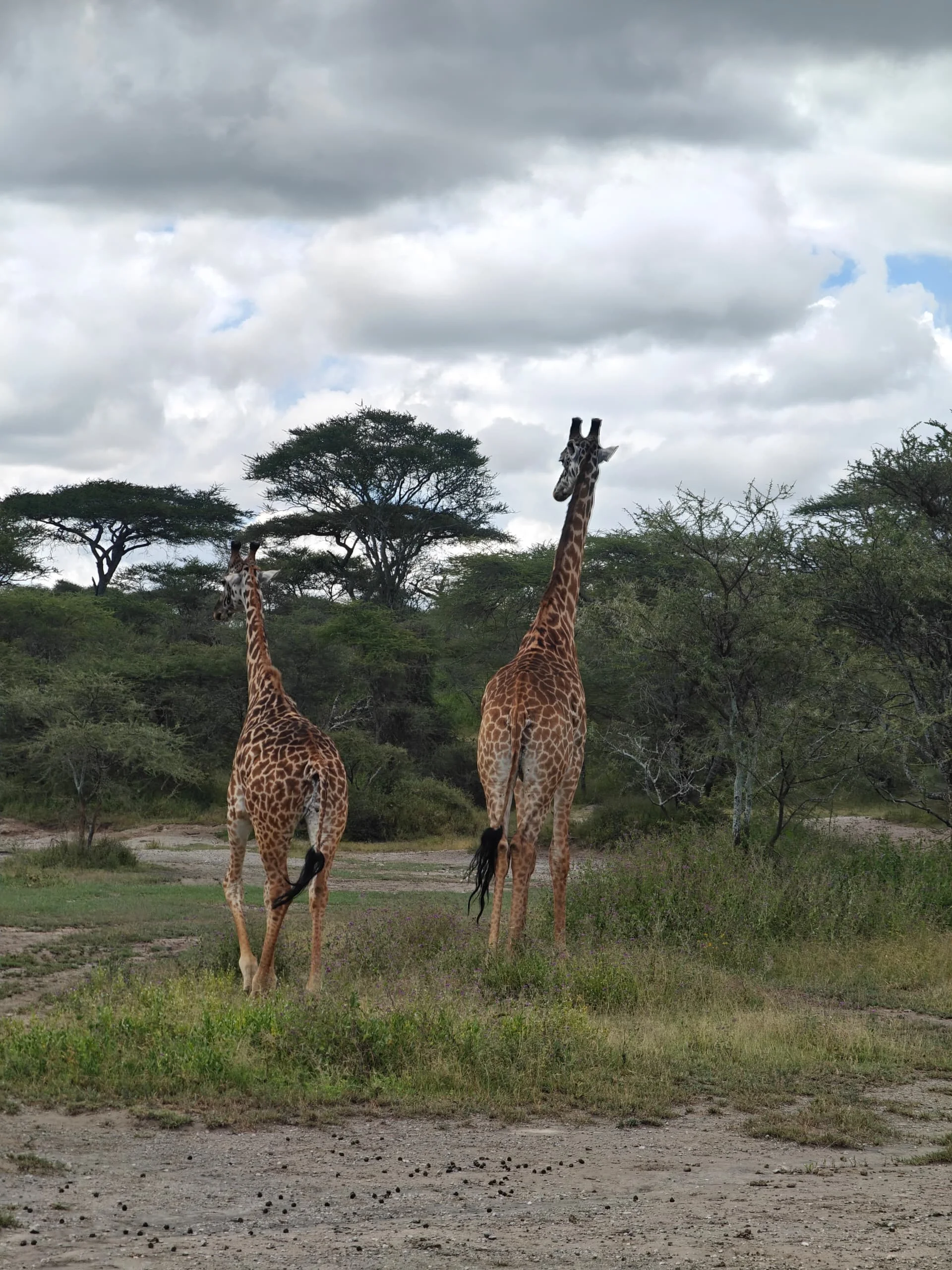
Yes. A well-documented example is Omo, a pale giraffe recorded in Tarangire National Park by the Wild Nature Institute. Its 19 January 2016 field report describes a calf seen in 2015 and again in January 2016. The researchers identify her as leucistic, rather than albino.
That distinction matters. Omo's story is a useful Tanzania example of why the popular phrase “albino animals” does not describe every pale individual correctly. Use the research team's wording and date when sharing the story.
The report is a historic record. It does not establish Omo's current location, survival, or availability for visitors in 2026 or later. This article makes no current sighting claim and does not use an old report as a reason to promise a particular animal on a new safari.
For a guest, the lesson is practical. Read the original record, check when it was made, and ask what is known now. A guide may discuss an old case during a drive without suggesting that the same animal is nearby.
4. What challenges can albino animals face in the wild?
Reduced pigment can affect more than appearance. The Missouri Department of Conservation overview describes possible vision and sunlight-related problems. It also cautions that being more obvious to people does not always tell us exactly how predators see an animal.
Keep the language measured. A pale animal is not automatically rejected by its group, unable to find food, or certain to die young. Its species, habitat, health, and life history all matter. A single photo cannot reveal the whole story.
Guests can ask what the animal is doing at that moment. Is it feeding, resting, moving with others, or staying in shade? These are observations. They are not enough on their own to diagnose health, explain social bonds, or predict survival.
Albino animals deserve the same care in viewing as any other wildlife. Interest in a rare trait should never become a reason to chase, crowd, feed, or handle the animal. If something seems wrong, tell the guide and let the right wildlife staff decide what to do.
5. How should guests behave if they see a pale animal?
Stay calm, give it space, and follow the guide's instructions. Let the animal feed, rest, and move without pressure. Keep your voice low, avoid sudden movements, and do not ask the driver to block its path for a photo.
TANAPA's Nyerere visitor guide gives examples of core viewing rules: designated tracks, safe distance, no feeding, and authorised guiding. Check the rules for the park and activity you have booked. A rare sighting does not create an exception.
Take a few useful images if conditions allow, then watch with your eyes too. Record the date and general setting for your own notes. Ask the guide how to pass a report to park staff or a suitable research team without turning the sighting into a public rush.
When sharing photos of possible albino animals, keep the caption honest. Describe what is visible, name the source for any confirmed diagnosis, and avoid publishing a live location that could draw a crowd. It is fine to leave an identification open.

A pale baboon beside a darker companion, from the TanzaLux media library. Appearance alone does not confirm the cause of the pale colour.
How to read a rare-wildlife story with care
A striking image can travel far beyond the place where it was taken. Before sharing it, check the species, country, date, and original source. A Kenya story should not become a Tanzania sighting because the landscapes look similar. A ten-year-old record should not be presented as news from this week.
Ask whether the claim comes from researchers, park staff, an observer, or a caption copied many times. These sources offer different kinds of evidence. A research team's dated field note has a clearer basis than an image with no location or history.
For albino animals, be cautious with claims such as “the only one in the world” or “sightings are increasing.” Those claims need evidence beyond one image or a growing number of social posts. This guide does not claim a rise in sightings in Tanzania.
Find the oldest reliable source you can trace.
Check whether the source says albino, leucistic, or simply pale.
Look for a date, species, and clear place name.
Separate a confirmed record from a suggested explanation.
Keep old reports in their original time context.
Avoid precise live locations when they may expose wildlife to pressure.
Simple ways to photograph pale wildlife
Bright fur or feathers can lose detail in a photo, especially in strong light. Check the image on your camera and adjust exposure if the pale parts look blank. Your settings will depend on the light, distance, and camera, so practise before the safari.
A longer lens can help you frame an animal from a respectful distance. A phone can still make a useful record of the setting and nearby animals. Do not move closer just because your camera cannot fill the frame.
For images of albino animals or other pale wildlife, keep the original files. Strong filters and large colour changes can mislead viewers. If you edit for a finished image, do not treat that edit as evidence of the animal's true colour.
Keep spare batteries and enough space for photos.
Take one wider frame to show the context.
Wait for a clear view rather than calling or feeding the animal.
Use the guide's chosen viewing position.
Leave the exact cause of pale colour open if it has not been confirmed.
Planning a safari around wildlife curiosity
Plan for a rich wildlife trip, with any rare colour trait as an unexpected bonus. There is no sound reason to promise albino animals as a standard safari inclusion. A well-placed camp and patient guiding can support learning without guaranteeing a rare individual.
Tell the planner what interests you most. You might enjoy giraffe behaviour, bird identification, animal tracks, or long periods with one herd. These interests help shape a good day even when no unusually pale animal appears.
Discuss the pace with your group before booking. Some guests enjoy waiting for a small detail. Others prefer to move between habitats and return to camp for rest. A private safari can allow that conversation while the guide still follows park rules and safety limits.
Ask about Abel's availability if you would like him to guide your trip. This draft does not confirm his schedule, assignment, training record, or personal sightings. The final booking should name the guiding arrangement that TanzaLux can actually provide for your dates.
Tell TanzaLux what you want to learn and ask about your safari guiding options.
When should you travel?
Choose dates around the wider safari experience. There is no verified best month for seeing albino animals in Tanzania as a group. A rare colour trait does not follow the same seasonal timetable as a migration phase.
Use normal route planning instead. The Tanzania tourism seasonal guide describes broad wildlife-viewing periods. Discuss rain, road access, camp opening dates, and the part of each park you hope to explore. A strong plan stays worthwhile without a rare sighting.
Give your main area enough nights. Changing camps each day can reduce time for slow observation. Ask the planner to show the route on a map and explain the travel days, especially if you are adding Serengeti or Zanzibar.
What to ask before you book
A safari quote should make the experience clear. Review the camp names, room type, meals, guide and vehicle arrangement, fees, and transfers. Compare proposals on the same basis rather than using one headline price.
Ask what is private and what is shared. A private airport transfer does not always mean private drives at a fly-in camp. Check the plan for each stay, along with the terms for deposits, cancellation, and any changes.
For a trip inspired by albino animals, confirm that the route is a general wildlife safari with no rare-sighting guarantee. That keeps the promise honest and lets you enjoy all the animals you find.
Sample Tanzania safari packages
These sample packages are route ideas for discussion, not fixed offers or trips that guarantee albino animals. Camps, transport, fees, activities, and guide availability need a tailored quote. The focus is time in nature and a chance to ask thoughtful wildlife questions.
Five days: A slower Tarangire wildlife stay
Day 1: arrive and stay in Arusha.
Day 2: travel to Tarangire and enjoy viewing as time allows.
Day 3: a full day exploring Tarangire from the chosen base.
Day 4: further viewing, then return to Arusha.
Day 5: transfer for departure.
This five-day, four-night idea includes two nights in the Tarangire area. It can suit guests who prefer one main park and a steady pace. Omo's historic record adds context to a discussion of colour, rather than a promise to find her.
Request a private five-day Tarangire safari focused on wildlife learning.
Eight days: Tarangire, Serengeti, and Ngorongoro
Day 1: arrive and stay in Arusha.
Day 2: Tarangire game drive and an overnight in the chosen area.
Day 3: transfer toward the selected Serengeti camp.
Days 4–5: two full days of Serengeti game drives.
Day 6: travel with viewing toward the Ngorongoro highlands.
Day 7: planned crater visit, then return to Arusha.
Day 8: departure transfer.
This eight-day, seven-night plan has three Serengeti nights. Choose the Serengeti base to match the season and your interests. Some transfer days are long, so add time or trim a stop if you want an easier pace.
Shape an eight-day northern circuit safari around your wildlife interests.
Twelve days: Northern wildlife and Zanzibar rest
Day 1: arrival and an Arusha hotel night.
Day 2: Tarangire and an overnight nearby.
Day 3: travel toward Serengeti.
Days 4–5: two full days based in Serengeti.
Day 6: transfer to the Ngorongoro highlands.
Day 7: planned crater visit and Arusha overnight.
Day 8: flight to Zanzibar and beach transfer.
Days 9–11: island rest, with optional outings agreed in advance.
Day 12: transfer for departure.
This twelve-day, eleven-night idea has three Serengeti nights and four Zanzibar nights. Flights and room availability may change the order. Check transport, meals, optional outings, and entry or insurance needs for the full journey before booking.
Combine a private Tanzania wildlife safari with a Zanzibar beach stay.
Why travel with TanzaLux Safaris?
TanzaLux is a Tanzanian-owned company based in Arusha. Its About TanzaLux page describes a tailored approach shaped by dates, pace, budget, and interests. The team can coordinate safari, Kilimanjaro, and Zanzibar within one wider holiday.
If albino animals have sparked your interest, use that curiosity to start a wider conversation about wildlife. Ask the planner for a route that gives you time to learn and watch. Discuss guide availability, camp position, and how long you want to spend at each stop.
A local planning base: discuss northern Tanzania with an Arusha-based team.
A route built around you: choose a pace that suits your group.
Clear arrangements: confirm guide, vehicle, camps, fees, and terms in writing.
A connected holiday: discuss onward beach or mountain plans with the same team.
The value is a well-planned journey and space for real discovery. A rare animal may never appear, yet a patient day can still reveal a great deal. Ask good questions, keep an open mind, and let the animals lead the story.
Share your dates and wildlife wishes with TanzaLux to begin your safari plan.
Frequently asked questions
1. What are albino animals?
They are animals with an inherited condition that affects melanin production. They may look very pale in the skin, coat, feathers, or scales. A pale appearance alone does not confirm albinism, so the cause needs careful review.
2. Is every white animal an albino?
No. White can be a normal species colour, a seasonal feature in some animals, or the result of another pigment trait. Describe what you see before naming a cause. Use a reliable record when one exists.
3. What is leucism?
Leucism involves pigment cells and may produce white areas or a largely white appearance. It differs from albinism. The term needs care across animal groups, and an expert may need more evidence than a single safari photo provides.
4. Can eye colour settle the question?
Eye colour can be a clue, but it is not a reliable field test from every distance or image. Light and detail matter. Do not chase an animal to inspect its eyes; let a specialist review suitable evidence.
5. Are albino animals a separate species?
No. Albinism is a trait or condition within a species, rather than a new species name. A giraffe remains a giraffe. Shape, size, movement, and other features still help identify the animal.
6. Was Omo the white giraffe albino?
The Wild Nature Institute's 2016 report identifies Omo as leucistic, rather than albino. The distinction is part of what makes her story useful for learning. Keep that dated research description when sharing her story.
7. Can I see Omo on a Tarangire safari today?
This article does not confirm her current status or location. The cited field report is historic. A new safari should be planned around the wider park experience, with no promise of seeing Omo or another rare individual.
8. Is there a best month for albino animals?
There is no verified Tanzania-wide month for seeing animals with albinism. Choose dates for your wider safari goals, access, and preferred pace. Treat an unusual colour sighting as a chance event rather than a seasonal promise.
9. Can a safari company guarantee a rare sighting?
A wild safari cannot honestly guarantee a particular rare animal. A planner can choose a suitable route and allow time to explore. Review what the package actually includes, and be cautious of promises tied to an old photo.
10. Do pale animals always struggle to survive?
Do not assume the same outcome for every animal. Vision, sunlight, habitat, and other factors may matter, but a single view does not reveal a full life history. Use species-specific evidence rather than a blanket claim.
11. Are pale animals always rejected by their group?
No such general claim should be made from colour alone. Watch what the animals are doing and separate that observation from a claim about social bonds. A short sighting cannot establish the full history of a group.
12. Is a pale bird with white patches always albino?
No. Bird colour changes have several possible causes. The BTO guide explains why leucism, progressive greying, and other traits can be confused. A useful record includes species features and context, while leaving the cause open if needed.
13. Should I report an unusual sighting?
Ask your guide how to share it with park staff or a suitable research team. Keep the date, useful images, and a clear description. Do not assume that a report needs to become a live public location post.
14. Should I post the exact location online?
Ask the guide or park team before sharing a precise live location. A rare animal may attract unwanted attention or a rush of vehicles. A general, delayed post can share the experience without directing people straight to it.
15. What if the animal appears injured?
Tell the guide and keep your distance. Let park staff or the appropriate wildlife team assess the situation. Do not leave the vehicle, feed, handle, or attempt to treat a wild animal yourself.
16. Can I get closer for a better photograph?
Only within the safe position and rules set by your guide and the protected area. Use your lens or a wider composition instead of pressuring the driver. The animal should be free to move and behave normally.
17. Are the pictures in a social post enough to confirm albinism?
Not always. Check the original file, source, date, and location. Exposure and editing can change the appearance of colour. A careful caption may describe a pale animal without claiming a confirmed diagnosis.
18. Are these Abel's recorded answers?
No. This is an editorial Q&A prepared for Abel's review, as noted at the start. It includes sourced background, with no invented quotes or personal sightings. His own answers and approval should be added before presenting it as an interview.
19. Can Abel guide my safari?
Ask TanzaLux about his availability and the guiding plan for your dates. This draft does not confirm an assignment. The final proposal should make clear who is booked and whether your drives are private or shared.
20. How can I plan a wildlife-learning safari with TanzaLux?
Share your dates, group size, budget, and interests through the contact page. Ask for enough time to watch wildlife and a clear plan for camps, transport, and guiding. Treat any rare colour sighting as a bonus.
Ready to start planning?
Tell us your dates and what you're after — no obligation.