5.0 Excellent

Is It Safe to Travel to Tanzania? Ebola Facts, Geography, and Safari Safety

Tanzania travel safety deserves a clear answer based on up-to-date facts. If you are asking, “Is it safe to travel to Tanzania?”, start with your exact route, your health needs and the latest travel advice. A well-planned safari can be a rewarding trip, but no country, lodge or tour company can promise travel without risk.
Health facts checked: 25 October 2026. In a notice dated 21 October 2026, Tanzania’s Ministry of Health stated that there was no Ebola disease in Tanzania at that time. This is reassuring, dated evidence. It is not a promise about future conditions. Read the Ministry’s public notice and recheck new updates before you book and fly.
This guide explains the Ebola facts, the geography and the useful steps that help you plan. It also covers current travel warnings, health planning and safari habits. It gives general trip advice; a travel-health doctor should assess your own medical needs.
What does Tanzania travel safety look like right now?
There are a few things to check. An Ebola update tells you about one disease. It does not settle questions about roads, crime, unrest, access to care or wildlife. Read the health and crime advice together, then apply it to your dates and the places you will visit.
The WHO update of 23 October 2026 reports an ongoing Bundibugyo virus disease outbreak in the Democratic Republic of the Congo (DRC), with imported cases in Kenya and Nigeria. Tanzania is not listed among the countries that had reported cases in that update. Regional spread still makes preparedness and honest travel declarations important.
The US travel advisory issued 16 October 2026 gives Tanzania Level 2: Exercise Increased Caution. It cites crime, terrorism, health, unrest, arbitrary enforcement of laws and risks to gay and lesbian travellers. It gives stronger advice for the Mozambique border area in Mtwara. Read the full advice for your passport and your own needs.
Confirmed status: use the date and wording of the dated health notice.
Your route: check every country visited or used in transit.
Your dates: review near-term alerts and delays or changes.
Your health: seek advice that fits your health history.
Your cover: confirm treatment, evacuation and cancellation terms.
Discuss your route and travel priorities with TanzaLux Safaris before choosing your private safari.
Ebola in Tanzania: read the status and the date together
It is reasonable to feel concerned when an Ebola story names a nearby country. First, check where cases were found. Then check the date of the report. “In East Africa” is too broad to describe an individual traveller’s exposure.
The 21 October Ministry notice says Tanzania had no Ebola disease at that time. It also describes stronger checks at airports, ports and land borders, plus wider preparedness. Those checks are a step to help keep disease out. Their presence does not, by itself, mean there is an outbreak at your destination.
For a useful Tanzania Ebola update, keep the source link as well as the headline. A screenshot with no date can spread long after things have changed. Ask what the post means. Is it about confirmed cases, a suspected case, a border rule or staff training? These are not the same kind of news.
Good Tanzania travel safety planning leaves room to act on new facts. Check again shortly before paying non-refundable costs and before you fly. If state advice changes, discuss the impact on your flights, stays and insurance. Check the facts with care. Neither panic nor a promise that all is well will help you plan.
Ebola facts for Tanzania travel safety
According to the CDC explanation of Ebola transmission, infection can occur when broken skin or the eyes, nose or mouth contact infected body fluids or contaminated objects. Contact with infected animals can also be a route. Ebola does not spread through the air in the same way as flu or COVID-19.
Simply passing someone in a public space is not the same exposure as contact with infected blood or vomit. Watching wildlife from a vehicle is also different from handling a sick animal or a carcass. This distinction helps put safari activities in context without claiming that any activity is risk-free.
Tanzania travel safety should include basic hygiene and respect for wildlife. Avoid contact with sick or dead wild animals and do not handle bats or primates. Do not buy or eat bushmeat. If someone is seriously ill, call for trained help. Do not try to give hands-on care without the right skills and kit.
Treat people who have had Ebola with respect. Do not judge someone’s health by how they look or where they are from. Follow health advice if there was a possible exposure. Risk depends on what happened, where it happened and when, not on a person’s passport.
Are mosquitoes a source of Ebola?
CDC states that there is no evidence that mosquitoes or other insects spread the viruses that cause Ebola disease. That does not make bites harmless. Malaria and other insect-borne diseases require their own prevention plan. Keep Ebola facts separate from the reasons to use bite protection.
Geography: where are the safari parks and Zanzibar?
Tanzania is in East Africa. It borders Kenya and Uganda, and shares Lake Tanganyika with the DRC and other countries. Zanzibar lies off the mainland in the Indian Ocean. The US country profile lists Tanzania’s neighbours, while the Tanzania Investment Centre describes the shared lakes.
The northern safari circuit brings together places such as Tarangire, Ngorongoro and Serengeti. These are distinct destinations within Tanzania, as shown in the Tanzania Tourist Board’s northern circuit overview. A trip built around them is not automatically a visit to an affected health zone in another country.
However, geography is context, not a shield. People travel by air, road and water. Cases can occur beyond the main outbreak area. A long distance on a map does not replace screening, health advice or a check of your flight connections.
For Tanzania travel safety, map the whole journey. Include the arrival airport, any transit airport, border crossings, parks, lodges and beach stays. Ask whether you will remain in an airport or enter a transit country. Give your doctor and airline the full route rather than only the final destination.
Three places, three planning questions
Arusha and the northern parks: how do airport transfers, road days and camp access fit together?
Zanzibar: which entry checks, health precautions and insurance rules apply to the island part?
A multi-country trip: how do recent travel history and transit rules affect each border?
Ask TanzaLux to explain the full route from arrival to your safari and any Zanzibar extension.
Entry screening and Tanzania health requirements
The UK entry requirements page reports heightened health screening for travellers from high-risk regions and affected countries following Tanzania’s 17 October announcement. It also says all travellers must complete the Traveller’s Health Surveillance Form before departure or on arrival.
Use the official Afyamsafiri health portal and check the current Ministry of Health Travel Advisory No. 18. Provide accurate travel and health information. Follow what Port Health staff tell you to do at the border and after entry. Do not assume that a rule from a past trip still applies.
Tanzania travel safety checks should cover transit as well as entry. Ask your airline about rules for your exact flight sequence and recent travel history. Do not hide a visit to an affected place to avoid questions. Allow enough time for airport checks and keep the form receipts that the system gives.
A health form, visa, vaccine record and insurance policy each have a role. Having one does not replace the others. Check the requirements for your passport and route through state sources before you leave. Your safari quote should identify which travel documents remain your responsibility.
Read the latest advice on crime and unrest
A Tanzania travel safety guide must cover more than one health risk. The UK safety advice warns of possible demonstrations, including around the 29 October 2026 election anniversary. It advises avoiding demonstrations and large crowds. It also notes that internet access has been limited during past unrest.
If your trip falls near that date, ask about current local conditions and how transfers could be adjusted. Keep key phone numbers and booking details available offline. A quiet safari camp does not remove the need to check the roads and airport routes used to reach it.
Regional advice names the places it covers. The UK regional risk page advises against all but essential travel within 20 kilometres of Tanzania’s border with Mozambique’s Cabo Delgado province. It also highlights robbery risks near Burundi and in Kigoma. These places should not be treated as the same as a northern safari route.
Use arranged transfers, keep valuables discreet and seek local advice before going out. Do not approach crowds to watch or record unrest. Review the advice relevant to your identity and activities too. A private safari helps organise the journey; it does not override official warnings or local laws.
Health planning beyond the Ebola headlines
Tanzania travel safety starts with a pre-travel health visit. Show the doctor your route, travel dates, activities and health history. Include pregnancy, immune system needs, medicines and children’s ages where relevant. If departure is close, still seek advice rather than assuming it is too late to prepare.
The CDC Tanzania guide recommends prescription malaria prevention for travellers going to relevant areas. It also lists vaccine advice and other health risks, including cholera. Ask a doctor which steps fit your route. Do not choose a malaria drug or vaccine solely from a safari blog.
Bring enough of your prescribed medicines for the trip and a sensible delay, subject to entry rules. Carry a clear list of generic names and key medical information. Check storage needs with the pharmacist. Tell your planner about useful support you need, while keeping medical treatment decisions with qualified professionals.
Yellow fever rules depend on the route
Yellow fever entry rules can depend on where you have travelled and your transit time. CDC lists requirements for arrivals from risk countries, including certain long airport transits. Ask your doctor and the relevant authorities to check your full journey. Do not assume that a direct arrival and a multi-country route have the same rules.
Use bite protection alongside any prescribed prevention
Follow CDC bite prevention advice: use an suitable repellent as directed, cover exposed skin and use suitable screens or a bed net where needed. Check product age limits for children. A room’s luxury label does not replace these basic steps.
Food, water and hand hygiene still count
The CDC food and water guide advises handwashing and safer food and drink choices. Choose properly cooked hot meals and water from a safe source. Check the safety of ice when water quality is uncertain. These habits address everyday travel risks as well as helping you feel prepared.
Plan a comfortable TanzaLux route with time for rest, clear transfers and your agreed useful needs.
Tanzania safari safety on game drives and at camp
Tanzania safari safety depends on guide judgement and guest behaviour. Listen to the briefing, remain in permitted areas and ask before leaving the vehicle. An animal that seems calm is still wild. Do not feed wildlife, call to it or seek a closer view by ignoring instructions.
The Serengeti visitor guide asks visitors to follow park rules, avoid feeding animals and follow ranger instructions. Serengeti safari safety also means using the camp’s escort system where required. Ask how to contact staff at night instead of walking alone to find help.
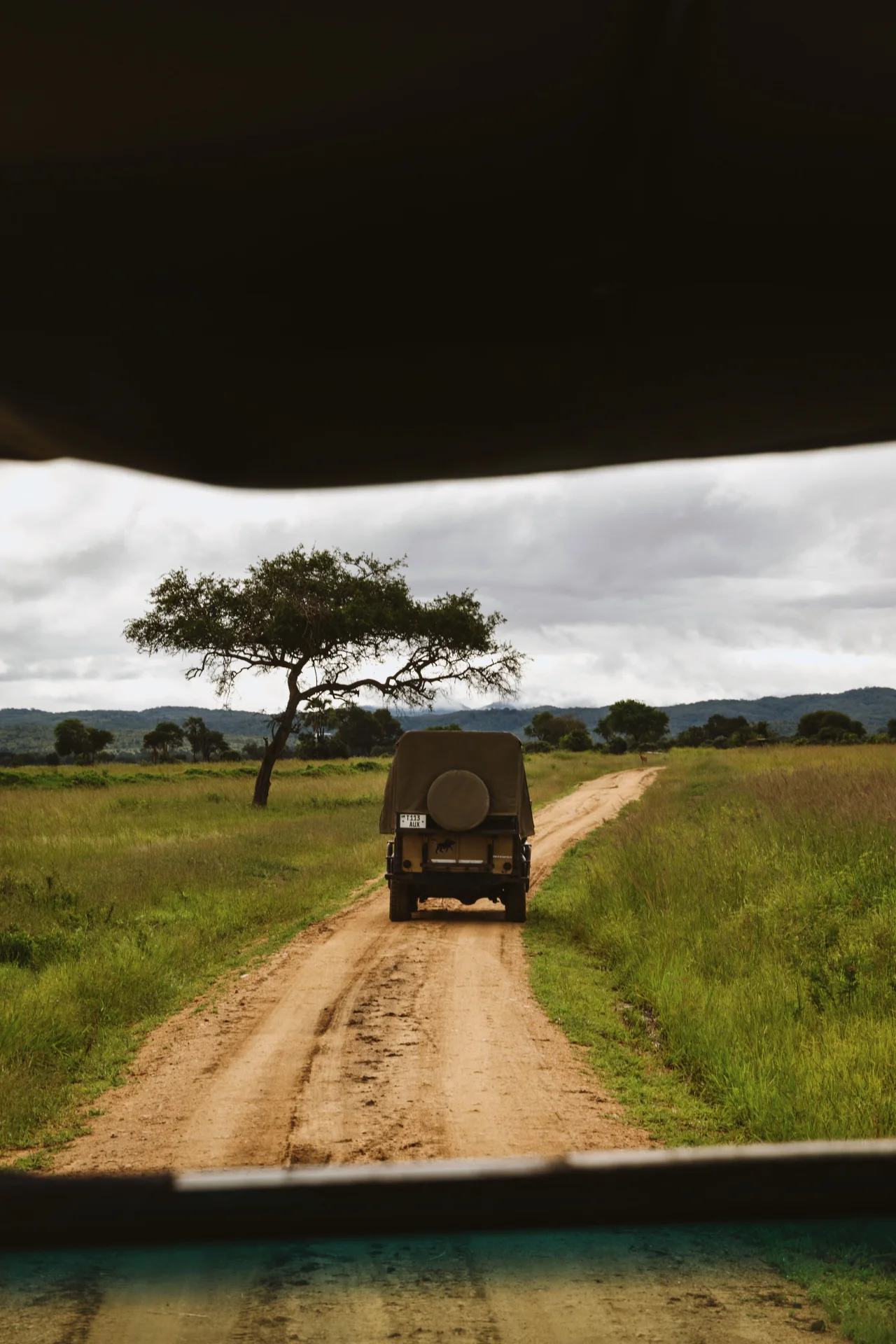
A guided safari pairs wildlife viewing with park rules and a clear daily plan. This media-library photograph illustrates a safari drive.
Discuss the pace before you set out. Long days can be tiring, especially after an long flight. Ask about water, planned rest stops and the likely road conditions. Wear the available seat belt while travelling and keep bags secure. A day with less rush can be more fun.
Walking safaris, balloon flights and other activities need their own checks. Ask about the operator, permits, age or fitness limits and weather conditions. They should be included only where suitable and confirmed. Do not assume that booking a safari means every activity is suitable for every guest.
Zanzibar travel safety needs its own review
A beach extension changes the setting, but not the need for planning. Zanzibar travel safety includes health checks, safe transfers, care with valuables and suitable insurance. Check sea conditions and the operator before taking a boat trip. Ask staff where swimming is suitable rather than judging only from a photograph.
Tanzania travel safety applies across the full holiday, including the flight between safari and beach. Keep your health documents available and check the rules for both parts. Allow time for the island transfer and onward travel. A beach booking should show the exact room, board basis and transport plans.
Tanzania travel safety: what to do if you feel ill
Seek prompt medical advice for fever or significant illness during or after the trip. Tell the doctor where you have been and when. Symptoms alone cannot tell you the cause. It could be Ebola, malaria or another illness. Do not try to name the illness from a list online.
The CDC symptom guide notes that Ebola symptoms can appear 2–21 days after exposure and may begin with fever, weakness, headache or aches. Bleeding is not required for concern. If you think you had a possible Ebola exposure and become ill, contact health services immediately and call ahead before attending.
For Tanzania travel safety, save contacts before you need them. The Ministry’s 21 October notice lists 199 for public-health reporting. The UK health page lists 112 for an ambulance. In a remote camp, alert staff and your insurer promptly so help can be coordinated. Do not assume an ambulance can reach every park quickly.
Insurance and medical access: check the limits
Remote parks can be far from the care you may need. Ask your planner how emergencies are handled at each base and ask the insurer about approval, payment and evacuation plans. A policy mentioning evacuation does not mean an aircraft is instantly available or that every illness is covered.
UK entry advice lists mandatory inbound cover for non-resident visitors to mainland Tanzania and Zanzibar. Check the latest rules and both policies’ terms.
Review exclusions for outbreaks, known events, existing conditions and travel against government advice. Ask about cancellation and disruption too. Keep a written answer where you need clarification. This is part of Tanzania travel safety planning, especially before paying for a complex trip with several flights and remote stays.
Ask TanzaLux about your proposed camps, transfer links and useful support plans before confirming.
A simple plan for the week before you fly
Tanzania travel safety is easier to manage when you keep your key details in one place. Make a short trip sheet for your group. List each night’s stay, the next day’s route and the name of the person who should meet you. Add phone numbers you can use if your first plan changes.
Check the full route once more
Read the ticket from start to finish. Check the names of each airport and the time between flights. Ask the airline about a short link or a change of airport. If you booked flights on separate tickets, ask how that affects your options if the first flight is late. Do not guess from a route map.
Send the final flight times to your planner. Ask them to confirm the pick-up point, the driver’s contact and the first night’s stay. Tell them if your bags, group size or room needs have changed. Small changes are easier to deal with before you land than at the end of a long travel day.
Keep a small set of useful records
Save your trip plan, cover details and key phone numbers so you can read them without the internet. Keep a paper copy if that helps. Share the plan with a trusted person at home. Let them know whom to call if they cannot reach you for a while. Do not post private records in public travel groups.
Pack your key items where you can reach them. These may include your phone charger, travel papers and the medicines you need, subject to the rules for your route. Check what can go in each bag with the airline. Keep the first day simple so a late bag does not upset the whole plan.
Agree how your group will handle a change
Talk through who will call the planner or airline if a flight changes. Choose one person to keep the group’s main details up to date. Keep that role simple; they do not need to make health choices for anyone else. Each guest should know where to get help and how to share their own needs.
For Tanzania travel safety, leave some space in the schedule. A buffer night or a free half-day can make a change less stressful. Ask what you would lose if a drive or flight runs late. Check change fees before you pay. A clear plan gives you choices without the need to rush.
Use news to ask a clear question
If you see a worrying headline, save its source and date. Ask which part of your route it affects and what action is advised. A report from another place may still matter to a flight link. It may also have no direct effect on your booked stay. Get the facts before you make a costly change.
Good Tanzania travel safety planning should leave you ready to enjoy the trip. Once you have checked the facts, set a time to check the news again. You can look forward to the bush and the coast. Keep a clear way to act if advice changes.
Sample packages for a clear, well-paced journey
These routes are planning examples, not fixed offers or health guarantees. Each needs current advice, available rooms, set travel plans and a health check where needed. Prices and inclusions depend on the final quote. None of these sample routes requires a visit to the DRC or Uganda.
Sample package: 7 days / 6 nights on the northern circuit
Night 1: rest in Arusha after arrival. Night 2: stay near Tarangire for the agreed park visit. Nights 3–5: use one Serengeti base matched to your dates. Night 6: return to Arusha before departure on day 7, using the confirmed road or air plan.
This outline keeps the route within Tanzania and leaves several nights at one safari base. Ask about actual transfer times and rest stops. A route with clear handovers can support Tanzania travel safety, but local conditions and flight history still need review. Add time if the proposed travel days feel too long.
Sample package: 10 days / 9 nights of safari and Zanzibar
Night 1: settle in Arusha. Nights 2–5: enjoy a Serengeti stay with guiding suited to your group. Nights 6–9: rest in Zanzibar. Day 10: depart, with the island transfer and international connection planned together.
Compare the safari and beach health requirements as one journey. Check the flight route rather than assuming a direct service on every date. Discuss mosquito protection, meals and water plans with your doctor and hosts. Keep the beach days relaxed enough to enjoy the change of pace.
Sample package: 8 days / 7 nights at a slower family pace
Nights 1–2: rest in Arusha and allow time to settle. Nights 3–6: stay at one suitable Serengeti base. Night 7: return to Arusha before departure on day 8. Confirm the air or road links before setting the final schedule.
One main safari base can reduce packing and room changes. Ask about family room layouts, child activity rules and access to assistance. Tanzania travel safety for a family should reflect the children’s ages and each person’s health needs. Give the planner your room and access needs early and confirm them with the property.
Adapt a sample package with TanzaLux Safaris around your dates, comfort needs and preferred pace.
Why travel with TanzaLux Safaris?
TanzaLux Safaris is a Tanzanian-owned company based in Arusha. Its company overview describes trips built around your dates, pace, budget and interests. Local planning can help you understand the route, choose sensible overnight stops and connect the safari with a beach stay.
The TanzaLux private safari page describes tailor-made travel with your own vehicle and driver-guide. Use that planning stage to discuss transfer timing, rest days and the daily routine. Ask who guides each section and who to contact if a flight or local condition changes.
For Tanzania travel safety, clear roles matter. Your doctor advises on personal health, authorities set entry and public-health rules, and insurers explain cover. Your safari planner helps build and coordinate the journey. A capable team should work with current guidance and explain useful limits rather than promise a risk-free holiday.
Share your full flight route and the support you need. Ask for camp and hotel names, transfer details, what is included and change terms in writing. These steps help you make an informed choice and let the trip focus on wildlife, landscapes and time together.
Your Tanzania travel safety checklist
Read the latest Ministry of Health and WHO updates, with their dates.
Check your own government’s security and regional advice.
Review every transit country and recent travel-history rule.
Complete required health declarations accurately.
Discuss vaccines, malaria prevention and medicines with a doctor.
Confirm insurance, remote medical access and emergency contacts.
Plan transfers with realistic time and clear meeting points.
Follow guides, camp briefings and park rules throughout the trip.
Good Tanzania travel safety planning is an ongoing process. Use the dated facts here to ask better questions, then check the trusted sources again when you are ready to travel. Reassurance is strongest when it comes with clear evidence and useful planning.
Frequently asked questions
1. Is it safe to travel to Tanzania right now?
It depends on your route, dates, health and needs. The US advisory reviewed on 25 October 2026 is Level 2, with stronger advice for some areas. Read current official guidance and assess the whole journey. A safari booking is not a guarantee of safety.
2. Is there Ebola in Tanzania?
Tanzania’s Ministry of Health stated on 21 October 2026 that there was no Ebola disease in the country at that time. This guide was checked on 25 October. Recheck the linked notice and newer updates before you go.
3. Does an outbreak in a neighbouring country mean Tanzania has Ebola?
No. Case reports name places and dates. Neighbouring outbreaks can create a risk of importation and lead to screening. They do not establish cases in Tanzania. Read current health reports rather than seeing a whole region as one outbreak zone.
4. Where is Tanzania compared with the DRC?
Tanzania is in East Africa and shares Lake Tanganyika with the DRC on its western side. Northern safari parks and Zanzibar are distinct destinations. Check the places on your full route. Distance gives context but cannot rule out disease importation.
5. Can I catch Ebola simply by sitting near someone?
CDC says Ebola does not spread through the air like flu or COVID-19. Simply being near someone is not the same as contact with infected body fluids. Follow CDC Ebola advice if there is a possible exposure or an ill traveller needs help.
6. Can mosquitoes spread Ebola?
CDC states there is no evidence that mosquitoes or other insects spread Ebola viruses. Mosquitoes can spread other diseases, including malaria. Use bite protection and follow the malaria prevention plan agreed with your doctor.
7. Can I get Ebola from watching animals on safari?
Watching from a vehicle is different from handling infected animals or body fluids. Do not touch sick or dead wildlife, handle bats or buy bushmeat. Follow your guide and park rules. Avoid describing any wildlife activity as entirely free of risk.
8. What health checks should I expect on arrival?
Current UK entry advice reports heightened checks for travellers from high-risk regions and affected countries, plus a health form for all travellers. Check the latest Ministry advisory for your route. Follow Port Health instructions on screening and any follow-up.
9. Do I need to complete a Tanzania health form?
The entry advice reviewed for this guide says all travellers must complete the Traveller’s Health Surveillance Form before departure or on arrival. Use the official Afyamsafiri portal. Provide accurate information and keep the confirmation supplied by the system.
10. Does transit through Kenya or another country matter?
It can. Your transit route and recent travel history may affect screening or entry rules. Ask the airline and authorities about your exact flight sequence. Do not assume that remaining in an airport makes every health or border rule irrelevant.
11. Is there an Ebola vaccine for safari travellers?
Do not assume an Ebola vaccine protects against every virus type. WHO’s 23 October update states that no approved vaccine or specific treatment exists for Bundibugyo virus disease. Ask a travel-health doctor about current advice and your own needs.
12. What symptoms require prompt medical advice?
Seek advice for fever or significant illness during or after travel. If there may have been Ebola exposure, call health services immediately and explain the history before attending. Do not wait for bleeding. Several illnesses can cause similar early symptoms.
13. Is malaria prevention part of Tanzania travel safety?
Yes. CDC recommends prescription prevention for travellers going to relevant areas. The choice depends on your route and medical needs. Ask a doctor, take prescribed medicine as directed and use bite protection. A luxury lodge does not remove mosquito exposure.
14. Is a yellow fever certificate always required?
No single rule covers every route. Requirements can depend on travel from risk countries and certain airport transits. Check the current official rules for your route and age. Ask your doctor about vaccination suitability as well as entry documents.
15. Does Tanzania travel safety cover more than health?
Yes. Read advice on crime, unrest, terrorism, local laws and regional risks. The UK advice reviewed for this guide flags possible demonstrations around 29 October 2026. Avoid protests and large crowds and check transfer conditions near your travel dates.
16. Is Zanzibar automatically safer than mainland Tanzania?
Do not use that blanket comparison. Zanzibar has its own travel, health, road and sea considerations. Check the island part of your route in detail. An offshore location does not replace current health guidance, insurance or sensible care.
17. Does a private safari guarantee Tanzania travel safety?
No. It can help organise guiding, transfers and the daily pace, but cannot remove all risks. Follow state advice and park rules. Ask how your operator handles changes and emergencies, and confirm the plans rather than relying on a general promise.
18. What cover should I check?
Check the latest inbound cover rules and your wider policy. Ask about medical treatment, evacuation, existing conditions, outbreaks and cancellation. Check exclusions for travel against government advice and keep important insurer contacts offline.
19. How can TanzaLux help me plan?
TanzaLux can help shape a private route around your dates, pace and useful needs. Ask for clear stays, guiding and transfer details. Use qualified doctors for personal medical advice and trusted sources for entry rules and current health status.
20. Where can I check Tanzania travel safety updates?
Use Tanzania’s Ministry of Health, WHO outbreak news, your government’s travel advice and a trusted health source such as CDC. Check the dates, not just the headlines. Review airline rules for the full flight route and keep key documents saved offline.
Ready to start planning?
Tell us your dates and what you're after — no obligation.