5.0 Excellent

Is Tanzania Safe? Safety Tips When You Visit Tanzania

Tanzania safety tips begin with an informed choice about your own trip. This is a destination that calls for increased caution, clear plans and care with health, transport and personal security. A private safari can help organise the journey, while the actual route and current advice still need review.
So, is Tanzania safe to visit? There is no blanket answer for every place and guest. A guided safari, a city stay, a beach holiday and a remote road trip each involve different checks. Use this guide to understand those checks and ask useful questions before you commit.
Facts checked: 28 October 2026. Read the live official sources before booking and again before departure. Conditions can change, and your health, identity, passport and insurance may affect your decision. No tour company or luxury stay can promise a risk-free holiday.
Is Tanzania safe right now? Read the current advice
The U.S. Tanzania travel advisory, issued on 16 October 2026, lists overall Level 2: Exercise Increased Caution. It cites crime, terrorism, health, unrest, arbitrary enforcement of laws and the targeting of gay and lesbian people. Stronger Level 3 advice applies to the Mozambique border area in Mtwara, with risks including the A19 highway.
The UK Tanzania advice, updated on 20 October and checked on 28 October, advises against all but essential travel within 20 kilometres of the border with Mozambique’s Cabo Delgado province. Read the map and regional text alongside the wider country advice. Northern safari parks are a different route from that southeastern border area.
Near-term alert: the UK safety guide warns of possible demonstrations around 29 October 2026. Avoid protests, rallies and large crowds. Past unrest has involved internet limits, so save key numbers and the final travel plan offline. Review the timing and route of airport pick-ups close to travel.
Tanzania safety tips should be used with your own government’s advice. Different countries use different terms and warning boundaries. Read the full notice, not a short online headline, and ask your insurer how the current advice affects your booking.
Tanzania safety tips before you book
Start with a clear plan for the whole journey. It should show arrival, each overnight stop, park visits and the trip home. Include transit countries and any beach extension. A list of famous parks alone is not enough to assess the travel days or support you may need.
Ask the operator to name the stays and explain who provides each transfer. Check the booking terms, payment details and written inclusions. Keep one final version of the plan so every guest works from the same information. If something changes, request an updated copy.
Useful Tanzania safety tips are specific. Ask about room access, the vehicle for your trip and any need for a slower pace. Get a direct reply to essential requests before payment. A general promise of comfort may not answer a question about steps, beds or food allergies.
Read current advice for every part of the route.
Check passport, visa, transit and entry-health rules.
Confirm named stays and verified transfer contacts.
Review the vehicle, daily pace and activity limits.
Arrange suitable insurance and check exclusions.
Share essential room, dietary or access needs early.
Ask TanzaLux for a private safari proposal with clear stays, transfers and written inclusions.
Arrival safety: know who is meeting you
Save your airport name, meeting point, driver contact and planner’s number before flying. Check how the driver will identify you and what happens if the flight is delayed. Send changes promptly so the team can review the pick-up time.
If someone says your hotel or driver has changed, verify it through a contact you already hold. Do not rely only on a logo, a sign or a new message. Take time to check before leaving with an unexpected person. Tell the planner if you cannot find the agreed meeting point.
Tanzania safety tips are easier to follow when the first day is simple. A rest night can help after a long flight. Keep medicines, key papers and contacts easy to reach, within airline rules, so you do not need to unpack everything at the airport.
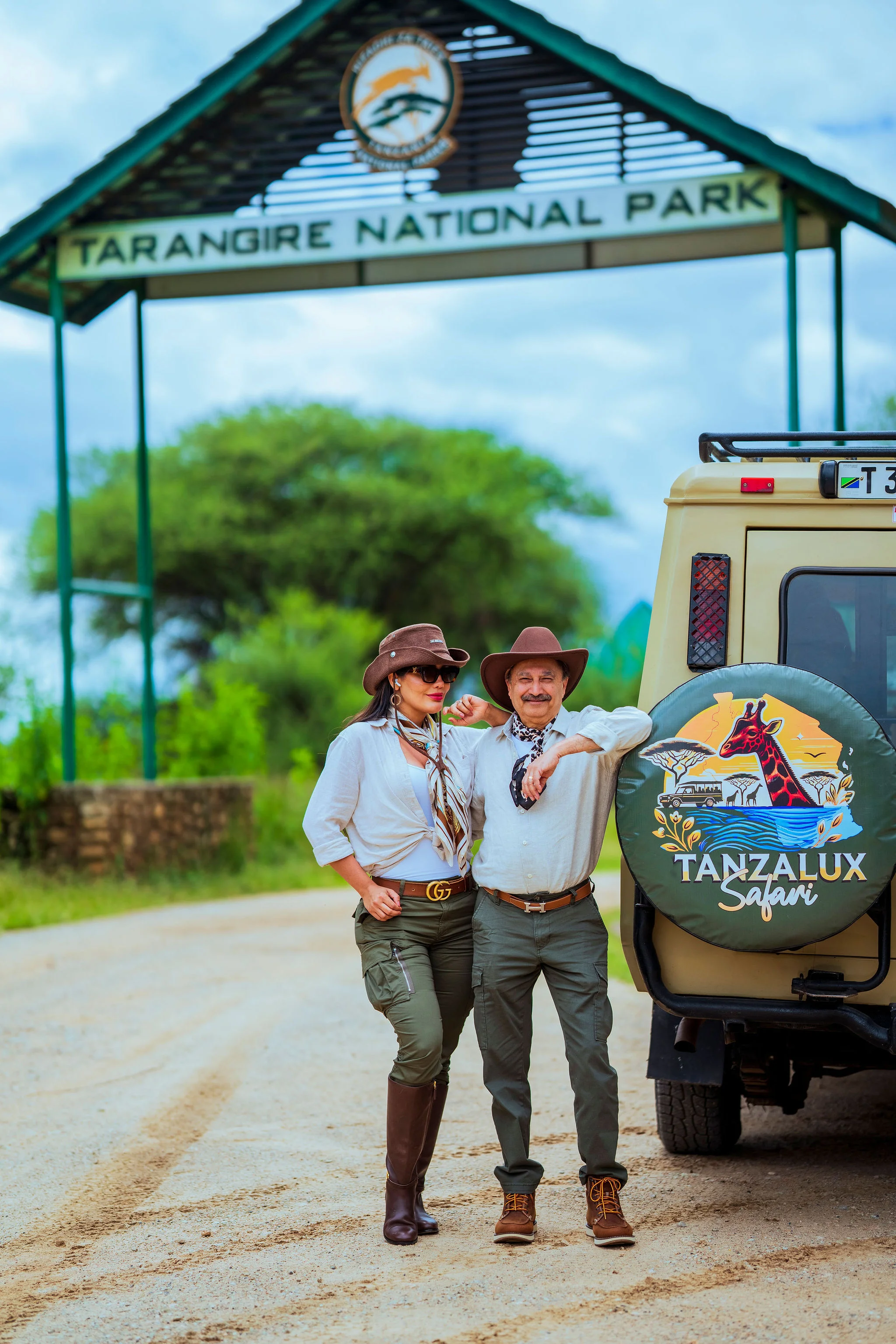
A clear handover helps the day begin well. This TanzaLux media-library photograph shows travellers beside a branded safari vehicle at Tarangire.
City safety: reduce exposure to theft and scams
The Government of Canada’s Tanzania advice warns of theft in busy places and violent crime. Use secure storage for important papers, keep valuables discreet and carry only what you need for an outing. Ask the host about current conditions before choosing a walking route.
Arrange transport through a provider you can verify. Canada also warns about express kidnappings linked to streets and transport settings. Do not accept an unplanned ride from a new acquaintance. If using a booked car, check the details before getting in.
For Tanzania safety tips about money, keep the steps simple. Use trusted payment channels, check the payee and verify changed bank instructions through a known number. Avoid sharing card details, identity papers or room numbers in public groups. Keep copies of receipts and agreed prices.
Ask for help from your host if a situation feels unclear. You do not need to accept an invitation or make a quick payment to be polite. Leave space in the day to check a detail. If threatened by an armed criminal, prioritise your life and do not resist.
After dark, solo travel and social settings
Plan the return journey before going out for a meal. Ask the host to arrange a suitable driver and agree the meeting point. Avoid isolated areas and unplanned walks after dark. Tell someone you trust where you are going and when you expect to return.
Solo guests can use the same Tanzania safety tips with a clear check-in routine. Save more than one contact and keep your phone charged. A private guide can simplify the daytime plan, but you should still know how to reach the host or planner yourself.
The UK guide highlights harassment and sexual-assault risks for women. Avoid leaving drinks unattended and be cautious with new acquaintances. A victim is never at fault for a crime. Seek medical care, support and consular help if an incident occurs.
Guests should make decisions based on their own needs and comfort. Discuss room privacy, transfers and the host’s contact routine before travel. If you prefer company for a city outing, say so. A clear request is more useful than assuming everyone wants the same experience.
Road and flight safety need separate checks
Tanzania safari safety includes the journey between parks. Ask how long each road day is likely to take, where breaks can be made and when you will arrive. Weather and road conditions can affect the plan. Do not build an onward connection around the fastest possible drive.
TANAPA’s official trip-planning advice calls for licensed operators and roadworthy vehicles. Ask about seat belts, space for bags and support after a breakdown. Keep exits clear, secure loose items and follow the vehicle briefing.
Tanzania safety tips also apply to safari flights. Check the operating airline before buying, not just the company selling the ticket. Review baggage, airstrip transfers and any medical or access needs. Ask how the plan works if the flight time changes.
The UK Air Safety List currently lists all airlines certified by Tanzanian authorities as banned from commercial services to, from or within the UK. It recommends avoiding listed airlines. Review that advice when choosing a carrier; this restriction is not a domestic legal flight ban.
Wildlife safety: let the guide set the boundaries
A good sighting does not need a risky approach. Stay within the positions allowed by the vehicle briefing and ask before leaving the car. Do not feed, call to or follow an animal on foot for a photo. An animal that looks calm is still wild.
The Serengeti visitor guide asks guests to remain in designated areas, avoid feeding wildlife and follow ranger instructions. Keep those rules in mind even when another vehicle behaves differently. Your guide should explain what is allowed at each stop.
For wildlife-focused Tanzania safety tips, patience matters. Let the guide choose the vehicle position and accept a decision to wait or leave. Keep animal paths clear. A private booking does not give special rights to ignore park rules or move closer.
A walking safari, balloon flight or other extra needs its own review. Check the provider, briefing, age or fitness limits and insurance. Confirm suitability before booking. Guests who prefer to rest at camp should have that choice built into the day.
Lodge and camp safety: learn the routine on arrival
Ask how to call staff, which paths you may use and when an escort is required. Read the emergency instructions and learn the night-time routine. A short briefing is useful even when the room looks familiar. Keep a light, shoes and key items easy to find.
Tanzania safety tips at camp include speaking up early. Report a faulty lock, path light or other concern while the team has time to help. If you need assistance at night, use the agreed contact method. Do not walk out alone where the camp requires an escort.
Compare stays by their actual fit for your group. Ask about steps, room distance, beds and help with bags. Check what is available rather than relying on a luxury label. For serious allergies, request a property reply before travel and confirm it with the host or kitchen on arrival.
Health safety: prepare for the route you will take
The UK health guide advises an early review of vaccine needs and notes limits to medical facilities. Take the full route and your health history to a travel doctor. Discuss access to care, especially for remote stays or a pre-existing condition.
The CDC Tanzania guide recommends a review of routine vaccines and medicines. It identifies malaria transmission areas below 1,800 metres and recommends prescription prevention for certain areas. Ask a clinician which medicine and timing fit you; do not copy another guest’s plan.
Daily Tanzania safety tips include suitable bite precautions, safe drinking water, shade and rest. Ask the host about water and refill arrangements. Keep what you need close during a drive. Tell the guide promptly if you feel unwell rather than waiting for the next scheduled stop.
CDC also flags widespread active cholera transmission at the time checked. The WHO food-safety framework stresses clean handling, keeping raw and cooked food apart, thorough cooking, safe temperatures and safe water. Ask the host about meals and packed lunches, and wash your hands at key times.
Check that legal medicines can be carried and stored as needed. Ask a pharmacist about heat, cooling and delays. Confirm the exact setup at every stay if a device needs power or medicine needs a controlled temperature. A room fridge should not be assumed to meet a medical need.
Entry rules, health screening and insurance
Tanzania safety tips should sit beside an entry checklist. Review the passport and visa rules for your nationality through Tanzania’s official visa portal and the authorities that deal with your case. Include transit stops and the journey home. Use official channels and keep proof at hand.
The UK entry guide describes heightened Ebola screening following Tanzania’s 17 October announcement. It states that all travellers must complete the Travellers Health Surveillance Form before departure or on arrival, and describes mpox temperature checks. Read the live instructions, answer truthfully and allow time for checks.
Screening is a border precaution; it does not by itself establish an outbreak at your safari destination. Seek current official health information about your route and consult your clinician. Report illness or a known exposure risk to health staff instead of trying to pass through unnoticed.
Check the inbound insurance rules that apply to your first port of entry and eligibility. Keep the required certificate for the dates of travel. Review your wider personal policy as well; an entry policy should not be assumed to cover every condition, activity or cost.
The U.S. insurance guide distinguishes health, evacuation and cancellation benefits. Ask about the full route, existing conditions, planned activities and emergency help. Read the actual terms and check how current travel advice affects cover.
Zanzibar and beach safety: review the sea as well as the stay
Zanzibar safety needs its own plan, even after a well-organised safari. Ask the host about local conditions, beach access and return transport. Keep valuables secure and avoid isolated areas after dark. A resort setting does not remove the need for personal care.
Canada’s travel guidance advises using reputable ferry providers and checking accessible life jackets. Do not board a vessel that appears overloaded or unseaworthy. Check the weather and be willing to change a sea outing. Confirm who operates any snorkelling or diving trip and review its activity terms.
For beach-focused Tanzania safety tips, ask where swimming is suitable on that day. Follow local warnings, posted rules and the provider’s instructions. Discuss your swimming ability honestly. Keep a child’s supervision plan clear rather than assuming a pool or beach is watched.
Respect local laws and consider personal risks
Read the legal and cultural sections of official advice before departure. Ask about clothing and behaviour at religious or community visits. Seek permission before photographing people, and follow restrictions on photography. A respectful visit begins with listening to the host and local rules.
The U.S. advisory warns that same-sex relationships are illegal and that gay and lesbian people face harassment and targeting. LGBTQ+ travellers should carefully assess these risks using current official guidance. A private itinerary or a welcoming property does not remove the legal context.
The UK safety guide also warns about filming or sharing images of protests and violence. Stay away from unrest and follow official instructions. If a situation develops near you, focus on leaving the area safely rather than stopping to record it.
Keep a one-page contact sheet
Tanzania safety tips are more useful when you can find them fast. Make a short sheet with the next stay, the meeting point and the names of the people who will help. Add a phone number for the guide, host, planner and insurer. Check that each number has the right country code.
Save the sheet on each adult’s phone and keep a print copy in a small bag. If one phone breaks, the group still has a way to call. Share the final route with a trusted person at home. Agree when you will check in and what to do if you miss that time.
Keep the day bag light. Put water, a hat, a light layer and the items you need within reach. Ask the guide where to place it so it will not block an exit. Check the bag before each drive, then leave time to enjoy the day.
If something goes wrong, know the next step
Before travel, save the guide, host, planner, insurer and your consular contacts offline. Give another adult a copy. Agree where the group will meet if a phone stops working. Keep your current route and key papers available without depending on internet access.
Useful Tanzania safety tips include knowing when to seek help. Tell the host or guide promptly about illness, injury, a missing item or a transfer concern. The UK health guide lists 112 for an ambulance. Use the local provider’s emergency plan too, and contact the insurer as soon as you can.
Confirm medical evacuation cover as a named plan. Ask who is registered, which dates and areas apply, and who authorises a response. Hospital bills and travel home may be separate benefits. Remote access, weather and provider decisions can affect help; avoid relying on a fixed rescue-time promise.
Sample packages with realistic time for travel and rest
These sample packages are route ideas, subject to current advice, access, availability and a dated quote. They are not fixed offers or safety guarantees. All use road-based northern planning with overnight breaks. Confirm the exact park visits, drive times and the onward plan before payment.
Sample package: 7 days / 6 nights with a Serengeti focus
Night 1: Arusha. Night 2: Karatu. Nights 3–4: one Serengeti base. Night 5: Karatu. Night 6: Arusha before departure on day 7.
This outline keeps a clear night before the flight home. Discuss whether a Ngorongoro visit fits the Karatu leg and your preferred pace. Apply Tanzania safety tips to each transfer, with planned breaks and the actual driver details confirmed.
Sample package: 9 days / 8 nights of Tarangire and Serengeti
Night 1: Arusha. Nights 2–3: Tarangire area. Night 4: Karatu. Nights 5–6: Serengeti. Night 7: Karatu. Night 8: Arusha before departure on day 9.
Choose the game drives and any crater visit with the planner. Check meals, vehicle space and room access, then keep the final route together. Add another Serengeti night if more time on the plains is a priority.
Sample package: 12 days / 11 nights at a slower pace
Night 1: Arusha. Nights 2–3: Tarangire area. Night 4: Karatu. Nights 5–8: Serengeti. Nights 9–10: Karatu with agreed park visits. Night 11: Arusha before departure on day 12.
Extra nights leave room for shorter outings and quiet afternoons. Use Tanzania safety tips to review any added walk or balloon trip on its own terms. Rest can be part of the plan, with no need to fill every spare hour.
Adapt a sample package with TanzaLux around your dates, interests and preferred daily pace.
Why travel with TanzaLux Safaris?
TanzaLux is a Tanzanian-owned company based in Arusha. Its team describes trips shaped around your dates, budget, pace and interests. You can discuss the full journey with a planner and ask why each stay and park belongs in the route.
The private safari service offers your own vehicle and guide on a tailor-made trip. That gives you a way to discuss rest stops, fewer room moves and the style of day you enjoy. Confirm services, named providers and key needs in the booking.
Bring these Tanzania safety tips into that conversation. Ask about transfers, briefings, room access and any offered emergency cover. Specific guide training, lodge procedures and evacuation benefits should be checked where they matter to you. A useful quote makes those details easy to check.
Good planning helps you understand both the pleasures and the demands of the journey. Share concerns early, keep the agreed plan and recheck official advice before leaving. A thoughtful route supports the experience you came for: time in the bush, good company and room to enjoy the view.
Your final Tanzania safety tips checklist
Read live advice and regional warnings.
Review entry documents, screening and applicable insurance.
Get personal health advice for the full route.
Verify airport meetings, drivers and payment changes.
Keep valuables discreet and plan transport after dark.
Follow wildlife, vehicle, lodge and activity briefings.
Confirm essential room, food and access needs.
Save contacts and the final plan offline.
Tanzania safety tips work best as habits you can use, not a list left at home. Check the facts, ask clear questions and speak up when something changes. Leave time for rest and sensible transfers so the plan remains useful throughout the trip.
Frequently asked questions
1. Is Tanzania safe to visit?
Assess the exact trip using current official advice and your own needs. Tanzania calls for increased caution, with stronger regional warnings. A guided trip can organise the journey, but it cannot remove every risk.
2. What is the current U.S. travel advisory level?
The notice checked on 28 October 2026 lists overall Level 2, issued on 16 October. Read the live page for all named risks and regional advice. Use your own government’s guidance as well.
3. Are all parts of Tanzania covered by the same warning?
Read the regional text and maps. The Mozambique border area has stronger warnings than the overall rating. Other risks still apply elsewhere. Compare the full route, including transfers, with the advice relevant to you.
4. Can demonstrations affect a safari visit?
They can affect parts of the wider journey, including transfers and communications. Review current alerts, avoid protests and large gatherings, and save key details offline. Ask for a revised plan if conditions change.
5. What Tanzania safety tips help solo travellers?
Verify transfers, keep a clear check-in routine and save more than one trusted contact. Plan the return journey before going out. Discuss any need for company on an outing with the planner or host.
6. What should women travelling alone consider?
Review current advice about harassment and assault risks. Confirm reliable transport and room plans, and seek support promptly after an incident. Discuss your concerns before booking so the daily plan fits your needs.
7. What should LGBTQ+ travellers know?
Take the legal context and official warnings seriously. Review current advice on laws, harassment and targeting before deciding to travel. A private tour or a property’s welcome does not remove those risks.
8. Is walking at night a good idea?
Plan suitable transport and avoid isolated areas or unplanned walks after dark. At camp, follow escort rules. Ask the host how to return from dinner and how to call for help if the plan changes.
9. How do I check an airport transfer?
Save the airport, meeting point, driver contact and planner’s number. Confirm changes through a known contact before leaving with an unexpected person. Send flight delays promptly so the pick-up can be reviewed.
10. How can I avoid payment scams?
Use verified channels, check the payee and confirm changed instructions through a number you already hold. Keep written terms and receipts. Take time to ask questions before sending money or private files.
11. What matters most on a road safari?
Confirm the vehicle for your trip, seat belts, space and realistic drive days. Plan breaks and ask about support if there is a problem. Follow the briefing and tell the guide early if you need a stop.
12. Should I check the airline on a safari flight?
Yes. Identify the operating carrier, review current safety advice and check baggage and transfer plans before buying. A charter or fly-in label is not a substitute for that review.
13. How should I behave around wildlife?
Follow park and guide instructions, use permitted viewing positions and ask before leaving the vehicle. Do not feed, call to or approach animals. Be patient if the guide decides to wait or move on.
14. Are luxury camps free of safety concerns?
Assess the exact stay and its procedures. Ask about paths, escorts, locks, emergency contacts and essential needs. A luxury label does not establish every daily practice. Report concerns promptly to the host.
15. Do safari guests need travel-health advice?
Take the full route and your health history to a clinician. Discuss vaccines, malaria prevention, medicines and access to care. Follow the personal plan given to you, including any steps after returning home.
16. Should I expect arrival health checks?
Read the current official instructions, complete the required health form and allow time for screening. Answer truthfully and report illness or relevant exposure. Recheck before departure because border measures can change.
17. Is evacuation included in every safari?
Check the written quote and actual plan. Ask about registration, dates, areas, limits and who approves a response. Medical treatment and travel home can be separate benefits. Keep terms and emergency contacts available.
18. What safety checks apply to Zanzibar outings?
Review the actual boat or activity provider, weather, safety equipment and your ability to take part. Follow local swimming guidance and arrange reliable return transport. Treat each outing as a separate planning decision.
19. How should families prepare?
Confirm beds, room access, vehicle entry, activity ages and supervision needs. Keep travel days realistic and leave time for rest. Get personal medical advice where needed and share essential clear requests early.
20. Why use TanzaLux for a private safari?
TanzaLux plans from Arusha and offers routes shaped around your interests and pace. Ask for clear stays, guiding, transfers and inclusions. That helps you assess the full journey alongside official advice and these Tanzania safety tips.
Ready to start planning?
Tell us your dates and what you're after — no obligation.