5.0 Excellent

Money Tips for Travelers to Tanzania
Tanzania money tips start with a clear view of what you have paid, what remains due and how you will cover small costs along the way. Carrying a large bundle of cash is not the only plan to consider. Check the payment terms, bring a suitable backup and know where you can get help.
This guide covers Tanzanian shillings, tourist currency rules, ATMs, cards, exchange costs, safari tipping and group budgets. It also shows how to read a safari quote so your travel money fits the actual journey.
Facts checked: 28 October 2026. Rates, fees, rules and payment services can change. Recheck the official sources, your bank and your written booking before departure. All worked examples below use invented amounts to explain the maths; they are not live rates or price quotes.
Tanzania money tips: start with the shilling
The Bank of Tanzania’s currency guide identifies the shilling as Tanzania’s currency. Its code is TZS. You may also see prices marked TSh or Tsh. Check the currency on the bill before paying, especially when a safari quote and a small shop use different units.
Keep some useful local cash for the costs you expect to pay in person. Ask for a mix of notes that makes small payments easy. Count the cash at the counter and keep the receipt. Learn to read the number and the currency together rather than judging the size of the note.
For everyday Tanzania money tips, think in terms of the next few planned costs. You may need a meal, a small purchase or a transfer that is outside the package. Build that list from your actual booking, rather than copying another traveler’s cash amount.
Can tourists use U.S. dollars in Tanzania?
The rules need context. The Bank of Tanzania’s 2 May 2025 notice sets out the shilling requirement for domestic prices and payments, while recognising permitted foreign-currency transactions. It directs visitors to banks or bureaux de change for exchange and allows card or digital payments.
The Bank’s later clarification on tourist payments, published in June 2025, says payments between residents and non-residents, including tourists, may use foreign currency. It also says providers must accept shillings. Do not turn an early “dollar ban” headline into a rule for every visitor payment.
These Tanzania money tips point to a useful next step: confirm the currency, method and conversion basis with each provider. Get those details in writing for a large safari payment. A permitted tourist transaction does not mean every shop accepts every foreign note or offers a good rate.
For USD in Tanzania, ask when and how the amount is set. If a bill is converted from dollars into shillings, request the rate and final TZS total before approving it. Keep the invoice so you can check that the payment matches the agreed price.
Build your travel budget from the written quote
A Tanzania safari budget has several parts. Start with the safari price, then add the costs outside it. Check flights, entry documents, required insurance, personal cover, tips, drinks, laundry, souvenirs and extra activities. A named category is not automatically an exclusion; the quote should say what applies.
Tanzania money tips are most useful when they prevent double counting. If meals or transfers are included, do not add the same cost again as daily spending. If the first or last night is outside the package, budget for it separately.
Already paid: deposits, tickets and any confirmed extras.
Still due: the safari balance and agreed payment fees.
Known local costs: items with a clear price and payment method.
Your choices: tips, gifts, meals out and optional outings.
A reserve: funds accessible if plans change.
Keep the reserve separate from your spending target. Decide how you will access it without assuming a remote ATM or card terminal will work. A reserve is a personal planning choice, not a fixed amount that suits every guest.
Ask TanzaLux for a clear quote showing the safari price, inclusions, extras and payment schedule.
Plan the safari deposit and balance before you fly
TanzaLux’s published booking terms, updated September 2026, state a 30% deposit. The remaining 70% may be paid in cash on arrival. A credit or debit card payment of the balance carries a 3.5% processing fee on the amount paid by card. Late bookings can require more advance payment.
Confirm the terms for your own booking, including currency, due date and the verified payment channel. Ask about any alternative method before travel. Do not assume a large balance can be paid in a way that has not been agreed.
For Tanzania money tips about fees, calculate the total cost of the method. As an illustration only, 3.5% of a 2,000-unit card payment is 70 units, making 2,070 before any separate issuer costs. Apply the actual rate only to the amount and currency shown in your booking.
The same terms describe the deposit as non-refundable and note possible supplier costs. Read cancellation and change conditions before paying. Keep payment receipts and written booking confirmation together so the amount paid is clear to both sides.
Confirm your TanzaLux balance, currency and payment method before you leave home.
Exchange money through a proper provider
Use commercial banks or licensed bureaux de change for Tanzania currency exchange. Ask for the rate, any commission and the exact cash you will receive. Check opening hours and required identification with the provider. Avoid handing money to a stranger who promises an unusually good street rate.
A posted rate alone does not tell the full story. One desk may show a better rate but charge a fee. Another may offer fewer shillings per dollar with no separate charge. Compare the net amount received for the same amount of foreign currency.
These Tanzania money tips can be tested with simple maths. In a made-up example, 100 dollars at 2,500 TZS per dollar gives 250,000 TZS. Subtract a 5,000 TZS fee and you receive 245,000 TZS. A second offer at 2,480 with no fee gives 248,000 TZS, which is more in this example.
Those numbers are not today’s exchange rate. Use a current bank quote for a real transaction and ask how long it remains valid. An online reference rate can help you ask questions, but it is not a promise of the retail rate at a counter.
Keep exchange receipts. They record what you paid, the rate and the cash received. Ask in advance what documents would be needed to convert leftover shillings later. Do not assume the reverse exchange will use the same rate.
Bring suitable notes, without relying on a blanket date rule
Ask the bank or provider which currencies, note series and conditions it accepts. A rule shared in an old forum may describe one counter rather than the whole country. Do not base a large arrival payment on unverified advice about dollar-note dates.
For cash-focused Tanzania money tips, inspect your notes before travel. Ask your home bank to help with badly damaged or marked foreign bills. Confirm the receiving provider’s policy before relying on a particular note. Carry amounts you have planned for, not extra cash simply because the notes look convenient.
Keep different currencies apart and label your own envelopes clearly. When paying, count the amount with the person receiving it and request a receipt. Check the change before leaving the counter. A calm process helps avoid a simple mix-up.
ATMs in Tanzania: have a plan and a backup
The UK travel guide’s money advice says major-city banks have ATMs that accept foreign debit cards and dispense shillings. It also notes that machines can fail or run out of cash. It recommends ATMs inside banks to reduce card-cloning risk.
Ask your bank whether your card is enabled for Tanzania, what networks it uses and which fees apply. Check your PIN and the bank’s travel-notification policy. Keep the issuer’s support number where you can find it without the card.
Tanzania money tips should not promise a single withdrawal limit. The machine’s limit, your bank’s daily limit and the cash in the ATM can all affect the result. Check the screen and your account rules. Do not rely on one large withdrawal just before a remote safari leg.
If a machine retains your card or a withdrawal looks wrong, use the bank’s official help channel. Record the time, location and receipt details. Check the account before making repeated attempts, and contact the issuer about any charge for cash you did not receive.
Cards: ask about acceptance before you need it
The Government of Canada’s money guidance notes that cards are not widely accepted in rural areas and that ATMs can run out of cash. Ask each camp, hotel or activity provider about the exact cards and payment methods it accepts.
For Tanzania money tips about backup, carry a second method you are able to use. Keep it separate from the main wallet. Check that you can reach your bank if a payment is blocked, including any login or verification step that depends on a phone.
Before approving a card payment, check the merchant name, currency, amount and any disclosed surcharge. Keep the receipt and compare it with the bill. A fee charged by the merchant is separate from any fee charged by your own card issuer.
Ask the issuer about overseas purchase fees, cash-withdrawal charges and any credit-card cash-advance costs. Use your actual account terms rather than assuming that all travel cards work the same way. A card that suits one guest may not suit another.
Understand the offer to pay in your home currency
Visa’s dynamic currency conversion guide explains DCC: a merchant or ATM offers to bill you in your home currency. It says the rate, local and home-currency amounts, and any markup should be shown. You should be given a choice.
Tanzania money tips for this screen are simple: pause and read it. Compare the offered conversion with your issuer’s terms. You can decline DCC and use the local-currency option instead, with conversion handled under your card’s terms. That choice is different from agreeing a separate foreign-currency safari invoice.
Do not assume a familiar currency makes the payment cheaper. Ask for the screen to be explained if needed. Visa recommends declining a conversion offer if required details are missing or you feel pressured. Keep the receipt and contact the issuer if the agreed choice was not followed.
How much spending cash should you carry?
Use the unpaid items and your own choices to build the amount. Ask when you can next reach a suitable bank or exchange desk. Keep a modest day wallet and store the rest securely. Your whole trip budget does not need to sit in one pocket.
Tanzania money tips can include a worksheet without inventing a daily price. For illustration, suppose you choose a personal spending allowance of 100,000 TZS on each of four days. Add a known 60,000 TZS payment and the planned total is 460,000 TZS before any reserve.
That is a chosen allowance, not a recommended cost of travel. Replace it with your actual meals, purchases and agreed extras. Keep any safari balance separate from this sum. Review the plan with your companion so shared costs are not counted twice.
Ask for smaller notes as part of your exchange or withdrawal plan where available. They can make exact payments easier. Do not exchange the full holiday budget at once without considering storage, future access and the risk of ending with too much unused cash.
Safari tipping: clarify the basis and the recipient
Discuss safari tipping before the trip rather than deciding the whole plan at the final handover. Ask whether the planner’s suggested amounts are per guest, per group, per day or per stay. A number without that basis is easy to misunderstand.
For Tanzania money tips on gratuities, ask whether a bill already includes a service charge. Confirm the camp’s method, such as a shared staff box, and how a guide tip would be handled. Request current guidance without treating one online figure as a fixed rule for every safari.
Set a personal allowance that fits your budget and the service received. Confirm the preferred currency and prepare suitable notes before the last morning. Keep tips separate from any contractual balance, activity charge or payment for a purchase.
If several guests travel together, agree how the group will contribute. Keep the process private and clear. The aim is a thoughtful thank-you, with no confusion about who has paid what or whom the money is meant to reach.
Mobile money can be useful, but check eligibility first
If you want to use M-Pesa or another wallet, ask the provider about visitor registration, identification, limits and fees. Vodacom’s SIM-registration guidance refers foreign visitors to its registration process using appropriate identification. Confirm wallet activation separately rather than assuming any data SIM includes an active payment account.
Tanzania money tips for phone payments include checking the recipient name and number before you send. Keep the confirmation and never share a PIN or one-time code. Use official shops or support channels if you need help. A travel data eSIM alone should not be treated as proof of wallet access.
Keep another way to pay while learning the service. Check how to recover access if the phone is lost and how to use any balance before leaving. Do not load more than you have planned to use without understanding the rules.
Keep money and payment details secure
Use the property’s secure-storage guidance and keep only what you need in the day wallet. Avoid counting a large sum in public. Store a backup card separately, and keep card-blocking contacts available offline. Do not put a full card number, PIN or passport copy in a public chat.
Useful Tanzania money tips also cover invoice scams. Verify a new bank account or payment link through a known contact before sending funds. Use a number you already hold, not only the details in the message that announces the change.
Keep a simple log of large payments: date, provider, currency, purpose and receipt. If a charge is unclear, ask for an itemised bill. Contact the merchant and issuer promptly about an error, and follow the issuer’s process if a card is lost or used without your approval.
Cash declarations: a threshold is not a spending allowance
Mainland Tanzania’s cross-border declaration regulations require declaration of currency and bearer negotiable instruments with a combined value of USD 10,000 or more, or its equivalent. The text uses an aggregate total and applies on entry and exit. Check the current customs process for your exact border.
Tanzania money tips should not describe that as a simple permission to bring any amount without other checks. Ask customs about forms, evidence and any separate currency restrictions. If your route includes Zanzibar, confirm the applicable Zanzibar process too. Also review departure and transit-country requirements.
If a large safari balance is due, resolve the lawful payment plan before flying. Keep the invoice and proof of source where required. Do not split funds or ownership artificially to evade a declaration. Ask the authorities when the total or the treatment of an instrument is unclear.
Zanzibar extras and the last days of the trip
A beach extension can change the spending plan. Ask about the hotel’s meal basis, drinks, local transfers, activities and any applicable levy or insurance charge. Get the current amount and payment method from the responsible provider. A safari meal plan should not be assumed to apply to a separate resort stay.
Tanzania money tips for departure start a day or two early. Check open bills, transfer costs and the cash needed until the airport. Ask a bank or licensed exchange desk about converting any surplus and the documents required. Recheck local-currency import or export rules before taking cash across a border.
Keep receipts and leave time for a final payment. Avoid a last-minute exchange only because you forgot an unpaid bill. Once home, compare charges with your records and raise any issue through the provider’s official process.
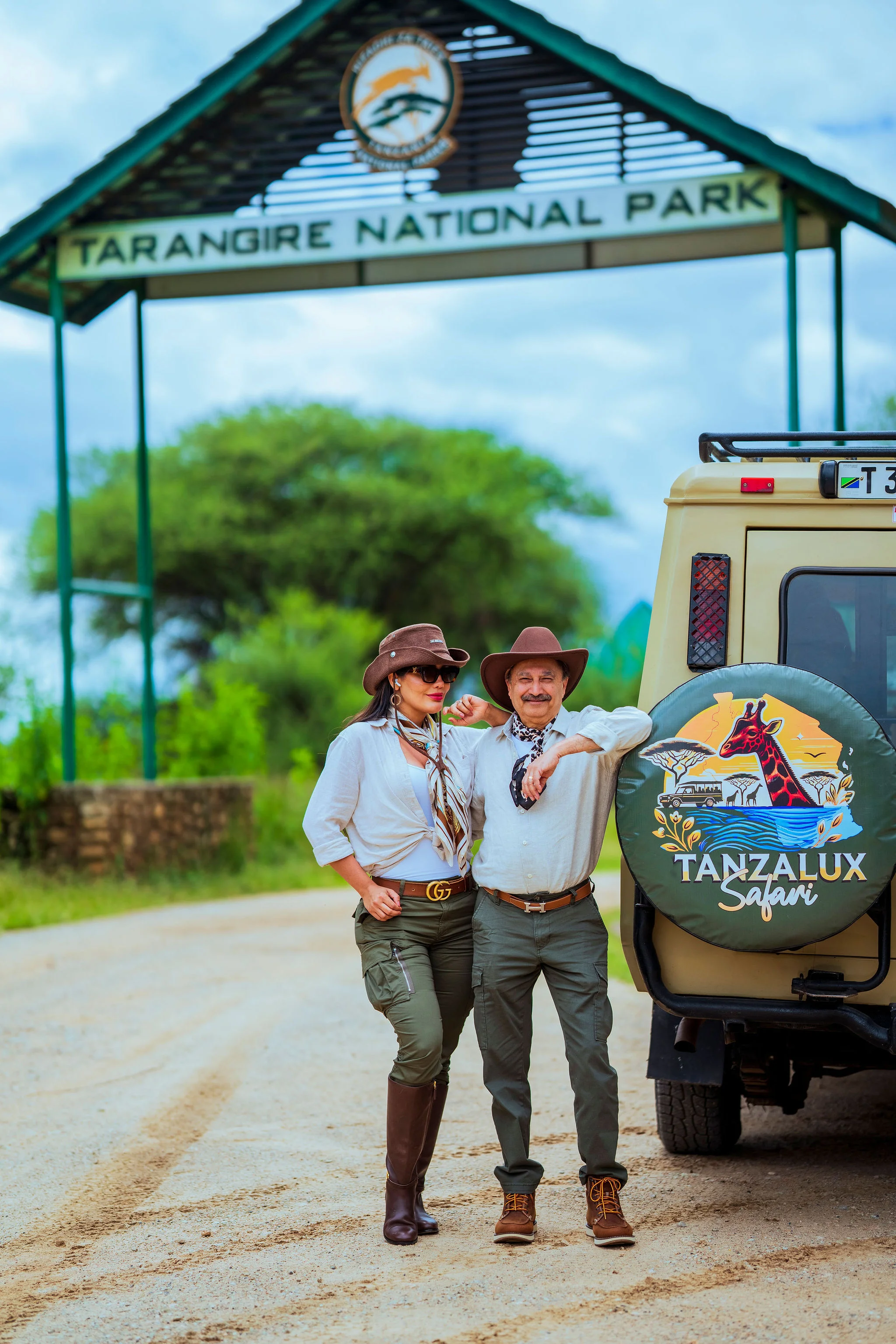
Plan the journey and its payments together. Travelers beside a TanzaLux vehicle at Tarangire, from the media library. Confirm your transfers and park visits in the written quote.
Sample packages and the money questions to ask
These sample packages are planning outlines, not confirmed offers or price quotes. They need a dated proposal, current access and suitable rooms. Each uses a road-based northern route with overnight breaks. Use the outlines to compare what is included and what you must pay separately.
Sample package: 7 days / 6 nights with a Serengeti focus
Night 1: Arusha. Night 2: Karatu. Nights 3–4: Serengeti. Night 5: Karatu. Night 6: Arusha before departure on day 7.
For this Tanzania safari budget, ask about airport transfers, all meals, park permits and any agreed crater visit. Confirm the deposit, balance method and personal extras. A short route still needs a clear payment plan.
Sample package: 10 days / 9 nights of Tarangire and Serengeti
Night 1: Arusha. Nights 2–3: Tarangire area. Night 4: Karatu. Nights 5–7: Serengeti. Night 8: Karatu. Night 9: Arusha before departure on day 10.
Use Tanzania money tips to compare several nights at each base with the full cost of the route. Check drinks, laundry and optional activities rather than treating the room rate as the whole bill. Agree any extra outing before it is booked.
Sample package: 12 days / 11 nights at a slower pace
Night 1: Arusha. Nights 2–3: Tarangire area. Night 4: Karatu. Nights 5–8: Serengeti. Nights 9–10: Karatu with agreed park visits. Night 11: Arusha before departure on day 12.
More time changes both the safari price and your chosen spending allowance. Check how tipping guidance is calculated, which rest-day meals are included and where payment services can be reached. The longer route should still have a simple written schedule of amounts due.
Why travel with TanzaLux Safaris?
TanzaLux is a Tanzanian-owned company based in Arusha. Its team describes trips shaped around your dates, budget, interests and pace. You can discuss the full route with a planner before comparing the proposed stays and services.
The private safari service offers your own vehicle and guide on a tailor-made trip. Ask for the exact inclusions in your quote and the provider details that matter to you. Clear terms make it easier to compare the complete journey.
Bring these Tanzania money tips into the planning conversation. Ask what is prepaid, what is due on arrival and what remains your own choice. Confirm currency, any card charge and the verified payment channel. That helps you focus on the safari with fewer unanswered money questions.
Your final Tanzania money tips checklist
Keep a final invoice and the amount still due.
Confirm currency, payment method and any fee.
Plan cash around the actual unpaid items.
Check card access, PINs and issuer support contacts.
Use banks or licensed exchange providers.
Read conversion screens and compare net costs.
Clarify tips, shared costs and optional extras.
Review declaration and border-currency rules.
Good Tanzania money tips leave you with a plan you can use. Know where the next payment comes from, keep a backup and save proof of large transactions. Check the details before travel, then leave room in the day to enjoy the places you came to see.
Start a TanzaLux safari plan with a clear budget, written inclusions and payments you understand.
Frequently asked questions
1. What currency is used in Tanzania?
The currency is the Tanzanian shilling, with code TZS. Check both the number and currency on a bill. Keep useful local cash for planned small costs and confirm the method for larger payments.
2. Can non-resident tourists pay in foreign currency?
The Bank of Tanzania’s June 2025 clarification says resident-to-non-resident payments, including tourist payments, may use foreign currency. Confirm the actual provider’s accepted currency and terms. Do not assume every foreign note is accepted everywhere.
3. Where should I exchange money?
Use a commercial bank or licensed bureau de change. Ask for the rate, fees, required identification and net cash received. Keep the receipt and count the money at the counter.
4. Is an online exchange rate the rate I will receive?
It is not a promise of a counter rate. Ask the provider for a current quote and all fees. Compare the final amount received for the same amount exchanged.
5. Are ATMs available throughout the safari?
Check access on your actual route. Major-city machines may be available, but they can fail or run out of cash. Arrange the next planned withdrawal before a remote leg rather than relying on one machine at the last minute.
6. How much cash should I bring?
Work from your unpaid balance, known local costs and chosen extras. Keep any reserve distinct from everyday spending. Confirm where you can obtain more cash and how the larger safari payments will be made.
7. Can I rely only on cards?
Ask each provider about acceptance and keep a suitable backup. Rural card access may be limited. Check issuer fees, account limits and how to reach support if a payment is blocked.
8. What is dynamic currency conversion?
It is an offer by a merchant or ATM to bill your card in your home currency. Review the rate and markup. You should have a choice; compare it with your card terms before accepting.
9. Is there one ATM withdrawal limit for Tanzania?
The result depends on the machine, your account limits and available cash. Read the screen and check with your bank. Do not plan a large payment around an unverified limit from a travel forum.
10. Which dollar-note dates are accepted?
Ask the actual bank or receiving provider about note series and condition. This guide does not set a universal cutoff year. Check your notes before travel and resolve acceptance questions before a large payment is due.
11. How should I budget for safari tipping?
Request current guidance and clarify whether it is per person, group, day or stay. Check service charges and the recipient. Keep your chosen tip allowance separate from the contractual safari balance.
12. What helps a group manage shared costs?
Agree who pays each bill and how guests will contribute. Use a simple log with currencies and receipts. Keep private payment details secure and avoid counting the same shared cost in every guest’s budget.
13. Can visitors use mobile money?
Check registration and wallet eligibility directly with the provider. Ask about identification, activation, fees and limits. A data SIM or travel eSIM should not be assumed to include a working payment wallet.
14. How do I plan the TanzaLux deposit and balance?
Read the current published terms and your booking confirmation. Ask for the amount, due date, currency and verified method. Check any late-booking payment requirements before committing to flights or stays.
15. Are card-payment fees always included in the safari price?
Check the quote and payment terms. Ask how a merchant fee is calculated and whether your issuer adds another charge. Calculate the cost on the actual amount paid by card.
16. Must large cash amounts be declared?
Mainland regulations require declaration at a combined USD 10,000 equivalent or more for currency and covered bearer instruments. Check the current customs process and separate rules for Zanzibar, departure and transit countries.
17. How can I check an unexpected payment request?
Contact the provider using a trusted number you already hold. Verify the payee, invoice and reason for a changed account or link. Do not send funds just because a message sounds urgent.
18. What extra costs should I check for Zanzibar?
Ask about meal basis, drinks, local transfers, activities and applicable levies or insurance. Get current amounts and payment methods. A mainland safari package does not automatically include a separate beach stay’s costs.
19. Why plan a private safari with TanzaLux?
TanzaLux plans from Arusha and offers routes shaped around your interests, dates and budget. Ask for clear stays, transfers and inclusions. That makes the complete trip easier to assess alongside these Tanzania money tips.
20. What should I do with leftover shillings?
Set aside the final known costs, then ask a bank or licensed exchange provider about converting a surplus. Check rates, documents and border-currency rules. Keep receipts and allow time before your departure.
Ready to start planning?
Tell us your dates and what you're after — no obligation.