5.0 Excellent

Antelopes of the Serengeti – Tanzania Safari Guide
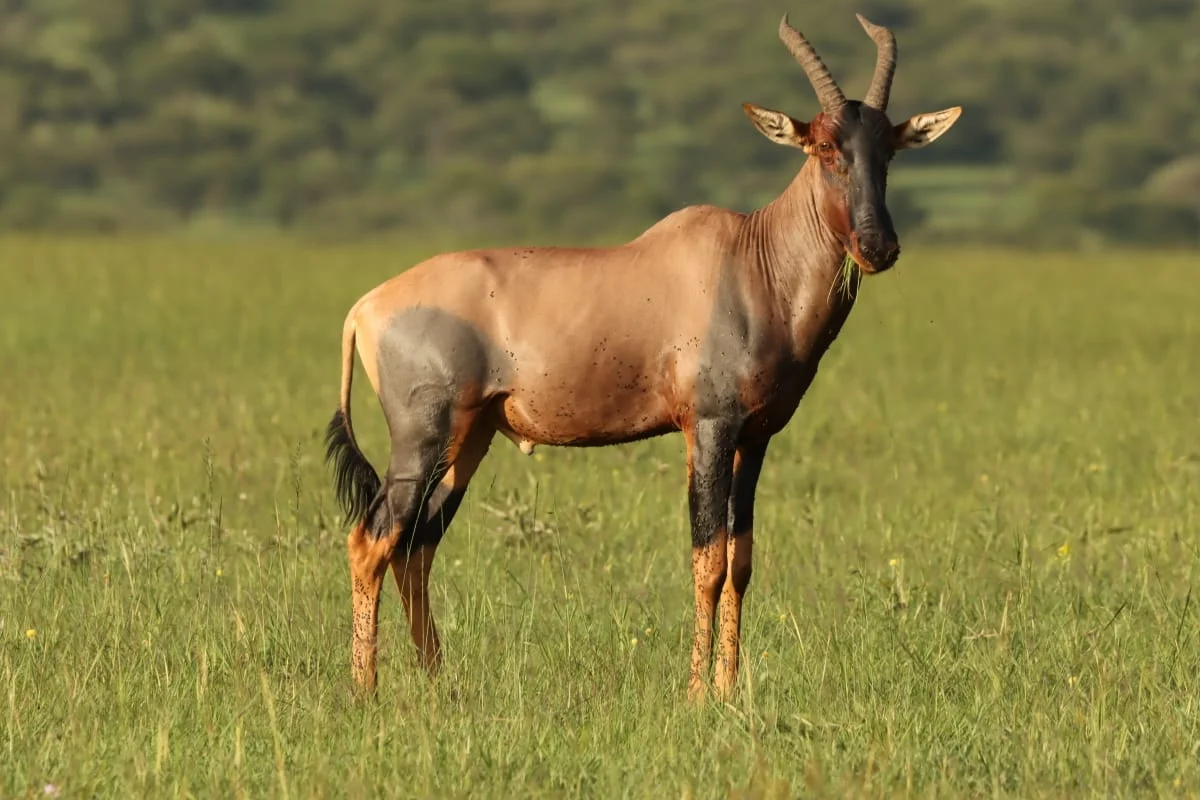
Serengeti antelopes bring the plains to life, from huge wildebeest herds to a tiny dik-dik at the edge of a thicket. Learning a few field marks adds depth to every game drive. You begin to notice which animals share a habitat, how they feed and what sets one species apart from another.
This Tanzania safari guide introduces eleven antelopes of the Serengeti. It covers useful ID clues, places to look, seasonal planning and respectful viewing. You will also find sample packages and practical answers to common questions. The aim is to help you enjoy the animals you see, rather than turn the trip into a rushed checklist.
Plan a private Serengeti wildlife safari with TanzaLux Safaris.
What are Serengeti antelopes?
Antelope is a broad common name for many hoofed mammals in the bovid family. Gazelles, impala and wildebeest all fall within that wider group. A zebra does not: it belongs to the horse family. The word antelope therefore covers far more than the small, slim animals many first-time guests picture.
The San Diego Zoo antelope guide explains this variety and the difference between horns and antlers. Antelope horns remain attached, while deer shed and regrow their antlers. Horns can help with identification, but in some antelopes only males have them.
Serengeti antelopes also vary greatly in size, diet and choice of cover. An open plain, a river edge and a rocky outcrop can each offer a different set of animals. Looking beyond the biggest herds makes a safari far richer.
Eleven antelopes to recognise on safari
This is a practical selection, not a full park inventory or a promise of eleven sightings. The field guide to animals of the Serengeti and Ngorongoro documents the region's varied antelope life. Your route, the habitat and local conditions will shape what you find.
1. Wildebeest: the famous migration antelope
Wildebeest are antelopes, despite their heavy heads and cattle-like build. Look for a strong front half, slimmer hindquarters, a mane, a beard and horns that curve out and up. The white-bearded wildebeest of the Serengeti-Mara ecosystem form the famous large migration herds.
The African Wildlife Foundation wildebeest guide describes these features and their search for grass and water. Watch the herd as well as the individual. Feeding, resting and movement can be as rewarding as a dramatic crossing.
Field clue: a bulky head and shoulders with a beard. Viewing tip: leave the track clear when animals move across it. Never ask your guide to push through a herd.
2. Thomson's gazelle: small size and a bold side stripe
Thomson's gazelle is a useful starting point for learning Serengeti antelopes. It is small and light-built, with a tan back, white belly and a bold dark stripe along the side. Its white rump patch stays below the tail rather than spreading high onto the back.
Open short-grass areas are a good habitat to scan. Use several clues together, as distance and light can hide a side stripe. The AWF Thomson's gazelle profile explains its appearance and grassland habitat.
Field clue: compact size, dark flank stripe and a smaller white rump patch. Viewing tip: compare animals in the same scene rather than relying on size from memory.
3. Grant's gazelle: a larger frame and broader white rump
Grant's gazelle is larger than Thomson's and has a broad white rump patch that extends above the tail. Horn shape, body size and the rump are useful clues. Some Grant's gazelles show a side stripe, so a stripe alone cannot settle the identification.
The AWF Grant's gazelle guide highlights the rump pattern as a key distinction. Ask your guide to explain the view you actually have. A partly hidden animal may not show enough for a confident answer.
Field clue: a larger gazelle with white extending high above the tail. Viewing tip: wait for a clear rear or side view without asking the driver to crowd the animal.
4. Impala: warm colour and graceful horns
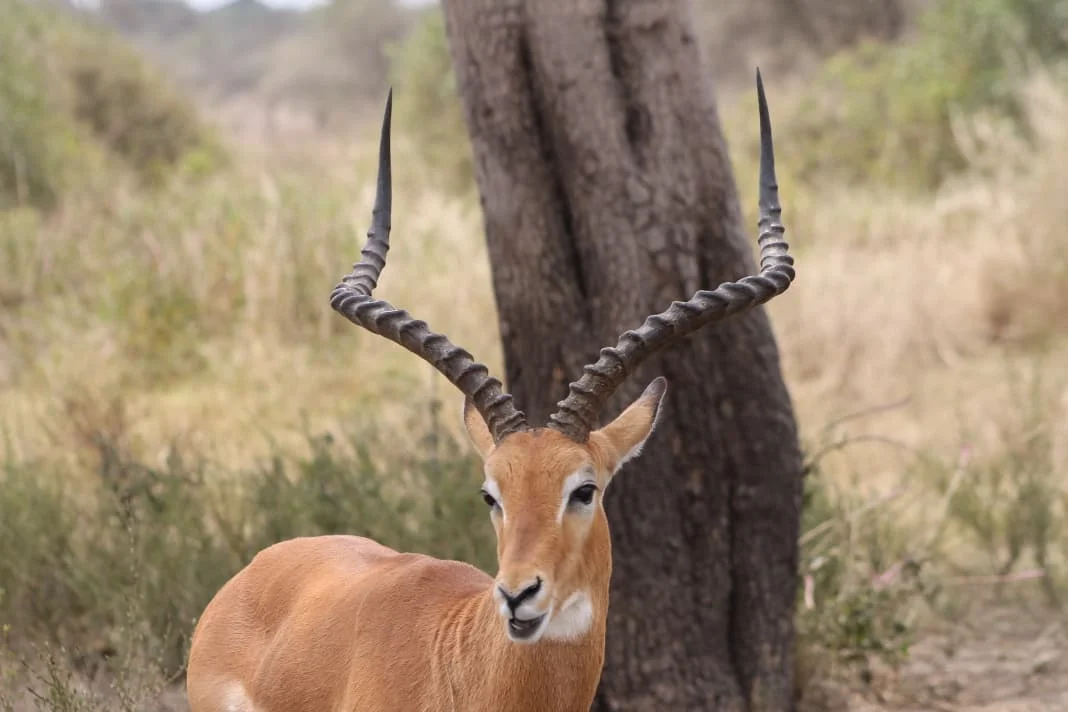
Impala have a smooth reddish-brown coat, pale underparts and dark markings around the tail and rear thighs. Adult males have long, lyre-shaped horns; females do not. Their shape is more substantial than that of a small gazelle, yet still light and graceful.
Woodland edges offer a useful change from the open plains when watching Serengeti antelopes. Look at a whole group to see horned males beside females. The AWF impala profile describes these marks and their flexible social groups.
Field clue: warm chestnut tones, dark rear markings and curved horns on males. Viewing tip: check the body and rump as well as the horns.
5. Topi: dark patches and pale lower legs
Topi stand out through contrast. Their reddish-brown coats carry darker patches on the face and upper legs, while the lower legs look pale or yellowish. Their strong forequarters and sloping backs can resemble a hartebeest, but the head is less long and narrow.
When comparing Serengeti antelopes, take time over that head shape. Coat colour alone can change greatly in shade. The AWF topi guide explains the dark patches, leg colour and general build.
Field clue: dark upper-leg patches above paler lower legs. Viewing tip: use binoculars to study the face and body without needing a closer vehicle position.
6. Coke's hartebeest: a long face and sloping back
Coke's hartebeest, also called kongoni, is the regional form to look for here. Its long, narrow face, high shoulders and sloping back give it a distinct outline. The body often appears more uniformly tawny than a topi's strongly patched coat.
The AWF hartebeest profile describes the long snout and steeply sloping back. These are better starting points than trying to memorise every bend of the horns from a brief view.
Field clue: an unusually long face above a high front half. Viewing tip: compare a side view of the head and back. Ask your guide about the local name kongoni.
7. Common eland: a giant with spiral horns
Common eland are very large antelopes with a heavy, almost cattle-like build. Both sexes have tightly spiralled horns. A large male may show a thick neck, a prominent dewlap and a darker coat than younger animals. Their size makes them a striking contrast to gazelles.
The AWF eland guide describes the horns and the changes that come with age. A distant group can be easy to overlook, so scan the wider scene rather than only the nearest animals.
Field clue: a large body with short, tightly twisted horns. Viewing tip: include some landscape in photographs to show the animal's scale.
8. Defassa waterbuck: shaggy coat and a broad white rump
Waterbuck have a shaggy brown-grey coat, rounded ears and a robust build. Males carry long, ridged horns that curve back and up. They need regular access to fresh water, so river-associated habitat is worth discussing with your guide.
A useful detail among Serengeti antelopes is the defassa waterbuck's broad white rump patch. Do not assume every waterbuck must have the neat white ring seen on common waterbuck. The AWF waterbuck guide explains that distinction.
Field clue: a shaggy coat and broad pale rump markings. Viewing tip: ask which form you are seeing, especially if comparing photos from different Tanzania parks.
9. Bushbuck: a quiet animal of thick cover
Bushbuck favour places with enough cover, such as brushy edges and vegetation near streams. White spots or patches may show on the body, and males have horns. A view can be brief as the animal moves between branches and shade.
The AWF bushbuck profile describes its markings and use of cover. Its habits make it a different viewing challenge from a large plains herd. Sometimes the best reward is simply noticing it before it slips out of sight.
Field clue: white markings on a medium-sized antelope in cover. Viewing tip: stay still and look through gaps. Do not try to flush it into the open.
10. Kirk's dik-dik: tiny, alert and easy to miss
Kirk's dik-dik brings a much smaller scale to a game drive. Look for a tiny antelope with large dark eyes, a pointed face and an extended snout. Small male horns may be partly hidden by hair, so they are not always easy to see.
The AWF dik-dik guide describes these features and its use of bush cover. Scan low at the edge of a thicket instead of only looking towards the horizon.
Field clue: very small size, large eyes and a fine, extended muzzle. Viewing tip: make a quiet stop when the guide spots one. A small movement may reveal an animal that was almost invisible.
11. Klipspringer: the rock specialist
Klipspringers are small antelopes built for rocky ground. Their compact bodies and sure-footed movement fit the kopjes that rise above the plains. A still animal can blend into the rock surprisingly well, so a patient scan matters.
The San Diego Zoo klipspringer guide explains its rock-dwelling life. This is one of the reasons to vary your route when looking for Serengeti antelopes. A day spent only on open grassland will miss a very different habitat.
Field clue: a small, stocky antelope on rocky outcrops. Viewing tip: scan ledges with binoculars from an authorised track. Do not climb a kopje to approach wildlife.
A simple way to identify Serengeti antelopes
For antelope identification, start with the whole animal, then work towards smaller details. One clear feature is useful, but two or three make a stronger identification. Ask your guide what else could fit the view.
Size: tiny dik-dik, small gazelle, medium impala or very large eland?
Body shape: slim and level-backed, or heavy at the shoulders with a sloping back?
Coat: plain brown, bold side stripe, dark leg patches or white spots?
Rump: a broad white patch, a smaller patch or dark rear markings?
Horns: present or absent, curved or tightly spiralled?
Habitat: short grass, woodland edge, dense cover or rock?
Young animals, females, poor light and half-hidden views can make identification harder. There is no harm in leaving one animal unnamed. Take a clear photo from your seat and review it later with the guide.
Which habitats suit different Serengeti antelopes?
The official Serengeti wildlife guide describes grasslands, riverine areas, woodland and kopjes. That habitat mix explains why one route cannot show every animal equally well.
Open plains: scan for wildebeest, gazelles, topi and hartebeest.
Woodland edges: slow down for impala and watch the shade as well as the grass.
River-associated cover: discuss waterbuck and bushbuck with your guide.
Low bush: watch for a dik-dik close to cover.
Kopjes: search the rock ledges for klipspringer from a legal viewing point.
These are habitat clues, not fixed animal locations. Food, cover, rain and disturbance all affect what you see. Give your guide room to adapt the day instead of requiring a rigid list of sightings.
When should you visit to see antelopes?
You can enjoy Serengeti antelopes throughout the year. Resident wildlife remains worth watching even when the main migration herds are elsewhere. The best dates depend on whether your priority is herd movement, young animals, varied habitats or a relaxed first safari.
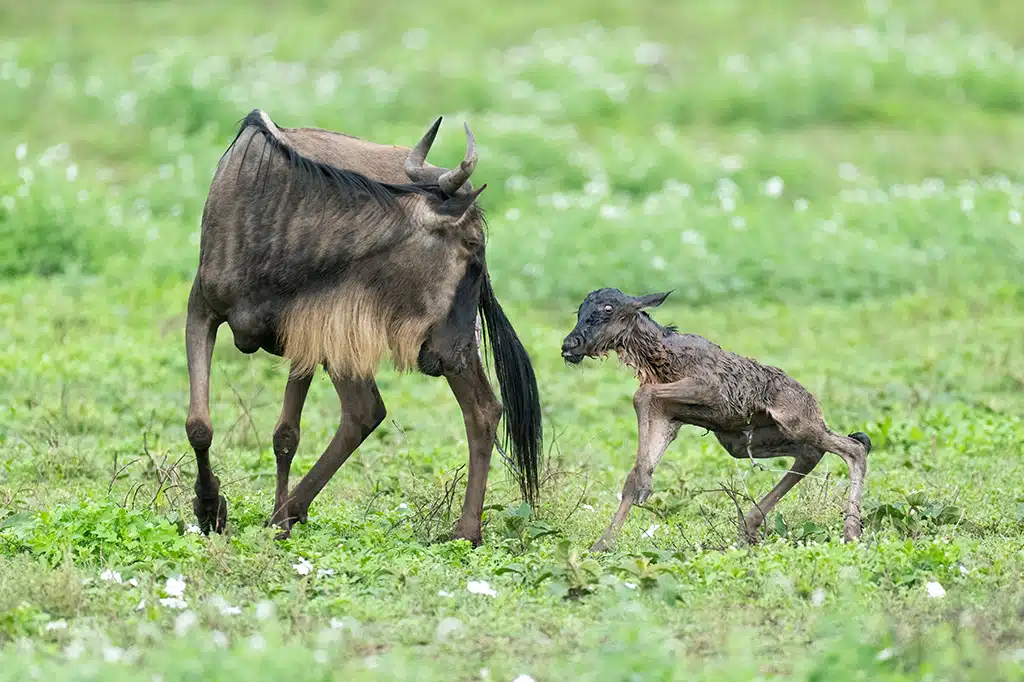
Early in the year, the southern Serengeti ecosystem and Ndutu area draw interest for wildebeest calving. The wider Ndutu area crosses park and conservation boundaries, so permits and the exact camp location matter. Herd positions follow rain and grazing rather than a fixed calendar.
In drier months, shorter grass can make some views more open. Greener months bring different light, fresh growth and sometimes harder spotting in tall cover. Ask about current road conditions and the habitats near the camp you are considering.
A migration-focused stay may call for a different base from a general wildlife trip. Avoid moving camp every night just to chase a distant report. For watching Serengeti antelopes, full days in a well-chosen area often beat a long series of transfers.
Why antelopes matter to the Serengeti ecosystem
Antelopes are part of the whole landscape, not simply a backdrop for predators. Different species use different foods and cover. Large grazing herds and smaller browsing animals reveal how varied that landscape is.
Watching Serengeti antelopes also helps you notice conservation needs. The AWF impala profile highlights habitat fragmentation and the need for space to move. A common animal still depends on connected habitat and effective protection.
Choose operators who follow park rules. Ask for evidence behind any claimed conservation donation or project link. A high trip price alone does not show how money supports wildlife.
How to watch and photograph antelopes respectfully
Keep your vehicle on permitted routes and follow the guide's instructions. Do not feed, call to, surround or chase animals. Leave space for a herd to cross, and never use the vehicle to separate a young animal from adults.
TANAPA's Serengeti guidance tells guests not to harass or feed wildlife, or get out or hang out of vehicles near animals. Follow current ranger directions as well.
For photographs of Serengeti antelopes, use a zoom lens rather than seeking an intrusive distance. A side view can show body shape; a rear view may reveal useful markings. Keep some wider frames that show habitat and group behaviour.
If you spot a young animal lying alone, do not assume it is abandoned. Some antelopes hide their young in cover. Stay back and tell your guide. Leave any assessment or intervention to the proper wildlife staff.
Ask TanzaLux for a safari with time for patient wildlife watching.
Sample packages for watching Serengeti antelopes
These are illustrative routes, not fixed offers or live prices. TanzaLux can check rooms, guides, permits and transport before quoting. No route guarantees a species, a birth, a hunt or a river crossing.
Sample package: 5-day Serengeti wildlife focus
Day 1: arrive in Arusha and rest.
Day 2: take a booked flight to the Serengeti, with a game drive as timing allows.
Days 3–4: enjoy full days exploring varied habitats with your guide.
Day 5: transfer to the airstrip for a confirmed return flight.
This plan protects time in the park while reducing long road transfers. Confirm flight availability, baggage limits and onward connections. Add an Arusha night if the international schedule requires it.
Request a Serengeti wildlife-focused itinerary.
Sample package: 7-day Northern Circuit safari
Day 1: arrive in Arusha.
Day 2: explore Tarangire, then stay near Karatu.
Day 3: travel to the central Serengeti.
Days 4–5: enjoy full Serengeti game-drive days.
Day 6: return towards the Ngorongoro highlands.
Day 7: visit the crater and return towards Arusha.
This route combines Serengeti antelopes with the wider northern wildlife circuit. Discuss the final day's length and add a night before an early flight. The mix of parks adds scenery as well as animals.
Plan a private Northern Circuit safari.
Sample package: 10-day safari and Zanzibar escape
Day 1: arrive in Arusha.
Day 2: enjoy Tarangire.
Day 3: travel to the Serengeti.
Days 4–5: take full game drives with time for antelopes and other wildlife.
Day 6: return to Arusha and stay overnight.
Day 7: take a booked Zanzibar connection and transfer to your hotel.
Days 8–9: relax by the coast, with optional outings quoted separately.
Day 10: transfer for onward travel.
The safari comes first, followed by time to rest. Confirm actual flight links and hotel transfer times. Tell the planner your preferred room style, meal plan and pace.
Create your Tanzania safari and Zanzibar package.
Why travel with TanzaLux Safaris?
TanzaLux is a Tanzanian-owned company based in Arusha. Its trip-planning approach starts with your dates, interests, pace and budget. If Serengeti antelopes are a priority, explain that you want varied habitats and time to study ordinary wildlife as well as big cats.
A private road safari gives your party its own guide and vehicle. Discuss photo stops, children's needs and rest breaks before you book. The guide can shape the day within park rules and what conditions allow.
Ask for a written route with named accommodation, transfers, meals, park charges and optional activities clearly set out. Good planning gives each stop a purpose and helps you avoid spending too much of the trip on the road.
Start planning your Serengeti antelopes safari with TanzaLux.
Frequently asked questions
1. Which antelopes can I look for in the Serengeti?
Examples include wildebeest, Thomson's and Grant's gazelles, impala, topi, hartebeest and eland. Waterbuck, bushbuck, dik-dik and klipspringer add variety in different habitats. Your guide can help identify what you see.
2. Will I see every antelope in this guide?
No. Sightings depend on habitat, route, season and luck. Treat the list as a learning tool. A patient view of a few species can be more rewarding than chasing a complete checklist.
3. Is a wildebeest an antelope?
Yes. Its heavy build can look cattle-like, but wildebeest belong to the wider antelope group. Look for the beard, mane, strong shoulders and curving horns.
4. Are gazelles also antelopes?
Yes. Gazelles are part of the broader antelope group. The words are not interchangeable for every animal: an eland or wildebeest is an antelope but is not a gazelle.
5. Is an impala the same as a gazelle?
No. Impala are a different kind of antelope. Their warm coat, rear markings and male horn shape help set them apart from Thomson's and Grant's gazelles.
6. How do I tell Thomson's and Grant's gazelles apart?
Thomson's is smaller and usually shows a bold dark flank stripe. Grant's has a broad white rump patch that extends above the tail. Compare more than one feature, as some Grant's have side stripes too.
7. How do topi differ from hartebeest?
Topi show dark patches and pale lower legs. Hartebeest have a longer, narrower face and a distinct high-shouldered outline. A clear side view is useful for comparing them.
8. Do female antelopes have horns?
It depends on the species. Female impala do not, while female eland do. Do not identify an antelope from the presence or absence of horns alone.
9. Do all waterbuck have a white ring on the rump?
No. Common waterbuck have a ring, while defassa waterbuck show broad white patches. Ask your guide which form you are seeing, particularly when comparing photos from different parks.
10. Are dik-diks the smallest antelopes in Africa?
They are very small, but avoid treating them as the smallest of all African antelopes. On this guide's list, they provide a striking size contrast with eland and wildebeest.
11. Where should I look for klipspringer?
Scan rocky outcrops and ledges from an authorised track. They are adapted to rocky ground and can be hard to spot when still. Use binoculars and stay in the vehicle.
12. Are all Serengeti antelopes part of the Great Migration?
No. Different animals have different movement patterns. Many sightings involve resident wildlife. Do not assume that every herd follows the same route as the main wildebeest migration.
13. Can I see antelopes outside migration season?
Yes. Resident antelopes make the park rewarding throughout the year. Choose dates and camp areas for your overall interests, not only for the location of the largest herds.
14. Is the calving season the same for every species?
No. Birth timing varies by species and local conditions. Do not expect all antelopes to have young during the wildebeest calving period. A birth sighting cannot be guaranteed.
15. Do all antelopes eat grass?
No. Diets differ, with some grazing, some browsing and others using a mix. Watching what an animal feeds on can help you understand its choice of habitat.
16. Are antelopes safe to approach?
No wild antelope should be treated as a pet. Even a calm animal needs space. Stay in the vehicle near wildlife and follow your guide and the current park rules.
17. What should I do if I see a calf alone?
Stay back and tell the guide. Some species hide young in cover while the mother is away. Do not touch, move or try to rescue the animal yourself.
18. What should I pack to watch Serengeti antelopes?
Bring binoculars, a camera or phone with zoom, sun protection and a light layer. A field guide or notes app can help you record markings and compare sightings later.
19. How many nights should I spend in the Serengeti?
Three nights usually give two full days between arrival and departure. More time can allow a wider habitat mix. Check actual transfer times rather than counting every night as a full game-drive day.
20. Can TanzaLux tailor a safari around antelope viewing?
Yes. Share your dates, budget and wildlife interests. Ask for enough time in suitable habitats and a clear written quote. No operator can guarantee a particular species or behaviour.
Ready to start planning?
Tell us your dates and what you're after — no obligation.