5.0 Excellent

Press Release: Rare Albino Animals in Tanzania and Sighting Reports

Arusha, Tanzania — 1 November 2026. Reports of rare albino animals in Tanzania invite travellers to look more closely at the wild. A pale shape in a herd can be a striking sight. Yet a white coat alone does not confirm albinism, and more shared photos do not prove that more such animals are being born.
This TanzaLux Safaris wildlife briefing explains the reports, the science, and the care these encounters deserve. It also shows how to plan a rewarding safari without making one rare animal the test of a good trip. There is no promise of a sighting of an animal with albinism or leucism on any route.
The news context: the widely shared “increased sightings” press release dates from October 2022. It came from another operator, Tanzania Specialist. This briefing is not an announcement of new TanzaLux sightings or a confirmed national increase in 2026.
Plan a private Tanzania safari with time to watch wildlife, ask questions, and enjoy the unexpected.
Hero image note: A pale baboon walks beside a darker companion. This image alone does not establish the sighting date or the genetic cause of its colour.
Are sightings of rare albino animals in Tanzania increasing?
There are historical reports of pale animals in Tanzania. The sources reviewed for this briefing do not show a measured rise across the country in albinism. A useful report needs a date, a clear location, and a reliable identification. A claim about a trend needs much more.
The 3 October 2022 Tanzania Specialist release described guide and guest reports involving a pale giraffe, zebra, wildebeest, baboon, and buffalo. These were that operator's accounts. They were not a full wildlife count or sightings recorded by TanzaLux Safaris.
A photo may show an unusual coat very well. It may tell us little about how often the trait occurs in a population. The same animal can also appear in several posts, on several dates, and under several captions. A new upload may even show an old encounter.
What would show an increase in albino animals?
Researchers would need a consistent method across years. They would need to count distinct animals and record how much survey work took place. More sightings per month may simply reflect more observers or more time spent looking.
Identity: is this a new animal or a repeat sighting?
Date: when was the animal seen, rather than when was the image posted?
Effort: how many survey hours or routes were covered?
Classification: was the pigment condition assessed by a qualified expert?
Comparison: were the same methods used in earlier years?
Until that evidence is available, treat the phrase “increased sightings” as an attributed report. Enjoy the story while keeping the limits clear. This gives rare wildlife sightings in Tanzania the care they deserve.
Albino animals and leucism: why the difference matters
When comparing albinism vs leucism, remember that both terms can involve a pale appearance. They refer to different pigment conditions. Melanin is a pigment involved in dark colour. Albinism affects its production; leucism involves changes in pigment cells or their distribution. The visible result varies between animals.
The British Trust for Ornithology's guide to pigment changes explains why colour can be hard to classify. In birds, it distinguishes albinism from leucism, dilution, and other changes. Those bird examples are useful context, rather than a field test for every mammal.
How are albino animals identified?
Eye colour, skin colour, patterns, and the history of an animal can help an expert assess a case. A distant phone image may hide those details. Sun glare, dust, shade, and camera settings can also alter how pale a subject looks.
Describe what you can see first. For example, write “an unusually pale zebra with faint stripes.” Avoid claiming a genetic cause from colour alone. If an expert later identifies the condition, add that source and the date to the caption.
Why are white animals not always albino animals?
A clear example comes from outside Tanzania. In its 2024 statement about a white bison calf, Yellowstone National Park said photos indicated leucism, rather than albinism. The park referred to dark eyes, hooves, and some pigment. It is an example of careful identification, not a Tanzania sighting.
For travellers, the useful lesson is simple. Leave room for uncertainty. You can value the encounter without giving it a label that the evidence does not support.
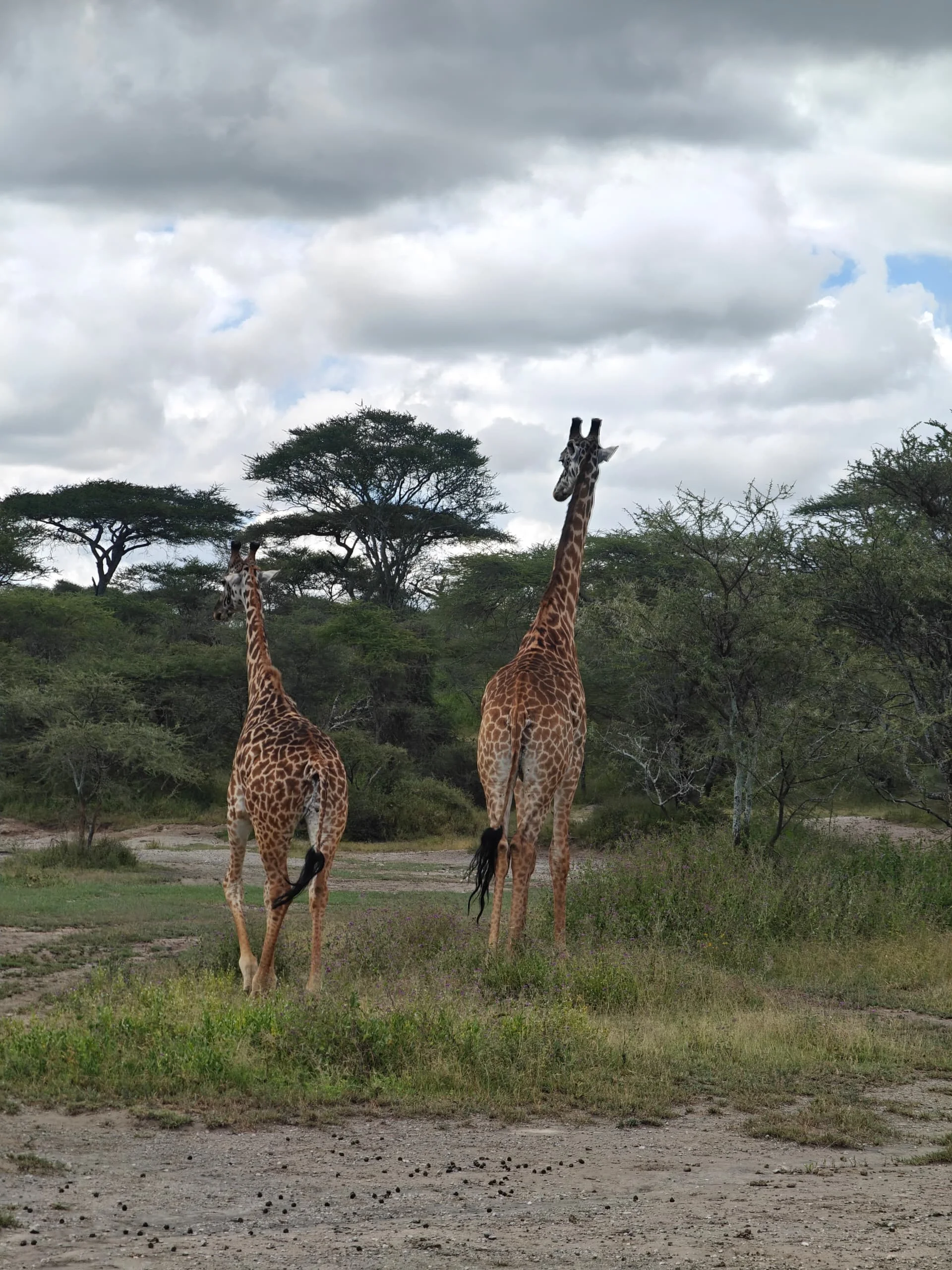
Giraffes with typical patterned coats. This image does not show Omo or an animal with confirmed albinism.
Omo, the white giraffe of Tarangire: a documented case
Omo is an important historical example of a white giraffe in Tanzania. On 19 January 2016, the Wild Nature Institute reported a repeat sighting in Tarangire. Its researchers identified the young giraffe as leucistic and explicitly stated that she was not albino.
The post referred back to a sighting in 2015. Those dates matter. This record supports the existence of an unusual animal at that time. It does not show where Omo is today, her current condition, or the chance that a visitor will see her.
For anyone reading about rare albino animals in Tanzania, Omo shows why the terms need care. A famous white animal can be well documented while the popular label attached to it is wrong.
Keep Tanzania and Kenya records separate
East African stories often travel far beyond the place where they began. The Northern Rangelands Trust's 2019 report from Ishaqbini described white giraffes in Kenya and discussed leucism. That is a separate historical record from Tanzania's Tarangire case.
Check the country before adding an encounter to your wish list. A dramatic photo from Kenya does not show what is currently present in Serengeti or Tarangire. Old reports also need a fresh status check before being used in trip planning.
Where should you plan a Tanzania wildlife safari?
Choose parks for their habitats, wildlife variety, and fit with your dates. The Northern Circuit offers several distinct settings. Build a route you will enjoy even if every animal you see has its usual colour.
Tarangire: elephants, trees, and patient watching
Tarangire is a sound choice for travellers who enjoy varied game viewing and time to watch a herd. Its link to the historical Omo record adds interest. It does not make the park a bookable white-giraffe attraction.
Leave time to notice normal differences too. Look at coat patterns, age, body shape, and how animals move together. Let your guide explain what can be inferred and what remains uncertain. Two nights in one area can give a gentler pace than a quick drive through.
Arusha National Park: a varied start near the safari hub
TANAPA describes Arusha's mix of forest, open glades, and lakes. Giraffes, buffalo, plains game, and primates form part of its appeal. This makes it a useful start for guests who want more than one type of habitat.
Ask about an arrival night before the park day. A late flight and a full wildlife outing are a poor match. An extra night can leave you rested and ready to notice details rather than rush from one stop to the next.
Serengeti and Ndutu: plan around the wider ecosystem
The Serengeti park overview sets out its broad wildlife and migration appeal. Choose your base for the season and the part of the ecosystem you want to explore. A camp name alone tells you little about daily driving distances.
Ndutu lies in the southern Serengeti ecosystem, with much of the visitor area in the Ngorongoro Conservation Area. Access rules and fees depend on where you go. Ask your planner to show the boundaries and the overnight stops in your proposal.
Rain shapes the movement of herds. Historic reports of pale calves are not a calendar for future sightings. A well paced Serengeti safari gives time for the landscape and the many species that live within it.
Explore private safari ideas and choose parks for a rich wildlife experience.
Is there a best time to see albino animals?
There is no verified season for albino animals in Tanzania. Book around the wider experience you want, then accept that a rare coat is a chance discovery. More days can allow more watching, but they do not create a known sighting probability.
Discuss the balance between open views, green scenery, weather, and your travel dates. Conditions vary by park and year. If migration is a priority, ask where the herds may be during your stay and what the plan is if rain changes their movement.
For a first safari: favour a practical route and enough nights in the main park.
For photography: allow repeat drives and time in good light.
For families: balance drives with meals, rest, and suitable camp routines.
For returning guests: choose a new habitat or a slower stay in a familiar region.
Tell your planner about rare albino animals in Tanzania as an interest. Keep it separate from an essential inclusion. A guide can respond to wildlife encountered on the day, within the rules and the time available.
How should you photo albino animals responsibly?
Give the animal space to carry on with its day. A rare colour is never a reason to crowd, chase, feed, or separate it from a herd. Keep the same care you would use for any other wild animal.
The Tarangire visitor guide tells visitors to stay on designated tracks, avoid harassment, and follow guide or ranger instructions. Those rules still apply when an unusual animal appears. Your guide must also follow the rules of each park you enter.
Take a careful photo
For photos of albino animals or any other wildlife, keep your kit easy to reach from your seat. Keep spare cards and a charged battery in a small bag. A bean bag can help support a long lens on a safe rest. Check with your guide before you put gear on any part of the vehicle.
Use a zoom lens rather than seeking a closer position. Keep voices low and movements calm. If other vehicles are present, let your guide choose a safe place to stop. Do not ask the driver to block the animal's path for a clear background.
Bright fur can lose detail in a photo. Check the preview and reduce exposure if the pale areas look blank. Take a wider image as well as a closer view. Habitat, body shape, and nearby animals may help explain the scene later.
Write a useful field note
Do a quick check before you share a post. Is the date right? Does the image show the park named in the caption? Did you take it yourself? If a friend sent it, ask for the source first. A clear, honest caption is of more use than a bold claim.
A simple record can preserve details that memory loses. Ask your guide to help identify the species. Make a private note of the date, general setting, visible markings, and behaviour. Record the location for a responsible report to park staff if needed.
Keep the original image file, including its date information.
Separate your own notes from what someone else told you.
Use a cautious label if the pigment condition is uncertain.
Share a concern with park staff through your guide.
Avoid posting precise live locations of a vulnerable animal.
A photo should tell the truth about the scene. Do not change coat colour and present the result as evidence. If you use an illustrative image of an ordinary animal, say so clearly.
Albino animals and conservation: what should travellers know?
The wider habitat matters more than one striking coat. Animals need food, water, safe movement, and space to live. Pale animals share those needs with the rest of their population.
The Wild Nature Institute's corridor work highlights habitat connections in the Tarangire ecosystem. It is a useful place to learn about movement beyond a single park. Habitat protection is worthwhile whether or not a rare colour is ever seen.
Do not infer inbreeding from one pale animal. A claim linking a pigment trait to isolation needs suitable genetic and population evidence. A striking image does not show that cause on its own. Nor does it prove that conservation success has made albinism more common.
Ask clear questions about a safari's impact
Ask which park fees your quote includes and how any optional donation works. If a camp claims to fund a project, ask for the project name and current evidence. A named beneficiary and a clear payment route are more useful than a broad promise to help wildlife.
Local employment, park visits, and conservation donations are different things. Understand each on its own terms. No fixed donation from your TanzaLux booking is claimed in this article. Ask for written details of any initiative offered with your trip.
Sample safari packages to tailor with TanzaLux
These are sample routes for discussion, not fixed departures or rare-animal tracking products. They do not promise rare albino animals in Tanzania. Lodges, flights, permits, vehicle arrangements, and costs need confirmation in your personal proposal.
5-day Arusha and Tarangire Wildlife Discovery
A gentle introduction for guests who want varied habitats and fewer changes of base.
Day 1: Arrive and settle into an Arusha hotel.
Day 2: Explore Arusha National Park on a guided game drive. Return to Arusha.
Day 3: Drive to Tarangire and begin wildlife viewing. Stay in or near the park.
Day 4: Spend a second day exploring Tarangire with time for unhurried stops.
Day 5: Return to Arusha for an onward stay or a suitably timed departure.
Confirm the last day's drive and flight timing. Add an Arusha night if needed. Optional walks require the right arrangements and should be requested in advance.
Ask TanzaLux to tailor this five-day Arusha and Tarangire safari to your dates and pace.
8-day Northern Circuit Wildlife and Photography Safari
A broader route with Tarangire, Serengeti, and the Ngorongoro highlands.
Day 1: Arrive in Arusha and rest.
Day 2: Drive to Tarangire for game viewing and an overnight stay.
Day 3: Enjoy another Tarangire drive, then continue to Karatu.
Day 4: Travel through the highlands to a central Serengeti base.
Days 5–6: Explore Serengeti with flexible game drives from the same base.
Day 7: Return towards the Ngorongoro highlands for an overnight stay.
Day 8: Take a planned crater drive, then continue to Arusha for an overnight stay.
Schedule departure for the following day. Ask for estimated daily drive times and a camp location suited to the season. This sample includes long transfer days, which can be adjusted with more nights or suitable flights.
Build an eight-day Northern Circuit safari with time for careful wildlife photography.
12-day Tanzania Wildlife and Zanzibar Escape
A bush and beach journey for travellers who want a wildlife focus followed by time to rest.
Day 1: Arrive in Arusha.
Days 2–3: Stay in or near Tarangire for game drives.
Day 4: Transfer to the Ngorongoro highlands.
Day 5: Enjoy a crater outing, with another highlands night.
Day 6: Travel to Serengeti and settle into camp.
Days 7–8: Explore from a seasonally suitable Serengeti base.
Day 9: Take a confirmed flight connection to Zanzibar and transfer to your hotel.
Days 10–11: Enjoy beach time and optional outings arranged separately.
Day 12: Transfer for your departure.
Flights can involve stops and baggage limits. Add a transit night if connections require it. A private safari vehicle does not make shared flights, boats, or other activities private.
Create a Tanzania safari and Zanzibar escape around your interests, comfort, and travel dates.
Why travel with TanzaLux Safaris?
TanzaLux Safaris is Tanzanian-owned and based in Arusha. Its local team plans trips around your interests, dates, pace, and budget. That gives you a direct place to discuss which parks fit your wildlife goals.
With a private road safari, your party has its own vehicle and guide. Tell the planner if you prefer long stops, birding, or photography. Flexibility operates within park rules, road conditions, lodge arrangements, and your agreed route.
Ask for a clear proposal showing camps, park visits, transport, meals, and exclusions. Share your hopes early, including an interest in rare albino animals in Tanzania. Expect an honest discussion of what can be planned and what depends on the wild.
A rewarding safari gives value to each day's discoveries. A rare sighting would be a special bonus. Watching a giraffe browse, a herd cross a track, or a bird feed its young can be just as absorbing when you have time to pay attention.
Contact TanzaLux Safaris for a wildlife trip planned for you and a clear, tailored quotation.
Frequently asked questions
1. Are rare albino animals in Tanzania becoming more common?
The sources reviewed do not show a measured rise across the country. Historical sighting reports exist, but more reports alone do not prove more animals have the trait. Consistent surveys would be needed to test that claim.
2. When was the increased-sightings press release published?
The matching Tanzania Specialist release is dated 3 October 2022. It contains that operator's reports and commentary. It should not be presented as a new 2026 announcement or as a TanzaLux field report.
3. What is albinism in animals?
Albinism is an inherited condition affecting melanin production. Its visible effects depend on the animal and the condition involved. An unusual coat is a reason for careful watching, rather than a firm diagnosis from a distant image.
4. What is the difference between albinism and leucism?
They affect pigmentation in different ways. Leucism can leave an animal with white areas while other parts retain pigment. Eye colour and other features may help experts distinguish conditions, but a single photo can be unclear.
5. Is every white giraffe an albino?
No. The well documented Tarangire giraffe Omo was identified as leucistic by Wild Nature Institute researchers. A white giraffe should be described using a reliable assessment, with the date and source kept clear.
6. Can I book a safari guaranteed to see Omo?
No guarantee is offered here. The cited Omo record is historical and does not confirm her present location or status. Choose Tarangire for its wider wildlife and scenery, with any unusual encounter treated as a bonus.
7. Which animals featured in the 2022 reports?
The release described pale giraffe, zebra, wildebeest, baboon, and buffalo sightings. These were attributed accounts from another operator. The list does not mean each animal was scientifically confirmed as albino or is currently still there to see.
8. Are the famous Ishaqbini white giraffes in Tanzania?
No. Ishaqbini is in Kenya. The 2019 Northern Rangelands Trust report is separate from the historical Tarangire record in Tanzania. Always check the country, date, and current context of wildlife stories.
9. What is the best park for rare albino animals in Tanzania?
There is no evidence-based park ranking or reliable sighting rate in the sources reviewed. Choose parks for habitat, season, and overall wildlife appeal. Avoid building the whole trip around an old report of one animal.
10. Is there a special season for albino sightings?
No verified season is showed here. Plan dates for your wider safari goals. Weather and vegetation can affect viewing conditions, but they do not provide a predictable calendar for finding an animal with an unusual pigment trait.
11. Will more safari days guarantee a rare sighting?
No. More time gives you room for more watching and a slower pace. It does not give a known chance of seeing a rare coat. Choose a trip length that feels rewarding across a range of encounters.
12. Does a pale animal prove that inbreeding is occurring?
No. A visible trait alone cannot show that cause. Such a claim needs suitable genetic and population evidence. Habitat connectivity matters for wildlife, but a photo does not prove a specific genetic explanation.
13. Can I identify albinism from eye colour alone?
Do not rely on eye colour alone. Distance, glare, and image quality may hide important features. Record what you can see and leave a firm assessment to a qualified expert with enough evidence.
14. Are pale birds always albino animals?
Yes. The BTO describes several causes of unusual plumage, including leucism, dilution, and progressive greying. Its guidance shows why a bird with white patches should not automatically be labelled albino.
15. How close can my vehicle get to a pale animal?
Your guide must follow the park's rules and judge the situation. Keep room for the animal to move normally. Do not request a closer approach that blocks a path or causes the animal to leave its group.
16. What camera equipment helps when photoing albino animals?
A zoom lens or binoculars can help you observe from a respectful position. Check image previews to keep detail in pale fur. A wide view showing habitat can be useful alongside a closer photo.
17. Should I post a rare animal's exact location online?
Avoid publishing precise live locations of a vulnerable animal. Share useful details privately with park staff through your guide when appropriate. Public captions can use a broader park location and a clear sighting date.
18. Can I leave the vehicle to take a photo?
Only leave at places and for activities where it is permitted, under the relevant instructions. An unusual animal is never a reason to step out on a game drive. Follow your guide and park staff.
19. Do the sample packages include fixed prices?
No. They are route ideas to tailor. Ask for a current quote that lists accommodation, transport, park fees, meals, and exclusions. Flights, special activities, and changes of camp can affect both the price and the pace.
20. Why discuss rare albino animals in Tanzania with TanzaLux?
It helps the local planning team understand your wildlife interests. TanzaLux can tailor a private route around broader safari goals and available time. Rare sightings remain a matter of chance and are not a promised inclusion.
Ready to start planning?
Tell us your dates and what you're after — no obligation.