5.0 Excellent

Where Lions Walk Among Mirages: A Photographer’s Journey Through the Ndutu Plains
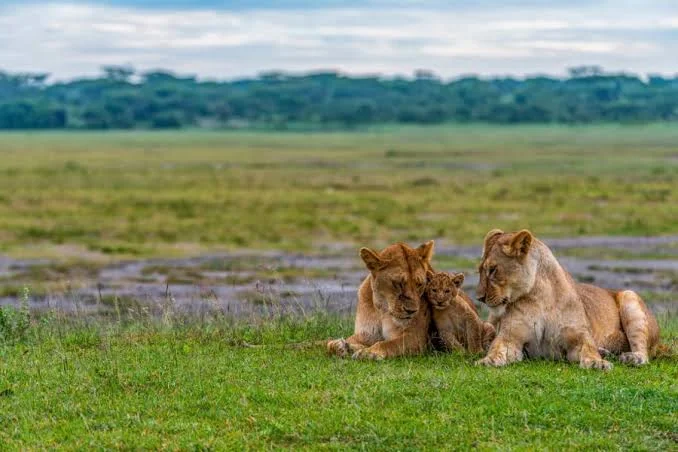
A Ndutu photography safari begins with the way you look. A distant shape may become a tree, a bird or an animal as the view grows clear. If a lion appears through a wavering horizon, the whole scene can matter as much as the face in your frame.
The Ndutu plains invite this kind of patient attention. Grassland, woodland, lakes and marshes give each drive a different setting. Lions are part of the area's wildlife story, but every sighting has its own distance, light and pace. Let the scene guide the photograph you make.
This guide follows a photographer's choices through a day in Ndutu. It explains light, lion viewing, mirages, camera preparation and respectful field practice. You will also find three sample packages, reasons to travel with TanzaLux Safaris and 20 FAQs. Use it to plan a trip with time to watch.
Plan a private photography journey with TanzaLux Safaris, shaped around your interests and pace.
Why choose a Ndutu photography safari?
Ndutu rewards photographers who enjoy animals within a wider landscape. A subject can share the frame with open space, a tree or a band of grass. These details give an image a sense of place. They also offer creative choices when a close portrait is beyond reach.
Varied settings: plains, lakes, marshes and acacia woodland.
Wildlife interest: resident predators alongside changing seasonal scenes.
Room to observe: a longer stay can reduce the rush between camps.
Several picture styles: portraits, wide views, details and quiet behavior.
A personal pace: discuss viewing time and vehicle use before booking.
A good Ndutu photography safari starts with your aims. Tell the planner if you want help with a camera, long waits at sightings or time for landscapes. Each need affects the shape of the day. Confirm the support and arrangements you require in writing.
Know the place behind the photograph
Ndutu forms part of the wider Serengeti–Ngorongoro ecosystem in northern Tanzania. Ndutu Safari Lodge sits within the Ngorongoro Conservation Area beside the southern Serengeti plains. The lodge's location guide explains this setting. Ndutu is an area rather than a separate national park.
Check where your camp and drives will be. The access zones shape the route, rules and fees. Ask your planner to mark each night on a map. This helps you compare how much time each option leaves for photography.
The local birdlife guide describes short grass plains, shallow soda lakes, freshwater marshes and acacia woodland. Water levels and other conditions change. Your Ndutu plains safari should leave room to explore the habitats that suit the day, within the confirmed route and permissions.
First light: look before you lift the camera
Start with a simple task: read the scene. Notice where the light falls and what the background holds. Look for a clear outline or a gentle layer of grass. Before making a close frame, take a wider view that records the setting.
On a Ndutu photography safari, early light may be a key goal. Ask which departure times fit your camp, route and local rules. Cloud may change the color or hide the sunrise you hoped for. Use the light you have and adapt your ideas.
If the morning is dim, choose your camera settings with care. A still subject and a moving subject call for different choices. Make a few test frames and check them. This quiet preparation can help when a brief moment later catches your eye.
Lions on the plains: wait for a gesture
Ndutu lion photography starts with a sighting, then a decision about how to watch. A lion may be far away, partly hidden or at rest. Ask your guide about the scene and the space the animal needs. Accept the viewing position that the rules and welfare allow.
The lodge's predator guide describes resident lions, cheetahs, leopards and smaller carnivores. These animals add interest when the major migratory herds are elsewhere. Their presence supports a broader safari focus, while a particular sighting or behavior remains uncertain.
Let a Ndutu photography safari make room for quiet behavior. A head may lift, an ear may turn or an animal may change position. Watch without trying to cause a response. A simple gesture can give an image life without a chase or hunt.
If the view stays quiet, consider what you can learn from it. Study the shape of the animal against the grass. Look at its relationship with shade and open ground. Patience can change the photograph you seek, even if the animal barely moves.
Photograph the plains as well as the predator
A small subject in a wide frame can suggest scale and space. Try leaving room in the direction an animal faces. Look for a horizon that supports the picture rather than cutting through a key detail. Compare a few frames and decide which feels most clear.
A Ndutu photography safari can also be a study of layers. Grass, a distant tree and a pale sky may form a simple pattern. Ask what the frame gains when you include more of the scene. Then ask what you can leave out.
Change your framing from the safe viewing position. A broad view, a closer view and a small detail can work as a sequence. You do not need to make every picture a portrait. A varied set of images can tell a fuller story of the trip.
Mirages and heat shimmer: understand the changing horizon
A mirage is an optical effect caused by light bending through air layers with different temperatures and densities. Images may appear displaced, distorted or inverted. An inferior mirage over heated ground can resemble water. The World Meteorological Organization's mirage guide explains the process.
Heat shimmer is a related but distinct effect. Distant objects can seem to flutter when viewed across a hot surface. The WMO describes this in its shimmer guide. Whether either effect appears during your visit depends on the conditions.
For photography, the practical implication is that the air itself may affect a distant image. This follows from the distortion WMO describes. A soft-looking frame does not always mean poor focus or camera shake. Review the scene before repeatedly changing your settings.
If detail is lost, try a wider picture that uses the atmosphere. Or turn to another subject you can photograph from your permitted position. A Ndutu photography safari gives you more than one way to tell the story. Accepting the conditions can lead to a stronger creative choice.
Midday: pause, review and reset
Discuss the day's rhythm with your guide. A break at camp may suit your route and group. Use part of that time to check a small set of pictures. Look for one clear lesson, such as a shutter setting to change or a background to notice.
Keep this review simple. It should help the next drive without taking over the holiday. Make sure batteries, cards and the bag are ready. Share any practical issue with your guide before you set out again.
A Ndutu photography safari also needs time to rest. Long waits and early starts can affect the whole group. Build a pace that family members and companions can enjoy. A relaxed guest often has more room to notice and create.
Late light: simplify the final frame
As the light changes, look for a clear outline or a simple shape. If color becomes warm, let it add mood without relying on it. Cloud can create a different scene. Choose the image that fits the conditions in front of you.
Check the time needed to return to camp within the rules. A photography plan should include that journey from the start. Let your guide decide what is practical. A final frame is easier to enjoy when the rest of the day remains well paced.
At the end of your Ndutu photography safari day, think about the pictures that belong together. A wide opening view, a quiet animal moment and a small detail can form a useful set. The most striking image may be one you never planned to make.
A practical camera approach for Ndutu
Choose gear you know how to use
Start with your camera and the kinds of images you hope to make. A longer lens can help frame distant wildlife, while a wider view can show the setting. Think about weight and handling as well as reach. Practice before travel with any unfamiliar equipment.
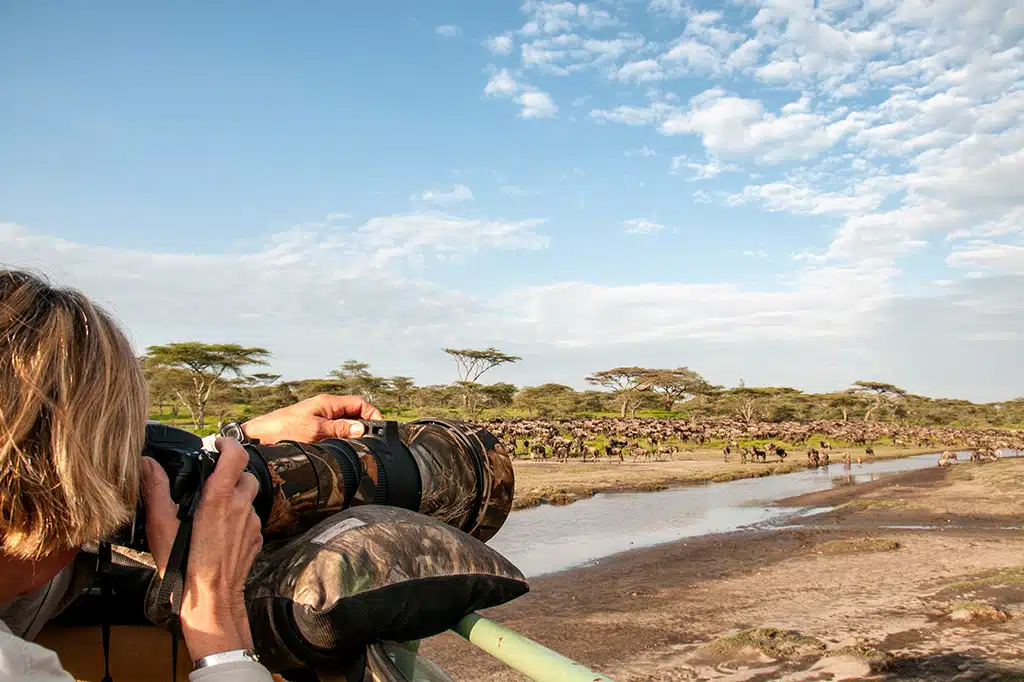
Discuss your kit during Ndutu photography safari planning. Ask where the bag can sit and how you will support the camera. A beanbag may suit a vehicle opening, if the setup allows it. Confirm whether you should bring one; do not assume specialist gear is supplied.
Canon's wildlife lens guide gives examples of lens choice and vehicle support. Use such guidance alongside the manual for your own equipment. A familiar setup can be easier to handle than a new kit you have barely tested.
Learn a few controls well
Focus: learn your continuous autofocus mode for moving subjects.
Tracking: try animal or eye detection if your camera supports it, then check the result.
Motion: use a fast enough shutter speed for the movement you want to freeze.
Review: check a few frames for sharpness and exposure as the light changes.
Canon's wildlife focus guide explains continuous focus and tracking on one camera system. Names and controls differ by model. Learn the equivalent functions on yours before travelling. Keep the manual available offline for a quick check.
These ideas are starting points for a Ndutu photography safari, rather than one setting for every scene. Test what works with your camera, lens and subject. If you need tuition, arrange that support before booking. A driver-guide's wildlife role does not automatically include camera lessons.
Keep equipment and images ready for the next drive
Pack a bag that keeps the kit secure and easy to reach. Check your camera maker's advice for dust and rain. Avoid unnecessary lens changes in blowing dust. Put loose items away before the vehicle moves.
Bring spare power and storage that fit your own shooting needs. Ask each camp about charging options and available power times. Check the airline's current baggage and spare-battery rules if you fly. Confirm these details before choosing extra equipment for the trip.
Leave time to keep a separate copy of your work where practical. Check that files copied successfully before clearing a card. Your backup plan should suit the equipment you can carry and the time you want to spend on it. Keep it manageable.
Choose the season by the pictures you want
A Ndutu photography safari can focus on several wildlife stories. If the major herds matter most, discuss the wider migration route for your dates. Southern herd presence is often described from mid-December to April, shaped by rain and grazing. See the local migration overview.
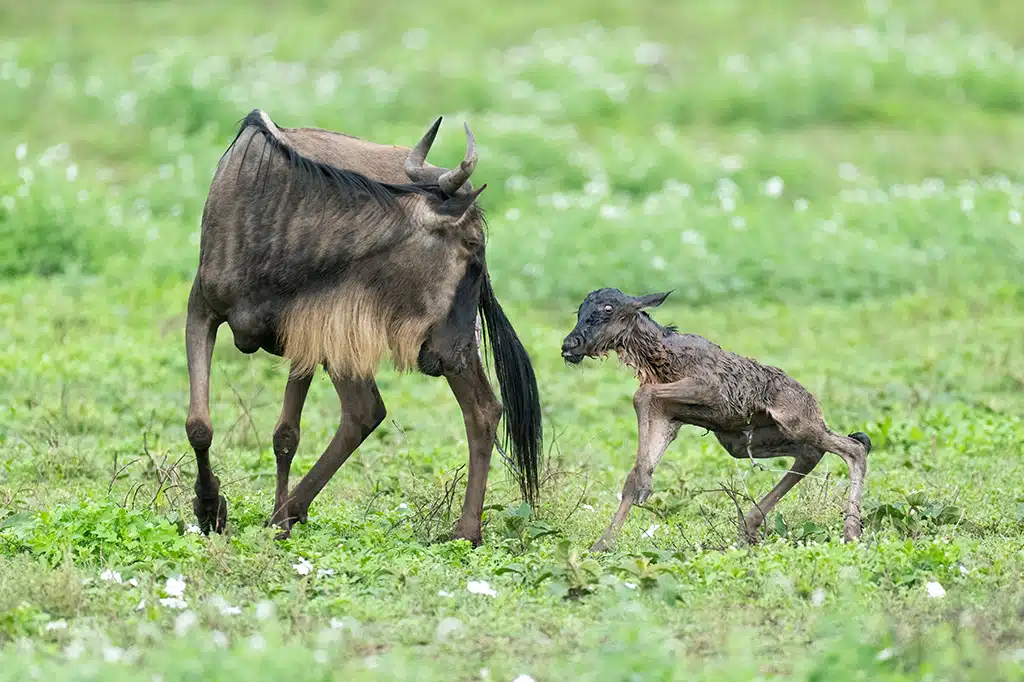
The usual calving window is January to March, with February often the peak. TANAPA's calving-season feature explains this seasonal chapter. Births, hunts and herd positions follow natural conditions, so keep your photographic aims broad.
Outside the main herd period, ask about resident wildlife, habitats and camp opening dates. The predator guide gives background on this appeal. A trip can focus on those subjects without expecting the same scenes as peak calving.
Birds can also shape Tanzania wildlife photography. Ndutu has resident birds and seasonal migrants, with variety across its habitats. The birdlife guide provides an overview. Ask what fits your travel period rather than expecting one species or lake scene.
The frame you leave untaken
Sometimes the right choice is to lower the camera. An animal may need space, another vehicle may block the view or the light may simply not work. Accept that moment and keep watching. The safari experience is larger than the images you bring home.
On every Ndutu photography safari, follow authorised routes and applicable permissions. Keep noise low and leave animals free to move. Do not block a path or ask the driver to provoke a response. Respect mothers, young animals and other guests at the sighting.
The Ngorongoro Conservation Area's photographic safari guidance and Serengeti visitor guidance explain the rules behind responsible viewing. Walking, night activities and special access need their own arrangements where allowed. A private vehicle does not grant unrestricted access.
Three sample Ndutu photography safari packages
These sample routes show how different trip lengths can support photography. They are tailored planning ideas, not fixed offers or confirmed availability. Camps, fees and travel arrangements need a dated quote. Each route should fit your exact dates and viewing goals.
Sample package 1: 4 days focused on Ndutu
Best suited to: guests who can start from Arusha on the first morning and want one safari base. The plan has three nights in Ndutu. It leaves two full days between arrival and departure, subject to the agreed daily arrangements.
Day 1: travel from Arusha to Ndutu and settle into camp.
Days 2–3: enjoy two full days of guided viewing with your photo interests in mind.
Day 4: return to Arusha, with any morning drive subject to travel timing.
This focused Ndutu photography safari keeps camp changes low. Arrival and final Arusha hotels are separate unless quoted. Review flight connections carefully before choosing the return day. The emphasis is time on location rather than extra stops.
Request a four-day private Ndutu photography plan from TanzaLux Safaris.
Sample package 2: 6 days with a crater visit
Best suited to: guests who want an arrival night and a broader northern route. This outline has five nights: one in Arusha, three in Ndutu and one in the Ngorongoro area. The crater visit has its own route and charges.
Day 1: arrive and stay in Arusha, with transfers as quoted.
Day 2: travel to Ndutu and settle into camp.
Days 3–4: spend two full days exploring Ndutu.
Day 5: take a morning drive, then move to the Ngorongoro area.
Day 6: make the arranged crater visit and return to Arusha.
Ask how the crater day fits your pace and onward flight. A final hotel night may be useful, but must be added if required. Compare full viewing time before choosing this plan over the shorter option.
Ask TanzaLux Safaris to tailor a six-day photography route with clear inclusions.
Sample package 3: 8 days with more time to watch
Best suited to: guests who value three full Ndutu days and hotel nights at both ends. The seven nights are one in Arusha on arrival, four in Ndutu, one in the Ngorongoro area and one in Arusha before departure.
Day 1: arrive and stay in Arusha.
Day 2: travel to Ndutu and get ready for the days ahead.
Days 3–5: explore Ndutu over three full days, with time to review and rest.
Day 6: enjoy a morning drive, then travel to the Ngorongoro area.
Day 7: visit the crater as arranged and return to an Arusha hotel.
Day 8: depart with the airport transfer arranged in your quote.
This longer plan gives a Ndutu photography safari more breathing space. Revisit subjects when conditions allow and leave room for weather changes. If you prefer central Serengeti instead of the crater, ask for a revised route with the travel and fees recalculated.
Build a slower eight-day photography journey with TanzaLux Safaris.
What should your photography safari quote cover?
Compare your Serengeti photography safari using the full route and services. A camp rate alone does not show the total cost. Ask for a dated quote with named properties, room types and daily plans. List photo support requests so each can be confirmed.
Camp nights: each property, room type, meals and charging arrangements.
Vehicle use: private or shared, seats, bag space, drives and transfers.
Guide support: the wildlife role and any separately arranged photo tuition.
Access charges: park, conservation area, vehicle, camp and crater fees that apply.
Transport: road transfers and any booked flights with baggage terms.
Daily costs: water, drinks, meals and any limits on inclusions.
Extras and terms: tips, personal spending, optional activities, payment and cancellation rules.
Specialist equipment, a professional photographer and exclusive sightings should never be assumed. Ask what is available for your dates and what costs extra. Clear answers make it easier to choose a trip that matches your skill level and hopes.
Why travel with TanzaLux Safaris?
TanzaLux Safaris is a Tanzanian-owned company based in Arusha. Its company overview describes tailored planning around dates, pace, interests and budget. The private safari collection sets out dedicated vehicle and driver-guide arrangements. Confirm the exact services in your quote.
Use that planning process to shape your Ndutu photography safari. Share your camera setup, preferred pace and the needs of companions. Ask how camp location affects early starts and return travel. Discuss long waits at sightings before the day-to-day plan is agreed.
The company also offers Tanzania safari photography planning advice. Use it to raise questions about space, charging and the guide's role. If camera coaching matters, request that service separately. A clear plan helps turn photographic goals into practical arrangements.
Plan a journey with time to see
Send the team your dates, group size and budget range. Explain the images you hope to make and how you like to travel. Include any camera support, food or access needs. Ask for a route that gives each day enough room.
A Ndutu photography safari is a chance to observe as well as create. Watch the horizon, notice the habitat and let wildlife keep its own pace. The photograph you remember most may be a quiet one: a small shape in a broad frame, held by the light around it.
Contact TanzaLux Safaris for a tailored Ndutu photography itinerary and itemised quote.
20 frequently asked questions about a Ndutu photography safari
1. Is this trip suitable for a new photographer?
A Ndutu photography safari can suit a range of skill levels. Tell the team what you use and hope to learn. Ask for a pace that leaves time to frame each scene. You can enjoy the trip without owning a large or costly camera.
2. Will I get close photos of lions?
Ndutu lion photography depends on sightings, light, distance, and animal behavior. No booking can promise lions or a close view. Set broad goals and give the guide time to search. Look for strong pictures of the scene rather than one fixed shot.
3. What else can I photograph besides big cats?
A Ndutu plains safari offers room to look beyond one species. Wide skies, grass, trees, and tracks can all help tell the story. Ask your guide where you may stop to look. Notice small details as well as the broad views across the land.
4. When should I plan my photography visit?
Plan your Ndutu photography safari around your goals and travel dates. Ask about current conditions, camp access, and likely herd movements. Choose dates for the whole trip rather than one promised sighting. Leave room for the day's light and weather to shape each drive.
5. What should I do when distant views seem to shimmer?
Review your pictures before spending a long time on one distant view. Ask how heat and light may affect that scene. Try a wider frame or a closer subject within reach. A sense of place can matter more than crisp detail in every shot.
6. Can I plan drives around the best light?
Tell the team if early and late light matter to you. Ask what drive times fit your camp, route, and local rules. Weather may change the light you hoped to find. Keep a plan for soft skies and quiet scenes as well.
7. Do I need an expensive camera or long lens?
Tanzania wildlife photography can begin with the gear you already know. Think about the pictures you want before buying extra equipment. Ask a trusted camera specialist what suits those needs. Leave time to practice at home with any new kit before the trip.
8. How should I protect my camera during drives?
Bring a bag that protects your gear and is easy to use. Ask your camera maker how to handle dust and light rain. Keep the kit tidy when the vehicle moves between stops. Check that each item is secure before the next drive starts.
9. Can I take camera bags on a small flight?
Check the airline's current bag rules for your Serengeti photography safari. Ask about weight, bag size, and how camera gear is carried. Do this before you choose or pack extra equipment. Share the details with the safari team when arranging your transfers.
10. How many batteries and cards should I bring?
Plan your Ndutu photography safari with spare power and storage in mind. Check your camera needs and the charging options at each camp. Ask the airline about rules for spare batteries. Bring enough storage for your own pace of shooting and review.
11. Should I ask for a private vehicle?
A private vehicle may give your group more choice over stops. Ask how the drive plan can fit long periods of watching. Check seats, bag space, and the view from your place. Make sure everyone in the group is happy with the planned pace.
12. Will my guide also teach me photography?
Do not assume every safari guide gives camera lessons. Tell the team whether you need help with settings or framing. Ask who will lead the trip and what support they provide. Request those details in writing if photo coaching is important to you.
13. Can family members enjoy the trip without taking photos?
Share the needs of everyone in your group before booking. Long waits for one shot may not suit every guest. Plan breaks, rest, and drives that leave room for shared interests. Ask how the team can balance photo stops with the wider family experience.
14. Which camera settings should I learn before traveling?
Learn how to change focus, exposure, and shooting speed on your camera. Practice finding these controls without searching through menus for long. Ask a trusted teacher to explain what suits your equipment. Bring the manual or save a copy you can read offline.
15. How much time should I allow for the trip?
A Ndutu photography safari works best with a pace you can enjoy. Ask how many full drives your route leaves after transfers. More stops can mean less time to wait with one scene. Compare plans by time on location rather than the number of camps.
16. How can I take photos without disturbing animals?
Use your lens rather than pushing for a closer approach. Keep noise low and give animals space to move freely. Follow your guide's directions at each sighting during the drive. A strong photograph should not depend on causing stress or blocking an animal's path.
17. Can I leave the vehicle or drive off-road?
Ask which rules apply in each zone along your route. Do not assume walking, night drives, or off-road access are included. Stay in the vehicle unless your guide allows an approved stop. Check special activity plans and permissions before you pay for the trip.
18. Should I review and back up pictures each day?
Leave time to review a few pictures while the day is fresh. This can help you spot settings to check next time. Plan how you will store copies of your work. Keep the process simple enough that it does not take over your whole evening.
19. What should a photography trip quote include?
Ask for a full quote using your dates and group size. Check the camp nights, vehicle use, guides, meals, fees, and transfers. List any requested photo coaching or special activities as separate items. Confirm the terms before you compare prices or pay a deposit.
20. How can TanzaLux Safaris help me plan?
Share your goals for a Ndutu photography safari with TanzaLux. Include your dates, group size, budget, and camera support needs. Ask for a route with time to watch and create. Contact TanzaLux Safaris to plan your photography trip.
Ready to start planning?
Tell us your dates and what you're after — no obligation.