 5.0 Excellent

Exploring Tanzania’s Tingatinga Art
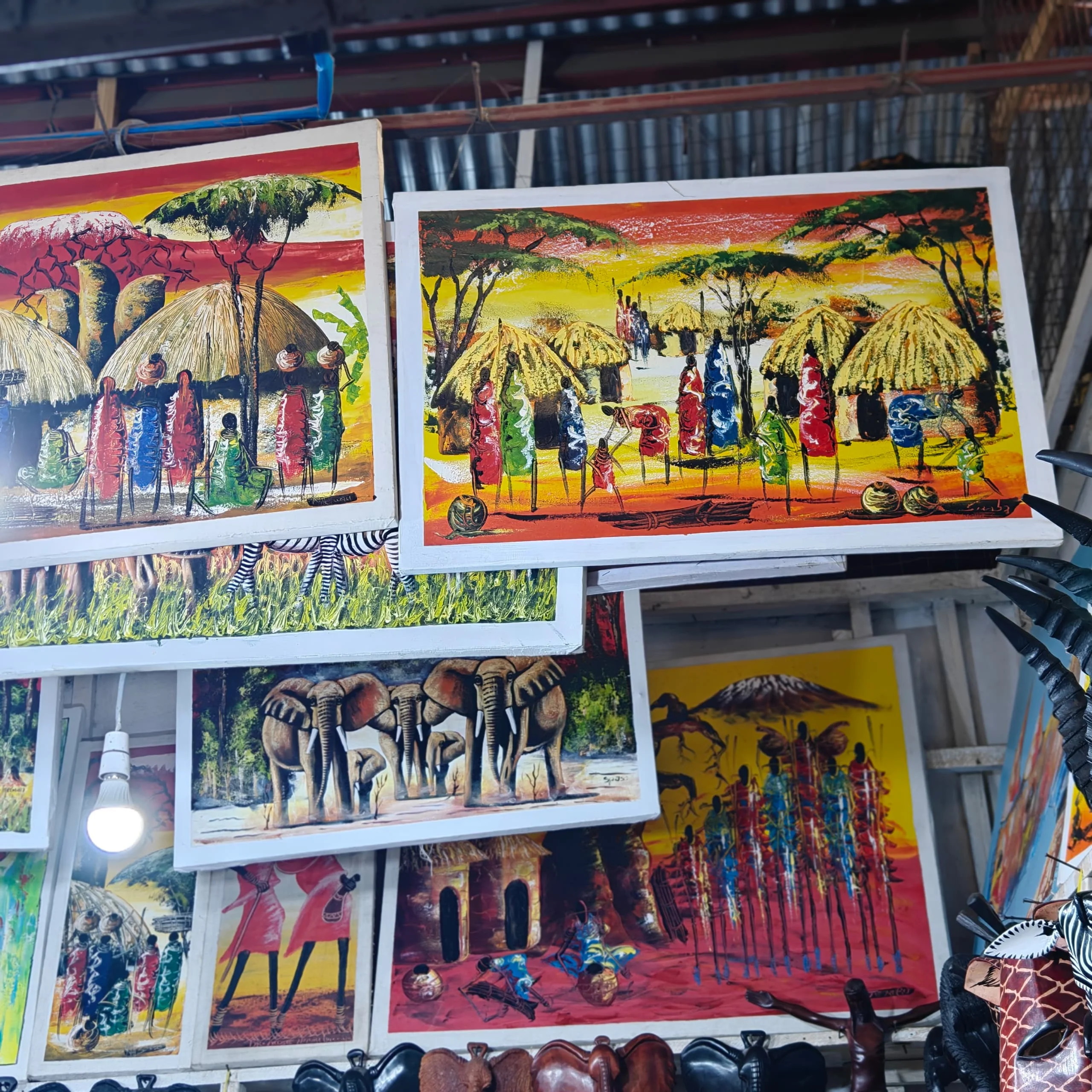
Tingatinga art brings Tanzania's wildlife to life through bold colour, strong shapes, and a playful eye. A bird may fill the sky with pattern. A giraffe may lean across a bright field of blue. These paintings invite you to look beyond a safari photograph and see the country through an artist's eyes.
Exploring Tanzania's Tingatinga art can add a rich cultural chapter to your holiday. You can learn its story, meet working artists where visits are agreed, and choose a painting with a clear link to its maker. This guide explains what to look for, where to begin, and how to fit art into a private safari.
Plan a Tanzania safari with time for art and local culture.
What is Tingatinga art?
Tingatinga art is a painting style named after Tanzanian artist Edward Saidi Tingatinga. Its roots lie in Dar es Salaam in the late 1960s. Bright colours, clear outlines, and stylised animals are familiar features. Birds, plants, and scenes of daily life can also fill the frame.
The term Tingatinga art describes a school of painting as well as a visual style. It does not mean every work was painted by the founder. Many artists have carried the style forward and brought their own ideas to it. A new painting by a named artist can be an original work in this living tradition.
Origin: Tanzania, with its early centre in Dar es Salaam.
Founder: Edward Saidi Tingatinga.
Look: vivid colour, bold forms, and often richly patterned surfaces.
Common subjects: wildlife, birds, people, and everyday scenes.
Travel appeal: a chance to connect art, place, and the people who make it.
The story behind Tanzania's colourful paintings
Edward Saidi Tingatinga and the early years
Edward Saidi Tingatinga lived from 1932 to 1972. His short painting career began in 1968. Circle Art Agency's auction catalogue records his use of enamel bicycle paint on square pieces of board. These modest materials became part of a striking and distinct approach to image making. Circle Art Agency's historical catalogue provides this background.
His work attracted buyers in Dar es Salaam. Friends and relatives learned from him, helping the style grow beyond one person's studio. The story matters because it ties the paintings to real lives and skills. This was a modern creative practice with a named founder, rather than an anonymous ancient craft.
A living style that keeps changing
Tingatinga art did not stop changing after its founder's death. Later painters developed their own ways to fill space and arrange forms. A University of Dar es Salaam study found shifts between early and later generations, including more complex scenes with several subjects. See the university's study summary on the style's evolution.
For a visitor, this is a reason to stay curious. Do not expect every painting to follow the same rules. Two artists may use a similar subject in very different ways. Ask about the choices in the work before deciding what it means.
How to recognise Tingatinga art
Look for colour and shape first
Start a few steps back from the painting. Notice which colour reaches you first. Then follow the main outline with your eye. A long neck, curved horn, or rounded body may give the scene its rhythm. The goal is often visual impact rather than a precise record of an animal's anatomy.
Next, move closer without touching the surface. Look at dots, stripes, leaves, and small lines. Do they echo across several parts of the picture? Such details can link a large animal with the plants or birds around it. Give yourself time to see how the whole image holds together.
Notice the artist's use of space
A Tingatinga art scene may feel flat, with bold forms set against a clear background. Another may be crowded with movement. Neither choice makes the painting better by itself. Look for a balance that holds your attention. A spare image can feel just as strong as a busy one.
A useful gallery exercise is to compare three works with the same subject. Look at how each painter treats a giraffe's neck or a bird's wings. This makes the artist's own hand easier to see. It also helps you choose for reasons beyond colour matching your room.
Ask about materials rather than guessing
Early Tingatinga paintings are closely linked to enamel on board. Current work can use different paints and supports. Ask what the surface is, which paint was used, and how the artist advises you to care for it. A glossy finish alone does not prove age, authorship, or value.
Do not use one visual feature as a test of authenticity. A signature is useful, but it needs context. The maker's name, the seller's account, and clear records matter too. If a claim sounds grand, ask for the evidence behind it.
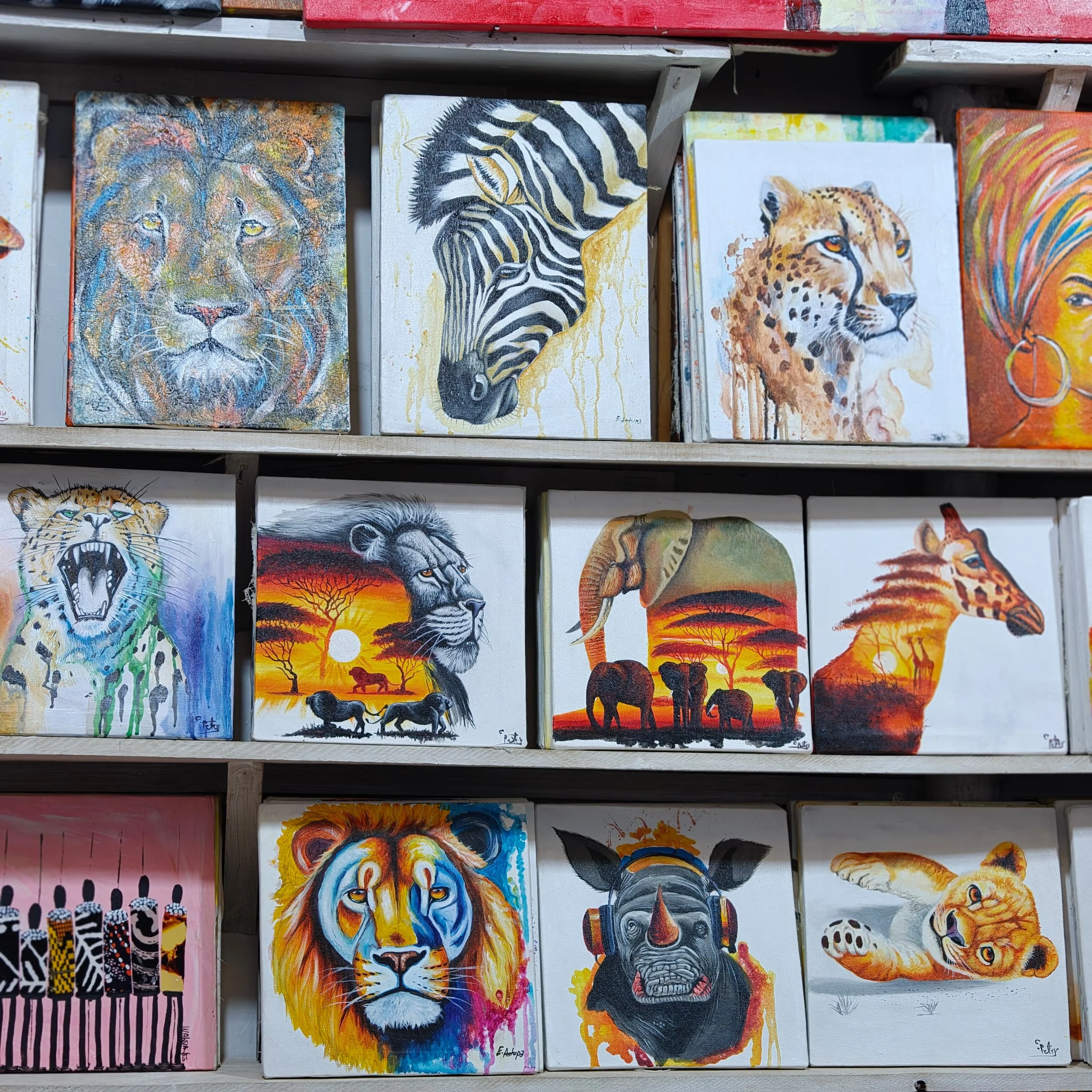
A gallery display can include several styles. Ask about the maker and background of each work rather than assuming all paintings are Tingatinga art.
Wildlife, birds, and stories in the paintings
Wildlife gives many visitors a first link to Tingatinga art. A painted elephant may recall a slow walk through Tarangire. A group of tall giraffes may bring back the shape of the plains. The artist can transform those forms through scale, colour, and pattern.
Try not to treat every detail as a field guide. A painted lion need not look like a lion in your photographs. The image may invite humour, surprise, or a new way of seeing. Ask the artist whether a scene has a story. Let them explain it in their own words.
Birds and plants deserve equal time. Small repeated forms may create the rhythm of a whole work. Human scenes can offer another subject to discuss. Avoid assuming that all paintings speak for one ethnic group or for all Tanzanians. Each maker has a voice and a reason for choosing a subject.
Where to explore Tingatinga art in Tanzania
Dar es Salaam: start with the cooperative
The Tingatinga Arts Cooperative Society is an important place to begin. Its visitor flyer lists Morogoro Stores on Haile Selassie Road in Oysterbay, on the Msasani Peninsula in Dar es Salaam. Check the cooperative's visitor information and confirm access before travelling across the city.
Allow a generous part of a morning or afternoon for the outing and transfers. This is a planning suggestion, not a set tour duration. Traffic, your hotel location, and the time you spend looking will shape the visit. Confirm who will receive you and whether artists will be working that day.
Ask separately about a guided talk or a painting lesson. A chance to browse does not mean a hands-on workshop is included. Agree the time, fee, materials, and group size in advance. Do not expect a particular artist to be present without a booking.
Arusha: fit art around the safari route
Arusha is a practical base for the northern parks. If your route starts here, ask your planner to check local galleries for suitable paintings. Be clear that you want Tingatinga art and would like to know who made each work. Stock and artist visits can change.
An Arusha gallery stop and a visit to the Dar es Salaam cooperative are different outings. Choose the option that fits your route and interests. There is no need to add a long detour if you only have a short safari. Leave some free time so a purchase does not become a rushed airport errand.
Zanzibar: browse with the same care
During a Stone Town stay, you can ask galleries and shops about Tanzanian paintings. Check the maker and place of production rather than assuming that a work was painted on the island. A painting sold in Zanzibar may have travelled from the mainland.
Use a relaxed browsing slot, ideally apart from a tight flight connection. Your guide can help with questions, but an art purchase remains your choice. A beach holiday can pair well with this cultural stop. Confirm each visit and any lesson before adding it to the final itinerary.
Ask TanzaLux to fit a confirmed art stop into your Tanzania route.
What to expect during a Tingatinga art visit
Start with a greeting and ask where you may stand. Give painters room to work and keep bags away from wet surfaces. A working space is also someone's place of business. You can show interest without asking the artist to stop every few seconds.
Ask before taking photos of people, work in progress, or finished paintings.
Check whether close-up images or online sharing are welcome.
Let the artist explain a work before asking about price.
Keep hands off paint, brushes, and canvases unless invited.
Agree a fee before a lesson or a long private demonstration.
Thank the host even if you choose not to buy.
Useful questions are simple. Which part of the painting took the most time? Why did you choose this colour? How did you learn to paint? These open a conversation without treating the maker as a photo prop. If language is a barrier, ask whether a guide can help.
For families, agree the pace and setup before arrival. A short look at shapes and animals may suit younger children. A longer lesson needs age-suitable materials and close supervision. Ask about ventilation and the paints in use. Keep food and drinks away from the work area.
Buying Tingatinga art thoughtfully
Know what “original” means
An original painting by a living artist is different from a print. It is also different from a work claimed to be by Edward Saidi Tingatinga himself. Those are separate claims. Ask exactly which claim the seller is making and have it written on the receipt.
A new work of Tingatinga art can be worth choosing for its own quality. You do not need a historic attribution to enjoy it. For a high-value historic claim, seek independent expert advice and a clear ownership history. A safari guide's opinion or a seller's certificate alone is not conclusive proof.
Ask for a clear record
Before you pay, ask for the artist's full name, the work's size, its materials, and the price. Request a receipt with the seller's details. If the work has a title or date, include those too. With permission, a photo of the artist beside the painting can be a personal keepsake.
That photo does not replace proof of authorship or ownership. Nor does buying the object automatically give you rights to copy it for a business. Ask separately before using its image on products, adverts, or a website. Credit the artist when sharing an approved image.
Discuss price with respect
Prices vary by artist, size, materials, detail, and the terms of sale. There is no single price for Tingatinga art. Ask whether the stated price is fixed or open to discussion. Set a budget and stay polite. Walking away kindly is better than pressing for a price the maker cannot accept.
Confirm the currency, payment method, and any card or delivery charges. For a commission, agree the subject, dimensions, finish, delivery date, and deposit terms in writing. Include what happens if the work is delayed. Avoid ordering a wet painting for collection just before your flight.
How to bring a painting home
Discuss packing before you buy, especially if you will take a small safari aircraft. Ask the artist how the specific Tingatinga art materials should travel. Some canvas works may suit rolling; others may need flat packing. Board cannot be rolled. Never assume one method works for every piece.
Check that the paint has fully dried and cured as needed. Ask a skilled packer to protect the surface and edges. Do not fold a canvas to fit a bag. Measure the packed item and check the airline's size and weight limits. A frame or tube may count toward your allowance.
If shipping is better, request a full quote and written terms. Clarify packing, tracking, insurance, customs paperwork, and who pays duties or taxes. Keep the invoice and photos of the packed work. Check your destination's import rules, especially for valuable or older pieces. Do not assume all art travels duty-free.
When to include art in your Tanzania holiday
A Tingatinga art visit can work at several points in a trip, subject to confirmed access. The main choice is how it fits your pace. Before a safari, it can spark interest in shapes and animals. After a safari, it lets you compare painted scenes with your own memories.
A city stop also gives the trip a different rhythm. You can swap a long game drive for a few hours of looking and talking. Keep a buffer between a gallery visit and a flight. Leave room for traffic, careful packing, or a second look at a work you love.
If you are keen on Tingatinga art, tell the planner early. A Tanzania cultural safari can make space for these interests. A named artist meeting or lesson needs more thought than a general shop stop. Ask for the final plan to show the venue, time, host, and cost. A request becomes part of the trip only when it is confirmed.
Sample packages: art, safari, and the coast
These sample routes are ideas for a tailored quote. They are not fixed, live offers. Art visits, lessons, flights, hotels, and park access depend on availability. Purchases, packing, and shipping should be budgeted separately unless the proposal states otherwise.
5-day Dar es Salaam and Zanzibar art escape
Day 1: Arrive in Dar es Salaam and settle into your hotel.
Day 2: Take a confirmed cooperative or gallery visit, with time for a slow lunch and browsing.
Day 3: Fly to Zanzibar and stay in Stone Town.
Day 4: Enjoy a guided old-town walk and a pre-arranged gallery stop if desired.
Day 5: Depart, or add beach nights to extend the holiday.
This route suits travellers who want art and coastal history without a full wildlife safari. Ask for a hotel and transfer plan that suits your flights.
Request a tailored 5-day art and Zanzibar package.
8-day Northern Circuit safari with an Arusha art stop
Day 1: Arrive in Arusha and rest.
Day 2: Visit a confirmed local gallery, then enjoy a relaxed afternoon.
Day 3: Drive to Tarangire for wildlife viewing and stay nearby.
Day 4: Enjoy more park time, then travel to Karatu.
Day 5: Continue to the Serengeti, with viewing en route where permitted.
Day 6: Spend the day on Serengeti game drives.
Day 7: Return towards the Ngorongoro highlands.
Day 8: Take a crater drive and return to Arusha for an overnight stay. Plan onward travel for the next day.
This is a northern safari with a local art visit. It does not include the Dar es Salaam cooperative. Ask about road times and choose camps for the season and your pace.
Build an 8-day safari with an Arusha art visit.
12-day wildlife, Dar es Salaam art, and Zanzibar journey
Day 1: Arrive in Arusha.
Day 2: Explore Tarangire and stay near the park.
Day 3: Travel through the highlands to the Serengeti.
Days 4–5: Enjoy unhurried Serengeti game drives.
Day 6: Fly to Dar es Salaam on a suitable scheduled service, allowing for any stops or connections.
Day 7: Visit the cooperative or an agreed gallery and arrange any purchase packing.
Day 8: Fly to Zanzibar and stay in Stone Town.
Day 9: Take a guided town walk, then transfer to the beach.
Days 10–11: Relax by the coast, with optional activities booked to suit you.
Day 12: Transfer for departure.
Flight schedules and baggage limits shape this route. Confirm them before paying for a large painting. A private safari vehicle does not make every flight or boat private; the quote should name each service.
Ask for a 12-day wildlife, Tingatinga art, and beach itinerary.
Why travel with TanzaLux Safaris?
TanzaLux Safaris is a Tanzanian-owned company based in Arusha. Its approach is to shape trips around your dates, pace, and interests. That gives art lovers a useful starting point: tell the team that cultural time matters as much as the next game drive. Learn more about the TanzaLux team and its trip-planning approach.
Ask for one clear plan linking hotels, road travel, flights, and requested art stops. The value is in making the whole route work at a pace you enjoy. A restful first day, enough gallery time, and a sensible baggage plan can all improve the experience.
Before booking, review the proposal together. Check which visits are confirmed, who will host them, and what is included. Ask which costs remain yours, from a painting lesson to customs fees. TanzaLux can discuss the travel arrangements; specialist art valuation and authentication need the right independent expert.
Bring your interests, not just a list of places. Perhaps you love birds, want a family art session, or hope to find one special work. Share your budget and the amount of time you want to spend. A thoughtful plan can make Tingatinga art a memorable part of the journey.
Start planning your Tanzania art and safari holiday with TanzaLux Safaris.
Frequently asked questions
1. What is Tingatinga art?
It is a Tanzanian painting style and school named after Edward Saidi Tingatinga. Bold colour and stylised forms are familiar features. Wildlife is a common subject, though artists also paint people, plants, and other scenes.
2. Who was Edward Saidi Tingatinga?
He was the Tanzanian artist whose work gave the style its name. His painting career ran from 1968 until his death in 1972. Friends, relatives, and later artists helped carry the approach forward.
3. Where did the painting style begin?
Its early centre was Dar es Salaam in the late 1960s. The city's Oysterbay area remains closely linked with the story. The style later reached many other places through artists and the sale of their work.
4. Is Tinga Tinga the same as Tingatinga?
The spaced form “Tinga Tinga” is often used for the painting style too. Check the context, since similar names can refer to shops or other projects. A name alone does not prove who made a work.
5. What subjects appear in Tingatinga paintings?
Animals and birds are common, along with plants and scenes of daily life. Subjects vary by artist. Ask the maker about the scene rather than assuming every detail has a fixed shared meaning.
6. Are all the paintings made with enamel?
No single material should be assumed for every work. Enamel on board is part of the early history. Ask the artist or seller which paint and support were used for the piece you are viewing.
7. Where can I see the cooperative in Dar es Salaam?
The cooperative's visitor flyer lists Morogoro Stores on Haile Selassie Road in Oysterbay, on the Msasani Peninsula. Confirm the location, opening arrangements, and planned visit with your host before setting out.
8. Can I meet a painter during my visit?
Ask for a meeting in advance if it matters to you. Browsing a shop does not guarantee a particular painter will be there. Agree the time and whether a guided talk carries a separate fee.
9. Can I take a Tingatinga painting lesson?
Ask about current options and book only after the host confirms them. Check the length, teacher, materials, cost, and what you can take home. A studio visit does not automatically include a lesson.
10. Is an art visit suitable for children?
It can be, with a suitable pace and host. Confirm age guidance for any lesson and ask about the paints in use. Adults should supervise children and keep hands away from tools and wet artwork.
11. Can I find Tingatinga art in Arusha or Zanzibar?
Ask local galleries about their current stock and the artists they represent. Confirm the maker and place of production. Buying a painting in a town does not prove it was painted there.
12. How do I know a painting is an original?
Ask whether it is a hand-painted work or a print, and who made it. Request clear records and a receipt. For a costly historic attribution, seek independent expertise and a documented ownership history.
13. Does “original” mean the founder painted it?
No. It may mean a new, hand-painted work by another artist. A claim that Edward Saidi Tingatinga painted it is a distinct historical attribution. That claim needs strong evidence and expert review.
14. How much does a painting cost?
There is no standard price. Size, artist, materials, detail, and sales terms all play a part. Ask for a clear quote in an agreed currency, with packing and delivery costs shown separately.
15. Is it acceptable to discuss the price?
Ask first whether the price is fixed or open to discussion. Keep any offer respectful and within your budget. You can decline politely without pressing the artist to accept an unfair price.
16. May I photograph artists and their paintings?
Ask before taking photos, especially close-ups of artwork or people at work. Check whether sharing online is allowed and how to credit the artist. Respect a refusal without trying to take a hidden photo.
17. Can I commission a custom painting?
Some artists may accept commissions; confirm with the chosen maker. Agree the subject, size, materials, price, deposit, and delivery date in writing. Include a plan for delays and allow time for safe drying and packing.
18. Can I roll a painting for my flight?
Ask about the specific work. Some canvas paintings may be suitable, but board must stay flat. Paint type and condition matter. Use suitable packing and confirm the packed size against every flight's baggage rules.
19. Does buying directly support the artist?
A direct purchase pays the maker for their work. With a gallery or shop, ask how the artist is paid if this matters to you. Do not assume a sale includes a wider charity or conservation donation.
20. Can TanzaLux combine art with a private safari?
Ask the team to include art interests in a tailored proposal. Confirm each venue, host, fee, and transfer before booking. The sample routes above show ways to combine cultural time with wildlife viewing and the coast.
Ready to start planning?
Tell us your dates and what you're after — no obligation.
