5.0 Excellent

East African Cheetah: A Wildlife and Safari Guide
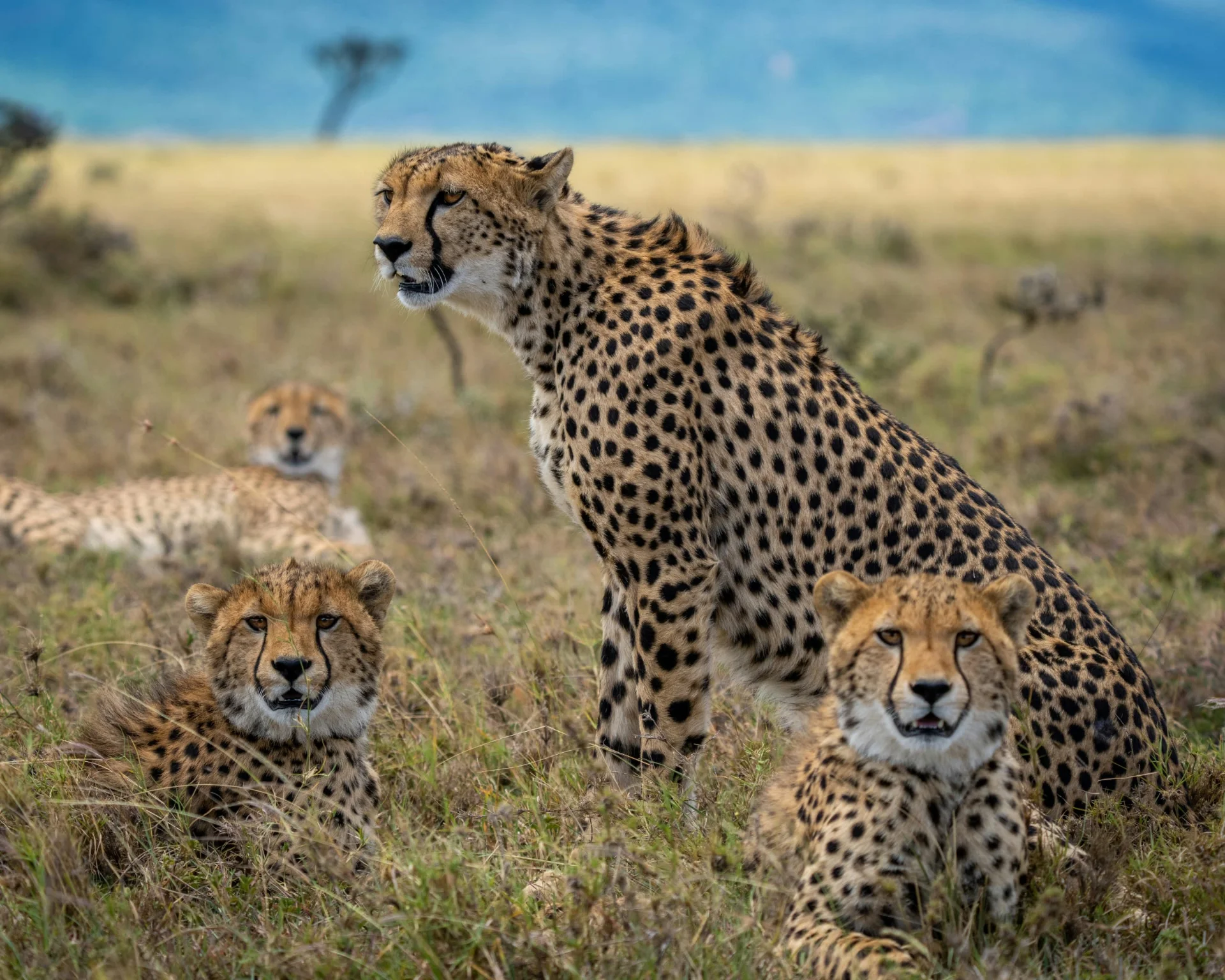
The East African cheetah is one of the most striking animals to look for on a Tanzania safari. Its slim frame, long legs, solid black spots and dark facial stripes set it apart from the other cats of the plains.
In this guide, “East African cheetah” describes cheetahs living in the region, rather than a separate species. The species is Acinonyx jubatus. Understanding that distinction helps you read wildlife guides without confusing regional names with scientific classification.
There is much more to this cat than a fast sprint. Hunting, raising cubs, finding space and avoiding larger predators shape its daily life. This guide covers cheetah facts, habitat, conservation and responsible viewing, with sample Tanzania safari packages to help you plan.
Plan a private Tanzania safari with TanzaLux and make time for the cats of the plains.
What is the East African cheetah?
The IUCN SSC Cat Specialist Group recognises four cheetah subspecies in its current profile and groups southern and eastern African animals under Acinonyx jubatus jubatus. Some wildlife resources use different regional labels or taxonomies.
For travellers, the clearest approach is to use the species name and describe the place. You can enjoy an East African cheetah sighting without assuming the regional name represents its own species.
Ask your guide about the landscape and the individual animal you are watching. A lone adult, a group of males and a female with cubs can present very different scenes.
How to recognise a cheetah
The Smithsonian National Zoo's profile describes a slender body, long legs, a small head and black tear marks running from the inner eye toward the mouth. The coat has solid spots rather than the leopard's open rosettes.
Body: look for a lean frame and long limbs.
Face: dark stripes run down from the eyes.
Coat: small solid spots cover much of the body.
Tail: a long tail helps distinguish the overall shape.
For an East African cheetah, use several features together. Light, grass and distance can hide a face or change the apparent shape of the body. Binoculars are often more useful than trying to get closer.
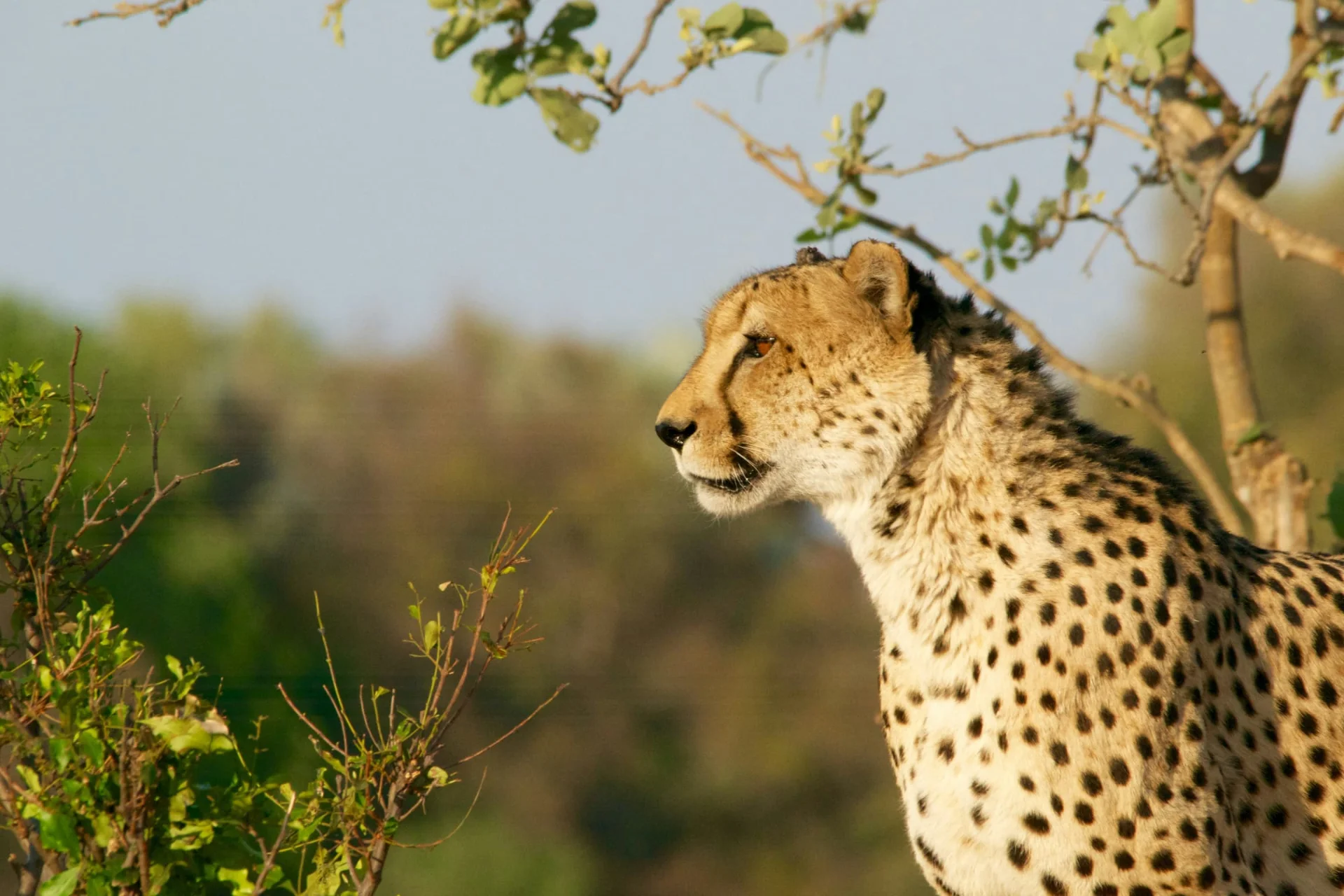
A profile view helps reveal the small head, spots and dark facial stripe. Identification is strongest when you combine several features.
Cheetah vs leopard: what is the difference?
A simple first clue is the coat: a cheetah has solid spots, while a leopard has rosettes. The Cat Specialist Group highlights this distinction in its cheetah description.
Shape is useful too. A cheetah looks long-legged and lean; a leopard generally looks more compact and powerfully built. Do not rely on a single rule such as “a cat in a tree must be a leopard.”
On safari, ask your guide to point out the features before giving you the answer. This turns identification into a skill you can use through the rest of the trip.
An East African cheetah can blend into dry grass surprisingly well. Take time to see the face and body rather than trying to decide from one distant spot.
How fast can a cheetah run?
The cheetah is the fastest land mammal. The Smithsonian profile gives a top-speed range of roughly 96–112 km/h, or 60–70 mph. Those are brief sprint figures; a chase also involves turns and obstacles.
Think of that as short-burst ability, not a normal pace or a promise that every chase reaches it. A sprint figure says little about the speed of a resting animal or one walking across the plains.
For an East African cheetah, agility and timing matter alongside speed. Watching the approach to prey can be just as revealing as the chase.
Never ask a driver to follow closely or provoke a run for a photograph. The most valuable sighting is one in which the animal continues its own activity without pressure from you.
What does a cheetah eat?
The Cheetah Conservation Fund lists prey such as Thomson's gazelles, impalas and other small or medium antelopes, along with hares, birds and occasionally calves of larger animals.
A hunt is more than a burst of speed. The cat must find a chance, approach and decide when to commit. Not every attempt succeeds, and safari guests should expect long quiet periods too.
If your East African cheetah sighting develops near prey, let the guide choose the position. Keep noise low and avoid asking for a move that would block the animal or affect the scene.
When are cheetahs active?
San Diego Zoo's cheetah guide describes hunting in the morning and toward dusk, with daytime hunting also possible. It explains how cheetahs use sight and raised places such as termite mounds to scan for prey.
That makes an early drive worth discussing, but it does not create an appointment with a hunting cat. Resting, looking around and changing position are normal parts of a sighting.
When you watch an East African cheetah, notice its direction of gaze. Ask your guide what else is visible in that direction. A small change in attention may be more interesting than an immediate move to another sighting.
Do cheetahs live alone or in groups?
Both patterns occur. San Diego Zoo describes females living independently except with young, while males may live alone or form small groups called coalitions. Related males often remain together.
This differs from the familiar idea of a lion pride. A group of cheetahs does not automatically mean a mother and cubs, so avoid assigning family roles from size or numbers alone.
A group can reward patient viewing. Watch whether the animals rest together, scan in different directions or move as a unit. Let your guide interpret the context.
Cheetah cubs and the work of raising them
The Cheetah Conservation Fund describes a gestation of about 93 days and litters commonly containing one to six cubs. Mothers raise their young without a male partner's help.
Cubs have a long pale-grey mantle along the back and neck. They depend on their mother and face risks from other predators. Avoid treating any one cub-survival statistic as a fixed rate for all places and years.
An East African cheetah family deserves extra space. Do not separate a mother from her cubs with a vehicle, crowd a hiding place or use sounds to bring them into view.
Keep the camera ready, but allow the guide to end the sighting when needed. A respectful departure is part of good wildlife viewing.
Can a cheetah roar?
No. The Cheetah Conservation Fund describes chirps, growls and other calls instead of a lion-like roar. Cheetahs can also purr.
Listen quietly if the scene allows. Calls are another reason an East African cheetah sighting can be memorable without a chase. Do not play recordings to attract a response.
East African cheetah habitat and range
Cheetahs use open landscapes, but the species is not confined to one kind of empty plain. The African Wildlife Foundation describes a range of habitats and explains the need for large, connected areas.
Kenya and Tanzania are important parts of the eastern African range. For a Tanzania trip, the Serengeti ecosystem is a useful focus for discussing cheetah-viewing interests.
Choose a base for the areas it makes practical to explore. Two camps described as “Serengeti” can be far apart. Ask to see each on a map and understand the driving time between them.
Where to look for cheetahs on a Tanzania safari
The central, eastern and southern parts of the Serengeti ecosystem are worth discussing with your planner. Asilia's Serengeti guide describes the eastern Namiri Plains area as big-cat country and illustrates cheetahs in that landscape.
The southern plains and Ndutu area can suit an early-year wildlife route, while a central base may fit a broader Northern Circuit trip. These are route ideas, not claims that cats stay in fixed places.
For an East African cheetah safari, explain your interest before choosing camps. A plan built around several full viewing days is more useful than adding a long transfer simply to collect another area name.
Kenya can also be part of a wider regional wildlife journey, but border crossings, transport and guiding need their own plan. Do not assume a Tanzania quote includes another country.
Ask TanzaLux which Serengeti base best fits your cheetah-viewing interests and dates.
When is the best time to plan your visit?
There is no guaranteed cheetah month. The right route depends on habitat, recent reports, access and the time you can spend in the area.
If calves and southern plains scenes interest you, discuss early-year dates. If you also want northern migration viewing, allow enough time for a different seasonal base. Do not treat migrating herds and cheetahs as one group that follows the same timetable.
An East African cheetah-focused trip should still offer other reasons to enjoy each stay. Birds, prey animals, landscapes and quiet camp time give the day depth when cats are hard to find.
Responsible viewing and photography
Use your lens or binoculars to bring the scene closer. Give the animal space, follow local rules and let the guide judge when a move would disturb it.
Stay in the vehicle unless your guide permits an exit at an authorised place.
Keep voices low and avoid calls, whistles or playback.
Leave clear space for the animal to move.
Never crowd a hunt, feeding cat or mother with young.
Do not ask the guide to chase or touch wildlife.
Be willing to leave a busy sighting rather than adding pressure.
For an East African cheetah portrait, look for light and a clear background. A resting cat can make a strong image. For movement, test continuous focus and an action-friendly shutter speed before the scene changes.
Capture some wider frames too. The relationship between a small cat and a vast plain often tells more of the story than a tight crop alone.
Cheetah conservation: why space matters
The Cat Specialist Group lists the cheetah globally as Vulnerable. That species-wide status should not be confused with a separate assessment for a regional name.
AWF identifies habitat loss, fragmentation, conflict with livestock owners and illegal trade among the threats. A cat that ranges widely needs more than one isolated patch of protected land.
For the East African cheetah, conservation includes the space between protected areas and the people sharing those landscapes. Connected habitat and ways to reduce conflict are central to long-term survival.
As a traveller, choose respectful viewing and look for clear evidence behind conservation claims. Do not assume a photo encounter, cub interaction or a company's general “eco” label proves a wildlife benefit.
Sample safari packages to discuss with TanzaLux
These are sample route ideas, not fixed offers or live prices. Dates, camps, travel times and services need a written quote. None guarantees an East African cheetah sighting.
Sample package: 7-day Northern Circuit wildlife safari
Day 1: arrive and stay in Arusha.
Day 2: visit Tarangire and continue to a suitable Karatu-area stay.
Day 3: travel to Central Serengeti.
Days 4–5: take full game-drive days from one base.
Day 6: return toward Ngorongoro for an overnight stay.
Day 7: visit the crater and transfer onward; add a night if needed for your flight.
Best for: a first trip with three Serengeti nights and a broad wildlife focus. Check the final day's driving and connection before booking.
Request a private Northern Circuit safari with time for cat viewing.
Sample package: 9-day central and eastern Serengeti safari
Days 1–2: arrive in Arusha, then travel toward Karatu.
Days 3–4: spend two nights in a central Serengeti base.
Day 5: move to an eastern base selected for your interests.
Days 6–7: enjoy full days in the eastern area.
Day 8: return toward the Ngorongoro or Karatu area.
Day 9: transfer onward; include a crater visit only if the booked timing works, or add a day.
Best for: guests who want five Serengeti nights and room for patient drives. Confirm camp positions and the practicality of each transfer.
Build a Serengeti route around your East African cheetah interests.
Sample package: 12-day safari and Zanzibar holiday
Days 1–6: follow an Arusha, Tarangire, Serengeti and Ngorongoro-area route.
Day 7: enjoy a crater visit and return to an Arusha overnight stay.
Day 8: take your separately booked Zanzibar connection.
Days 9–11: relax at one beach base, with optional outings.
Day 12: transfer for your onward journey.
Best for: a wildlife holiday with a slower coastal finish. Check the actual transport provider, baggage rules and all transfer arrangements.
Plan a private safari and Zanzibar escape with TanzaLux Safaris.
Why travel with TanzaLux Safaris?
TanzaLux is Tanzanian-owned and based in Arusha. Its team shapes trips around dates, pace, interests and budget. The private safari service offers your own vehicle and guide on a tailored route.
Share your East African cheetah interests at the planning stage. Ask why each camp fits your goals, how many full drive days you have and which services the quote includes.
A private route gives your party space to discuss the pace, breaks and time at sightings. Your guide still works within park rules and the conditions on the day.
Turn your wildlife interests into a tailored Tanzania safari with TanzaLux.
Frequently asked questions
1. What is the East African cheetah?
Here the term means cheetahs living in eastern Africa. It is a regional description of the species Acinonyx jubatus, not a separate species.
2. What scientific classification does this guide use?
It follows the Cat Specialist Group's current profile, which places southern and eastern African cheetahs in A. j. jubatus. Regional names and older classifications may differ.
3. Where can I look for cheetahs in Tanzania?
Discuss the Serengeti ecosystem with your planner, including bases suited to central, eastern or southern routes. Camp position and time in the area matter.
4. How do I distinguish a cheetah from a leopard?
Look for solid spots, dark facial tear stripes and a lean, long-legged shape. Leopards have rosettes. Use several features rather than a single clue.
5. How fast can cheetahs run?
The Smithsonian profile gives roughly 96–112 km/h for short sprints. Actual runs vary, and a top-speed figure is not the normal pace.
6. Do cheetahs hunt only at night?
No. They often hunt by day, including morning and late afternoon. A sighting can also involve long periods of resting or scanning.
7. What do cheetahs eat?
They take prey such as gazelles and other small or medium antelopes, with smaller animals and some larger species' calves also in the diet.
8. Do cheetahs live in prides?
No. Their social pattern differs from lions. Adult females are generally alone or with young; males may live alone or in coalitions.
9. What is a cheetah coalition?
It is a group of males, often related animals such as brothers. A group sighting does not automatically mean a mother with cubs.
10. Who raises cheetah cubs?
The mother raises them. Cubs depend on her as they grow and learn, so vehicles should never come between a mother and her young.
11. How many cubs are in a litter?
The Cheetah Conservation Fund gives one to six as a usual range, while larger litters have been recorded. Do not assume every cub you see will survive.
12. Can cheetahs roar?
No. They use calls such as chirps and growls and can purr. Listen quietly without playing sounds to attract them.
13. Are their claws fully retractable?
No. Cheetahs have semi-retractable claws, which help provide grip. This is one of several features associated with their running ability.
14. What is the cheetah's conservation status?
The global species status is Vulnerable. That is not a separate assessment of the regional name.
15. What threatens cheetahs?
Habitat loss, fragmented ranges, conflict with people and illegal trade are major concerns. Conservation needs to consider connected landscapes as well as protected areas.
16. Is there a guaranteed season to see one?
No. Choose a suitable base, allow time and use recent local advice. No month guarantees a sighting or a hunt.
17. Can we get out near a resting cheetah?
Stay in the vehicle unless your guide permits an exit at an authorised place. A resting wild cat is not an invitation to approach.
18. Can we photograph cheetahs with cubs?
Only from a respectful position chosen with your guide. Keep space, avoid attracting attention and leave if viewing is causing pressure.
19. How much safari time should we allow?
Three or more nights in one base is a useful planning suggestion when possible. A second region needs extra transfer time and full days to explore.
20. Can TanzaLux tailor a cheetah-focused trip?
Yes. Send your dates, budget and wildlife interests. Ask for a route with suitable camps and time to explore, while keeping expectations realistic.
Ready to start planning?
Tell us your dates and what you're after — no obligation.