5.0 Excellent

The Birds of Tanzania
The birds of Tanzania add colour, sound and surprise to every safari. A roller on a bare branch, a fish eagle above a river or cranes feeding in wet grass can become a highlight of the day. You do not need to be an expert to enjoy them. A little patience and a good pair of binoculars are a fine start.
This guide introduces memorable birds, key habitats and practical ways to plan a Tanzania birding safari. It also covers seasonal visitors, gear, responsible viewing and sample routes. Whether you want a few bird stops between mammal sightings or a trip shaped around birds, the right pace makes a difference.
Plan a private wildlife and birdwatching safari with TanzaLux.
Why are the birds of Tanzania so varied?
Tanzania brings together open savanna, lakes, rivers, mountain forest, dry woodland and a long coast. Each habitat offers different food, shelter and nesting places. The islands add another layer of interest, including birds with small native ranges.
The African Bird Club's Tanzania overview records more than 1,100 species. Exact totals vary as checklists and records are updated. For travel planning, the more useful question is which habitats and birds fit your route.
The birds of Tanzania cannot all be found on one game drive or in one park. A forest specialist may need a dedicated walk far from the main safari circuit. Start with your interests, then choose a realistic mix of places rather than chasing a national total.
Nine bird highlights to look for
These examples offer a starting point for enjoying the birds of Tanzania. They are not a complete checklist or a promise of sightings. Some are easy to notice in the right setting; others take more care, a local guide and time.
1. Lilac-breasted roller: colour on a roadside perch
A lilac-breasted roller can turn a short stop into a memorable sighting. Look for a sturdy bird with a lilac breast and bright blue tones, often perched where it can watch open ground. Light and angle affect how the colours show.
The local Tanzania Birds photo records include birds seen in Tarangire, Ruaha and the Serengeti region. They also show why young birds and different views can complicate a quick identification.
Watching tip: enjoy the perch and the habitat. Do not call, clap or drive closer just to make the bird fly for a photograph.
2. Superb starling: a familiar bird worth a second look
Superb starlings reward attention even when they are near a picnic area. Adults show glossy blue-green tones, a warm chestnut belly and a pale eye. A narrow white breast band helps complete the picture. Young birds can look different, so study more than one feature.
The Tanzania Birds superb starling gallery documents adults and young from several safari areas. Familiar birds of Tanzania can offer just as much pleasure as a rare find.
Watching tip: keep food packed away. Let the bird forage naturally rather than offering scraps to bring it within camera range.
3. African fish eagle: a striking bird by the water
An adult African fish eagle has a bold white head and breast, dark wings and a rich brown body. Look for a perched bird near a river or lake, then take time to watch the wider water scene. Young birds lack the same clean adult pattern.
The BirdLife South Africa species account explains these field marks. River-based outings can add a fresh viewpoint when exploring the birds of Tanzania, though no trip can promise a hunt or a catch.
Watching tip: scan trees along the bank with binoculars. Let the guide choose a safe boat or vehicle position.
4. Secretarybird: the long-legged ground hunter
The secretarybird is a bird of prey that spends much of its time hunting on foot. Long legs, a grey body, dark flight feathers and a crest of long head feathers give it a clear outline. Watch it stride through open grass rather than expecting it to sit on a perch like an eagle.
The San Diego Zoo species guide describes its ground-based hunting and ability to fly. It searches for more than snakes, taking a range of small prey.
Watching tip: allow it to continue its route. Do not use the vehicle to push it towards prey or force a reaction.
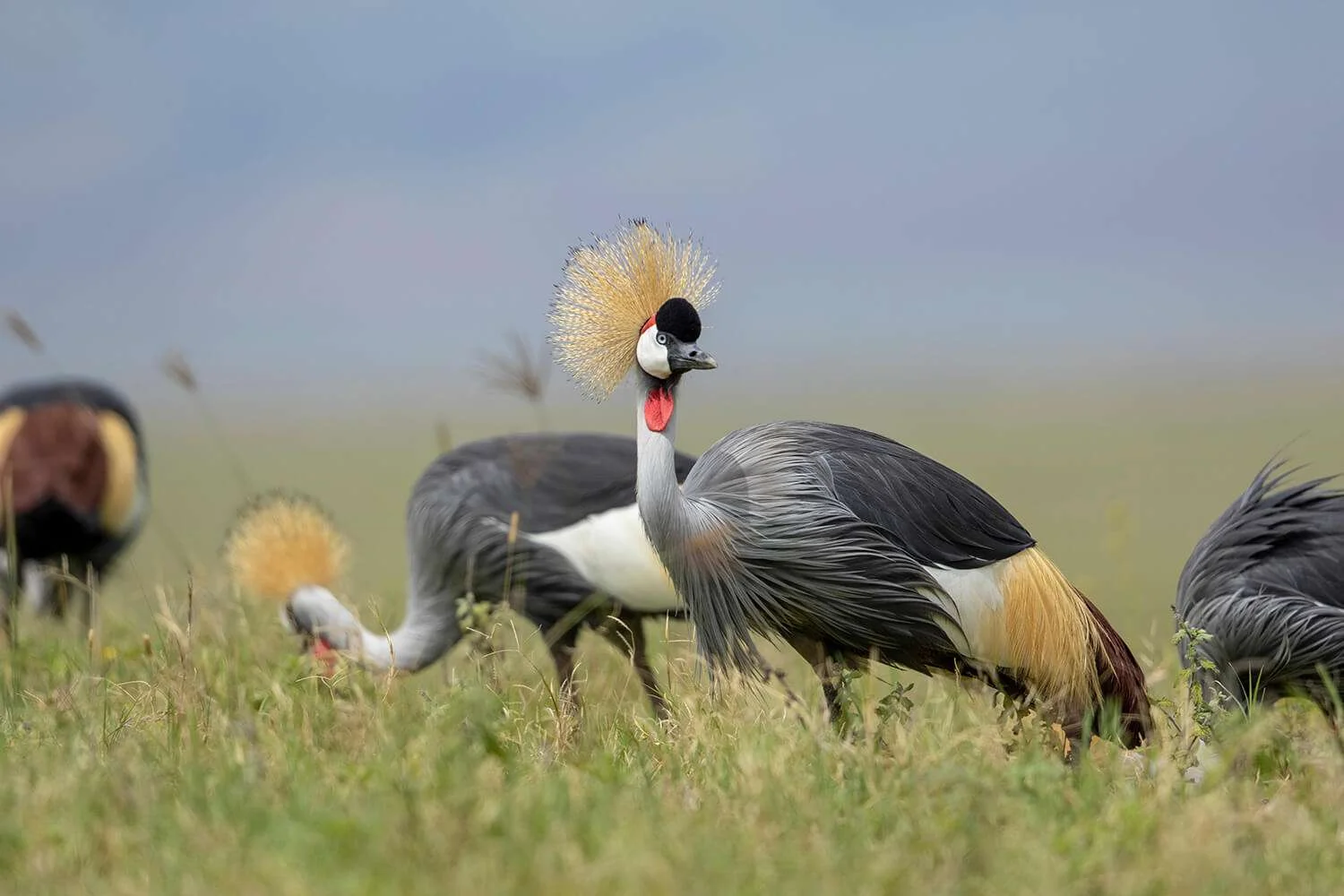
5. Grey crowned crane: a golden crown above the grass
Grey crowned cranes are distinctive adults, with grey bodies, white cheek patches, a red throat pouch and a crown of stiff golden feathers. Their shape makes them a good bird for first-time watchers to learn. Look at the whole bird before focusing only on the crown.
The International Crane Foundation profile describes their field marks and the threats posed by wetland loss and disturbance. Beautiful birds of Tanzania also depend on healthy places to feed and breed.
Watching tip: keep well back from nests and young. A feeding pair can be enjoyed from a quiet, fixed viewing point.
6. Kori bustard: a large bird that blends into the plains
A kori bustard is one of the world's heaviest flying birds, yet much of its life is spent on the ground. Its brown-grey pattern blends into grassland, so it may be less obvious than its size suggests. Scan slowly for a large walking bird.
The Smithsonian National Zoo profile describes its open grassland and lightly wooded savanna habitat. It can fly, but seeing it on foot is part of the experience.
Watching tip: use a wider photo to show how well the plumage matches the setting. Never try to flush it into flight.
7. Ostrich: a familiar outline on the open plains
An ostrich is easy to recognise from its long neck, long legs and large flightless body. Even so, it is worth a proper stop. Watch how it feeds, walks and scans the surroundings, and notice how small it can look against a broad plain.
The official Serengeti park guide includes ostriches among its birdlife. They provide a useful reminder that a birdwatching day can involve large ground birds as well as small species hidden in trees.
Watching tip: keep the animal's full body in some frames. Give it room near the track and do not approach on foot.
8. Lovebirds: small parrots with local interest
Fischer's and yellow-collared lovebirds are among the small parrots that draw birders to Tanzania. They are distinct species, so a brief flash of green is not enough to identify one. A settled bird gives a better view of the face, head and neck pattern.
TANAPA's Tarangire birding notes highlight yellow-collared lovebirds, along with ashy starlings and rufous-tailed weavers. Do not describe the lovebird as occurring only within Tarangire.
Watching tip: ask your guide which local birds of Tanzania are realistic targets for your route. Watch wild birds without buying or handling captive ones.
9. Flamingos: a changing lake spectacle
Greater and lesser flamingos occur in Tanzania, and a distant flock should not be identified by pink colour alone. Numbers can shift as water levels and feeding conditions change. A lake visit may be rewarding even when the famous pink band is absent or far away.
Nature Tanzania explains Lake Natron's importance as the only regular successful lesser flamingo breeding site in East Africa. That importance does not mean visitors should approach breeding areas.
Watching tip: use a scope or binoculars from an approved viewing point. Follow local guidance and keep clear of nesting colonies.

Where should you watch the birds of Tanzania?
Choose a route around a few habitats. A change from plains to forest or river can add more variety than another long drive through similar ground. These areas offer different styles of birdwatching in Tanzania.
Serengeti: open plains, woodland and kopjes
Serengeti birds are a reason to pause between mammal sightings. The park has grassland, woodland, riverine areas and rocky outcrops, each with a different feel. The official wildlife guide describes that habitat mix.
When exploring the birds of Tanzania here, ask for time to scan the ground as well as tree tops. Stay several nights if possible, so a travel day does not become your only chance to look.
Tarangire: woodland birds and regional specialities
Tarangire birdwatching fits well into a northern safari. Baobabs, acacia woodland, open areas and wetlands create varied stops. Give small birds in the branches as much attention as the large birds on the ground.
The birds of Tanzania are best enjoyed with realistic targets. Discuss lovebirds, weavers and starlings with the guide, while remaining open to other sightings. A dedicated birding pace is slower than a drive focused only on mammals.
Lake Manyara: forest and waterbird contrast
Lake Manyara combines groundwater forest, woodland and lake-associated habitats. TANAPA's park overview describes the forest and waterbird setting. This makes it a useful contrast to open plains.
Ask about current water levels, road access and viewing conditions. Flamingo numbers are variable, and a large flock should never be the sole reason for the stop. Forest birds and other wetland species can still make the visit worthwhile.
Nyerere: rivers, lakes and boat-based birding
The Rufiji system offers a different way to watch. The official Nyerere guide highlights fish eagles, skimmers, bee-eaters and kingfishers around lakes and channels. A guided boat outing can complement game drives.
Confirm the boat trip in advance and check operating conditions. Water levels affect routes. Keep hands and gear inside the boat, follow the guide and never treat a wildlife river as a place to swim.
Ruaha: varied southern habitats
Ruaha deserves time for birds as well as big mammals. The park's official brochure links its bird variety to different vegetation types and altitudes, and notes both northern and southern migrants.
Choose enough nights to settle into the area. Ask the planner how camp location, season and travel links affect the birding. A southern route usually needs its own access plan rather than a quick detour from the northern parks.
Eastern Arc forests: a dedicated search
Forest birding is often about listening, waiting and searching through leaves. The Udzungwa park guide highlights forest birdlife, including greenbuls and sunbirds. A forest walk feels very different from a vehicle game drive.
For specialist birds of Tanzania, discuss a suitably skilled local bird guide, trail conditions and enough time. Do not assume rare forest birds can be added to a short transfer day. Some targets may need a different mountain area or a longer trip.
Zanzibar and Pemba: coastal and island birding
A coast stay can include tidal habitats and forest, alongside beach time. On Unguja, ask about a guided Jozani-area visit and suitable shorebird viewing. Tides shape the best time for some coastal stops.
Pemba is a separate island plan. The Ngezi forest biodiversity survey records island specialities such as Pemba green pigeon, Pemba sunbird and Pemba white-eye. These birds of Tanzania require the right island and habitat, not just any Zanzibar hotel.
When is the best time to see the birds of Tanzania?
Birding is rewarding throughout the year. Many northern-hemisphere migrants add interest during roughly November to April, though timing varies by species and place. Some residents also become more vocal or show breeding plumage as conditions suit them.
The TANAPA trip-planning guide describes the contrast between dry and green seasons. Greener periods can bring migrant birds and lush scenes, while rain may affect roads, trails and camp operations. Dry months still offer resident birds and can make some travel simpler.
For a general safari: balance bird interest with mammals, comfort and travel dates.
For specific birds: choose dates with a guide who knows their local pattern.
For wetlands: ask about water levels as well as the month.
For forests: check trail conditions and allow more than one session.
A season is a planning guide, not a sighting guarantee. To enjoy the birds of Tanzania, protect time in suitable habitat and let each day adapt to weather and local activity.
How to plan a Tanzania birding safari
Tell your planner how much of the trip should focus on birds. A beginner may want short stops alongside wildlife drives. An experienced birder may prefer early starts, longer waits and fewer total destinations.
For the birds of Tanzania, a short wish list is useful. Share a few target species or bird groups, then ask what is realistic. Confirm whether a specialist bird guide is needed and whether that service is included. A general safari guide and a specialist forest birder may offer different skills.
Try to keep at least two full sessions in your main birding area. Build in rest, meals and travel time, especially with children or non-birding companions. One productive patch can be worth more than a long drive towards a distant report.
Ask TanzaLux to shape a safari around your birding interests.
What should you pack for birdwatching?
Binoculars are the most useful first item for watching the birds of Tanzania. Choose a pair you can hold steady and adjust easily. Practise finding a perched bird before travel, rather than learning the controls during a brief sighting.
A regional field guide or offline app: useful for comparing likely species.
A notebook or notes app: record date, place, habitat and key marks.
A camera with zoom: helpful for later review, but not essential.
Sun and rain protection: pack a hat, a light layer and a cover for optics.
Comfortable footwear: choose closed shoes with grip for guided walks.
A charged battery and spare storage: useful for long days away from power.
A scope can help at lakes, but it is not needed for every guest. Ask whether the guide can provide one. Check luggage limits if your route includes small aircraft, especially with heavy camera equipment.
Watch birds without disturbing them
Enjoying the birds of Tanzania comes with a duty to give them space. Keep back from nests, feeding areas and young. Do not cut branches, leave paths or move vegetation to clear a photo angle.
The American Birding Association's ethics code puts bird welfare first. Keep noise low, avoid using calls to pull birds closer and respect local rules. Never chase a bird to force flight or offer food for a photograph.
Watch for changes in behaviour. If your presence causes alarm or interrupts feeding, give more space and follow your guide. Share sensitive nest locations with care. The best image is one made while the bird continues its normal day.
Sample packages for exploring the birds of Tanzania
These are planning ideas, not fixed offers or live prices. Rooms, guides, permits and transport need checking. Ask for specialist birding services to be clearly named in the quote. No route guarantees a particular bird or a species total.
Sample package: 8-day Northern Circuit bird and wildlife safari
Day 1: arrive in Arusha and rest.
Day 2: explore Tarangire with time for birds and mammals.
Day 3: visit Lake Manyara and stay near Karatu.
Day 4: travel to the central Serengeti.
Days 5–6: enjoy full days in varied Serengeti habitats.
Day 7: return towards the Ngorongoro highlands.
Day 8: visit the crater and continue towards Arusha.
This route gives birdwatching a place within a classic safari. Add an Arusha night if needed before your onward flight. Actual timing and current access determine how each day is arranged.
Request a Northern Circuit bird and wildlife itinerary.
Sample package: 12-day safari and Zanzibar nature escape
Day 1: arrive in Arusha.
Days 2–3: explore Tarangire and Lake Manyara.
Day 4: travel to the Serengeti.
Days 5–6: enjoy wildlife drives with patient bird stops.
Day 7: return to Arusha for an overnight stay.
Day 8: take a booked connection to Zanzibar.
Day 9: enjoy a guided forest or coastal outing if confirmed.
Days 10–11: relax at your beach base.
Day 12: transfer for onward travel.
Agree on the guide, fees and exact island outing before booking. Pemba needs separate transport and nights; it is not included in this Unguja outline.
Combine a birdwatching safari with a Zanzibar stay.
Sample package: 10-day Nyerere and Ruaha journey
Day 1: arrive in Dar es Salaam.
Day 2: transfer to Nyerere using the agreed transport.
Days 3–4: combine game drives with boat-based birding if available.
Day 5: travel towards Ruaha on confirmed connections.
Days 6–8: enjoy unhurried wildlife and birding days.
Day 9: return to Dar es Salaam and stay overnight.
Day 10: continue your journey.
Do not assume a direct flight between parks. Add a transit night or day if the confirmed schedule needs it. Camp season, guide availability and river conditions shape the final plan.
Discuss a tailored southern Tanzania birding safari.
Why travel with TanzaLux Safaris?
TanzaLux is a Tanzanian-owned safari company based in Arusha. Its planning approach starts with your dates, budget, pace and interests. If the birds of Tanzania are a priority, say so early. That helps the planner protect birding time and discuss the right guide skills.
A private road safari gives your party its own vehicle and guide. You can discuss a balance between bird stops, mammal viewing, rest and photography. Park rules and conditions still shape what is possible.
Ask for a written itinerary with accommodation, transport, meals, park fees and optional activities clearly listed. Specialist bird guides, scopes, boat trips and island outings need explicit confirmation. Clear planning helps each traveller understand how the days will feel.
Start planning your journey to see the birds of Tanzania with TanzaLux.
Frequently asked questions
1. How many bird species have been recorded in Tanzania?
More than 1,100 species have been recorded, with totals varying by checklist and updates. A trip will cover only part of that variety. Choose habitats and realistic targets rather than a fixed species count.
2. Do I need birding experience to enjoy a safari?
No. Start with large or colourful birds and ask your guide about their names and habits. A few quiet stops can make a normal wildlife drive more rewarding.
3. What is the best time for birdwatching in Tanzania?
Many migrants add variety from roughly November to April. Resident birds can be enjoyed all year. The best dates depend on the birds, habitat, access and other goals for your trip.
4. Is dry-season birding worthwhile?
Yes. Resident birds remain, and some travel may be simpler in drier conditions. You may see a different mix from the green season. Ask about the actual parks and dates you are booking.
5. Which park is best for a first birding safari?
Tarangire and Serengeti work well within many first northern trips. Lake Manyara adds forest and waterbird habitats. Choose a route that allows time rather than trying to visit every park.
6. Are flamingos guaranteed at Lake Manyara?
No. Numbers and viewing conditions change with water and food availability. Visit for the wider habitat and birdlife, and treat a large flamingo flock as a bonus.
7. Why is Lake Natron important for flamingos?
It is East Africa's only regular successful breeding site for lesser flamingos. That makes careful protection vital. Use approved viewing areas and do not try to approach nesting colonies.
8. Do greater and lesser flamingos both occur in Tanzania?
Yes. A distant pink flock is not enough for a precise identification. Use binoculars or a scope, and let the guide explain which features are visible.
9. What does endemic mean?
An endemic bird has a natural range limited to a particular area. The area may be a country, island or region. An endemic species is not necessarily easy to find.
10. Can I see Pemba birds from any Zanzibar hotel?
No. Pemba is a separate island from Unguja, where most Zanzibar beach stays take place. Its special birds need a suitable island itinerary, local access and the right habitats.
11. Should I book a specialist bird guide?
Discuss this if birds are a main goal, especially for forest or narrow-range targets. Ask about local knowledge and guide availability. Make sure specialist services are named in the quote.
12. Can children enjoy birdwatching?
Yes. Keep sessions short, use easy targets and let them describe colours or shapes. Choose safe viewing points and follow the guide. A relaxed pace helps everyone enjoy the day.
13. Are binoculars essential?
They are the most useful tool for most birdwatchers. Choose a pair that is comfortable and easy to hold steady. Practise using them before you travel.
14. Do I need a camera or spotting scope?
No. A camera can help with later identification, and a scope is useful for distant waterbirds. Neither is required to enjoy birds. Ask what equipment the guide can provide.
15. What should I record when I see an unfamiliar bird?
Note the place, habitat, size, shape, colours and behaviour. A photo can help, but do not disturb the bird for one. Compare the clues with the guide afterwards.
16. Is forest birding like a game drive?
No. It often involves walking, listening and waiting for brief views through leaves. Discuss fitness, trail conditions, permits and guide skills before adding it to your route.
17. Can boat safaris be good for birds?
Yes. Nyerere's river system offers a different viewpoint for waterbirds. Confirm the outing, guide and current conditions. Keep clear of wildlife and follow the boat briefing.
18. Can I use recorded calls to attract birds?
Avoid using calls to draw birds closer, especially near nests or sensitive species. Follow local rules and guide advice. Quiet observation puts the bird's welfare ahead of a quick sighting.
19. Can any tour guarantee a rare bird?
No. Wild birds move freely and may remain hidden even in suitable habitat. A knowledgeable guide and enough time improve the plan, but cannot guarantee a particular sighting.
20. Can TanzaLux plan a trip around the birds of Tanzania?
Yes. Share your dates, budget and birding interests, then ask for a realistic route and written quote. Confirm any specialist guiding, equipment and activities before booking.
Ready to start planning?
Tell us your dates and what you're after — no obligation.