5.0 Excellent

When is the best time to see the Great Migration in Serengeti?

The best time for the Serengeti Great Migration depends on the stage you want to see. For calving, start with January to March in the southern plains and Ndutu. For northern Mara River crossing opportunities, July to October is a common planning window. Match the month to the right area, then allow time to watch.
The migration is a moving wildlife cycle, with herds following changing rain and grazing. It is not one event in one place. A camp that suits February may be far from the main herds in August. The exact pattern also varies from year to year.
This guide explains the seasons, regions and practical choices behind a good trip. You will find a calendar, sample packages and answers to common planning questions. Use it to choose the experience you want, then shape a clear route with TanzaLux Safaris.
Explore Great Migration journeys with TanzaLux Safaris and match your dates to the right region.
Serengeti Great Migration: the best time by experience
Calves and herd life: usually January to March in the south, with February often the calving peak.
Western movement: discuss the Western Corridor around May to July, using current reports.
Mara River crossing focus: commonly July to October in northern Serengeti.
Return south: November and December can bring a changing route as the rains return.
Fixed travel dates: choose the area that fits your week, rather than keeping one camp for every season.
These are broad planning windows, not live herd positions. No guide can promise a river crossing, live birth or a particular animal scene. The best time to see the Great Migration is the time that matches your main interest with a well-placed stay.
Why the right location matters as much as the month
The Serengeti Great Migration links seasonal grazing areas across the wider Serengeti–Mara ecosystem. The Convention on Migratory Species' migration fact sheet explains the role of rain, food and movement between the southern plains, western areas and northern refuge. The animals do not follow a visitor's timetable.
That has a simple planning effect: ask where each camp sits during your stay. A broad label such as “Serengeti” is not enough. Check which area you will explore and how long the daily journey may take. A map of the nights is a useful starting point.
Daily flexibility can help a guide respond within your booked route and permissions. Moving to a faraway region is a different matter. It may need a new camp, flights, fees or transfers. Confirm what can change before treating a trip as fully flexible.
Great Migration month by month: a practical calendar
Read this calendar as a seasonal guide. Rainfall, grazing and the spread of the herds can shift the pattern. Ask for current advice as you plan and again near departure. A dated field report helps refine a route; it cannot promise where animals will be on arrival.
January to March: southern plains and calving
These are the usual months to plan a southern calving-focused visit. Ndutu and nearby short grass plains can form the core of the route. February is often the peak in births. See TANAPA's calving-season feature and the Ndutu migration overview for background.
Check the access zones for a southern stay. Ndutu Safari Lodge sits within the Ngorongoro Conservation Area, beside the southern Serengeti plains. Camp and drive locations affect the fees and rules that apply.
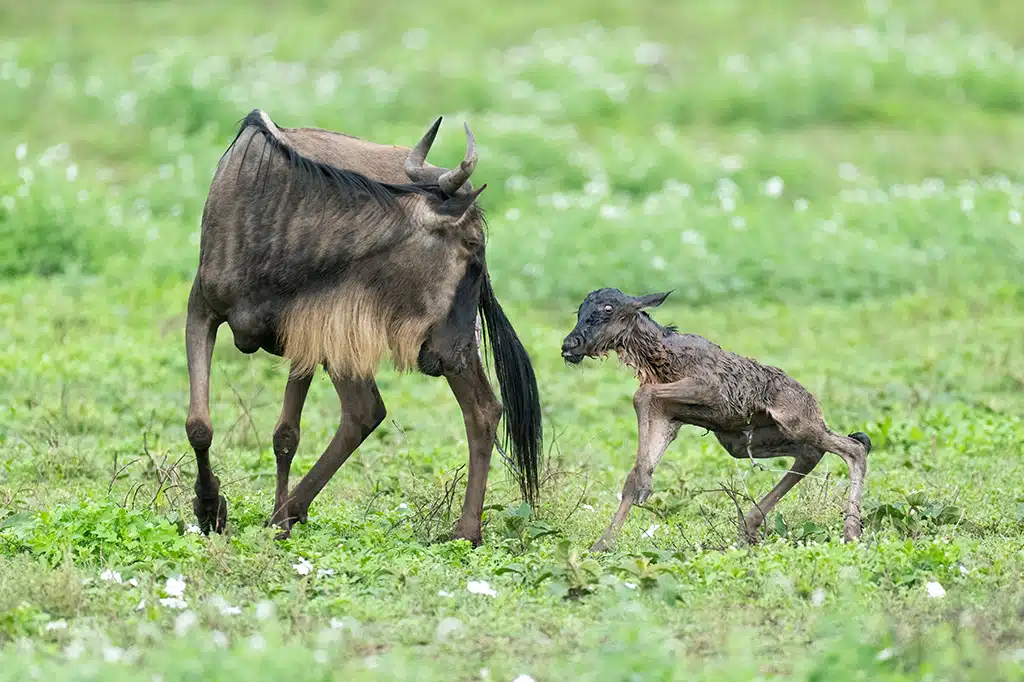
Calving offers a different migration story from the northern river crossings.
For a Serengeti Great Migration trip in this period, think about full days near the herds. Watch mothers, calves and the wider landscape. Keep other wildlife interests in the plan as well. A live birth or hunt should remain a hope rather than a booking condition.
April and May: review the transition towards central and western areas
As the southern phase changes, the right route becomes especially date-specific. The CMS fact sheet describes westward movement with the onset of the dry season in May. Central or western stays may form part of a plan, depending on current reports. Avoid treating the first day of a month as a fixed changeover.
Ask your planner why each proposed camp fits that week. Compare the viewing time with the travel needed between bases. Rain can affect road access and the pace of a transfer. Check camp operations before the route is confirmed.
June and early July: the Western Corridor and onward movement
The CMS overview describes use of the Western Corridor in June and July before further movement north. This makes it an important period to discuss western options and the Grumeti area. Timing can overlap across regions. Some herds may already be farther north while others remain elsewhere.
A Serengeti Great Migration route should respond to that spread. Ask for an explanation of the proposed base and any transition night. Give the chosen area enough time. A long drive each day is not always the best way to follow a changing picture.
July to October: northern Serengeti and Mara River opportunities
July to October is a common window for a northern crossing-focused stay. Seasonal guidance from an operator working in the Serengeti describes this northern focus. The broad season does not make crossings predictable on a particular day or at one river point.
Allow time to wait, explore and return when conditions suit. A group near the river may linger or move away. Other wildlife and the surrounding habitat can still reward a quiet day. The Mara River crossings are one part of a wider safari experience.
November: a changing return route
As rains return, the broad cycle turns south again, as the CMS fact sheet explains. Yet the herds can be spread over a wide area. Northern and central route choices need current advice. November should not be treated as a guaranteed empty north or a fixed southern arrival date.
Tell the team if your dates are fixed. Ask which region best fits the whole stay, rather than one possible scene. A Serengeti Great Migration trip in a transition month works best with a clear reason for each base. Confirm the terms for any later changes.
December: follow the developing southern season
The broader southern herd period often runs from mid-December to April, according to the Ndutu overview. This is wider than the main calving window. December should not be sold as a promise of peak births. Ask what current rain, grazing and herd reports suggest for your exact week.
Use the calendar to narrow your choices, then use local planning advice to refine them. Avoid carrying a northern crossing plan into a southern-season trip by default. The camp, route and wildlife goal should all point in the same direction.
Should you choose calving or river crossings?
Choose the south if new life is the main draw
The Ndutu calving season can suit guests who want calves, mothers and time with herd life. It also calls for patience and sensitive viewing. Give animals room and follow your guide's position. Wild nature may include difficult scenes as well as moments of new life.
For the Serengeti Great Migration, calving is a distinct reason to travel. It does not need to be a substitute for a crossing trip. Decide which experience interests you more and plan for it on its own terms.
Choose the north if crossing opportunities are the priority
Set aside several nights near the relevant northern drive areas. The right number depends on your time and budget; three or four nights can be a useful starting discussion. Check how arrival and departure reduce actual viewing time. More days allow more opportunities, while the event itself remains uncertain.
Prepare for long waits and a mix of quiet and active drives. Discuss this with the whole group before booking. A crossing-focused plan should still leave room to enjoy the bush. Your trip should feel worthwhile beyond one hoped-for scene.
Where should you stay for the Serengeti Great Migration?
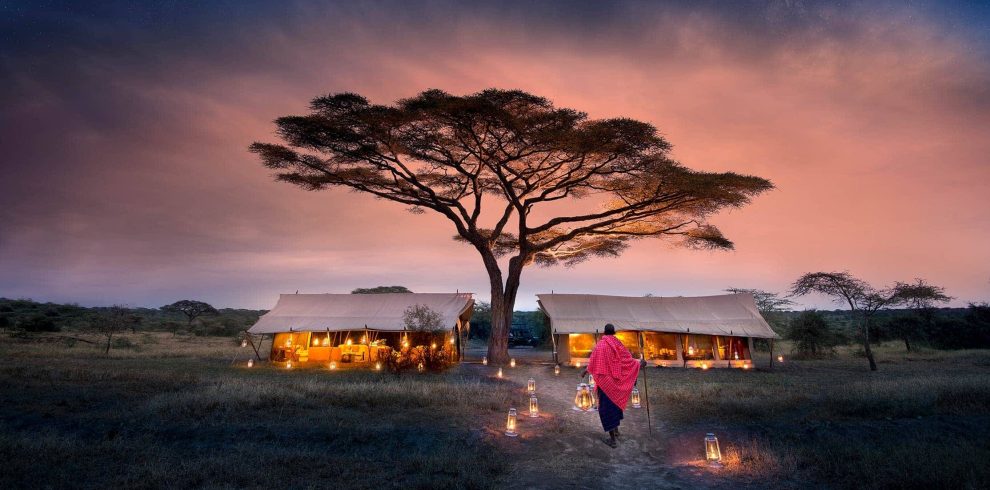
Choose location first, then compare comfort. Ask where the camp will sit for your dates and which drive areas it serves. Some camps operate seasonally or move between regions at set periods. A mobile camp does not move with the herds during your stay on demand.
Have the planner confirm the property, room type and opening dates in writing. Check bathrooms, meals, charging and essential needs. Ask how much daily travel the stay is likely to involve. A famous name alone cannot settle whether the location fits your main interest.
Also check whether a camp change would affect flights or transfers. A Serengeti migration safari works best when transport and stays form one plan. Request clear alternatives if your first choice is unavailable. Compare full viewing time as well as room features.
How long should a migration safari be?
Count nights in the area linked to your main goal. A week-long trip can include an arrival hotel and substantial transfers. Those days do not all belong to the migration focus. Ask for a simple night-by-night breakdown before comparing packages.
For a Serengeti Great Migration trip, several nights in one well-chosen base can be useful. They allow time to observe and adjust within the route. Add regions only when the extra travel serves a clear purpose. Fewer camp changes can give the journey a calmer rhythm.
Road and air options need their own checks. A flight still requires a suitable schedule, baggage plan and ground transfers. A road route needs realistic time for conditions and breaks. Leave a sensible margin before onward flights and include hotel nights where needed.
What should you expect during the day?
Your guide may search, pause, wait or move between approved areas as conditions change. Discuss your interests early, then leave room for the day to develop. Viewing times must fit camp operations and local rules. A private vehicle can offer more choice over pace for your group.
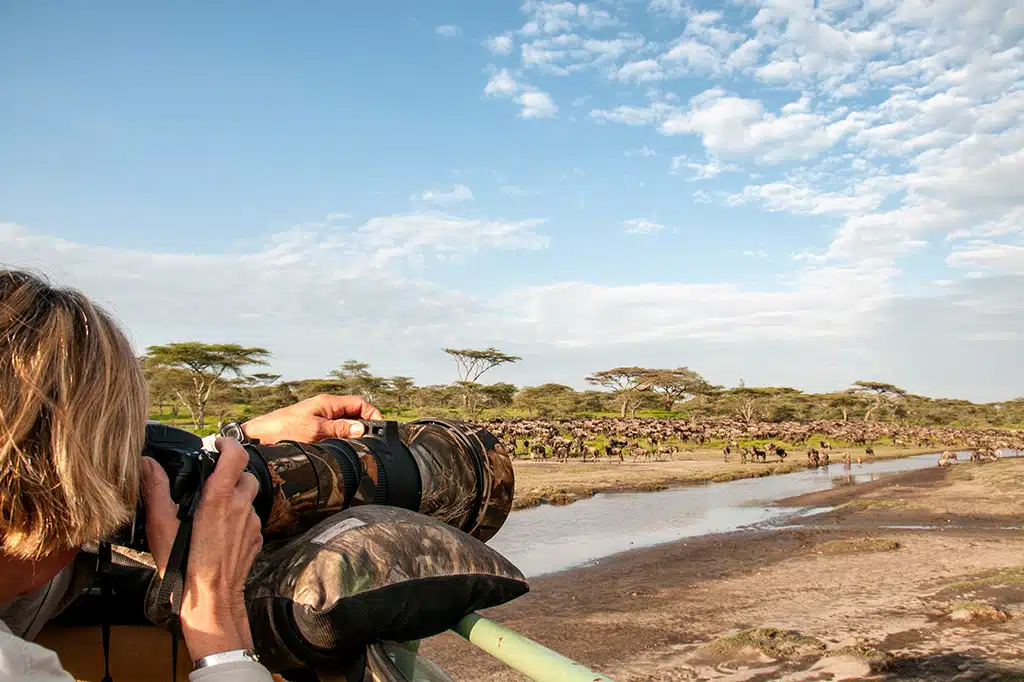
Photographers should ask about seats, bag space and charging before booking. Families should share children's ages and check camp and activity rules. Include breaks and prepare for nature's harder scenes. Long waits may suit some guests more than others.
The Serengeti Great Migration is more rewarding with broad interests. Watch herd patterns, smaller details and other wildlife. Ask the guide to explain the context of a quiet scene. A day without the event you hoped for can still add depth to the trip.
Watch river crossings responsibly
Give herds room and follow the guide and ranger instructions at designated viewing areas. Do not ask a driver to chase, surround or block animals. Stay in the vehicle as directed. The wish for a clear photograph must not shape the animals' route.
Serengeti Park Management's Mara River crossing guidance, revised in June 2024 sets out designated viewing arrangements and stationary vehicle rules. Follow the current directions on location. A private safari does not provide special rights to approach a crossing.
Responsible Serengeti Great Migration viewing includes accepting limits. You may have a distant view, another vehicle nearby or no crossing at all. Keep noise low and let the guide manage the position. The experience should leave wildlife free to move.
Three sample seasonal migration packages
These Serengeti Great Migration examples are tailored planning ideas, subject to access and camp availability. They are not fixed offers or confirmed prices. Flights and transfers need suitable schedules. Request a dated quote with named properties, full inclusions and booking terms.
Sample package 1: 6 days with a southern calving focus
Suggested planning window: January to March, refined for your dates. The five nights are one in Arusha, three in Ndutu and one in the Ngorongoro area. The outline gives two full Ndutu days between arrival and departure.
Day 1: arrive and stay in Arusha.
Day 2: travel to Ndutu and settle into camp.
Days 3–4: explore the southern wildlife areas with your guide.
Day 5: take a morning drive, then travel to the Ngorongoro area.
Day 6: make the arranged crater visit and return to Arusha.
The crater is a separate visit with its own arrangements and charges. Check the last day's pace against your onward flight. Add a final Arusha hotel if needed. Calving and specific sightings remain subject to natural conditions.
Request a six-day southern migration plan from TanzaLux Safaris.
Sample package 2: 7 days with a western migration focus
Suggested planning window: discuss May to July using current field advice. The six nights are one in Arusha, four in a western Serengeti base and one in central Serengeti. The flight and camp choices must work together for your dates.
Day 1: arrive and spend the night in Arusha.
Day 2: fly to a suitable Serengeti airstrip and transfer to the western camp.
Days 3–5: enjoy three full days exploring the agreed western areas.
Day 6: move to central Serengeti, with viewing as timing permits.
Day 7: transfer for the booked flight to Arusha, with onward plans confirmed.
Ask why the western base fits your travel week. Confirm which airstrips and transfer services are included. If current conditions favor another region, request a revised plan before booking. Neither a Grumeti crossing nor a herd position can be guaranteed.
Ask TanzaLux Safaris to tailor a western Serengeti migration route.
Sample package 3: 8 days focused on the northern season
Suggested planning window: commonly July to October, with date-specific advice. The seven nights are one in Arusha on arrival, five in northern Serengeti and one final night in Arusha. This leaves four full days between the northern arrival and departure.
Day 1: arrive and stay in Arusha.
Day 2: fly to the confirmed northern airstrip and transfer to camp.
Days 3–6: explore northern Serengeti, with crossing-focused viewing when conditions suit.
Day 7: take the booked flight to Arusha and stay at a hotel.
Day 8: depart using the transfer arranged in your quote.
This plan gives the main focus more time, rather than adding many distant stops. Confirm flight sectors, baggage rules and ground transfers. A longer northern stay creates more opportunities to observe; it still cannot promise a crossing.
Build a northern migration journey with TanzaLux Safaris around your travel dates.
What should your migration safari quote include?
Price a Serengeti Great Migration trip as a complete route. Season, camp choice, group size and transport affect the total. Compare the same services across options. A room rate alone does not show what the whole journey will cost.
Every night: property, location for your dates, room type and meals.
Guide and vehicle: private or shared use, drives and transfers.
Access charges: park, conservation area, vehicle, camp and crater fees that apply.
Flights, if booked: sectors, baggage terms and airstrip transfers.
Daily inclusions: water, drinks, meals and any limits.
Extras and terms: tips, activities, extra hotels, changes and cancellations.
Ask which costs sit outside the total and how a route change affects the price. Camp substitutions and new flights need clear terms. If you want Zanzibar or another safari area afterwards, request those services as a detailed addition.
Why travel with TanzaLux Safaris?
TanzaLux Safaris is a Tanzanian-owned company based in Arusha. Its company overview describes tailored planning around dates, pace, interests and budget. It also sets out direct planner contact through the trip process. That gives you a place to discuss the choices behind a seasonal route.
Use that support to refine your Serengeti Great Migration plan. Explain whether calves, moving herds or crossing opportunities are your priority. Ask the team to compare camp positions and full viewing days. The final itinerary should show why each base fits your travel week.
The company also plans safari, Kilimanjaro and Zanzibar travel. If your holiday includes several parts, discuss how the transfers connect. Confirm each service and its booking terms in writing. A well-matched trip turns your interests into practical arrangements you can review.
Choose the event, then choose the dates and camp
For the Serengeti Great Migration, there is no single month that serves every goal. Start with the experience you want, then choose the region and allow useful time there. Keep the seasonal pattern in mind while respecting natural variation. Let the day offer more than one hoped-for scene.
Contact TanzaLux Safaris for a tailored migration itinerary and itemised quote.
Frequently asked questions about the Serengeti Great Migration
1. What is the best time to see the Great Migration?
The Serengeti Great Migration offers different experiences through the year. January to March usually suits southern calving interests. July to October is a common northern crossing window. Choose the event first, then match the camp and region to your dates with current planning advice.
2. Is there one best month for everyone?
No single month fits every wildlife goal or travel style. A guest drawn to new calves may choose a different season from one hoping for river scenes. Share your main interest and available dates. Ask for a route that supports those priorities with useful viewing time.
3. Does the migration stop outside crossing season?
The migration is a continuing cycle of movement, grazing and seasonal use of different areas. River crossings are one stage of that story. Ask which region fits the time you can travel. Avoid judging the whole experience by whether a crossing is part of the plan.
4. When is the Ndutu calving season?
The usual Ndutu calving season runs from January to March, with February often the peak. Rain and herd movements can shift the scenes you find. Ask about your exact travel week rather than one fixed birth date. Allow time for patient drives and wider wildlife viewing.
5. Can I see Mara River crossings in January?
For the Serengeti Great Migration, January is usually linked to the southern calving focus. It is not the normal planning window for northern crossing opportunities. Tell the team which scene matters most. Choose dates and a region that fit that goal rather than combining distant seasons.
6. Are river crossings guaranteed in the usual season?
No booking can promise a crossing during your stay. Herds may gather, wait or move away without entering the water. Give the area time and enjoy other wildlife too. A guide can manage a responsible viewing plan, while the animals decide how and when to move.
7. What is the difference between Grumeti and Mara crossings?
They involve different rivers and parts of the wider migration route. Do not treat a western stay and a northern stay as the same booking. Ask which region fits your dates and interest. Have the planner explain the camp, access and travel time for each option.
8. Is June always a northern migration month?
The Serengeti Great Migration can be spread across regions during transition periods. June often brings western planning discussions, while some northern arrivals can vary with conditions. Ask for current field advice and the reason behind each camp choice. Avoid assuming all herds move together on schedule.
9. Can November or December be worthwhile?
These months can suit a trip focused on the developing return south. The right base depends on current conditions and herd positions. Do not assume peak calving or a crossing at one fixed location. Build the route around your week and the wider wildlife experience.
10. Is a Great Migration month by month calendar exact?
A Great Migration month by month calendar is a starting guide. It cannot account for every year's rain or the spread of the herds. Use it to narrow your choices, then seek current advice. Confirm a route that still suits your interests if one scene does not appear.
11. Why do rain and grazing matter so much?
Rain helps shape the food and water available across the ecosystem. Those changing conditions influence where the herds spend time. Ask your guide to explain the local scene rather than relying only on a month label. The landscape is part of the story you came to see.
12. How many nights should I allow near my main focus?
For a Serengeti Great Migration trip, discuss several nights in the chosen area. Three or four can be a useful starting point, depending on your route. Count full drives after arrival and departure travel. Add time if you want a slower pace or longer periods of watching.
13. Will central Serengeti work in every season?
Central Serengeti may form part of a wider safari, but it should not automatically replace the region linked to your main migration goal. Ask what each night contributes to the route. Compare daily travel and viewing time before keeping one base for every stage of the cycle.
14. Does a mobile camp follow the herds every day?
Seasonal camp moves happen according to planned operating arrangements. Do not assume your tent will shift whenever herd positions change. Confirm the camp's location and opening period for your dates. Ask how the daily drive plan responds within the route and permissions you have booked.
15. Should I travel by road or fly?
A Serengeti migration safari can use either approach, depending on time and budget. Road travel needs realistic transfer days and breaks. Flights need suitable schedules, baggage terms and ground transfers. Compare the full journey and allow enough time before onward flights at the end.
16. Is this suitable for children and guests without cameras?
Share the ages and interests of everyone in the group. Long waits may not suit each guest, so discuss the pace before booking. Check camp and activity rules and plan rest breaks. Prepare children for nature's harder scenes as well as the appeal of new life.
17. Should I request a private vehicle?
A private vehicle may give your group more choice over pace and stops. Ask about seats, bag space and the daily plan. It does not provide exclusive sightings or special access rights. A shared trip should have a clear schedule that works for everyone on board.
18. Can I change regions after I arrive?
A major route change may need new camps, transfers, flights and fees. Availability can limit the options. Ask about change terms before paying rather than assuming every adjustment is included. Daily guiding flexibility and moving your whole stay to another region are different planning decisions.
19. What should a migration quote include?
Request a dated total with named camps, locations, nights, meals and vehicle use. Check guides, fees, flights, baggage terms and transfers. Ask which costs remain outside the price. Confirm extras and booking terms so you can compare complete routes rather than room rates alone.
20. How can TanzaLux Safaris help me choose dates?
Share your Serengeti Great Migration goals, dates, group size and budget. Ask for clear camp options and a route with enough time in the right area. Confirm the inclusions and terms in writing. Contact TanzaLux Safaris to plan your migration journey.
Ready to start planning?
Tell us your dates and what you're after — no obligation.