5.0 Excellent

Ndutu Safari Guide: Calving Season, Packages & 20 FAQs
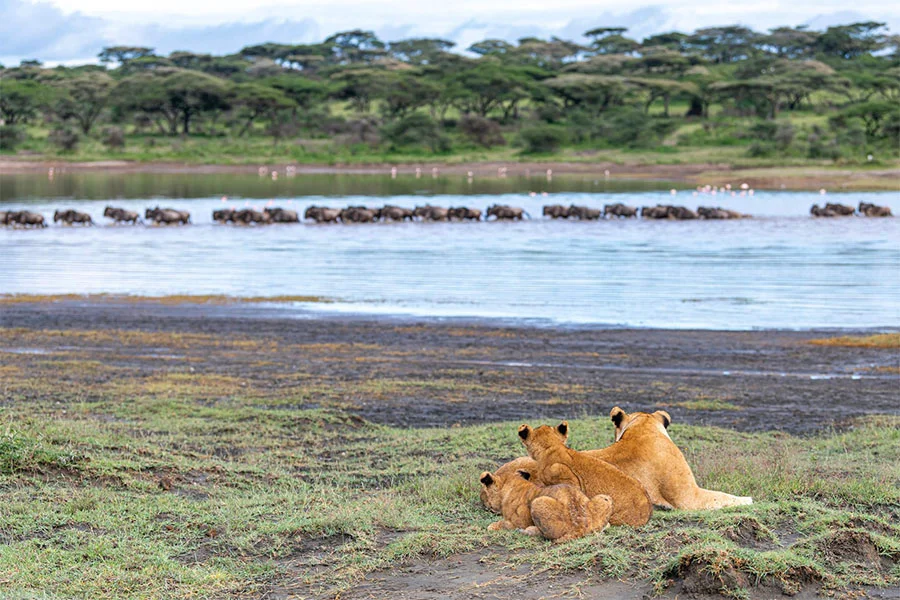
A Ndutu safari is a chance to explore the southern Serengeti ecosystem at its own pace. The area is known for open plains, seasonal herds and wildebeest calves. Woodland, marshes and lakes add variety to the drives. The best route depends on your dates and wildlife interests.
Many guests come for the Ndutu calving season. Others want quiet time with resident wildlife and wide views. This guide explains the seasons, camp choices and travel plans. It also includes three sample packages and 20 FAQs.
Use it to plan a trip with realistic expectations. Herds move with rain and fresh grazing. No camp or guide can promise a birth, hunt or certain animal. A thoughtful plan gives you time to enjoy what the day brings.
Plan your Ndutu safari with TanzaLux Safaris.
Where is Ndutu?
Ndutu is in northern Tanzania's connected Serengeti–Ngorongoro wildlife ecosystem. Ndutu Safari Lodge's location guide places the lodge within the Ngorongoro Conservation Area, beside the southern Serengeti plains. This helps explain why travel guides use both names.
Ndutu is not a separate national park. The wider safari area sits around an important administrative boundary. Your camp and drives may use different zones. Ask which permits and rules apply to each part of the route.
Ndutu and Ngorongoro Crater are also different places. A stay on the plains does not include a crater descent by itself. If you want both, put both in the plan. Allow the travel time and relevant fees.
Start with TanzaLux's Ndutu Plains guide for a destination overview. Then build the route around your dates. The right camp should fit the areas you plan to explore. A familiar place name alone is not enough.
Why choose a Ndutu safari?
Ndutu rewards guests who enjoy watching wildlife behaviour. A herd can be interesting long before it starts to move. Birds, tracks and changing light give the day more depth. You do not need a dramatic event to have a good drive.
The area offers more than one type of scene. You can discuss routes through plains, woodland and lake surroundings with your guide. Each setting calls for a different pace. The variety can make a longer stay worthwhile.
A Ndutu safari can suit a first Tanzania trip. It can also appeal to returning guests with a clear seasonal goal. Share what you hope to experience. That helps the planner choose how much time to spend here.
When is the best time for a Ndutu safari?
For calving, January to March is the main planning window. TANAPA's 2026 tourism publication identifies this period on the southern plains, especially around Ndutu. The exact pattern still depends on conditions.
The lodge's official migration guide describes a broader herd season from mid-December into April. It places the usual calving peak around February. Use these as seasonal guides, rather than fixed arrival dates for the animals.
December: plan around recent rain, camp access and the latest herd reports.
January–March: focus on the southern plains and the usual calving period.
April–May: check wet-ground access, camp dates and where the herds have moved.
June–November: discuss a resident-wildlife visit rather than assuming the main herds remain nearby.
Your Ndutu safari should fit the season you can travel. Do not choose a date only from a striking photo online. Ask what the route is likely to offer then. Keep the daily driving plan flexible within permitted access.
What makes the Ndutu calving season special?
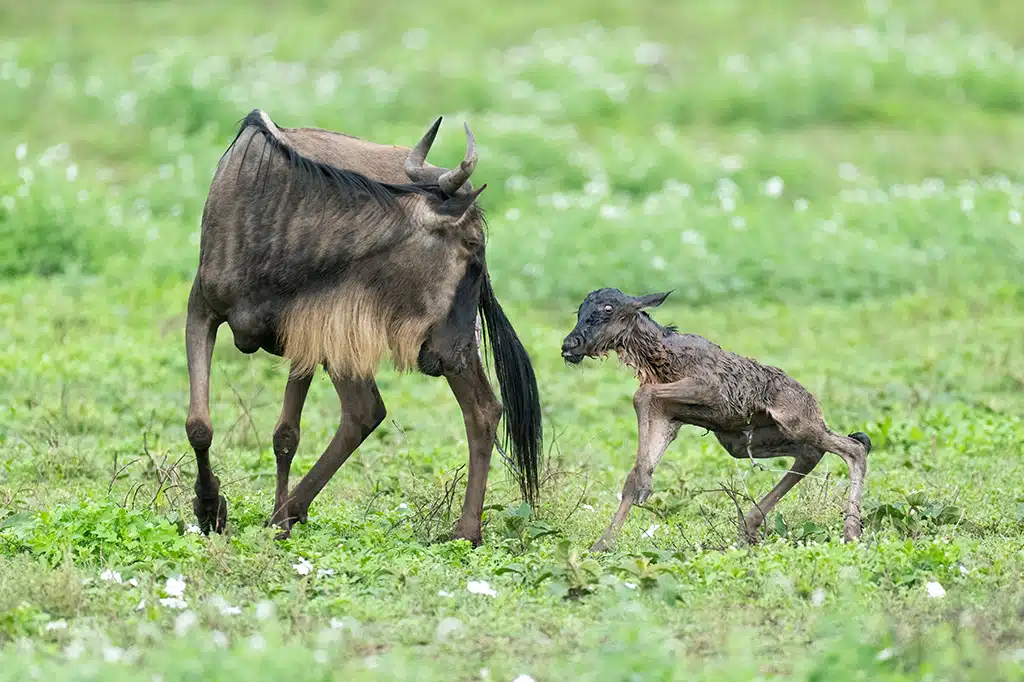
The short-grass plains form part of the herds' breeding landscape. Fresh growth draws animals to the wider southern ecosystem. Young calves become part of the scene. Rainfall and grazing help shape where the herds gather.
The Great Migration in Ndutu is a moving wildlife event. It is not confined to one lake or a camp boundary. A guide may adjust the day as local observations change. A good base gives you options, not a guaranteed view.
Keep a broad interest in the animals you find. Watch social behaviour, feeding and the way a herd uses space. Allow time for quiet observation. Avoid making the trip depend on seeing a birth.
Ndutu is associated with the southern grazing and calving stage. Mara River crossing sites are much farther north. If crossings are your main goal, discuss a different area and season. One migration label does not describe the whole annual journey.
Which wildlife and habitats can you explore?
Plains, lakes and woodland
Ndutu's habitats help make its drives varied. The lodge's stay guide describes marshes, acacia woodland, the short-grass plains and the soda lakes Ndutu and Masek. Ask your guide how conditions affect the accessible routes.
Look beyond the distant horizon. A track beside the road or a bird in a tree can hold your attention. A shorter route with good stops may be rewarding. There is no need to keep moving simply to cover distance.
Herds, predators and resident wildlife
Seasonal drives may bring wildebeest, zebra and other grazers into view. Lions, cheetahs and hyenas are among the area's wildlife. Sightings depend on habitat, conditions and animal movements. Treat a species list as a possibility, not a promise.
Predator watching calls for patience and space. Do not ask the guide to trigger a reaction. A resting animal is still worth observing. Hunting is part of the ecosystem, but a hunt is never a booked event.
A Ndutu safari is not a guaranteed Big Five checklist. Choose destinations for the experiences they suit. A wider route may offer more variety, but it still cannot ensure sightings. Keep time to enjoy smaller animals too.
Birdlife
The lodge's birdlife guide highlights the area's mix of wetland, woodland and plains habitats. Bird sightings change with season and conditions. Binoculars help you enjoy these quieter moments between larger wildlife sightings.
Tell your guide if birds are a priority. You can then discuss a pace that allows time to look. A few careful stops can be more useful than constant driving. Leave room in your plan for discoveries you did not expect.
What is a typical day on a Ndutu safari?
A park day may start early at your camp. You head out with your guide and stop where viewing allows. Lunch may be packed or taken back at camp. The final schedule should fit the route and site rules.
Some guests prefer a long outing with a picnic stop. Others enjoy a break at camp during the day. Share your needs before the plan is set. Children, photographers and guests who need rest may want different rhythms.
Expect some quiet spells, dust or uneven tracks. Rain can change which routes are practical. Keep water and useful layers within reach. Let your guide assess the conditions and adjust safely.
A private Ndutu safari can give your group more say over the pace. It does not remove gate times, route limits or animal needs. Agree on the main goals and allow sensible changes. The day should work in real life, not only on paper.
How many nights should you spend in Ndutu?
As a planning suggestion, start by considering three nights. That can allow two full days between arrival and departure. It gives more room to explore than a brief transfer stop. Add time if photography or a slow pace is central to your trip.
More nights do not ensure a particular sighting. They do give you more time to watch and adapt. Balance this against the length of your whole holiday. Do not spread a short trip across too many distant bases.
For a southern Serengeti safari, compare full viewing days with travel days. A four-day route may contain only two full days at your base. Ask for the night-by-night plan. It is a better guide than the headline day count.
How do you reach Ndutu from Arusha?
Road itineraries often approach through the Ngorongoro area. Your starting point, stops and road conditions shape the journey. Ask the planner to confirm the actual route. Do not treat a transfer as a full wildlife-viewing day.
If you choose a direct road journey from Arusha, plan for a substantial travel day. A town night before departure can help the start feel calmer. Leave enough time for access formalities and breaks. Avoid pairing a late flight arrival with a rushed road plan.
Air access may suit some dates and routes. Ask which flights and airstrip work for the chosen camp. Confirm baggage limits and the camp transfer. A flight quote should show every leg and its ground connections.
For either option, compare total travel time and cost. Include airport transfers, waiting time and the drive from the airstrip. The shortest flight is not the whole journey. Your Ndutu safari plan should join these parts clearly.
Where should you stay?
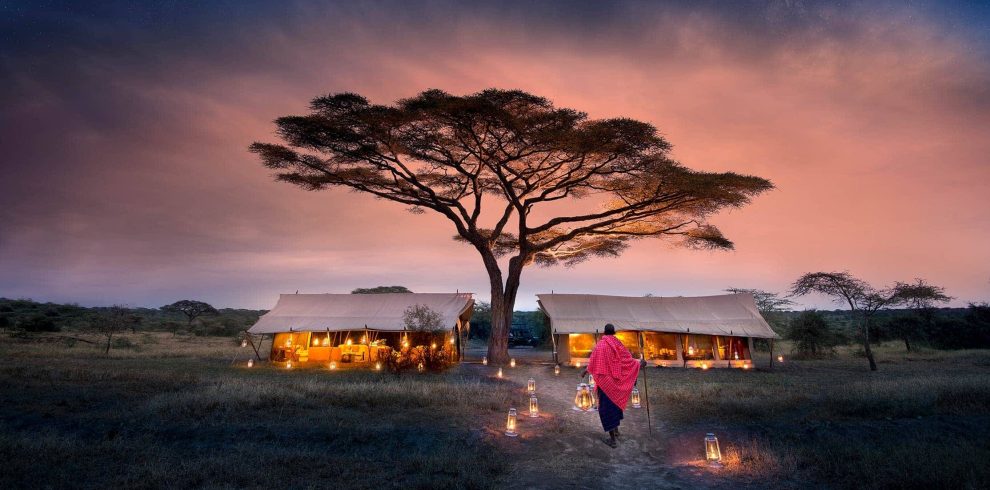
Choose the camp for its location, comfort and operating dates. Ndutu has permanent lodge options and seasonal camps. A tented stay can range in style and services. Ask for the exact room and facilities.
Do not assume a seasonal camp stays open all year. Check the dates for the particular camp you want. If it moves, confirm where it will be during your stay. Your quote should name the actual base, not just a brand.
For a Ndutu safari, practical details matter. Ask about beds, bathrooms, power, meals and the path to your room. Check family and access needs before paying. A smaller room in a better location may suit you more than a distant suite.
Camp location cannot keep a moving herd beside your room. Discuss what the base offers when the animals are farther away. Choose a place you would enjoy for the whole stay. Confirm any proposed replacement if your first choice is unavailable.
Can you drive off-road or walk near the animals?
Do not assume off-road driving is permitted. Your guide must follow authorised routes and the current rules for each area. The Ngorongoro Conservation Area Authority's visitor guidance is an important reference. Check permissions rather than relying on a past visitor's account.
A private vehicle does not grant special access across the plains. Nor does crossing an area boundary make every route open. Follow your guide's instructions. Give animals space and avoid blocking their movement.
Stay in the vehicle except at permitted stops. A walking activity needs its own authorised arrangements. Do not walk out toward a herd for a photo. Ask separately about any activity beyond standard game drives.
Responsible viewing makes a Ndutu safari better for everyone. Keep noise low, leave no litter and respect other vehicles. Be willing to wait or move away when asked. A calm sighting is worth more than a forced close-up.
How should photographers plan their trip?
Start with time and light, rather than a long gear list. A private vehicle can help you discuss patient stops with the guide. Ask about seating, viewing positions and luggage space. Make sure the setup suits the whole group.
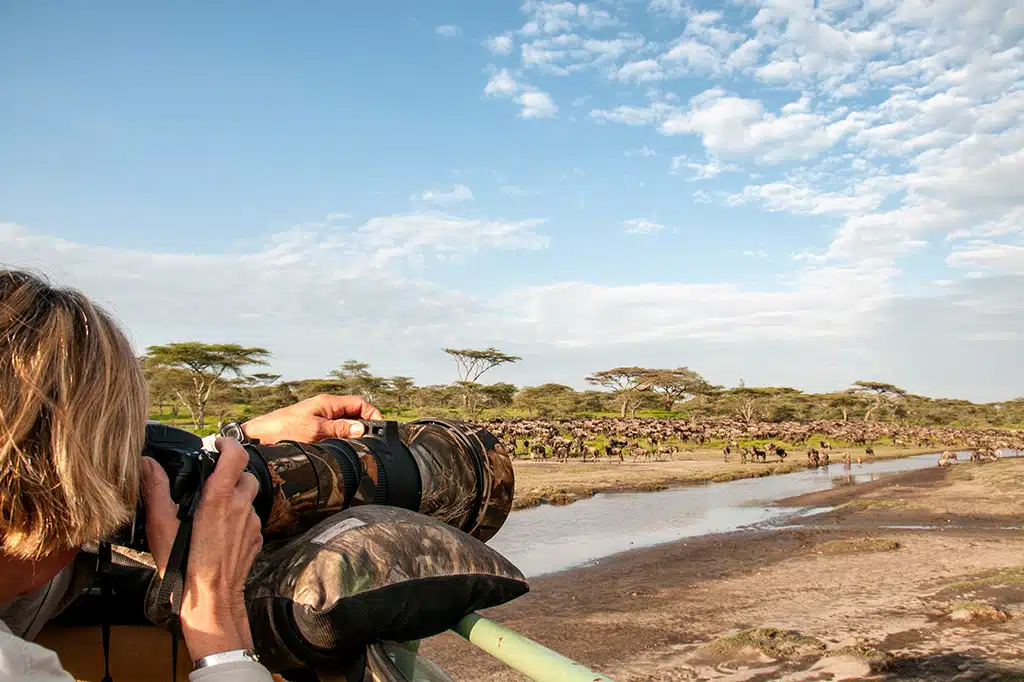
Bring gear you can use from your seat. A longer lens may help with distant subjects. Wider views can show the animals within their habitat. Binoculars are useful even when the camera stays in its bag.
Pack spare power, storage and dust protection. Rain protection is useful when conditions change. Check charging arrangements at the camp. If flying, include camera gear when checking the baggage allowance.
The Ndutu calving season can be rewarding for photos, but conditions vary. Avoid building the trip around a single dramatic image. Watch natural behaviour and give the scene time. The best moments may be quiet ones.
What affects the price of a Ndutu safari?
The total depends on dates, camps, nights and group size. Private transport, guiding and any flights also shape the quote. Fees depend on where the route goes. Ask for one clear total with a full service list.
Compare Ndutu safari packages on the same basis. Use the same dates, guest ages and room-sharing needs. Check private versus shared drives. A low headline price can cover a very different trip.
Named camp, room type and number of nights.
Meals, drinking water and any included drinks.
Vehicle, driver-guide and planned game drives.
Road transfers, flights and airstrip pickups.
Conservation-area, park, vehicle and accommodation-related charges.
Crater access if it is part of the route.
Taxes, optional activities and costs paid locally.
Deposit, balance, change and cancellation terms.
Do not assume one “Ndutu park fee” covers the whole circuit. Ask which zones each night and drive uses. Check what happens if the route changes. International flights, visas, insurance, tips and extras should also be addressed.
Sample Ndutu safari packages with TanzaLux Safaris
These are sample routes to tailor, not fixed offers. They are intended for dates when a Ndutu focus suits your goals. Camp access, operating dates and prices need confirmation. No sample promises where the herds will be.
The examples below are road itineraries starting in Arusha. An arrival hotel night is separate unless agreed. Request rooms, meals, guiding, water, transfers and the relevant fees in the quote. Flights and extra activities are not assumed.
Sample package 1: Four-day Ndutu focus
Best for: guests who want to spend their available time in one wildlife area. This sample has three nights at a Ndutu base.
Day 1: depart Arusha and travel to your confirmed Ndutu camp. View wildlife as time allows.
Day 2: explore permitted routes around Ndutu with your guide.
Day 3: enjoy another full viewing day from the same base.
Day 4: return to Arusha, with breaks and stops suited to the route.
This Ndutu safari keeps camp moves to a minimum. The outward and return journeys are still substantial travel days. It does not include a crater descent. Add that visit with extra time and an agreed fee plan.
Request a four-day Ndutu safari built around your dates.
Sample package 2: Five days — Ndutu and Ngorongoro Crater
Best for: guests who want a Ndutu stay and a separate crater visit. Allow four nights for this route.
Day 1: travel from Arusha to your Ndutu camp.
Days 2–3: enjoy full days exploring from your base.
Day 4: take a morning drive, then head toward your booked Ngorongoro-area stay.
Day 5: visit the crater and return to Arusha.
The plan has three Ndutu nights and one near Ngorongoro. Confirm the final stay's exact location and access terms. Check the last day's travel before booking onward flights. Add a final Arusha night if needed.
Explore private safari options and tailor your five-day Ndutu trip.
Sample package 3: Seven days — Ndutu, Central Serengeti and the crater
Best for: guests who want a wider view of the ecosystem. This sample has six nights.
Day 1: travel from Arusha to Ndutu.
Days 2–3: explore the Ndutu area from one base.
Day 4: transfer to Central Serengeti, with viewing as time allows.
Day 5: spend a full day in Central Serengeti.
Day 6: enjoy morning viewing, then head toward Ngorongoro.
Day 7: visit the crater and return to Arusha.
This plan has three Ndutu nights, two in Central Serengeti and one near Ngorongoro. It crosses areas with different access arrangements. Confirm every entry and stay in the quote. Choose fewer stops if your group prefers less road time.
Plan your Ndutu and Serengeti migration route with TanzaLux Safaris.
For a separate listed option, view TanzaLux's four-day Ndutu migration and big cats safari. Its route differs from the four-day sample above. Request current camps, nights and a dated quote before choosing.
Can you add Zanzibar or other stops?
Yes, build the extension as its own part of the itinerary. Check flights, transfers, hotel nights and meal plans. Your safari return point needs to fit the onward route. Allow enough time to make the connection comfortably.
A beach stay can offer a slower finish after early starts. Choose its length around how you want to spend your days. Ask for separate safari and beach subtotals. That makes it easier to compare the choices.
Keep the Ndutu safari at a pace you can enjoy. Adding a new stop may need more nights. Do not squeeze every place name into a short route. A few well-chosen bases can make a stronger holiday.
What should you pack?
Pack for changing conditions and keep your day bag practical. Light layers, a warm top and sun protection are useful. Bring comfortable closed shoes and a rain layer. Keep drinking water and essential personal items within reach.
Binoculars and a camera or phone.
Spare batteries, power and memory space.
Protection for gear against dust and rain.
A hat, sunglasses and suitable sun protection.
Your itinerary, booking details and travel documents.
Any items agreed with the camp for special needs.
Share children's ages, food needs and access needs before booking. Ask about seats, steps, bathrooms and daily drive lengths. Check the exact camp's power and laundry arrangements. If you fly, pack to the booked carrier's baggage rules.
Why travel with TanzaLux Safaris?
TanzaLux Safaris is Tanzanian owned and based in Arusha. We shape routes around your dates, pace, interests and budget. You can discuss the plan directly with a planner.
Local planning: work with a team based in Tanzania.
A route for your dates: match your Ndutu focus with the wider trip.
A pace that suits you: balance camp nights, drives and rest.
Direct contact: speak by phone, email or WhatsApp as plans develop.
Coordinated travel: arrange safari, Kilimanjaro and Zanzibar with one team.
A good Ndutu safari starts with clear priorities. Tell us whether your focus is calves, photography, birds or a broader first safari. We can help you assess route and camp choices. Ask for the full itinerary and services in writing.
How do you start planning?
Send your dates, group size and room needs. Share your budget and how long you want to travel. Mention the wildlife experiences that matter most. Add your arrival and departure details if they are already set.
Ask the planner to explain why Ndutu suits those dates. Compare the camp location, viewing days and travel time. Check every inclusion and the booking terms. Your Ndutu safari should feel clear before you commit.
Start planning your Ndutu safari with TanzaLux Safaris.
20 frequently asked questions
1. What is a Ndutu safari?
This trip explores the Ndutu area and its nearby plains. Game drives give you time to look for wild animals. The route depends on your camp, dates, and local rules. Ask for a plan that leaves room to follow the day's conditions.
2. Where is Ndutu?
Ndutu lies around the southern Serengeti and Ngorongoro Conservation Area boundary. Check where your camp and planned drives sit on the map. Different zones may have different fees and rules. Ask the team to explain each part of your route.
3. Is Ndutu a separate national park?
No, Ndutu is an area rather than its own national park. A Ndutu safari may cross areas with different access rules. Check the exact route before you compare trip quotes. Ask which fees and permits your chosen drives will need.
4. When is the best time to visit?
The best time depends on the sights you hope to see. Share your main goals when planning a southern Serengeti safari. Ask about the likely conditions for your exact travel dates. Keep some room to adjust the route as conditions change.
5. When is the Ndutu calving season?
Calving is linked with January to March, often peaking in February. Rain and herd movement affect the timing each year. These months offer a planning guide rather than a fixed schedule. Ask for recent field reports before you settle on your route.
6. Can I visit at other times of the year?
A Ndutu safari can be possible outside the main calving months. Herds move, and some camps may open only for a season. Ask which stays and drives suit your dates. Choose based on the full experience, rather than one hoped-for sighting.
7. Will I see large herds during my visit?
The Great Migration in Ndutu depends on shifting herd movements. No booking can promise a set number of animals. Share your hopes, then ask how the route fits the season. Enjoy the smaller sights and wide views along the way too.
8. Will I see big cats or a hunt?
Wildlife sightings are never certain, including big cats and hunts. Give your guide time to look without setting a fixed list. Watch quietly when animals come into view during a drive. A calm visit can be rewarding even without dramatic action.
9. How many nights should I plan?
Three nights can be a useful starting point for your Ndutu safari. Treat this as a suggestion, not a set rule. Check how much time your arrival and departure plans leave for drives. Add nights if you want a slower pace.
10. Should I drive or fly from Arusha?
Compare the full route when choosing between a drive and flight. Ask about road conditions, flight schedules, baggage, and ground transfers. Check the total travel time and cost for your dates. Choose the option that best fits your pace and wider trip.
11. Are all camps open throughout the year?
Some camps follow seasonal opening dates, so check before booking. Ask for your camp's name, location, and planned opening period. Confirm the room type and services in the written quote. Request clear terms for any change to the named camp.
12. Should I choose a private or shared trip?
Compare Ndutu safari packages by vehicle use and group size. A private trip may give your group more choice over pace. Shared trips need plans that work for all the guests. Check the route, seating, and drive schedule before you decide.
13. Can our guide drive off the main tracks?
Rules depend on the zone where your vehicle is driving. Do not assume off-road access applies across the whole area. Ask the team to explain the rules for your route. Follow your guide's directions and respect each zone's wildlife rules.
14. Which fees should my quote include?
Ask for fees based on the exact route and travel dates. Share the nationality and residency status needed for a correct quote. Check park, conservation, camp, and other charges in writing. Request a clear total before you pay for the trip.
15. Can I expect to see rhinos or the Big Five?
Do not book with a promise of seeing every species. Ask how your whole route matches the animals you hope to see. No guide can guarantee a rhino or the Big Five. Leave space to enjoy what the day brings instead.
16. Is the trip suitable for children?
Share each child's age before you choose camps and activities. Check the rules for room sharing, vehicles, and planned outings. Ask for breaks and a pace that suits your family. Build in time to rest between long travel days and drives.
17. Can camps meet special diet and access needs?
Tell the team about food and access needs before paying. Ask them to check the details with each named camp. Request clear answers about meals, paths, bathrooms, and vehicle entry. Choose the route only after you know what can be arranged.
18. What should I pack for the trip?
Ask for a packing list that fits your dates and route. Choose layers and shoes you can wear with ease. Check baggage rules if your plan includes a small flight. Keep travel papers and daily essentials close during each transfer.
19. Can I combine Ndutu with the Ngorongoro Crater?
Yes, ask for a route that includes both places. A stay in Ndutu does not place you inside the crater. Check the drive, overnight stops, and separate visits in your plan. Allow enough time to enjoy each stop without a rush.
20. Can TanzaLux Safaris add a Zanzibar beach stay?
Ask TanzaLux to pair your Ndutu safari with Zanzibar. Share your dates, group size, budget, and preferred pace. Request a full quote covering the safari, beach stay, and links between them. Contact TanzaLux Safaris to plan your trip.
Ready to start planning?
Tell us your dates and what you're after — no obligation.