5.0 Excellent

Mara River Crossing: Your Complete Guide to the Great Migration in Serengeti
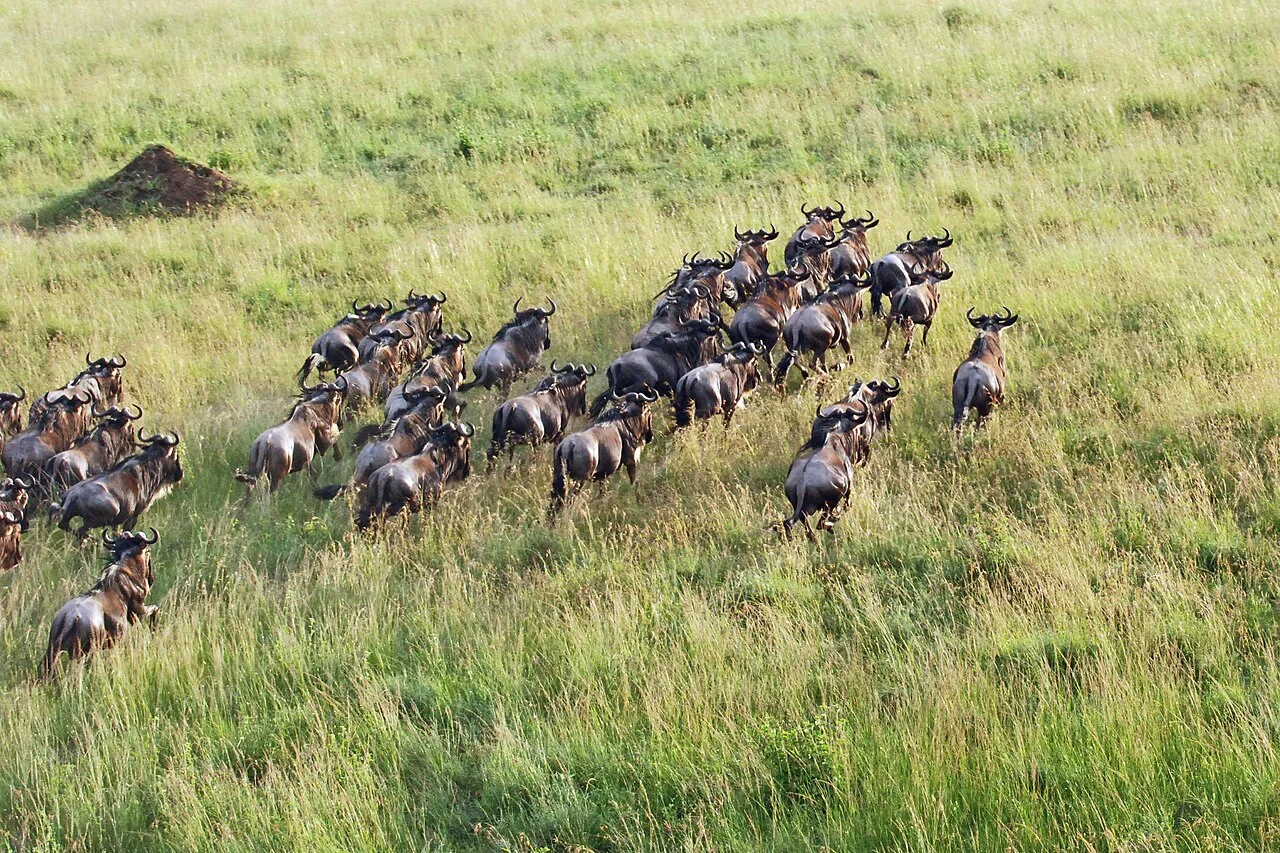
A Mara River crossing is one of the most powerful sights on a Tanzania safari. Wildebeest gather on a steep bank, dust hangs above the grass, and the whole herd seems to pause. Then one animal may step forward. Others may follow, or the herd may turn away and start to graze.
That uncertainty is part of the experience. You can choose a good season, stay near the river and give your guide time to work. You cannot book a wildebeest river crossing for a set day. This guide explains how to plan a northern Serengeti safari with clear expectations, comfortable camps and enough time to enjoy the wider landscape.
Plan your private Mara River crossing safari with TanzaLux Safaris.
Mara River crossing safari: the key facts
Main area: the northern Serengeti in Tanzania, within the wider Serengeti–Mara ecosystem.
Season to consider: July to October, with July to September a well-known window for a chance of crossings.
Suggested stay: four nights in the north gives three full days between arrival and departure.
Useful airstrip: Kogatende, subject to your camp and confirmed flight route.
Best approach: a patient guide, legal viewing positions and a flexible daily plan.
Important limit: neither a crossing nor a particular wildlife sighting can be guaranteed.
Four nights is a planning suggestion, not a formula for success. Some guests see action on their first drive. Others spend several days near the river and see no crossing. Build a trip you will still value in either case.
What the river means to the Great Migration
The Great Migration is a moving search for grass and water. Large herds of wildebeest travel through an ecosystem shared by Tanzania and Kenya. Zebra and gazelles also form part of this wider story. Rain and fresh grazing influence where the animals go, so their route does not follow a fixed calendar.
The Mara River becomes a major obstacle when herds reach the northern part of that ecosystem. Its banks, water and currents create a very different scene from grazing on open plains. Some animals hesitate at the edge. Others move along the bank, split into groups or return to a place they have used before.
A Mara River crossing is therefore one chapter of a year-round migration. It is not the whole migration, and it is not a single annual parade. The herds can move in different directions and cross more than once. UNESCO describes the wider movement and its ecological importance on its Serengeti National Park page.
When is the best time for Mara River crossings?
July to October is a common window for planning a river-focused trip in the northern Serengeti. Within that broad season, Tanzania Tourism highlights July to September for the chance to see Mara River crossings. These are popular months, so the best-placed rooms can attract strong demand.
Use those months to choose a season, then let current conditions shape each day's plan. Rain, grass and herd movements can change the picture. A photograph from the same week last year cannot tell you where animals will gather this year. Even a herd at the water's edge may wait for hours or leave without entering.
July and August: plan early and allow time
These months draw many travelers who want a Great Migration safari. Book your preferred camp and private vehicle well ahead where possible. Ask how much of your stay falls near the river, rather than counting all Serengeti nights as river time. A night in the central park serves a different purpose.
September and October: keep the plan flexible
The north may still be a useful base, but movement varies. Avoid treating a later date as a promise of fewer vehicles or easier sightings. Ask your planner about camp operating dates, travel links and the value of your stay as a whole. The northern landscape has much to offer beyond a single event.
Outside the main river season
A safari at another time can still be rewarding. However, a trip built around the southern calving plains has a different focus. Do not book Ndutu and assume you will make a short visit to the Mara River. Choose your region around the wildlife experience you most want, then leave room for nature to surprise you.
Ask TanzaLux Safaris to match your travel dates with a sensible migration route.
Where to stay for a Mara River crossing
Your camp's location matters as much as its style. A beautiful lodge far from your main viewing area can mean more time on the road. For a focused river stay, compare camps in the northern Serengeti around the relevant Kogatende and Lamai areas. Ask for the exact location of each proposed property.
The central Serengeti is an excellent part of a wider route, but it is not a convenient base for daily trips to the far north. A map can hide the effect of road conditions, wildlife stops and park routes. Judge a camp by access to your planned area, not by a broad label such as “Serengeti luxury.”
Sayari Camp: a northern Serengeti option
Asilia's Sayari Camp is in the northern Serengeti and uses Kogatende as its closest airstrip. The operator places its migration season around July to October. Its suites, decks and pool give guests a comfortable place to rest between drives.
Ask for the right room type, current opening dates and the full board basis in your quote. Also check whether game drives use a dedicated vehicle or a shared camp vehicle. A high room rate does not by itself confirm private guiding. Camp access helps your daily plan, but no property can control when a herd will cross.
Lamai: views from a rocky setting
Nomad's Lamai sits among the rocks of Kogakuria Kopje in the northern Serengeti. Its position and open views suit travelers who want a strong sense of place alongside their wildlife drives. It is another named option to discuss for a northern stay.
Confirm the exact property in the proposal, since Lamai and Lamai Private are distinct choices. Compare room layout, family needs, guiding arrangements and travel dates. These examples are ideas to assess, not a claim of availability or a promise that either camp will suit every budget.
Seasonal tented camps: check the practical details
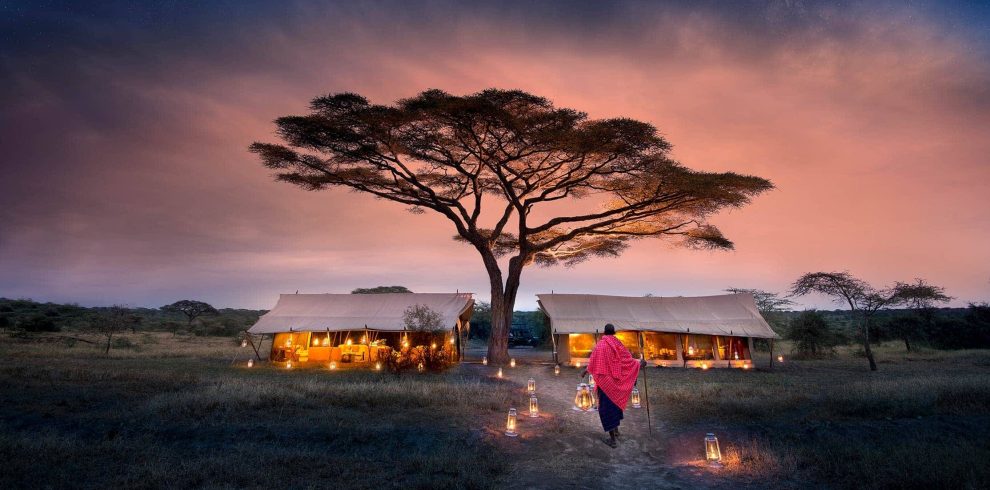
A seasonal camp can also suit a Mara River crossing itinerary. Ask where it will stand during your dates and how long it takes to reach likely viewing areas. Check the bathroom setup, power supply, charging hours and meal arrangements. Small details have a large effect when you return tired and dusty.
Choose comfort that supports your safari habits. Keen photographers may value an early breakfast and packed meals more than a long list of room features. A family may place more weight on room spacing, shade and rest time. Your planner should explain these choices in clear terms.
What a day near the river really feels like
A Mara River crossing day often starts with a plan and ends with a different one. Your guide may suggest an early departure with food and water, or a shorter drive if conditions favor it. The aim is to spend useful time in the right area while keeping the day comfortable.
Morning: read the landscape
You may begin with tracks, fresh grazing and small groups moving through the grass. Your guide assesses what is happening along legal routes and listens to current information. This is active observation, even when the vehicle is still. The presence of a large herd alone does not mean a crossing is about to begin.
At the bank: patience takes over
The most tense moments can be very quiet. Animals may bunch together, look toward the water and edge away again. A group might start to move, then stop. Bring water within reach, keep your camera ready and settle into the wait. Do not ask the driver to crowd the herd to force action.
When a Mara River crossing begins
The pace can change in seconds. Keep your seat, listen to your guide and use the view you have. A clear route for wildlife matters more than a closer photograph. There may be dust, splashing water and other vehicles in your frame. Seeing the event is different from owning an empty riverbank.
After the moment passes
A crossing may be brief, prolonged or split into separate waves. Give the animals space as they leave the water. Then take time to notice the wider scene: herds finding grass, birds along the banks and the shift back to calm. These quieter details often become the memories you keep longest.
Responsible Mara River crossing viewing
Wildlife should be able to approach and leave the river without pressure from vehicles. The park's Mara River Migration Crossings Guideline, revised June 2024, sets out specific viewing controls. Follow the latest ranger instructions and signs on the day.
Use designated, signed viewing areas and respect the limits shown at each point.
Remain stationary in the designated area when animals gather or cross.
Do not approach animals during a crossing.
Do not set up a table or picnic activity on the riverbanks.
Your guide should choose an allowed place for a meal or rest stop. Stay in the vehicle unless you are told that leaving it is permitted. Avoid shouting, feeding wildlife or pressing for a route that is closed. The TANAPA trip-planning guidance is a useful source for wider park conduct.
A private Tanzania safari gives you more control over your pace, but the same park rules apply. Privacy is about your group and guiding setup. It does not mean exclusive access to a crossing point or permission to follow animals off a legal route.
Wildlife beyond the river
Give your guide room to include the rest of the northern Serengeti. Riverine woodland, rocky outcrops and open grassland create different settings for a drive. A day without a crossing can still include rich wildlife encounters, quiet views and time to study behavior.
TANAPA's Serengeti wildlife overview describes the park's herds, predators and varied habitats. Wildebeest and zebra are central to the migration story, while crocodiles are part of river life. Lions, elephants and many birds add further reasons to explore. Individual sightings always depend on conditions and chance.
Do not turn the drive into a checklist of dramatic events. Hunting and predation may occur, but they are never a promised feature of a good safari. Watching animals rest, feed or protect their young can be just as absorbing. A patient day leaves room for all of it.
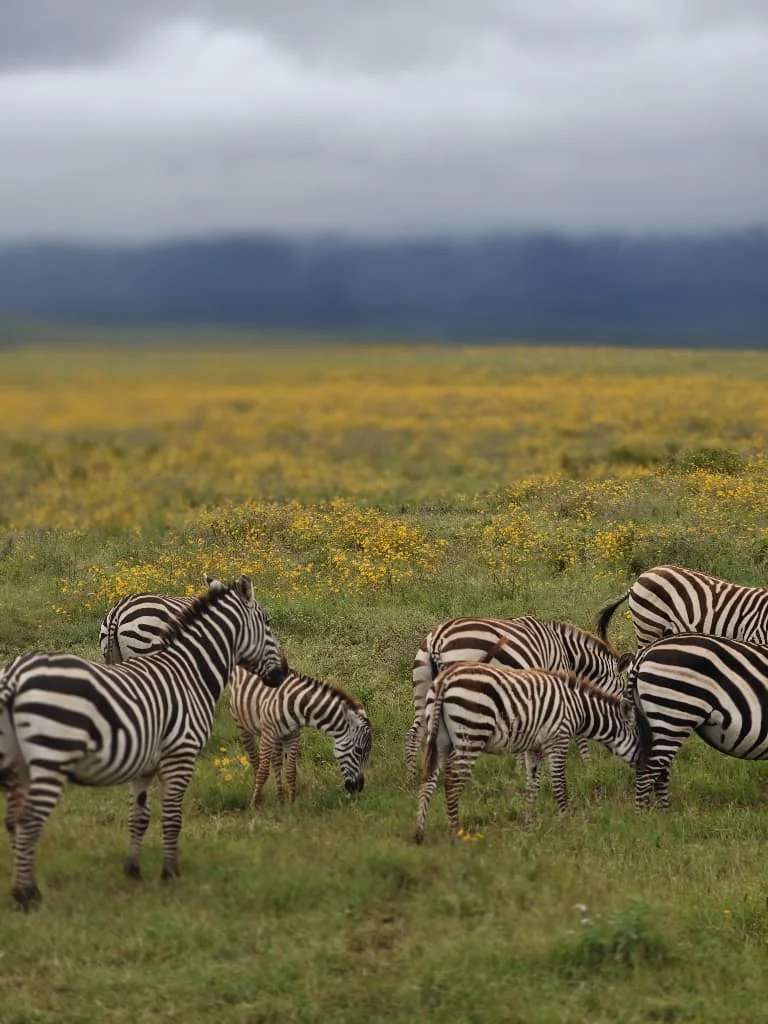
Zebra on the plains are part of the wider Serengeti wildlife experience, beyond the river itself.
How to reach the Mara River crossing area
For a focused Mara River crossing trip, compare a fly-in route with a road safari that moves through several regions. The right choice depends on your dates, interests and time. A short holiday often benefits from flying closer to the north. A longer journey can use road travel to connect different landscapes.
Flying to Kogatende
A Kogatende safari usually needs a confirmed light-aircraft service and a camp or guide transfer from the airstrip. Check the exact departure airport and arrival point on the ticket. Arusha Airport and Kilimanjaro International Airport are different places, so leave enough time for the transfer between them.
Ask the carrier for its current baggage limit, bag shape rules and camera equipment policy. Do not assume a large international suitcase will be accepted on a small aircraft. Flight stops, schedules and connections vary. Your planner should make the airstrip pickup and onward journey clear before you pay.
Traveling by road
A road route can link Arusha, the Ngorongoro area and the central Serengeti before reaching the north. It brings variety, but it also needs more travel time. A central-to-northern transfer should be treated as a travel day with possible sightings, rather than a full day waiting at the river.
Ask for a realistic daily outline instead of a promise based on distance alone. Road conditions, permitted routes and stops affect the journey. If an international flight follows your safari, discuss a sensible buffer. Add a final hotel night when the connection would otherwise feel tight.
Photography tips for a Mara River crossing
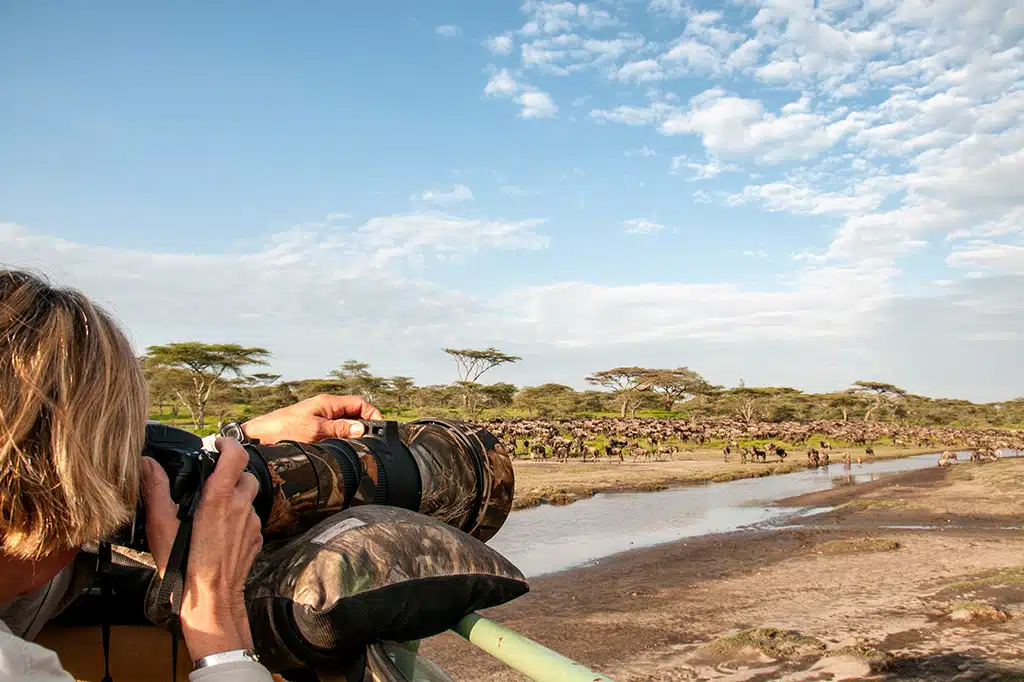
Prepare before you reach the bank. Check batteries, free space on memory cards and the settings you know how to use. A crossing may start while you are changing a lens. If you have two camera bodies, keep different focal lengths ready. A phone can still capture the scale and sound of the scene.
A fast shutter can help freeze moving animals, but the right setting depends on light, lens and creative intent. Practice at home so changes feel familiar. Take wider frames as well as close views. Dust, a line of animals and the bend of the bank can tell more of the story than one tight crop.
Ask about camera support and beanbags in the vehicle before departure.
Protect equipment from dust and splashes without blocking your own access.
Keep spare batteries and cards where you can reach them quietly.
Let other guests use their viewing space and avoid leaning across them.
Never trade a legal viewing position for a closer shot.
Discuss your photo goals when booking. A dedicated vehicle can make long waits easier for a small group with shared interests. Still, no vehicle booking grants an unobstructed view. Drone use needs the relevant permissions; do not pack one on the assumption that normal camera rules cover it.
Design a private safari around your photography interests and preferred pace.
Comfort on a Mara River crossing safari
A Mara River crossing safari works best when everyone understands the rhythm of the day. There can be long periods in the vehicle, dust and uneven ground. Ask about the roof design, seating, drinking water and planned comfort stops. Tell your planner about mobility needs before camps and flights are confirmed.
For children, think about patience as well as age. Some young travelers love watching a herd make up its mind. Others need shorter drives and more breaks. Agree on a family pace, check camp age policies and explain that wild scenes can include injured animals or predation. You can leave a viewing area when your family needs a change.
Pack light layers for cool starts, sun protection, a hat, binoculars and a rain layer. Keep the day's essentials inside the vehicle rather than buried in luggage. Your guide can suggest permitted rest stops. Nobody should step out alone beside the river to stretch or find a better view.
What to budget for and what to check
The cost of a Mara River crossing safari depends on season, camp, room type, group size, flights and the driving setup. Premium dates and a private vehicle can change the total substantially. Ask for a dated written quote with each major inclusion shown. A headline room rate is not the cost of the whole journey.
Rooms and meals: confirm nights, room category, board basis and which drinks are included.
Guiding: check whether drives are private or shared and who handles each transfer.
Transport: confirm domestic flights, road sections, airstrip pickups and baggage terms.
Fees: ask which park, camp and activity charges are included at current rates.
Extras: allow for tips, personal purchases and any optional activity you choose.
Read the payment and cancellation terms before booking. Ask what happens if a flight changes or a camp cannot operate. Keep optional activities separate in the quote so you can judge their value. A balloon flight can be a fine landscape experience, but it should never be sold as a way to guarantee a crossing.
Request a clear, itemized quote for your northern Serengeti safari.
Three sample Mara River crossing safari packages
These suggested routes show how to protect time in the north. They are sample plans for a quote, rather than fixed departures or priced offers. Camp availability, flight services and your arrival time may change the details. Each route allows four northern nights, with three full days between arrival and departure.
Sample package: 6-day northern Serengeti fly-in safari
Best for: travelers with limited time who want a focused stay near the river. Overnights: five, made up of one in Arusha and four in the northern Serengeti.
Day 1 — Arusha: arrive, meet your transfer and rest. Use the evening to check your bags and discuss the next day's flight.
Day 2 — Fly north: take a confirmed flight to Kogatende and meet your guide. Settle into camp, with a drive if the schedule allows.
Days 3–5 — Three full safari days: explore the northern area at a flexible pace. Spend time near the river when conditions and legal access support the plan.
Day 6 — Return: fly to Arusha on the confirmed service. Allow for your onward transfer or add a hotel night if needed.
This route keeps most of your safari time in one region. It suits guests who prefer to unpack once in the bush. Its value comes from time and focus, not a promise that the herds will cross during your stay.
Personalize this six-day fly-in safari with TanzaLux Safaris.
Sample package: 8-day Ngorongoro and northern Serengeti safari
Best for: a first Tanzania visit that combines the crater landscape with a Mara River crossing focus. Overnights: seven, made up of one in Arusha, two near Karatu and four in the northern Serengeti.
Day 1 — Arusha: arrive and rest after your journey.
Day 2 — Karatu: drive to your lodge and enjoy an unhurried afternoon. Any extra stop should be agreed within the day's timing.
Day 3 — Ngorongoro Crater: visit the crater with your guide, then return to the Karatu area for the night.
Day 4 — Travel north: transfer to the agreed airstrip, such as Lake Manyara if the confirmed service works, and fly to Kogatende.
Days 5–7 — Northern Serengeti: keep three full days for game viewing and patient river visits.
Day 8 — Return: fly to Arusha and continue according to your confirmed connection.
The flight between regions avoids treating a long road journey as a full river-viewing day. Ask your planner to confirm every link before accepting this route. A change in flight schedule may require a different airstrip or an extra night.
Sample package: 10-day central and northern Serengeti with Ngorongoro
Best for: guests who want a broader safari with more than one Serengeti base. Overnights: nine, made up of one in Arusha, two near Karatu, two in the central Serengeti and four in the north.
Day 1 — Arusha: arrive and settle in.
Day 2 — Karatu: travel to the highland area and rest at your lodge.
Day 3 — Crater visit: explore Ngorongoro Crater, then return to the Karatu area.
Day 4 — Central Serengeti: drive into the park and reach your first Serengeti camp. This is a travel day with possible sightings.
Day 5 — Central safari: enjoy a full day in this part of the park.
Day 6 — Move north: transfer by road to your northern camp. A flight alternative can be quoted if a suitable service is available.
Days 7–9 — Northern safari: allow three full days for river time and wider wildlife drives.
Day 10 — Fly out: return to Arusha by the confirmed flight and continue your journey.
This longer route gives each region a clear purpose. The central nights add a different setting, while the northern nights support the river focus. Keep the transfer day honest in your expectations. It should not be counted as three separate activities compressed into one day.
Why travel with TanzaLux Safaris?
A well-planned Mara River crossing safari depends on choices made before you reach the park. The camp must fit the route, the flight must fit the camp and the daily pace must fit your group. Clear planning leaves you free to enjoy the waiting as well as the action.
TanzaLux Safaris is a locally owned operator based in Arusha. Its approach to tailor-made travel starts with your interests, dates and budget. For this journey, ask the team to compare a focused fly-in stay with a wider road-and-air route. Share whether you care most about photography, family comfort or time in one camp.
Request clear answers about private guiding, northern nights, camp locations and included fees. Ask the team to explain the tradeoffs between each proposal. Good advice should also be honest about nature: no itinerary can secure a crossing on demand. The aim is a thoughtful private Tanzania safari that remains rewarding whatever the herds do.
Start planning your Mara River crossing journey with TanzaLux Safaris.
Frequently asked questions
1. What is a Mara River crossing?
It is the movement of migrating herds through the Mara River, often involving wildebeest and zebra. Animals may gather, hesitate and enter in separate groups. The event forms part of the wider Great Migration.
2. Which months should I consider?
July to October is a common planning window for the northern Serengeti. July to September is widely highlighted for crossing opportunities. Herd location and timing vary with conditions, so these months offer a chance, not a booking guarantee.
3. Can a guide guarantee a crossing?
No. A skilled guide can assess movements, choose legal viewing areas and use your time well. The animals decide whether to enter the water. Treat any guaranteed-crossing claim with caution when comparing trips.
4. How many nights should I stay in the north?
Four nights is a useful starting point because it allows three full days between arrival and departure. Add more if your time and budget allow. More time gives flexibility, but it cannot ensure a sighting.
5. Can I do this as a day trip from Arusha?
A short fly-in visit may be possible with specific services, but it leaves little room for waiting or changes. A multi-night stay is a more practical choice for a river-focused trip. Check the actual flight schedule before planning.
6. Where should I base myself in Tanzania?
Look at camps in the northern Serengeti with suitable access to your planned viewing area. Ask for the property's exact location during your dates. A general Serengeti label does not confirm that a camp is near the river.
7. Do I need to visit Kenya to see the river?
You can plan river viewing within Tanzania's northern Serengeti. A Kenya extension is a separate travel choice. If your itinerary enters another country, ask your planner about the border arrangements and check the entry requirements that apply to you.
8. Which airstrip is useful for a river safari?
Kogatende is commonly used for northern Serengeti camps. Your exact route depends on the camp and available services. Confirm the flight, pickup and baggage terms together rather than booking each piece on a separate assumption.
9. Can I stay in the central Serengeti and visit the river daily?
The distance makes that an inefficient plan for a focused river stay. Use central nights to explore the central area, then move north. Your itinerary should show the transfer as travel time rather than a full viewing day.
10. What time of day does a Mara River crossing happen?
There is no reliable appointment to plan around. A herd may wait at the bank for a long time or move away. Follow your guide's assessment and stay flexible about meals, breaks and the day's route.
11. How long does a crossing last?
There is no fixed length. A small group can pass quickly, while a larger movement may unfold in waves with pauses. Keep your camera ready, but avoid judging the whole experience by its duration.
12. Do wildebeest always cross in one direction?
No. Herd movements can shift, and animals may cross again. Think of the migration as a search for suitable conditions across a living landscape. It is more complex than a one-way line on a map.
13. Is the Mara River the same as the Grumeti River?
No. They are different rivers associated with different parts of the migration route. If your main aim is the Mara, ask for a northern Serengeti plan. Do not assume any itinerary mentioning a river crossing serves that goal.
14. Is calving season part of the same experience?
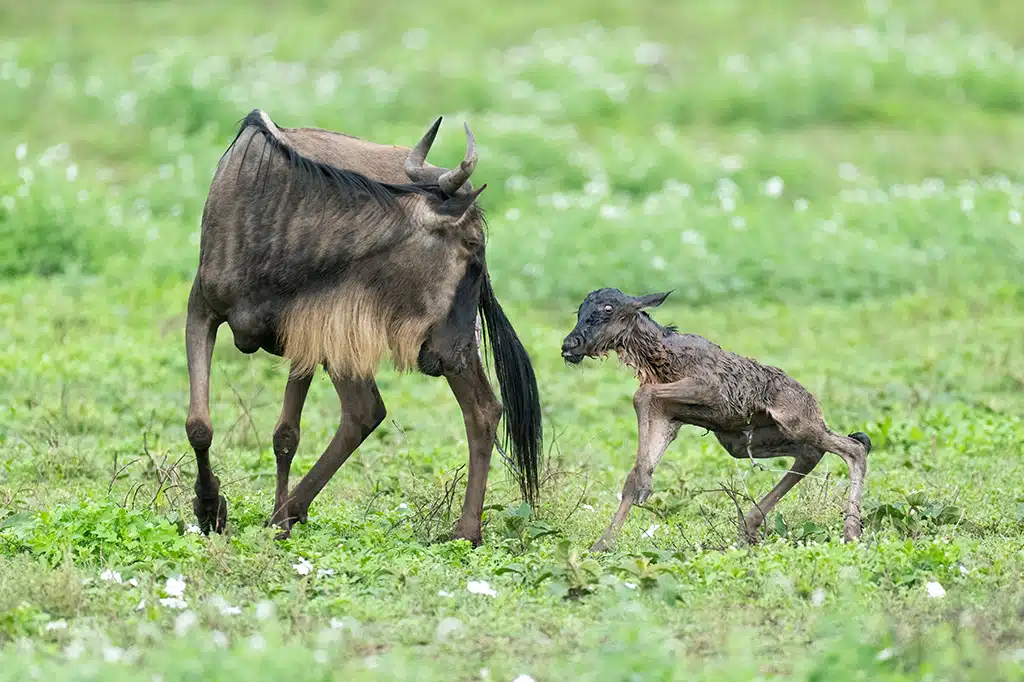
Calving is another phase of the migration, usually planned around the southern short-grass plains. It has a different seasonal and regional focus. A Ndutu trip and a northern river safari should be designed around their own conditions.
15. Is a river-focused safari suitable for children?
It can be, if the pace suits them and the camp accepts their ages. Long waits may be tiring, and wildlife scenes can be intense. Discuss shorter drives, rest time and room arrangements before choosing a route.
16. Is a private vehicle worth considering?
It can help when your group wants long waits, frequent breaks or a shared photography focus. Check that private use is stated in the quote. It changes your pace, but it does not grant exclusive access to the river.
17. What camera equipment should I bring?
Bring equipment you know well, spare batteries, memory cards and dust protection. A longer lens helps with distant subjects, while a wider view tells the landscape story. Ask about support in the vehicle and your flight's baggage limit.
18. Can a balloon flight show me a crossing?
You should not book a balloon flight on that assumption. Routes depend on wind, and wildlife timing is uncertain. Consider it for a different view of the landscape, subject to availability and the operator's conditions.
19. May I fly a drone near the herds?
Do not assume that you may. Drone operations require the relevant permissions and must follow park restrictions. Ask about the current process well before travel. A normal safari booking does not itself authorize drone use.
20. How do I book a Mara River crossing safari with TanzaLux?
Share your dates, group size, budget and preferred pace with TanzaLux Safaris. Ask for northern camp options, enough full viewing days and a clear quote. Then confirm the route, terms and travel connections before making payment.
Ready to start planning?
Tell us your dates and what you're after — no obligation.