5.0 Excellent

How to Choose: Serengeti Lodges and Tented Camps
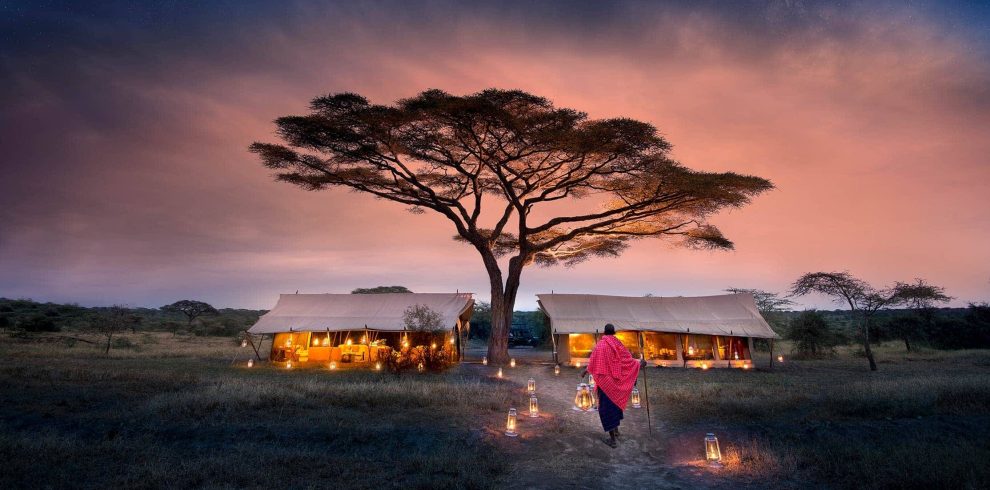
Choosing between Serengeti lodges and tented camps starts with three things: your dates, the wildlife you hope to see, and the comfort you need. A lovely room can make a trip feel special. Yet its location will shape how much time you spend watching wildlife and how much time you spend on the road.
A tent does not always mean a simple stay. Some Serengeti tented camps have large suites, private decks, hot showers, and pools. A lodge may offer solid walls and a wider range of shared spaces. The names alone will not tell you which is right for your trip.
This guide helps you compare the real details. You will find advice on regions, seasons, rooms, guiding, costs, and sample safari routes. Start with the experience you want, then choose the places that help make it work.
Ask TanzaLux Safaris to compare lodges and camps for your dates, budget, and travel style.
How should you choose Serengeti lodges and tented camps?
Choose the area first, then compare the room and the rate. Match the base to the season and your main interests. Next, check the bathroom, cooling, room layout, guiding, and journey to camp. Finally, compare written quotes for the same dates and services.
Wildlife priority: resident animals, the migration herds, birds, or a mix.
Location: the camp's actual site during your stay.
Comfort: the features you need to sleep and relax well.
Safari service: shared or private drives, guide, and vehicle arrangements.
Total cost: rooms, fees, transport, activities, and extra charges.
When comparing Serengeti lodges, ask for a map pin and a clear travel plan. A broad label such as “Serengeti area” can cover very different locations. A property outside the park may need extra driving and a separate access plan.
Understand the three main stay styles
A permanent lodge
A lodge usually has a fixed site and rooms built with more solid materials. It may suit guests who value indoor space, a familiar hotel feel, and facilities between game drives. Some have restaurants, pools, gyms, or a spa. Check the exact property rather than assuming all these features are included.
Serengeti lodges can work well for mixed groups. One guest may take a full-day drive while another rests at the property, if separate plans can be arranged. Ask about shade, room distance from the main area, and transport for anyone who walks slowly.
A permanent tented camp
A permanent tented camp stays in one place but may use canvas roofs or walls alongside stone, wood, or glass. Rooms can be spacious and highly furnished. The result can feel close to the bush while still offering a good bed and a private bathroom.
Canvas lets more sound through than solid walls. Birds, wind, rain, and wildlife calls can be part of the night. If you are a light sleeper, discuss this before booking. Ask about room spacing and whether noise from the dining area reaches nearby tents.
A seasonal mobile camp
A mobile camp changes sites at planned times of year. It is set up for guests at each site; you are not normally packing the tent each morning. Confirm the exact site for your booking and whether any closure or move falls near your dates.
These Great Migration camps often focus on getting guests within reach of likely herd areas. Some use simpler shower and power systems. Others offer more elaborate tented suites. A seasonal camp can be very comfortable, but its small footprint may mean fewer shared facilities.
Choose the region before the room
Serengeti accommodation should fit the map of your trip. The park has grasslands, woodlands, rivers, and rocky kopjes. TANAPA describes how habitats and seasons shape animal movements. No single base gives equally quick access to every part of this wide landscape.
Central Serengeti and Seronera
Consider the central area for a broad introduction and resident wildlife. It can also fit a road safari entering from the south. The choice of exact camp still matters: two properties described as central may have very different transfer times.
Do not book central Serengeti lodges on the assumption that a northern Mara River outing is a short daily drive. Ask your planner how far your target areas are in real road conditions. If the north is your main goal, staying there may make better use of your time.
Northern Serengeti
The north is often the focus for travellers hoping to see the migration near the Mara River during roughly July to October. Herd timing varies with rain and grazing. Even when animals are near the river, a crossing is never guaranteed.
Northern Serengeti lodges and camps also host guests interested in resident wildlife and scenery. Ask about the experience outside the main herd season, as well as opening dates. A quieter month can offer a different kind of safari, rather than the same river scene with fewer vehicles.
Southern plains and Ndutu
The southern plains are often considered for green-season herds and calving, broadly from December to March, with January and February common planning targets. Conditions can shift. Choose your base with recent local advice and a flexible view of wildlife.
Ndutu is part of the wider Serengeti ecosystem, and some camps there lie in the Ngorongoro Conservation Area. Confirm which authority manages the exact site and which fees your itinerary needs. A marketing use of “Serengeti” does not settle that question.
Western and eastern areas
The Western Corridor can be relevant as herds move west and north, often around May and June. The timing and spread of animals vary. Eastern areas can suit a trip focused on plains and big cats, with the exact camp guiding your daily range.
Use the Nomad migration guide as a broad seasonal reference, not a timetable. Ask which region fits your dates before choosing a room from photographs.
Compare comfort feature by feature
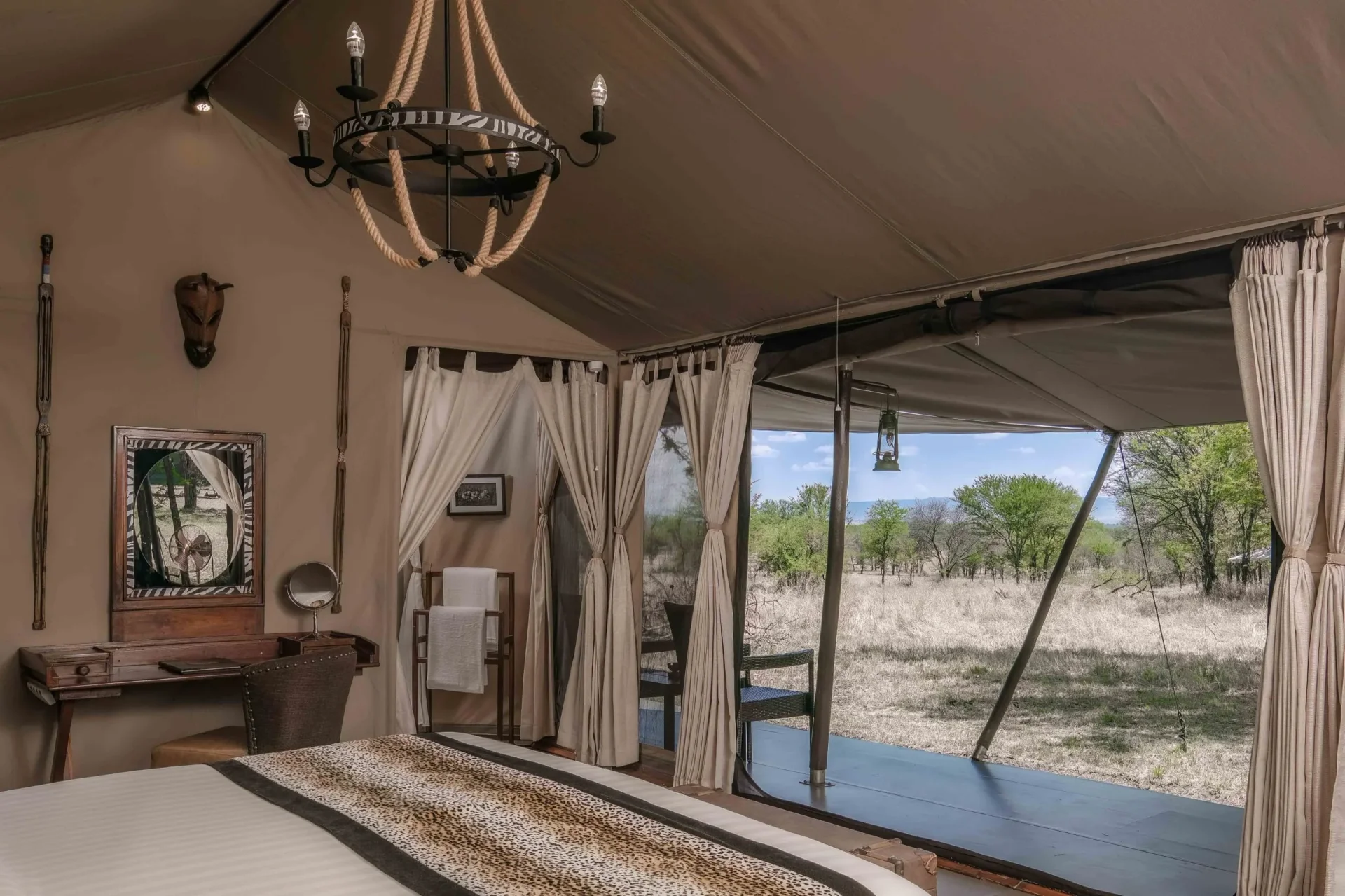
Compare the bed, room space, and view. Ask for photos of the exact room you will book.
The best Serengeti lodges for your group are the ones that meet your actual needs. Write down the details that affect your sleep and daily comfort. Share them with your planner before the shortlist is made.
Bathrooms and hot water
Check whether the bathroom is en suite and how the shower works. A hot shower may be plumbed or prepared by staff when requested. Ask about the toilet, water supply, privacy, and any steps between the bed and bathroom.
A prepared bucket shower can be a pleasant part of a classic camp stay. It may not suit someone who wants long, on-demand showers. There is no need to guess: ask for the room's current bathroom details.
Cooling, power, and charging
Do you need air conditioning, or would shade, a fan, and ventilation suit you? Air conditioning is not standard across Serengeti lodges and camps. Check the feature in the exact room category.
Ask where and when you can charge cameras and phones. A solar-powered camp may still have limits on high-use appliances. Discuss any essential powered equipment before booking, including what backup is available and who can confirm suitability.
Space, beds, and the view
Compare the room plan as well as the floor area. Check twin-bed options, how extra beds are arranged, and whether a family unit has internal access between sleeping spaces. Two separate tents placed nearby are different from one connected family unit.
Also ask what a view category means. A plains view, a waterhole-facing room, and a room near the main building can offer different benefits. Wildlife can appear near any property, but no view category promises animal sightings.
Guiding and game drives can change the whole stay
Two guests at the same camp may have different safari arrangements. One might arrive with a private road guide and vehicle. Another might fly in and join the camp's scheduled drives. The room itself does not tell you which service you have bought.
When comparing Serengeti lodges, ask who runs each drive, how many guests share the vehicle, and whether a private vehicle costs extra. Check daily drive options, picnic plans, and what happens on arrival and departure days.
A private room does not mean a private game drive. Nor does a private road safari automatically mean a private aircraft, balloon basket, or whole camp. State the level of privacy you want, then have each part confirmed in writing.
Walking, balloon flights, and other activities depend on the site, rules, guide skills, conditions, and availability. Do not assume an activity is allowed because another property in the wider ecosystem offers it.
Five real properties that show the range
These examples illustrate different styles of Serengeti lodges and camps. They are not a ranking or a promise of availability. Features and operating dates can change. Ask TanzaLux for a current quote and confirmation before treating any example as part of your itinerary.
Four Seasons Safari Lodge Serengeti: substantial lodge facilities
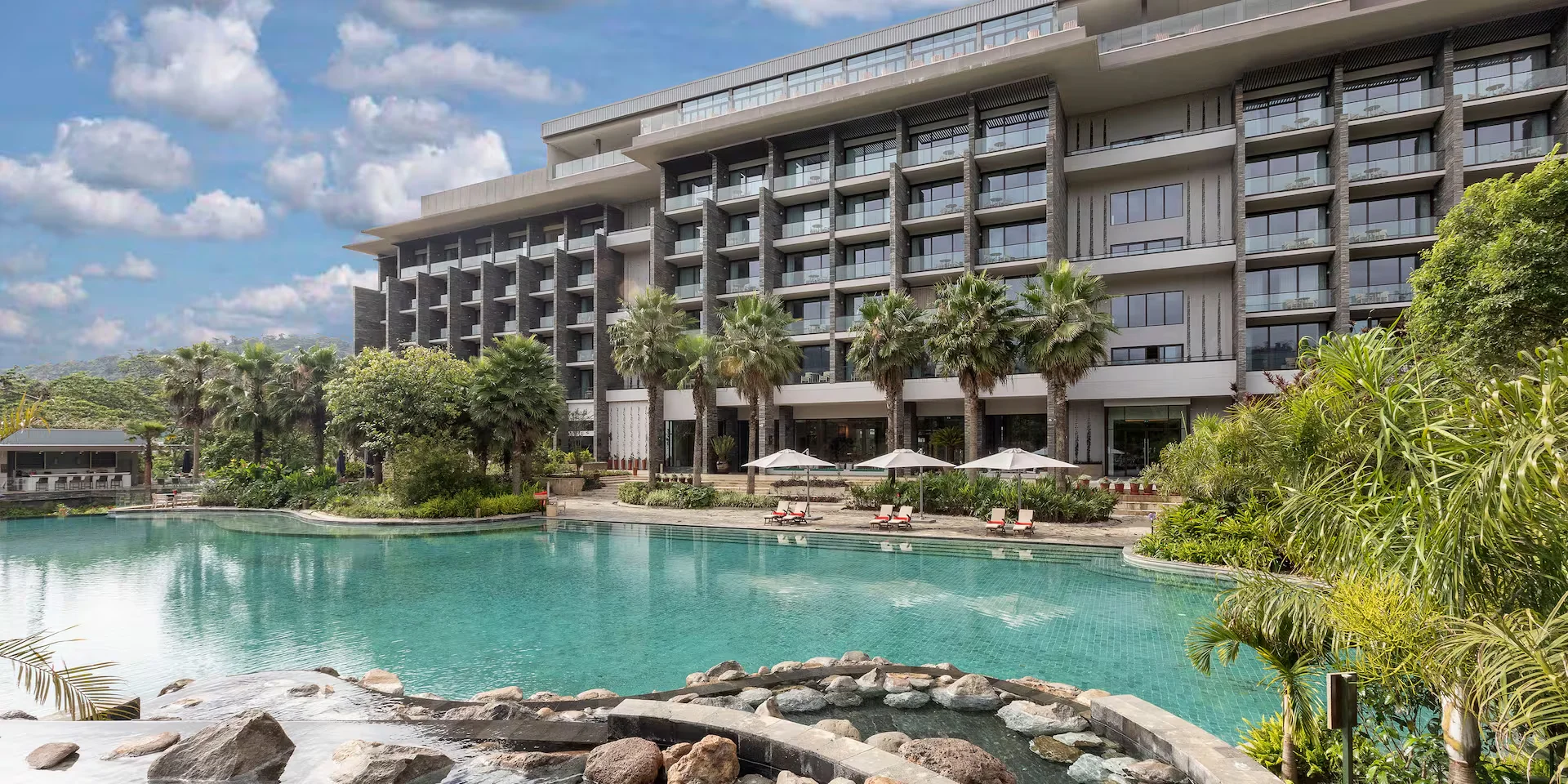
Four Seasons is worth comparing when hotel-style facilities matter. The operator lists air-conditioned rooms, an infinity pool, restaurants, and a fitness centre. Its official facilities page shows the breadth of services.
Ask which room type suits your group, what the booked rate includes, and how drives are arranged. A large choice of facilities is useful only if you plan time to enjoy them. Check the drive plan as carefully as the pool photos.
Namiri Plains: a permanent tented suite style
Namiri Plains is in the eastern Serengeti. Asilia describes tented suites with stone walls, decks, and outdoor baths, plus shared pool and spa facilities. It is an example of why “tented” does not necessarily mean basic.
Consider the location for your wildlife interests, then confirm the transfer from the planned airstrip. Ask about the exact family layout if travelling with children. Big-cat country remains wild country, so sightings cannot be promised.
Sayari: a permanent camp in the north
Sayari offers tented suites, hot-water bathrooms, decks, and a pool in the northern Serengeti. It can help illustrate the difference between a permanent northern base and a moving migration camp.
Check the booked room or retreat category, current opening dates, and drive arrangements. Different products at one property can carry different inclusions. Proximity to the Mara River improves access to that area, but does not guarantee a crossing.
Serengeti Safari Camp: a classic seasonal approach
Nomad's Serengeti Safari Camp changes location during the year. The operator describes spacious tents, prepared bucket showers, and eco-flush toilets. This is a useful example for travellers who value a small camp and a seasonal wildlife focus.
Confirm the camp's site for your stay and its transfer plan. Mobile does not mean the staff move it each time the herds shift. Even a well-placed camp cannot promise that the migration will be close on every day.
Olakira Migration Camp: seasonal sites with more tented comforts
Asilia's Olakira Migration Camp uses northern and southern seasonal sites. Its operator lists en suite bathrooms, solar-heated showers, and mesh-enclosed stargazing spaces. The southern site is in Ndutu within the Ngorongoro Conservation Area.
Check the exact opening period, location, and family-unit availability. The published calendar includes closure periods between some seasons. This is why Great Migration camps must be checked against your actual nights, rather than selected by name alone.
Families, couples, and photographers need different details
For families comparing Serengeti lodges, confirm the minimum age for the property and each activity. Ask about connected rooms, meal times, child supervision, and whether a private drive is required. A child accepted at camp may still be too young for a walk.
Couples may value a quiet deck, a bath, a view, or time for a late breakfast. Ask about tent spacing and dinner arrangements rather than relying only on the word “romantic.” Any private meal should be confirmed, including its cost and weather backup.
Photographers should discuss vehicle space, camera supports, charging, and time at sightings. A photographic vehicle is a specific service, not a standard feature of every luxury Serengeti safari. Match the base to the subject and the light you want to work with.
For mobility needs, request actual details: path surfaces, steps, doorway widths, bathroom fittings, and distance to meals. A ground-floor room can still involve rough paths. Ask the property to confirm what assistance and room options it can provide.
Understand the total price before booking
Compare Serengeti lodges on a total-trip basis. A room rate without drives can look cheaper than a camp rate that includes scheduled safari activities. Add the missing services before deciding which is better value.
Room basis: per person sharing, per room, or exclusive use.
Meals and drinks: exactly which meals, drinks, and dining extras are covered.
Safari service: vehicle, guide, shared drives, or a private-vehicle supplement.
Transfers: the named airstrip and any longer transfer charges.
Fees: park entry, concession or camping charges, taxes, and any operator levies.
Extras: flights, balloon trips, spa visits, tips, laundry limits, and insurance.
For example, Olakira's published rate separates room and safari inclusions from park and other fees. That does not set the rules for every property. Read the specific quote for your booking and check that the same service is not counted twice.
Ask about single supplements, child rates, deposits, changes, cancellation terms, and when payment is due. These are part of choosing Serengeti accommodation, even if they appear less exciting than a room tour.
How many nights and how many camps?
For many first trips, consider three or four nights in one well-chosen area. This is a planning suggestion, not a rule. Arrival and departure take time, and a one-night stay can leave little room for a full safari day.
With a longer stay, two bases can make sense when they serve different goals. Central and northern areas, for example, may suit a wildlife overview plus a seasonal river focus. Avoid changing Serengeti lodges simply to collect more names.
Compare the full door-to-door journey. A short flight still needs check-in, possible stops, and an airstrip transfer. A road transfer may include wildlife viewing, but it can also be tiring. Ask for realistic timing and luggage rules for the booked service.
Share your dates and interests so TanzaLux can compare one-base and two-base Serengeti plans.
Check safety and environmental claims
Both lodges and camps can stand in places where animals move freely. Solid walls do not make the surrounding grounds a place to wander alone. Follow the camp briefing and use staff escorts whenever instructed, especially after dark.
Ask Serengeti lodges how they communicate in an emergency and what evacuation arrangements mean for your booking. Check your own insurance separately. A rescue arrangement, an evacuation service, and medical treatment cover are different things.
For environmental claims, look for specific evidence about energy, water, waste, local jobs, and community partnerships. Canvas alone does not prove a low impact. A solar system is one feature, not a full measure of a property's wider practices.
Sample safari packages with different stay styles
These sample routes are starting points to tailor with TanzaLux Safaris. They do not confirm any named property, departure, flight, or price. Your final plan should identify the room category, guide service, transfers, fees, and agreed activities.
Sample package: 7-day Northern Circuit with a Central Serengeti Base
Best for: a first safari using a lodge or permanent tented camp.
Day 1: Arrive in Arusha and rest.
Day 2: Visit Tarangire and continue to Karatu.
Day 3: Visit Ngorongoro Crater and return to Karatu.
Day 4: Drive to a central Serengeti base.
Days 5–6: Enjoy game drives from the same property.
Day 7: Fly toward Arusha on a suitable service and connect onward with enough time.
Confirm the airstrip transfer, flight routing, and connection margin. Add an overnight stay in Arusha if required. Compare Serengeti lodges and permanent camps using the same three-night room and safari basis.
Explore private safari options and request a seven-day lodge or tented-camp comparison.
Sample package: 8-day Serengeti Safari with Two Bases
Best for: guests with time for a central stay and a northern seasonal focus.
Day 1: Arrive in Arusha.
Day 2: Fly to Seronera if the schedule suits, then transfer to camp.
Days 3–4: Take game drives in the central area.
Day 5: Transfer to a northern base by the agreed road or flight plan.
Days 6–7: Explore the north, with river time if conditions and herd positions suit.
Day 8: Fly onward from the suitable northern airstrip.
Choose the season before choosing the properties. An inter-camp flight is not automatically direct or available every day. The move should add a different experience, rather than use a day for little gain.
Ask for a seasonal Serengeti plan with two carefully chosen bases.
Sample package: 11-day Serengeti and Zanzibar Escape
Best for: travellers combining a focused safari with time by the sea.
Day 1: Arrive in Arusha and stay overnight.
Day 2: Fly to the Serengeti and transfer to your chosen property.
Days 3–5: Enjoy game drives and planned time at the lodge or camp.
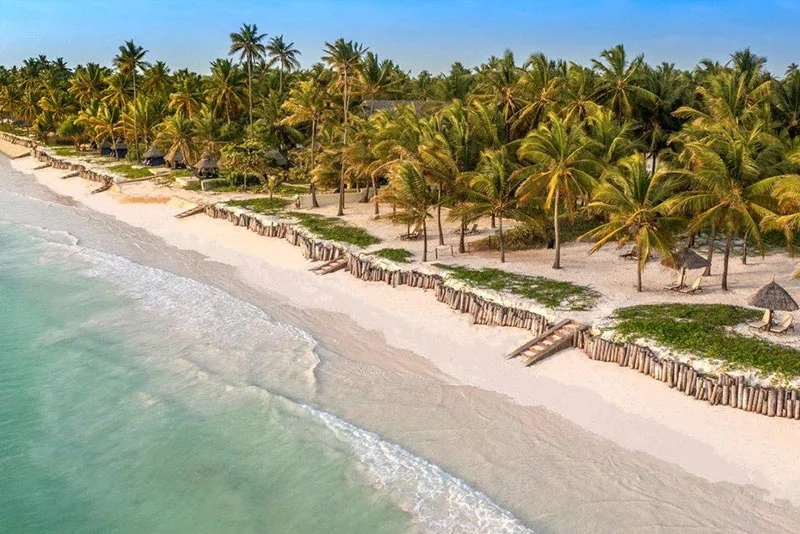
Day 6: Fly to Zanzibar on a suitable service and transfer to your hotel.
Days 7–10: Relax at one beach base and add optional outings.
Day 11: Transfer to the airport for departure.
The safari base could be a fixed lodge, a permanent camp, or a seasonal camp open on your dates. Flights can have stops and luggage limits. Add a transit night if the available schedule needs it.
Build a Serengeti and Zanzibar holiday around the stay style you enjoy most.
Why choose TanzaLux Safaris for your stay?
TanzaLux Safaris is Tanzanian-owned and based in Arusha. The team tailors journeys around your dates, pace, budget, and interests. That planning helps connect your room choice with the roads, flights, and wildlife areas in the wider trip.
Ask TanzaLux to shortlist Serengeti lodges and camps on a like-for-like basis. Share the features you need, your group ages, and your main safari goals. Request the exact property, room category, meal plan, drive service, and transfer plan in the final quote.
The company offers private road safaris with your own vehicle and guide. For fly-in stays, confirm the camp's guiding arrangement separately. Good planning means knowing which parts of the experience are private and which are shared.
Choose a base that gives your trip room to breathe. The right combination of location, comfort, and guiding can matter far more than whether the roof is canvas or solid.
Plan your Serengeti stay with TanzaLux Safaris and receive a tailored lodge and camp shortlist.
Frequently asked questions
1. Are Serengeti lodges better than tented camps?
Neither style is best for everyone. Compare location, comfort, guiding, and total cost. A camp may suit a close-to-the-bush feel, while a lodge may offer more hotel-style facilities.
2. Are Serengeti tented camps basic?
Some are simple, while others have large suites, private bathrooms, decks, and pools. Check the actual features. The word “tent” alone does not tell you the comfort level or price.
3. Does a mobile camp move every day?
No. Seasonal camps change sites at planned times and normally remain set up during your stay. Confirm the site and opening period for your dates. They do not move every time the herds shift.
4. Which area suits a first Serengeti trip?
The central area is often worth considering for a broad introduction. Your dates and interests may point elsewhere. Ask for a region recommendation before choosing a property from photos.
5. Where should I stay for Mara River crossings?
Consider a suitable northern Serengeti base during the relevant herd season. Ask about current expectations and access to river areas. No camp location or number of nights guarantees a crossing.
6. Where should I stay for calving-season herds?
Explore southern plains and Ndutu options for the early-year season. Herd timing varies with local conditions. Confirm whether the camp is in Serengeti National Park or the Ngorongoro Conservation Area.
7. Are all Serengeti lodges inside the national park?
No. Properties marketed for Serengeti safaris can be in the park, neighbouring areas, or the wider ecosystem. Request a map pin, access details, and the fees needed for your planned drives.
8. Do all rooms have private bathrooms?
Do not assume so. Ask whether the bathroom is en suite and check the toilet, shower system, and hot-water arrangements. The exact room category matters as much as the property name.
9. Do Serengeti lodges have air conditioning?
Some do, but it is not universal. Others rely on ventilation, shade, or fans. If cooling is essential, request written confirmation for the room you are booking.
10. Are game drives included in the room rate?
Only if the rate states that they are. Some packages include camp-operated drives; others cover lodging while your road guide handles the safari. Compare the full service before judging price.
11. Does a private room include a private vehicle?
No. A private room can be sold with shared game drives. Ask about the vehicle, guide, guest numbers, and any private-vehicle supplement. Confirm each part separately.
12. How many nights should I spend in the Serengeti?
Consider three or four nights for many first trips, allowing for travel days. A longer stay can support two bases. The right length depends on your route, budget, and goals.
13. Should I split my stay between two camps?
It can help when the bases serve different regions or interests. Check what the move adds and how much time it takes. One well-chosen base may suit a shorter trip better.
14. Can children stay at lodges and camps?
Many properties accept families, but minimum ages and activity rules vary. Check the room layout, meals, supervision, and vehicle requirements. A family unit is different from two separate tents.
15. Are Serengeti lodges accessible for guests with limited mobility?
Access varies by property and room. Ask about steps, path surfaces, distances, bathroom fittings, and vehicle access. Request precise confirmation rather than relying on a general accessibility label.
16. Can I walk around camp after dark?
Follow the property's briefing and use staff escorts when instructed. Animals may move through the grounds. Never assume that a short path or a solid room makes wandering alone safe.
17. Do camps have Wi-Fi and charging?
Many offer some service, but coverage, speed, charging points, and power hours vary. Check essential needs before booking. A wilderness stay may not support reliable video calls.
18. Is flying always better than driving?
No. Flying can reduce long road journeys, while driving can fit a wider northern route. Compare the full journey, including stops and transfers. Check luggage rules for the booked flight.
19. What extra costs should I check?
Ask about park and concession fees, transfers, drinks, laundry, private drives, optional activities, flights, tips, and insurance. Also review single supplements and cancellation terms. Your written quote should make the inclusions clear.
20. How can TanzaLux help me compare Serengeti lodges?
Share your dates, group size, budget, wildlife goals, and room needs. Ask for a shortlist with exact locations and comparable inclusions. TanzaLux can then tailor the stay choices to your wider safari plan.
Ready to start planning?
Tell us your dates and what you're after — no obligation.