5.0 Excellent
Best Serengeti Luxury Safaris: Your Dream African Adventure Begins Here
The best Serengeti luxury safaris combine the right location, skilled guiding, a comfortable camp, and time to enjoy the wild. A beautiful room matters, but it cannot make up for a rushed route or long drives to your main wildlife area.
Picture a quiet dawn on the plains, a slow game drive, and lunch back at camp with time to rest. Luxury can mean more space, a private vehicle, or simply fewer hotel changes. The right choice depends on how you want to travel.
This guide helps you compare regions, seasons, camp styles, travel plans, and quotes. You will find practical booking questions and 20 FAQs at the bottom. Wildlife remains wild: no lodge or operator can guarantee a sighting.
What makes a Serengeti safari truly luxurious?
A luxury safari should make your time easier, more comfortable, and more rewarding. Look beyond décor to guiding, location, service, and the pace of each day.
A camp placed well for your interests and dates.
A guide who listens and explains what you see.
A suitable vehicle with enough space for your group.
Clear arrangements for meals, transfers, and activities.
Time to rest rather than move camp every day.
Honest advice about what is included and what costs extra.
Decide which comforts matter most before choosing a lodge. A pool, a quiet tent, a private deck, or reliable charging may rank differently for each guest. Ask about the actual room category, not just the property name.
Which Serengeti region should you choose?
Choose your region by season, wildlife interests, and travel time. The wider ecosystem is vast. A camp that suits one month may be far from your main goal in another.
Central Serengeti and Seronera
The central area is a useful base for a broad wildlife safari. It often suits first-time visitors who want varied game drives without making the whole trip depend on the migrating herds.
Ask how far the proposed camp lies from your usual drive areas. Two properties described as “central” can give you different transfer times. A good base leaves more time to watch and less time to commute.
Southern plains and the Ndutu area
The southern ecosystem is often considered for the calving period early in the year. Exact herd locations depend on rainfall and grazing. The Ndutu area also involves boundaries beyond Serengeti National Park.
Check the precise camp location, access rules, and fees. Do not assume every camp marketed as southern Serengeti sits within the same protected area. Your quote should show what your route requires.
Western Corridor
The west can suit travellers interested in that landscape and a seasonal migration route. Plan around current conditions and camp location rather than expecting the herds to arrive on a fixed date.
The national park’s Western Corridor is not the same product as a stay in a nearby private reserve. Singita Grumeti, for example, is part of the wider ecosystem with its own accommodation and access arrangements.
Northern Serengeti
The north is often chosen for the Mara River phase of the migration. It can reward a stay of several nights, but river crossings are never scheduled or guaranteed.
Ask how far your camp is from the areas you plan to explore. Waiting by a river for hours is not every traveller’s ideal day. Balance migration time with other game drives and rest.
When is the best time for Serengeti luxury safaris?
There is no single best month for every traveller. Start with your main interest, then choose the region and camp. Rainfall can shift herd movements and road conditions.
January to March: the southern plains are often a focus for calving-season travel.
April to June: changing rains and grazing shape movements through central and western areas.
July to October: northern areas are often considered for the Mara River phase.
November and December: returning rains can draw herds south, with timing varying by year.
Use this as a broad planning outline, not a timetable. The Great Migration moves across the ecosystem through the year. It is not one event that begins and ends in a single month.
If you prefer fewer crowds, ask about quieter regions as well as quieter dates. A famous crossing point can be busy even when your camp feels secluded. Private guiding does not give you exclusive use of public park sightings.
What wildlife might you see in the Serengeti?
The Serengeti supports a rich range of wildlife, but each drive is different. Build your trip around habitats and patient observation rather than a guaranteed animal checklist.
Lions, elephants, buffalo, giraffes, zebras, wildebeest, and many birds may feature on drives. Leopards and cheetahs can take time to find. Rhino sightings are much less dependable and should not be presented as routine.
The Big Five are lion, leopard, elephant, buffalo, and rhino. Seeing all five on one trip is possible, not assured. Tell your guide your interests, but leave room for small details and unexpected encounters.
A good guide can make a quiet sighting rewarding. Tracks, bird calls, grazing patterns, and animal behaviour add depth to a safari. Resist the urge to rush past everything that is not on a list.
Should you choose a luxury lodge or a tented camp?
Choose the style that matches your comfort needs and the location that fits your route. “Luxury” is not a single standard, and a tent can range from simple to very spacious.
Permanent lodges
A lodge may offer more built facilities and a wider range of shared spaces. Ask about the room layout, air cooling, pool, internet, and distances between your room and the main area.
Do not assume every facility is available in every room category. If step-free access, a bathtub, or family space is essential, get written confirmation before you commit.
Permanent tented camps
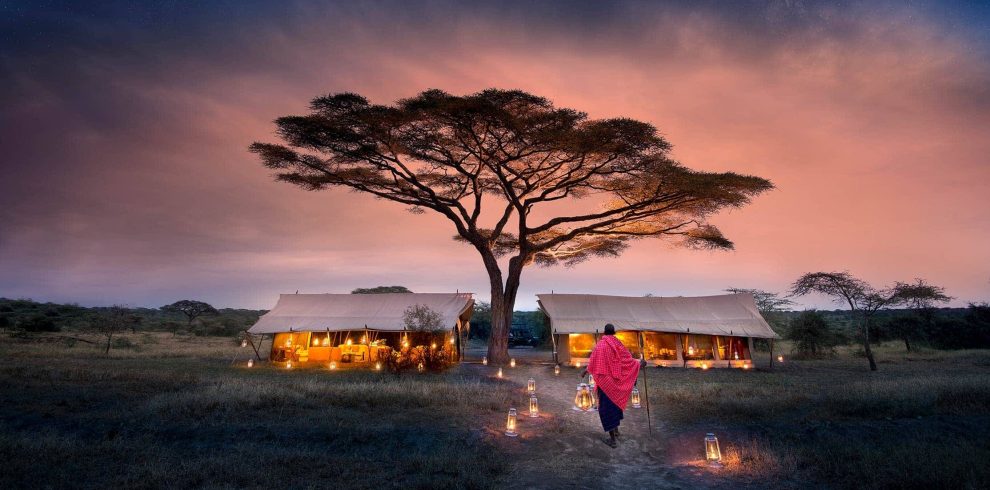
A tented camp can offer comfortable beds, private bathrooms, and a close connection to the sounds outside. Canvas may let in more sound than a solid-walled room.
Ask about hot water, lighting, power hours, and how staff escort guests at night. If wildlife sounds may affect your sleep, discuss that honestly rather than choosing from photos alone.
Seasonal migration camps
Some camps relocate between seasonal sites. They do not follow individual herds each day. Confirm where the camp will be on your dates and how that suits the current plan.
Facilities and schedules can differ from a permanent lodge. Ask about shower systems, laundry, charging, and the transfer from the airstrip. A well-placed seasonal camp may be worth more to you than a larger room far away.
Private villas and exclusive-use stays
These may suit families or groups who want shared private space. Check whether a vehicle, guide, meals, and activities are included in exclusive use or billed separately.
Privacy at camp does not mean all wildlife areas are private. Confirm the land designation, access permissions, and rules that apply to each activity.
Is a private safari vehicle worth it?
A private vehicle can give your group more control over pace and interests. It may suit photographers, families, or guests who prefer longer stops. Confirm it explicitly in the quote.
Some fly-in lodge packages use shared camp vehicles. That can still be a strong experience, but it differs from a private vehicle and guide for your party. Do not treat “luxury safari” as proof of either arrangement.
How many guests share the vehicle?
Does each person have a useful viewing position?
Is the same guide with you throughout?
Are drives scheduled or flexible within park rules?
Is there room for camera bags and other gear?
Are charging, drinking water, and shade provided?
Flexibility has limits. Guides must respect park hours, routes, weather, and wildlife. A private booking should not promise off-road access or activities that are not permitted.
Should you fly or drive to the Serengeti?
Flying can reduce long overland journeys, while driving lets you connect more stops. Compare the complete door-to-door plan, not just flight time or distance on a map.
For a fly-in safari, confirm the airstrip, camp transfer, luggage rules, and onward connection. Small aircraft can have tight baggage limits. Flight routes may include stops, so avoid assuming every service is direct.
A road safari can link the Serengeti with other northern destinations. It also means time on rough or dusty roads. Ask for realistic drive estimates with meals, gates, and breaks included.
A mixed plan may work well: drive through part of the route and fly out. Price it as a full itinerary, including all transfers. Leave a sensible buffer before an international flight.
How many nights should you spend in the Serengeti?
Three or four nights can provide a useful starting point for one main area. More nights help if you want two regions, a slower pace, or time focused on the migration.
Arrival and departure days are rarely full game-viewing days. Count nights at camp and usable time outside, not just the number of calendar days on a brochure.
For a short stay, one well-chosen base may be better than two rushed camps. If you move, make sure the second stop brings a real change in habitat, location, or experience.
What could a seven-night luxury itinerary look like?
A balanced route should match your dates and leave time to settle in. The outline below is an example for planning, not a fixed package or promise of wildlife.
Night one: arrive and rest in Arusha or another suitable arrival base.
Nights two to four: stay in one Serengeti area with time for drives and camp rest.
Nights five and six: add a second area only if the season and transfer make sense; otherwise extend the first stay.
Night seven: use an onward stop or flight buffer that fits your departure plan.
If your priority is the migration, the camp sequence may change. If you want the Ngorongoro Crater as well, add or reallocate nights rather than trying to fit everything into one long transfer day.
A shorter trip should have fewer moving parts. A longer trip can include a beach stay after the safari. The goal is useful time, not the largest number of destinations.
How much do Serengeti luxury safaris cost?
There is no single luxury rate. Dates, camp category, room sharing, flights, group size, and private guiding all change the total. Request a current quote for your exact plans.
Compare complete packages rather than an isolated nightly room price. A low headline figure may leave out park charges, transfers, drinks, or activities. Ask whether taxes and required fees are included.
Accommodation, room type, and number of nights.
Meals, drinking water, and included beverages.
Park, conservation, and concession charges where applicable.
Private or shared vehicle and guiding arrangements.
Domestic flights, airport transfers, and airstrip transfers.
Optional activities and equipment hire.
Single-room supplements and child policies.
Payment, cancellation, and change terms.
Ask for currency, quote validity, and clear exclusions. International flights, travel insurance, entry documents, tips, and personal purchases may be separate. Verify each point rather than assuming a package is fully inclusive.
Value often comes from choosing well, not adding more. An extra night in the right place can be more useful than a costly room upgrade in the wrong area.
Which activities can you add?
Game drives are the core activity for most trips. Other options depend on the camp, location, permissions, weather, and provider. Confirm availability before treating an activity as part of your plan.
Balloon safaris
A balloon flight offers a different view of the plains when conditions permit. Ask about the launch area, early transfer, eligibility rules, and cancellation terms. It does not guarantee migration views.
Guided walks
Walks require the right location, permissions, and qualified staff. Do not assume every camp offers them. Confirm age limits, fitness needs, and what the walk involves.
Photography and birding
Share your interests before travel so the guide can plan a suitable pace. Bring gear you know how to use. Ask about support for long lenses and space in the vehicle.
Cultural visits
These may take place outside the park or as part of another route segment. Arrange visits with willing hosts. Ask about fees, photo consent, and how local people are paid.
Can families and honeymooners enjoy the same route?
They can visit the same regions, but their best daily plans may differ. Match room layout, pace, and activities to the people travelling.
Families should check minimum ages, meal flexibility, room connections, and supervision needs. Some camps are unfenced, so children must follow staff guidance. A private vehicle may make breaks easier.
Couples may value a quiet room, a slower lunch, or a private meal. Confirm special arrangements and costs in advance. A romantic setting should not depend on unverified promises of exclusive wildlife sightings.
Tell the planner about mobility, diet, or other access needs early. Ask for specific details on steps, pathways, seating, bathrooms, and transfers rather than a broad assurance that everything is suitable.
What should you pack and check before travel?
Pack light layers, closed shoes, sun protection, and the gear you use on drives. Check every flight’s luggage rules before choosing your bag.
A warm top for cool mornings.
Comfortable clothes for drives and lodge time.
Hat, sunglasses, and personal essentials.
Binoculars and a camera with spare storage.
Charging cables and a suitable adapter.
Travel documents and secure offline copies.
Check current entry requirements and seek personal travel-health advice before departure. Confirm insurance cover for your activities and itinerary. A lodge’s luxury label is not a substitute for preparation.
Follow camp briefings, especially after dark. Use escorts when required and never approach wildlife on foot for a photo. Keep food and belongings stored as staff advise.
Why plan your safari with TanzaLux Safaris?
Ask TanzaLux Safaris to turn your preferences into a clear route and itemised proposal. The useful starting point is your travel style, not a list of the most expensive camps.
Share your dates, group size, budget range, and main wildlife interests. Say whether you prefer private drives, a pool, a tented stay, fewer flights, or a relaxed pace.
Ask the team to explain why each camp fits your dates and how transfers work. Request written confirmation of guiding, room categories, inclusions, and change terms before paying.
Contact TanzaLux Safaris for a tailored Serengeti proposal. A clear brief makes it easier to compare options and build a trip that fits you.
Choose time and location before extra luxury
A rewarding safari starts with the right area and enough time to explore it. Add the comforts that matter to you, then keep the rest of the plan simple.
Leave room for quiet moments as well as major sightings. The plains, light, birds, and time with a good guide are part of the experience. Nature does not need to follow a script to be memorable.
20 FAQs about Serengeti luxury safaris
These answers help you compare options. Confirm camp details, rates, and activities for your exact dates before booking.
1. What makes a safari luxurious?
It combines comfort, good guiding, a useful location, and well-planned service. The right pace and clear inclusions matter as much as room size or décor.
2. What is the best month to visit the Serengeti?
It depends on your interests. Early-year travel often focuses south, while the northern migration phase is often considered from July to October. Conditions vary, so match the camp to your dates.
3. Is the Great Migration guaranteed?
The herds move through the wider ecosystem, but their exact location is not guaranteed for your visit. Rainfall and grazing affect movement. Build a flexible plan with realistic expectations.
4. Can a lodge guarantee a river crossing?
No. Animals choose when and where to cross. Staying near the relevant area for several nights may give you more opportunities, but it cannot ensure a crossing.
5. Can I see all of the Big Five?
It is possible, not assured. Rhino sightings are particularly uncertain. Plan for a varied wildlife experience rather than judging the trip only by five species.
6. How many nights should I book?
Three or four nights can suit one main area. Add time for a second region or a slower pace. Count transfer days carefully, as they may offer limited game-viewing time.
7. Are tented camps comfortable?
Many offer comfortable beds and private bathrooms, but facilities vary. Ask about power, hot water, room size, and night escorts. Canvas also lets in more outside sound.
8. Do migration camps move every day?
No. Seasonal camps generally use planned locations for set periods. Confirm the camp’s site on your dates rather than assuming it follows nearby herds in real time.
9. Is a private guide always included?
No. Some luxury packages use shared camp drives. Ask whether the guide and vehicle are exclusive to your group and whether that applies throughout the trip.
10. Are luxury safaris fully inclusive?
Not necessarily. Inclusions vary widely. Check flights, fees, drinks, transfers, optional activities, and tips. Compare the final trip total rather than a headline rate.
11. Is flying better than driving?
Flying may save overland time, while driving connects more places along the route. Compare all transfers and luggage rules. A mixed road-and-flight plan can also work.
12. Can I bring a large suitcase?
Check your booked carrier’s rules first. Small aircraft may have strict weight and size limits. Confirm whether camera gear and hand luggage count toward the allowance.
13. Is a balloon safari included?
Only if your quote says so. Ask about launch location, transfers, eligibility, and weather cancellation terms. Book ahead if it is a priority.
14. Can I walk in the Serengeti?
Only through an authorised activity in an approved area with the required staff. Do not leave the vehicle or camp for a walk on your own.
15. Are luxury camps suitable for children?
Some are, but age rules and facilities differ. Check room layouts, meals, activity limits, and supervision needs. Tell the planner the children’s ages at the start.
16. Is a safari suitable for a honeymoon?
It can be a strong choice for couples who enjoy nature. Build in rest time and confirm any private meals or special room requests. Do not crowd every day with activities.
17. Will I have internet and charging?
Availability varies by camp and room. Ask about power hours, charging sockets, and where Wi-Fi works. Keep key documents offline and bring spare camera storage.
18. Can I add Ngorongoro or Zanzibar?
Yes, if the route and time allow. Add realistic transfer buffers and avoid squeezing too many stops into a short trip. Check the full cost of all connecting travel.
19. How early should I book?
Start early when dates or specific camps are important, especially for busy periods. Availability changes. Ask for current options and understand deposit terms before confirming.
20. How do I request a TanzaLux quote?
Send your dates, group size, budget range, and priorities. Ask for camp names, room types, guiding arrangements, transfers, inclusions, and cancellation terms in writing.
Ready to start planning?
Tell us your dates and what you're after — no obligation.