
Laetoli Footprints Tanzania: Where Humanity Left Its First Steps
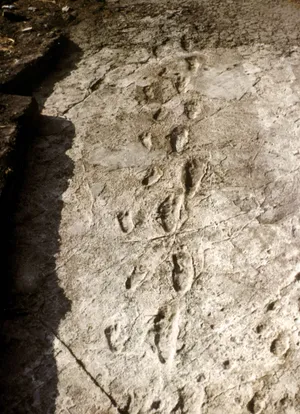
Imagine standing where our ancient ancestors walked nearly 3.66 million years ago. The Laetoli Footprints are among the greatest archaeological discoveries in human history, preserving the earliest known footprints made by human ancestors. Hidden within Tanzania’s spectacular Ngorongoro Conservation Area, this remarkable site tells a story that predates modern civilization by millions of years.
Unlike museums where history is displayed behind glass, Laetoli allows visitors to connect with the very origins of humanity. Every footprint preserved in volcanic ash is a silent reminder that the journey of mankind began long before cities, kingdoms, or written language.
For travelers interested in archaeology, anthropology, history, and Tanzania’s extraordinary heritage, a visit to the Laetoli Footprints Tanzania is an unforgettable experience.
What Are the Laetoli Footprints?
The Laetoli Footprints are fossilized tracks believed to have been made by Australopithecus afarensis, one of humanity’s earliest ancestors. Around 3.66 million years ago, volcanic ash settled over the landscape after an eruption from a nearby volcano.
Soon afterward, several hominins walked across the soft ash. Rain later hardened the surface, preserving every step beneath layers of sediment until the footprints were discovered in 1978 by renowned paleoanthropologist Mary Leakey and her research team.
Today, these footprints provide some of the strongest evidence that early human ancestors walked upright on two legs long before the appearance of modern humans.
Why Are the Laetoli Footprints So Important?
Scientists consider Laetoli one of the most significant archaeological discoveries ever made because it provides direct evidence of early bipedal walking.
The footprints reveal:
- Human ancestors walked upright millions of years ago.
- Feet were surprisingly similar to modern human feet.
- Early hominins traveled together in small groups.
- Tanzania played a central role in the story of human evolution.
This discovery transformed our understanding of where humanity began.
A Journey Through the Cradle of Mankind
Visiting Laetoli is much more than seeing ancient footprints. It is a journey into the origins of human life.
Many travelers combine their visit with:
Together, these destinations create one of the world’s greatest historical and wildlife adventures.
What Can You Experience During Your Visit?
A guided visit with TanzaLux Safaris offers an educational and immersive experience.
Highlights include:
- Professional historical interpretation
- Views of the protected archaeological site
- Learning about human evolution
- Scenic landscapes of Ngorongoro Conservation Area
- Visits to nearby museums and research centers
- Wildlife viewing along the journey
Our experienced guides explain complex scientific discoveries in a simple and engaging way, making the visit enjoyable for adults and children alike.
Best Time to Visit Laetoli Footprints
The site is accessible throughout the year.
The best months include:
- June to October for dry weather
- January to March for pleasant temperatures
- Combined safari and archaeological tours year-round
Many visitors include Laetoli during Northern Tanzania safari itineraries.
Why Visit Laetoli with TanzaLux Safaris?
At TanzaLux Safaris, we believe every safari should tell a story. Our expertly designed itineraries combine Tanzania’s incredible wildlife with its fascinating human history.
When you travel with us, you enjoy:
- Expert local guides
- Comfortable safari vehicles
- Flexible itineraries
- Cultural experiences
- Professional planning
- Personalized service
- Seamless visits to Olduvai Gorge and Laetoli
- Opportunities to combine archaeology with Big Five safaris
Whether you’re a history enthusiast, researcher, family, or first-time visitor, TanzaLux Safaris creates unforgettable experiences that bring Tanzania’s past and present together.
Nearby Attractions
Continue your adventure by visiting:
- Olduvai Gorge Museum
- Ngorongoro Crater
- Serengeti National Park
- Maasai Bomas
- Lake Eyasi
- Mto wa Mbu Cultural Village
Each destination adds another chapter to Tanzania’s remarkable story.
Final Thoughts
The Laetoli Footprints Tanzania are not just ancient impressions in volcanic ash they are humanity’s earliest preserved journey. Standing near these footprints offers a profound reminder of how far our species has come.
Pair this extraordinary archaeological experience with Tanzania’s breathtaking wildlife, vibrant cultures, and stunning landscapes through TanzaLux Safaris. From the world’s oldest footsteps to the Great Migration, your adventure will be one you’ll remember forever.
Book your Laetoli and Northern Tanzania safari with TanzaLux Safaris today and discover where the story of humanity began.
Frequently Asked Questions (FAQs)
1. Where are the Laetoli Footprints located?
They are located in the Ngorongoro Conservation Area in northern Tanzania.
2. How old are the Laetoli Footprints?
They are approximately 3.66 million years old.
3. Who discovered the Laetoli Footprints?
Mary Leakey and her research team discovered them in 1978.
4. Why are the footprints important?
They provide the earliest clear evidence of upright walking by human ancestors.
5. Can tourists visit Laetoli?
Yes, visits are possible through authorized guided tours.
6. Is Laetoli near Olduvai Gorge?
Yes. Both sites are commonly visited together.
7. How long does a visit take?
Most visits last 2–4 hours, depending on your itinerary.
8. Is the site suitable for children?
Yes. Families interested in history and science will find it educational.
9. What should I bring?
Comfortable walking shoes, a hat, sunscreen, water, and a camera.
10. Can I combine Laetoli with a safari?
Absolutely. Many travelers combine Laetoli with Ngorongoro, Serengeti, Tarangire, and Olduvai Gorge.

Recent Posts

Lake Natron Tanzania: A Journey to Africa’s Most Unique Natural Wonder
Maasai Bomas in Tanzania: A Journey into Living African Culture
Laetoli Footprints Tanzania: Where Humanity Left Its First Steps
Quick booking process
+255 625 179 415